Why Does It Get Windy In Coachella Valley?
Learn why Coachella Valley gets so windy, where the wind is strongest, and why the San Gorgonio Pass creates a natural wind tunnel.

Coachella Valley gets windy when air moves from relatively higher pressure west of the mountains toward lower pressure over the hot desert. The San Gorgonio Pass gives that airflow a low mountain opening, channeling and often accelerating west winds into Whitewater, North Palm Springs and the northern valley.
Afternoon heating frequently strengthens the regional pressure difference and mixes faster air down toward the surface, so the wind often becomes more noticeable later in the day. Fronts and larger weather systems can also produce strong winds, which is why the pattern is common but never identical from day to day.
- The wind starts with a pressure difference; hotter desert air and cooler air to the west often help create it.
- The San Gorgonio Pass channels west winds through the mountains and into the Coachella Valley.
- Whitewater, North Palm Springs, Desert Hot Springs and the I-10 corridor usually have the greatest exposure.
- La Quinta, Indian Wells and south Palm Desert are often calmer, but terrain and individual neighborhoods matter.
- Historical airport data show a strong afternoon-and-evening pattern, especially in spring and early summer; they are not property-level wind ratings.
Why Is the San Gorgonio Pass So Windy?
Wind is air moving from higher pressure toward lower pressure. In Southern California, the coastal side can remain relatively cool while the inland desert heats quickly. That temperature contrast can contribute to a pressure gradient from west to east, especially during warm afternoons.
The mountains then reshape the flow. The San Gorgonio Pass is a broad, low opening between the San Bernardino Mountains to the north and the San Jacinto Mountains to the south. Air that might otherwise be blocked or redirected by the ranges is channeled through the opening. The National Weather Service notes that mountain passes can act like tunnels and substantially increase wind speed.
That combination—pressure-driven airflow plus terrain channeling—is the main reason the pass and the western entrance to the Coachella Valley are so reliably windy. It also explains why the region became a major wind-energy location.
Where Is the Wind Strongest in the Coachella Valley?
The greatest routine exposure is near the pass outlet and across the open northern valley. Whitewater and North Palm Springs sit directly in the corridor. Desert Hot Springs and areas along Interstate 10 are also exposed to west and northwest flow.
Farther east and south, the wind can weaken, shift or become more localized. Palm Springs itself is not one uniform wind zone: northern and eastern areas often feel more pass wind than locations closer to the base of the San Jacinto Mountains. The same neighborhood-scale variation appears throughout Palm Desert, Rancho Mirage, Indio and La Quinta.
Typical relative wind exposure by area
| Wind exposure | Areas | Why |
|---|---|---|
| Highest | Whitewater, North Palm Springs, Desert Hot Springs and the I-10 corridor | Closest to the San Gorgonio Pass outlet and open northern-valley terrain |
| Moderate | Palm Springs, Thousand Palms and north Indio | Still exposed to west or northwest flow, with large neighborhood-to-neighborhood differences |
| Often calmer | La Quinta, Indian Wells and south Palm Desert | Farther from the pass and often closer to terrain that provides partial shelter |
These bands are a regional guide, not a guarantee. Lot orientation, walls, landscaping, washes, open fields and nearby terrain can make two properties only a few miles apart feel very different.
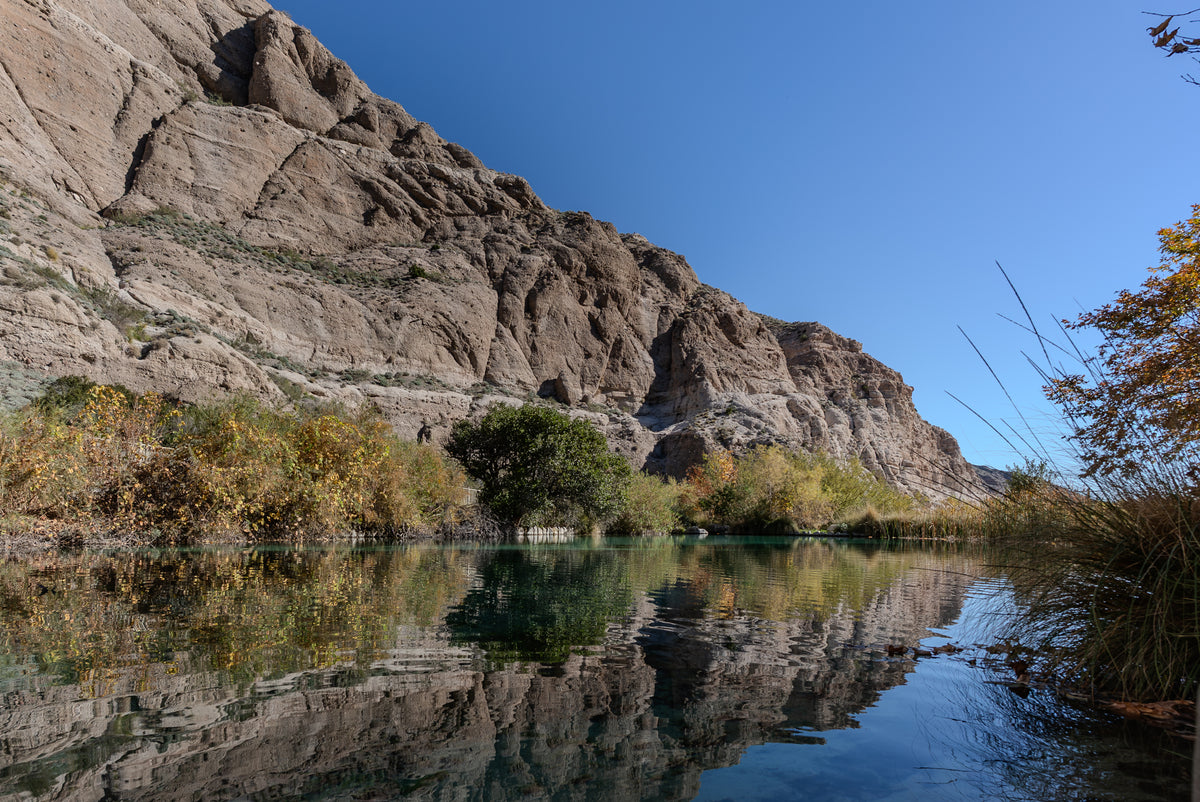
Highest relative exposure: Whitewater sits at the pass outlet, where channeled west winds first enter the valley.
Interactive Wind Map
Use the map to see how the San Bernardino, San Jacinto, Santa Rosa and Little San Bernardino mountain ranges frame the valley and how the I-10 corridor follows the pass into the desert.
When Is Coachella Valley Windiest?
There is no single windy season or hour that applies everywhere, but the most recognizable local pattern is a late-afternoon and evening increase. As inland areas heat, the west-to-east pressure gradient can strengthen and daytime mixing can bring faster-moving air toward the surface.
At Palm Springs International Airport, NOAA hourly climate normals show the highest average speeds concentrated in late afternoon and evening during spring and early summer. Thermal has a different profile because it is farther down-valley. Both stations also record wind in every month, and strong fronts or regional weather systems can override the usual daily pattern.
Real station observations · Not a forecast
Average wind speed (mph) · PST
Swipe horizontally to see later months.
| Time |
|---|
Average wind speed (mph)
NOAA/NCEI 2006–2020 U.S. Hourly Climate Normals · Average wind speed, not gusts · Times are PST; during daylight saving time, add one hour to match the clock.
These are real airport observations averaged into a historical pattern—not current conditions, a forecast, or a property-level wind rating. Neighborhood conditions can differ substantially.
Why Are Some Coachella Valley Cities Less Windy?
Distance from the pass is only part of the answer. Local terrain changes the direction and speed of airflow. Neighborhoods near the Santa Rosa and San Jacinto Mountains may receive partial shelter from common west winds, while open areas nearer Interstate 10 may have fewer barriers.
That is why La Quinta, Indian Wells and south Palm Desert are often calmer than Whitewater or North Palm Springs. “Often calmer” does not mean wind-free. Strong regional events can reach the entire valley, and canyons, slopes and washes can create their own localized effects.

What Does Wind Mean for Daily Life and Real Estate?
Wind can influence outdoor dining, golf, hiking, pool use, photography, drone flights and how quickly dust returns to a patio. For residents and homebuyers, the practical question is not simply whether a city is windy; it is how a specific site behaves during the hours and seasons when you expect to use it.
Visit a property more than once, including a late afternoon if possible. Look at its position relative to the pass, open desert and nearby mountains. Ask about outdoor furniture, pool debris, gates, awnings and prevailing wind direction. Airport observations and regional maps are useful context, but they cannot substitute for on-site experience.
The Bottom Line
Coachella Valley wind is the product of moving air, a recurring west-to-east pressure gradient and mountain terrain that concentrates airflow through the San Gorgonio Pass. The pass outlet and northern I-10 corridor generally feel it most; southern, mountain-adjacent areas are often calmer but still experience wind.
The pattern is reliable enough to shape wind-energy development and everyday life, but it is not precise enough to rate a neighborhood—or a home—from a city name alone.
Continue exploring: Coachella Valley Atlas
Frequently Asked Questions
Is Palm Springs always windy?
No. Wind varies by hour, season, weather system and location. North Palm Springs and areas nearer the San Gorgonio Pass are usually more exposed than central or south Palm Springs, but strong events can affect the whole city.
What is the windiest part of the Coachella Valley?
Whitewater, North Palm Springs, Desert Hot Springs and the Interstate 10 corridor near the San Gorgonio Pass generally have the greatest routine exposure because they sit close to the pass outlet and open northern-valley terrain.
Is La Quinta less windy than Palm Springs?
Often, especially compared with North Palm Springs and the western I-10 corridor. La Quinta is farther from the pass and close to the Santa Rosa Mountains, but individual neighborhoods and strong regional wind events can produce exceptions.
Why are there so many wind turbines near Palm Springs?
The San Gorgonio Pass provides a concentrated and recurring wind resource. Its terrain channels airflow into the western Coachella Valley, making the area suitable for utility-scale wind generation.
When is the Coachella Valley usually windiest?
The familiar local pattern often strengthens in late afternoon and evening, with airport normals showing especially strong averages in spring and early summer. Wind can occur in any month, and fronts or larger weather systems can produce strong conditions outside that pattern.
Sources and Further Reading
This guide uses official weather, climate and geography sources. Wind varies at a much smaller scale than regional maps or airport observations can show.
- National Weather Service: Prevailing Winds, Terrain and Mountain Passes
- NOAA/NCEI: U.S. Climate Normals
- National Weather Service: San Gorgonio Pass Forecast Zone
- National Park Service: Keys View and Coachella Valley Geography
- National Renewable Energy Laboratory: San Gorgonio Wind Resource Area Report