



























European Starling
Sturnus vulgaris
Glossy dark plumage turns speckled in fresh feathers; look for flocks over farms and towns.
- Bird group
- Songbirds & flycatchers
- Where to look
- Introduced species
- Explore the region
- Coachella Valley bird guide
What to notice
- Glossy dark plumage turns speckled in fresh feathers; look for flocks over farms and towns.
Where to look
Introduced species
When to look
The European Starling is a highly adaptable, non-native songbird that has become a year-round resident throughout the Coachella Valley.
Next time you are outside
Glossy dark plumage turns speckled in fresh feathers; look for flocks over farms and towns.
Habitat guidance is not a guaranteed sighting. Photographs may have been taken outside the valley.
Through the lens.
Select any photograph for a closer look. Move through the gallery with the arrows or a swipe.


This is a regional bird guide; photographs may also come from places beyond the valley. Locations are noted when available.
Know what to notice.
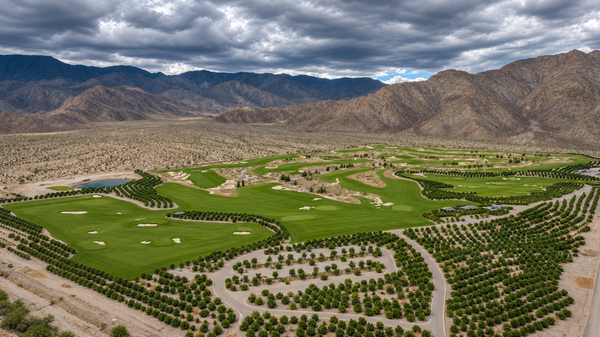
The European Starling is a highly adaptable, non-native songbird that has become a year-round resident throughout the Coachella Valley. Originally introduced to North America from Europe in the late 1800s, it has since spread across nearly every habitat type, thriving in both urban and agricultural settings. In the desert environment of the Coachella Valley, starlings are most often seen in irrigated farmlands, date groves, golf courses, and residential areas where food and water are readily available.
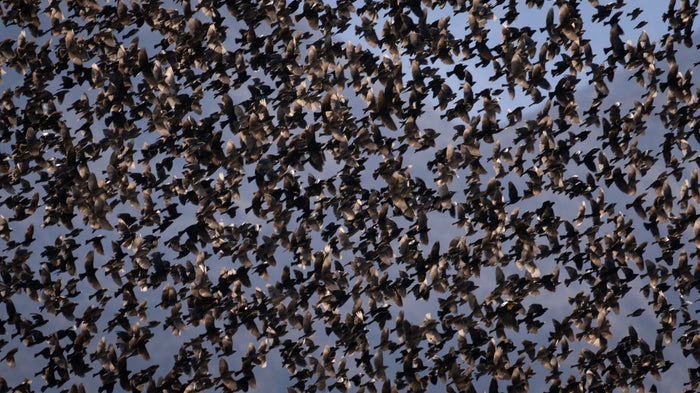
Adult starlings are medium-sized birds with glossy black plumage that shimmers with purple and green iridescence in sunlight. During the cooler months, pale feather tips give them a speckled appearance. Their wings are sharply pointed, their tails short, and their bills slender—yellow in the breeding season and dark in winter. Starlings often travel in tight, synchronized flocks, and their collective movements create dynamic aerial displays, especially at dawn and dusk.
Ecologically, European Starlings occupy a complex role in the Coachella Valley. They are opportunistic feeders, consuming insects, fruits, seeds, and agricultural crops. During spring and summer, they can help control insect populations, including pests in date palms and other crops. However, their benefits are offset by their negative impact on native species. Starlings compete aggressively for nesting cavities, often displacing native birds such as Western Bluebirds, woodpeckers, and swallows. Large flocks also contribute to crop loss and can degrade natural roosting sites.
Despite their status as an invasive species, European Starlings have become a permanent part of the Coachella Valley’s avian community. Their remarkable adaptability and complex social behavior make them a fascinating subject for observing how introduced species integrate—and sometimes dominate—desert ecosystems shaped by human activity.
Blog Post
- The First Fall Show In Thermal, CA








Another bird to discover.
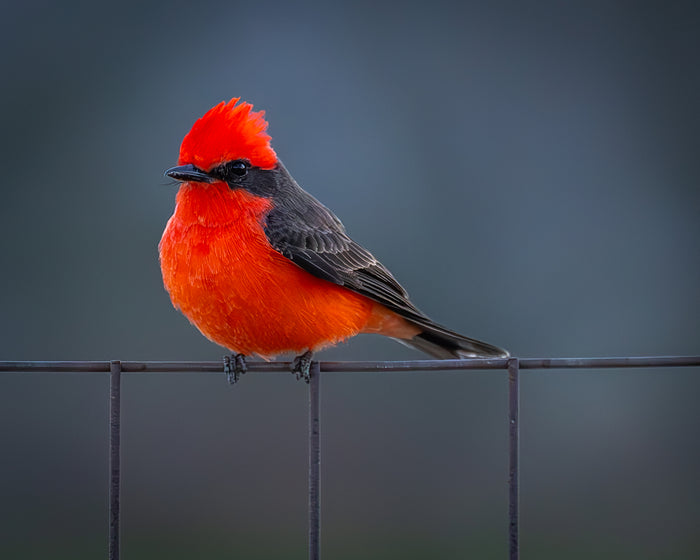
Vermilion Flycatcher
Adult males flash scarlet red; watch for short flights out from an exposed perch.
Meet this bird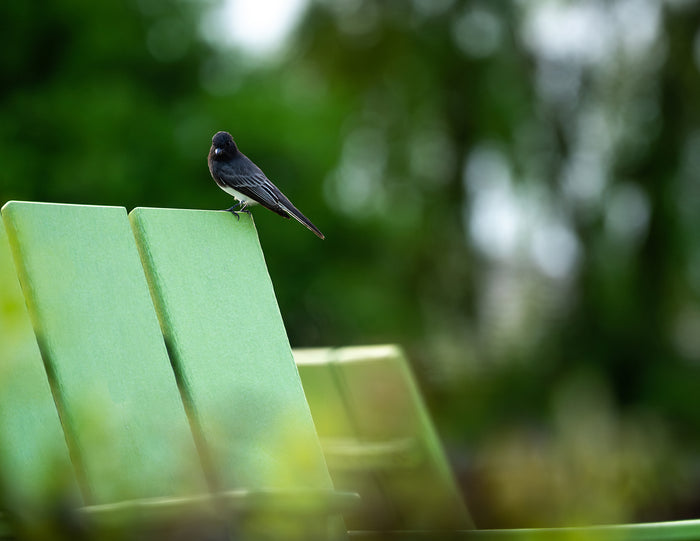
Black Phoebe
A black chest and white belly; often returns to the same low perch after catching insects.
Meet this bird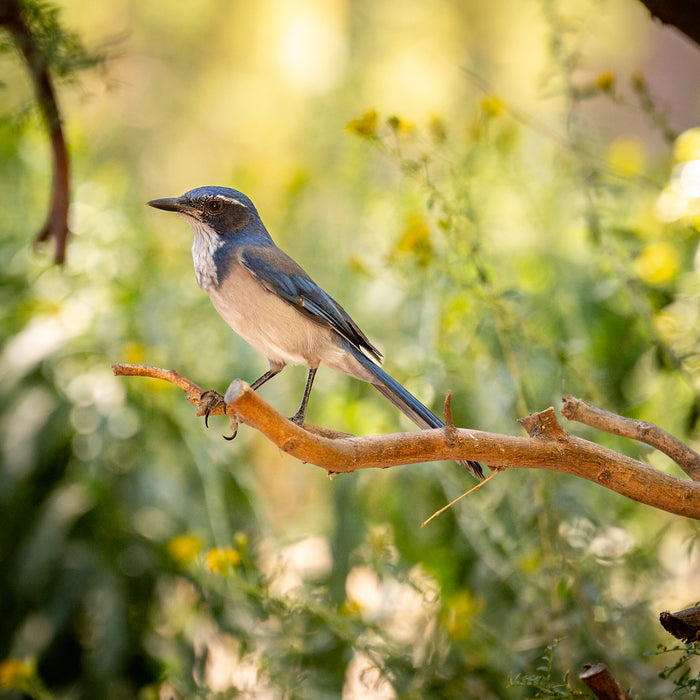
California Scrub-Jay
Blue wings, a gray-brown back and no crest distinguish it from the mountain Steller’s Jay.
Meet this bird