











Inside The Living Desert’s Miniature Railroad
A closer look at the landmarks, tiny street scenes and living garden around the Bighorn Railroad.

A train draws your eye through a bridge. Then you notice a theater marquee, a row of tiny cars, or a station standing beneath trees that suddenly look enormous. At The Living Desert’s Bighorn Railroad, the moving trains are the beginning of the scene.
This outdoor model railroad brings pieces of the Coachella Valley into a wider miniature landscape. Looking closely turns a quick stop into a small journey through architecture, scenery and the craft of making a place feel alive.
- Recognize a local theater in the miniature Pickford scene.
- Look beyond the trains to architecture, people and living plants.
- Follow the photographs from the Coachella Valley to a Santa Barbara landmark.
A miniature valley that reaches beyond the valley
The zoo describes a journey from Palm Springs toward the Salton Sea along Highway 111, alongside scenes inspired by Joshua Tree, Chuckwalla, Santa Barbara, Solvang and Baja California. Think of it as a collection of places brought together through model railroading, rather than a street-by-street map.
That distinction makes the layout more interesting. A familiar name can prompt a memory of somewhere you have been; the next scene can suggest a destination much farther away. The pleasure is in recognizing the reference and then discovering how a few shapes, signs and small details convey it.
Look closer: the Pickford Theatre scene
Select a numbered detail below to explore the photograph. You can open more than one explanation at a time.
1Read the façade
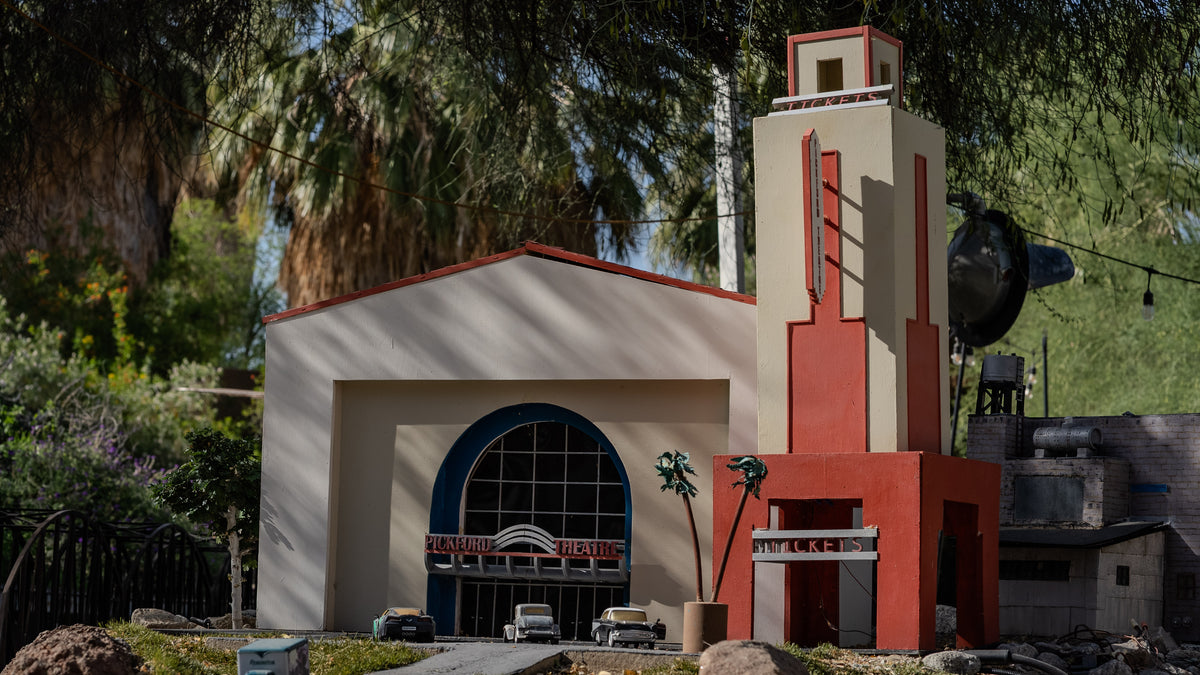
The words “Pickford Theatre” identify the scene. The tall red-and-cream tower and arched window give the building a recognizable outline even at miniature size. The real Mary Pickford cinema is in Cathedral City.
2Look at street level
Small cars sit outside the entrance. Their size makes the theater look substantial, while the ticket signs turn a building model into the suggestion of a place people might visit.
3Find the full-size world
Look behind the tower: real branches and outdoor light remain visible. The model shares its setting with a living garden, so the miniature world and the full-size landscape appear in the same frame.
Pickford Theatre scene, photographed April 29, 2026. Mark Miller.
The real Mary Pickford Theatre is at 36850 Pickfair Street in Cathedral City. In the model, the lettering makes the local connection explicit. The tiny vehicles, ticket signs and surrounding landscaping add a street scene around that architectural reference.
A little Santa Barbara beneath the trees

The Arlington name leads out of the desert to Santa Barbara. The real Arlington Theatre opened in 1931 and retains a Spanish Colonial and Mission Revival character, according to its official history.
In Mark’s photograph, the model’s marquee and tower establish the building, but the crowd supplies the story. The figures stand in different poses, forming small groups along the front. A façade becomes a gathering place. Look from the roofline down to the people, and the same photograph gives you two very different things to notice.
The model also offers a useful way to look at buildings elsewhere: start with their outline, find the entrance, then notice how signs and people change your understanding of the place.
Follow the train, then watch the landscape

A train gives the landscape a sequence. You watch it approach, pass through a scene and disappear beyond the next bend. A building you might otherwise pass over becomes part of a route.
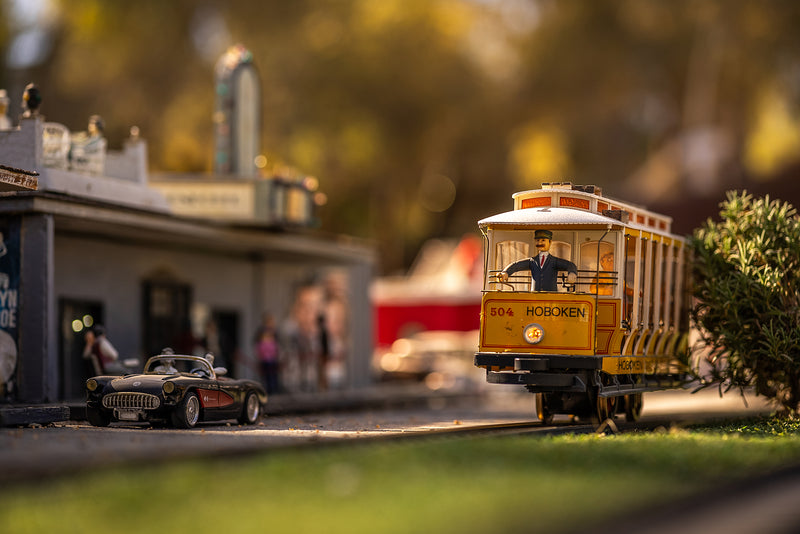
Mark’s streetcar photograph shows another layer: the vehicle occupies the foreground, a small car sits beside it, and buildings recede behind. The shallow focus makes the closest details feel immediate. It is easy to spend your time following the vehicle; try looking at the scene again after it passes.

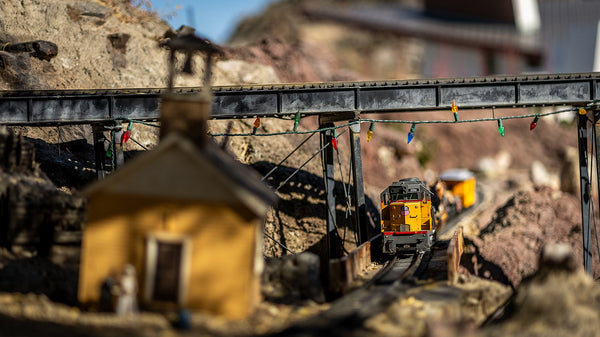
The bridge photograph works differently. Dark beams frame the locomotive while the foreground building falls out of focus. Rockwork and a second track above give the scene height. The layout creates the impression of a much larger landscape within a small area.
The garden is part of the illusion

The zoo’s train-adoption information describes real plants and climate zones within the railroad display. In the station photograph, the relationship is visible: a small yellow building sits beneath full-size trunks, with gravel and rock around it.
Real sunlight supplies the shadows. Branches soften the background. A plant that would be ordinary beside a walking path can feel like a forest when it appears behind a miniature building. The contrast between those sizes is part of the experience.
The people keeping a small world moving
The railroad also depends on practical work. The Living Desert says its train volunteers help operate the model railroad and locomotives, and maintain tracks, electrical and lighting systems, buildings, displays and landscaping.
That range of work helps explain why the exhibit rewards attention. There is a transport system to operate, scenery to care for and a garden around it. If a volunteer is available during your visit, asking about one particular model or scene is a natural way to learn more.
Give the exhibit a slower second look
Start with one scene and stay long enough to notice what surrounds the train: the sign above an entrance, the people outside a theater, or the way a bridge frames a view. Then change your position slightly and look again.
For the complete collection, explore Mark’s Toy Train Exhibit photographs. Continue through the Living Desert guide for more animals, gardens and places to explore. Check the zoo’s current visitor information before planning your day.
Frequently asked questions
What is the miniature railroad at The Living Desert called?
It is the Bighorn Railroad, an outdoor G-scale model train display inside The Living Desert Zoo and Gardens in Palm Desert.
Is the Bighorn Railroad a train ride?
The exhibit discussed here is a model railroad viewed from the surrounding visitor areas. The miniature locomotives and streetcars shown in these photographs are display models.
Does the exhibit represent only the Coachella Valley?
No. The zoo describes local scenes along Highway 111 as well as destinations including Santa Barbara, Solvang and Baja California. It brings multiple places together in one miniature landscape.
Do the model trains operate all year?
The zoo’s Wild Americas page says the G-scale model train is open daily year-round, with fewer lines potentially running in summer heat. Confirm current availability before a special trip.
Where can I see more photographs of the exhibit?
Browse Mark Miller’s Toy Train Exhibit profile for all five photographs and the full-size gallery. The photographs show scenes captured in 2024 and on April 29, 2026; the layout may change over time.
Sources and photography notes
Sources reviewed November 7, 2026. Original photography by Mark Miller, from 2024 and April 29, 2026. Descriptions of visible details are based on those photographs; they are not a complete inventory of the current layout. No volunteer interview was conducted for this article.
- The Living Desert: Plan Your Visit — destinations represented in the display and current visitor information.
- The Living Desert: Wild Americas — official exhibit name, year-round availability and summer operating caveat.
- The Living Desert: Volunteer — train volunteers’ operational and maintenance work.
- The Living Desert: Adopt a Train — real plants and climate zones; support for upkeep.
- Arlington Theatre: Official History — Santa Barbara location, 1931 opening and architectural character. Identification of the model is based on its visible Arlington lettering.
- D’Place Entertainment: Mary Pickford Theatre location — Cathedral City address. Identification of the model is based on its visible Pickford Theatre lettering.