







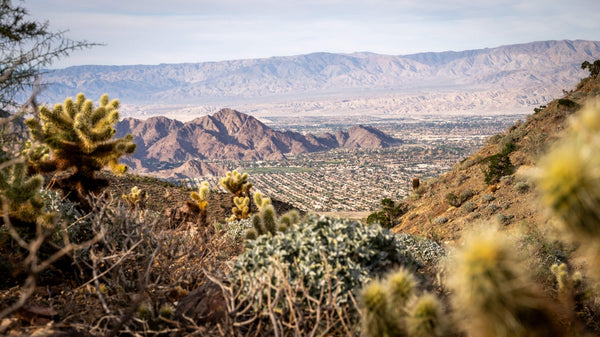


What Happens to Coachella After Everyone Goes Home?
Inside the Stagecoach changeover, cleanup, donated gear and quieter life of Empire Polo Club.

The last song ends. The livestream cuts away. Festivalgoers pack their bags, leave the campgrounds and begin the trip home.
But what happens to the place they leave behind?
At the Empire Polo Club in Indio, the answer involves another festival, crews taking apart a temporary city, usable goods finding new homes and a few familiar landmarks that never leave. Looking at the grounds between events reveals a side of Coachella that rarely makes it into the highlight reel.
- First, a changeover. Stagecoach follows Coachella, so the grounds are preparing for another audience before the April season ends.
- Useful things keep moving. Local nonprofits have recovered camping equipment and surplus food through documented festival partnerships.
- The venue has another life. Spectra remains, some festival art becomes public art, and Empire hosts activities beyond April.
First comes Stagecoach
The first surprise is that Coachella's final Sunday is not the end of the site's April festival season. In 2026, Coachella ran April 10–12 and April 17–19. Stagecoach followed April 24–26. The grounds had another audience to welcome just five days after Coachella's last night. [1]
That changes the picture completely. The task between festivals is a changeover: adapting a working venue for a different event while keeping the next opening in sight.
There is a useful glimpse of that process in a 2024 account from event-infrastructure company eps america. Its crew installed 5,000 linear feet of barricade across Coachella and Stagecoach, separating stages, VIP areas and art installations. The company described Coachella teardown and Stagecoach construction happening simultaneously that year, without its usual changeover break. [2]
For the person leaving with a wristband and a camera roll, the festival is over. For the crews, the same field is already becoming the next show.

Taking apart the temporary city
Think of what a festivalgoer uses in a single afternoon: an entrance lane, a stage, a food counter, a restroom, a place to refill water, a stretch of fencing and a route back to camp. The crowd experiences those things as one destination. Behind the scenes, they involve many different crews and suppliers.
Production designer Steve Lieberman described that layered work in a published interview about festival production: steel, staging, lighting, video, scenery, food and beverage, entrances and camping all have to come together. Some structures take weeks to build. His description of backstage was a workplace filled with equipment and people moving things, even while the audience sees a show. [3]
After the final event, those layers have to come apart again. The important distinction is between equipment that belongs to a particular production and the venue that supports it. A stage's finished appearance is not a reliable guide to which components will move, which will be reconfigured and which infrastructure will remain.
Nor is there one useful countdown for the entire property. The contractor account documents an overlapping changeover; it does not establish a universal number of days in which every stage, tent and service disappears. Different parts of the site are doing different jobs at the same time.
A tent's next stop can be Mecca
Some of the most interesting departures happen in trucks carrying things their original owners no longer need.
The Galilee Center in Mecca has collected usable goods from the festival grounds through its partnership with Goldenvoice. In its May 2024 report, the center said employees and volunteers worked across three Mondays and collected approximately 80,000 pounds of donations. The items included air mattresses, canopies, pillows, clothing, food and furniture. That is a documented 2024 collection, rather than a standing annual total. [4]
Back at the center, the work continues: cleaning, sorting, distributing goods to people who need them, and placing suitable items in the thrift store to help fund the organization's programs.
The afterlife of a campsite can therefore reach well beyond the polo grounds. Something bought for a weekend may become useful to another household in the same valley.
Lost property follows a different route
A missing phone or wallet is a different matter from donated camping equipment. Coachella maintains an online Lost & Found inventory and a claims process. Its published instructions explain that verified items can be returned after a visitor has left town, including by shipping at the owner's expense. Start with the official Lost & Found page if you are trying to recover something. [5]
The food and materials have an afterlife, too
The end of a festival also leaves an unusual food question: what happens to supplies brought in to feed a temporary population?
In its March 2025 reporting, Palm Springs Life described the Coachella Valley Rescue Mission collecting surplus food from festival caterers and vendors. The work extended across setup, festival days and the period afterward. Staff described unopened supplies that helped support the mission's meals well into summer. [6]
The same reporting described separate teams handling trash, recycling, composting, electronic waste and reusable materials, including signage. These are different destinations with different requirements. Donating good food, recovering a usable chair and recycling a material are all forms of recovery, but they are not interchangeable.
This is one reason a photograph of an empty field cannot tell the whole cleanup story. The important part may already be happening somewhere else: in a sorting area, a nonprofit's kitchen or a warehouse where material can be used again.
It also keeps the story grounded. Recovery programs matter; their existence does not mean the festivals produce no waste.
Some of the most recognizable things stay
It would be easy to imagine a completely blank field after the crowds leave. Your eyes tell a different story in the quieter months.
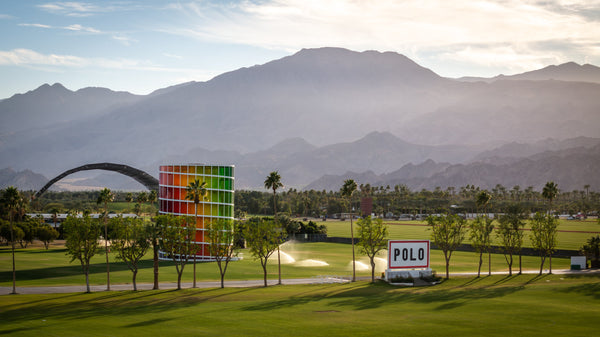
Spectra, the rainbow-colored tower that has become one of Coachella's best-known landmarks, is a particularly clear example. Its creator, NEWSUBSTANCE, describes it as a permanent feature of the festival. Structural engineer DeSimone also identifies it as a permanent installation. [7]
The distinction is visible in my January 2025 photographs: the crowds are absent, but Spectra is still part of the landscape. A quiet view is not necessarily an empty one.
There is a substantial venue beneath the festival, too. Empire's own materials describe established gardens, indoor event space, a permanent covered area at Hacienda del Toro, and the landscaped setting around Medjhool Lake. Those spaces give the property uses beyond a single April production. [8]

Some artworks leave—and become part of the valley
Leaving the festival grounds does not always mean disappearing.
If you have driven through the roundabout at Jefferson Street and Avenue 52 in La Quinta, you have already encountered one example: the enormous metal Roadrunner sculpture.
The City of La Quinta says it began as an installation at the 2014 Coachella festival. The city acquired it from Goldenvoice in 2015 for its Art in Public Places collection. DKLA Design, led by Don Kennell and Lisa Adler, created the piece. [9]
That is a different kind of festival legacy. A sculpture made for a temporary audience becomes a familiar landmark for people driving to work, meeting friends or visiting the valley years later.
Spectra and the Roadrunner offer two concrete answers to the question of where the art goes: one remains at the venue; the other found a lasting public home nearby. Each installation has its own story.

What about the grass?
The lawns are part of what makes Coachella feel so unusual: a large gathering on green fields, with desert mountains behind it.
Protecting that surface begins before the audience arrives. In its 2024 project account, eps america described using protective ground-cover rolls around sensitive turf during construction and equipment load-in. The need to protect the grounds is built into the work, rather than beginning only after the last show. [2]
Afterward, removing equipment and caring for the underlying landscape are separate tasks. The sources reviewed for this article do not establish that the entire property gets new sod every year, or that every lawn follows one fixed recovery schedule.
It is also worth separating festival wear from the valley's seasonal practice of winter overseeding. Repairing a worn area and managing a lawn for a different season answer different questions.
My January photographs show broad maintained fields between events. They document how the property looked on that date; they do not show the intervening maintenance work.
There is a calendar between Aprils
Coachella has made these grounds famous, but the property has a life beyond Coachella.
Goldenvoice's 2021 agreement gave it year-round operational control of Empire Polo Club. AEG described the arrangement as allowing a wider range of sporting events, special events and private functions. [10]
Professional soccer is one example. The Coachella Valley Invitational brought MLS and NWSL clubs to Empire for preseason matches in February 2026. The same destination associated with headliners and enormous crowds became a place to watch teams prepare for their seasons. [11]
Another use was less obvious: AEG reported that a free community healthcare clinic operated at Empire from February 27 through March 1, 2026. The site served a different public need with a very different kind of temporary setup. [12]
Weddings and private events use the property's established venue spaces as well. The April festival is its most visible transformation, not its only purpose.

Can you see the grounds outside festival season?
The practical way to experience Empire outside Coachella is through an event or a permitted visit. It is a working venue with event-specific access, rather than a park you can assume is open for an afternoon wander.
Begin with the Empire Polo Club guide, then check the organizer's current admission and arrival instructions. The official venue website lists public events and provides information for arranged venue visits. A ticket or invitation for one event does not establish access to the entire property. [8]
If what interests you is the festival's lasting footprint, the Roadrunner offers a different starting point. You can also use the Indio and Coachella day-trip guide to explore the cities beyond the gates.
For the longer story of how this location became a worldwide destination, read the history of Coachella.
The last song closes the audience's weekend. After that, equipment moves, useful goods find new owners, some artworks stay and others begin another chapter. Eventually the quieter landscape becomes visible again—with a great deal of work between the two views.
Frequently asked questions
How long does it take to take down Coachella?
There is no single verified public countdown for the entire site. Stagecoach follows Coachella, and the work includes a changeover before the April festival season ends. A 2024 contractor account describes Coachella teardown overlapping with Stagecoach construction. Different structures, equipment and grounds tasks follow different schedules.
Does everything at Coachella get taken down?
No. Spectra’s creator and structural engineer describe the tower as a permanent installation. The property also has established event spaces and landscaped grounds. Temporary production equipment and permanent venue infrastructure should not be treated as the same thing.
What happens to camping gear left after Coachella?
Galilee Center has worked with Goldenvoice to collect usable donated items, then clean and sort them for distribution or thrift-store sale to support its programs. Its May 2024 report recorded approximately 80,000 pounds across three collection Mondays. Personal lost property follows Coachella’s separate Lost & Found process.
Is all the grass replaced after Coachella?
The sources reviewed do not establish that the entire property gets replacement sod every year. Turf protection, repairs after heavy use and seasonal winter overseeding are different activities. A single photograph does not establish the site’s maintenance schedule.
Can you visit Empire Polo Club when Coachella is over?
Visit through a scheduled public event or another permitted arrangement, and follow that organizer’s entry instructions. Empire is a working venue, not a public park with unrestricted daily access. Its calendar includes uses beyond April, such as sporting events and private functions.
Sources and photograph notes
Researched October 27, 2026. Historical examples are dated in the text. This is a sourced explainer, with original photographs; it does not represent an on-site interview with the teardown crews.
- City of Indio: 2026 festival traffic plan and dates. 2026; confirms Coachella April 10–12 and 17–19, followed by Stagecoach April 24–26.
- eps america: Coachella and Stagecoach installation account. May 23, 2024; firsthand contractor account of barricades, turf protection and simultaneous festival changeover.
- Peterson’s — interview with Steve Lieberman: Festival Production Designer. Published interview about the disciplines and working conditions involved in major-festival production; general production context, not a teardown schedule.
- Galilee Center: Galilee Receives Tons of Donations from Coachella Festival. May 3, 2024; approximately 80,000 pounds collected across three Mondays. This is a historical example, not a current annual estimate.
- Coachella: Official Lost & Found. Current inventory and published claims/return process; accessed October 27, 2026.
- Palm Springs Life — Ellen Alperstein: Inside the Sustainability Efforts of Coachella Festival and Stagecoach. March 28, 2025; reporting with AEG and nonprofit representatives about food recovery and separate material-recovery streams.
- NEWSUBSTANCE and DeSimone: SPECTRA project records. Both creator and engineer describe Spectra as permanent. Engineering account: DeSimone: Spectra Coachella.
- Empire Polo Club Events: Venue spaces and official event information. Established gardens, indoor spaces and covered venues; public-event listings. Check the individual organizer for access.
- City of La Quinta: Roadrunner — Art in Public Places. September 14, 2023 newsletter; identifies the 2014 festival origin, 2015 acquisition, creators and location at Jefferson Street and Avenue 52.
- AEG / Goldenvoice: Year-round Empire Polo Club operations agreement. 2021 agreement; broader sporting, special-event and private-function uses.
- Coachella Valley Invitational: 2026 match schedule announcement. December 17, 2025; MLS and NWSL preseason program at Empire, February 7–21, 2026.
- AEG: Community healthcare access at Empire Polo Club. Reports the clinic held February 27–March 1, 2026.
Photographs
All photographs by Mark Miller. The festival image was made in 2022. The Empire Polo Club off-season photographs were made January 24, 2025. The Roadrunner photograph was made in 2024. No AI-generated images are used. Off-season photographs document those dates, rather than the teardown of the 2026 festivals.