





How Palm Springs Became an LGBTQ+ Capital
The businesses, care networks and public milestones that turned a desert retreat into a community.

Palm Springs is famous for its mountains, modernist homes and poolside weekends. But one of its most important transformations happened through people: LGBTQ+ residents and visitors who built businesses, found one another, cared for neighbors and claimed a visible place in public life.
How did a desert resort become an LGBTQ+ capital? The answer stretches from Hollywood privacy to volunteer health care, from hotel gathering places to the council chamber. Pride is the most visible expression of that history. The community behind it took decades to build.
- Palm Springs’ LGBTQ+ identity grew through everyday connections as well as public milestones.
- Volunteer care, business networks and community organizations helped make that identity durable.
- The history extends across the Coachella Valley and continues through art, archives and civic life.
A resort town offered room to exhale
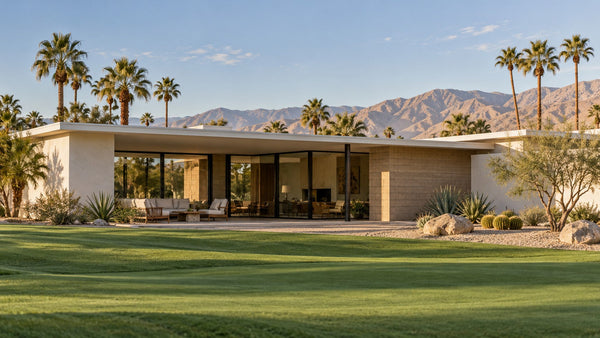
The early connection was partly about distance. Palm Springs gave people in the entertainment industry a retreat from Los Angeles and the scrutiny that came with it. During the studio era, an actor’s public image could determine a career. A desert home or a private gathering offered a measure of separation from that pressure.[1]
That helps explain the appeal of the desert, but privacy had limits. Being able to relax among trusted friends was different from being able to live openly everywhere. The familiar Hollywood-hideaway story describes one part of the city’s past; it cannot stand in for the experience of every resident.
Creative work also connected the communities. William Haines, the actor who became an interior designer, and his partner, Jimmie Shields, built a design business with prominent Hollywood clients. Haines’ work became part of the design culture associated with Palm Springs.[1] The connection is a useful reminder that LGBTQ+ history belongs in a discussion of the city’s interiors and visual identity as well as its nightlife.
Businesses made connection part of daily life
A destination becomes a community when people can build a life around it. Hotels and social venues create places to meet, but businesses also mean livelihoods, professional relationships and reasons to return. The question gradually becomes larger than where to spend a weekend: where can I work, find customers and get to know people?
The Desert Business Association dates to 1979. Its work promoting LGBTQ+ and allied businesses includes networking, education and a member directory.[2] That is a less glamorous chapter than a celebrity pool party, but it helps explain how a social presence can become something durable.
Seen this way, hospitality and business networks did more than give the city a recognizable visitor identity. They offered repeated opportunities for connection. A person arriving without an established circle could find a starting point. A small business could find support. Those everyday relationships deserve a place alongside the better-known milestones.
The AIDS crisis made care essential
Any account of this history has to make room for loss. Desert AIDS Project began in Palm Springs in 1984, founded by community volunteers responding to the HIV/AIDS epidemic.[3] Its origin places care near the center of the city’s LGBTQ+ story.
It is tempting to tell the history of a destination through openings, festivals and famous names. The founding of Desert AIDS Project asks us to look at a different kind of work: people organizing because their neighbors needed help. Community was something people had to practice, especially during a crisis.
The organization is now DAP Health, with a broader health care mission that serves people across the region.[3] That expansion does not erase its beginnings. It shows how a response to an urgent local need can become an institution with a much wider reach.
This is one reason the phrase “LGBTQ+ capital” means more than a large celebration or a busy hotel season. It also describes the organizations people built to sustain one another when celebration was not enough.
Pride brought the community into public view
Palm Springs Pride began with Sizzle, a dinner and variety show at the Riviera Resort in 1986. The first parade followed in 1992, traveling along Williams Road and Mesquite Avenue to Demuth Park. In 1995, the celebration moved from Memorial Day weekend to November; the parade moved to Palm Canyon Drive in 1997.[4]
Those changes describe an increasingly public presence. A gathering inside a ballroom and a parade through the center of town make different claims on a city. The latter puts community identity into shared space, where residents and visitors can encounter it together.
There were other ways to belong, too. Pride’s local chronology records the founding of the Desert Women’s Association in 1986.[4] A complete history needs room for women’s organizations, smaller gatherings and friendships that may never appear in the most familiar photographs.
In 2026, Greater Palm Springs Pride marks its 40th anniversary.[10] The anniversary is a reason to look beyond the weekend itself and ask who did the work that made it possible.
Visibility reached City Hall, with unfinished work

The city’s civic milestones also have names: Ron Oden became its first openly gay mayor in 2003, and Lisa Middleton became its first transgender mayor in 2021.[4]
In 2017, Palm Springs elected an entirely LGBTQ city council, a milestone recognized by the California State Legislature the following year.[5] Representation had reached the institution responsible for governing the city.
That matters beyond symbolism. A community discussed mainly as a visitor market occupies a different position from one represented in public decision-making. The council milestone belongs in the same history as the businesses, volunteers and celebrations that preceded it.
But the story is not an uninterrupted march toward acceptance. Pride’s chronology also records Police Chief Bryan Reyes’ 2021 apology for the department’s role in the 2009 Warm Sands sting operations.[4] Holding that episode beside the council milestone gives a more honest picture than treating a welcoming reputation as proof that discrimination had disappeared.
A city can have meaningful achievements and still owe people acknowledgment and repair. Both belong in its history.
The community reaches beyond one neighborhood
Palm Springs is the best-known name, but LGBTQ+ life in the desert does not stop at its city limits. The LGBTQ Community Center of the Desert describes a regional mission, with programs addressing connection, isolation and practical support. Its work includes the Community Food Bank and services for people of different ages and identities.[6]
The Center’s account of its eastern Coachella Valley work is particularly important. It describes organizing shaped by young people, families and local partners, leading to the opening of The Center Coachella in 2021.[7] That history broadens the picture beyond the resort districts and the experiences most often marketed to visitors.
It also changes the question. Instead of asking whether the desert has one welcoming neighborhood, we can ask how people find community where they actually live. A support group, a family program or a place for young people to gather may matter as much as a famous street.
Art and archives carry the story forward

Palm Springs Art Museum established Q+ Art in 2023 to advance recognition of LGBTQ+ artists through exhibitions, collecting, programs and education.[8] That work places queer art within the museum’s wider account of culture, with opportunities to revisit whose stories and work receive attention.
Preservation matters just as much. Founded in 2019, LGBTQ+ History & Archives of the Desert collects and preserves the region’s LGBTQ+ history and works to make it accessible.[9] Without that effort, ordinary records of community life can disappear while the same handful of famous stories continue to circulate.
An archive gives future writers a way to ask better questions. Who organized the event? Who raised the money? Whose experience was missing from the public record? The history gets stronger when it can include people who were essential without being famous.
See the city with that history in mind
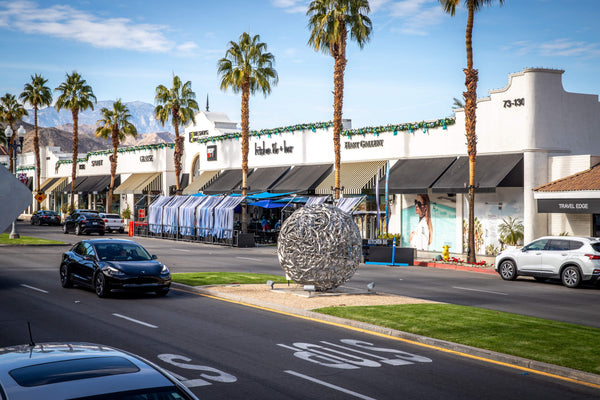
You do not need to treat Palm Springs as a museum to notice these layers. On a visit to downtown Palm Springs, consider how businesses and public gathering places help people find one another. At City Hall, the words above the council chamber entrance—“The People Are the City”—offer a useful prompt to think about representation.
At Palm Springs Art Museum, check the current Q+ Art program. To go deeper, explore the archives’ collections or learn about the work of DAP Health and The Center through their own websites. These are different entry points into the same larger story.
Palm Springs became an LGBTQ+ capital through accumulated effort: making places to meet, supporting businesses, caring for neighbors, organizing publicly and preserving what happened. Its reputation makes more sense when we see the people and institutions behind it.
Questions about Palm Springs’ LGBTQ+ history
Why is Palm Springs known as an LGBTQ+ destination?
Its reputation developed through a combination of resort privacy, LGBTQ+ and allied businesses, social connections, volunteer organizations, public celebrations and civic representation. No single celebrity or event explains the whole story.
When did Palm Springs Pride begin?
The first celebration, Sizzle, was held in 1986. The first Pride parade took place in 1992. Those are separate milestones.[4]
Is this history limited to gay men in Palm Springs?
No. Women’s organizations, transgender residents, young people, families and communities throughout the Coachella Valley belong in the story. The Center’s eastern-valley history provides one useful starting point for a broader view.[7]
Where can I learn more about local LGBTQ+ history?
Start with LGBTQ+ History & Archives of the Desert, Pride’s historical timeline, and the institutional histories of DAP Health and The Center. Palm Springs Art Museum’s Q+ Art program adds an arts perspective.
How can I find current Pride events and community programs?
Use the official Palm Springs Pride website for the current festival program, and the websites of The Center and Palm Springs Art Museum for their latest offerings. Confirm details directly before visiting.
Sources and photo notes
Sources reviewed October 27, 2026. Historical dates are attributed to the organizations’ own records or the source identified below. Interpretation connecting those milestones is Desert Oasis Insider’s editorial synthesis.
- Palm Springs Bureau of Tourism: Palm Springs LGBTQ+ History: From Hollywood Hideaway to LGBTQ+ Destination. August 23, 2026; resort, Hollywood and design context.
- International LGBTQ+ Travel Association: Desert Business Association member profile. Association history and business networking mission; undated.
- DAP Health: About Us. Institutional history, 1984 founding and expanded mission; undated.
- Greater Palm Springs Pride: History. Local chronology, including 1986, 1992, 1995 and the 2021 police apology; undated.
- City of Palm Springs: California State Legislature honors Palm Springs City Council. June 8, 2018; recognition of the all-LGBTQ council elected in 2017.
- The LGBTQ Community Center of the Desert: About Us. Mission, programs and regional scope; undated.
- The LGBTQ Community Center of the Desert: History of the LGBTQ Center in the Eastern Coachella Valley. Youth-led priorities and opening of The Center Coachella in 2021; undated.
- Palm Springs Art Museum: Q+ Art. Initiative founded in 2023 and its collecting, exhibition and education mission; undated.
- LGBTQ+ History & Archives of the Desert: Mission, Vision & History. Founding in 2019 and preservation mission; undated.
- Greater Palm Springs Pride: Official festival website. 2026 anniversary and current program. Check the official schedule for event details.
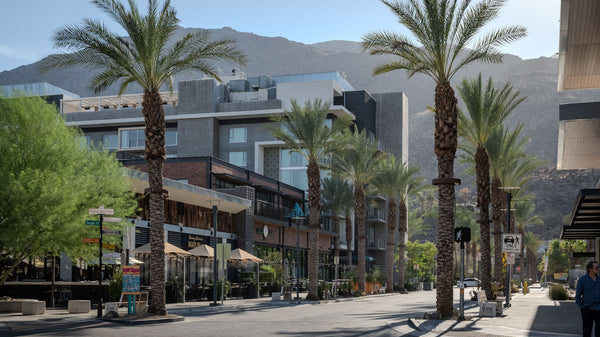
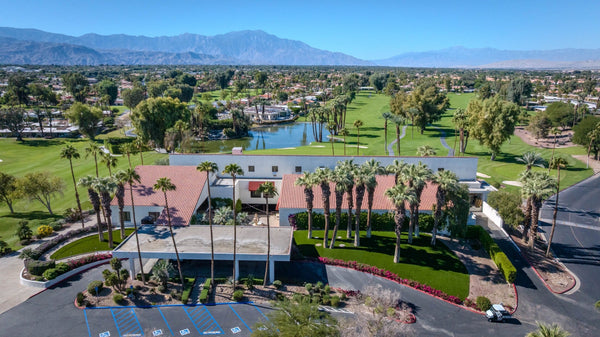
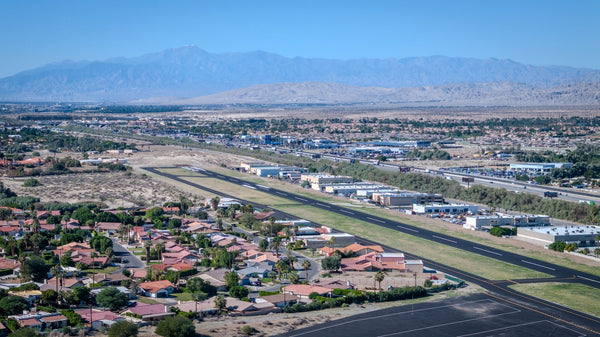
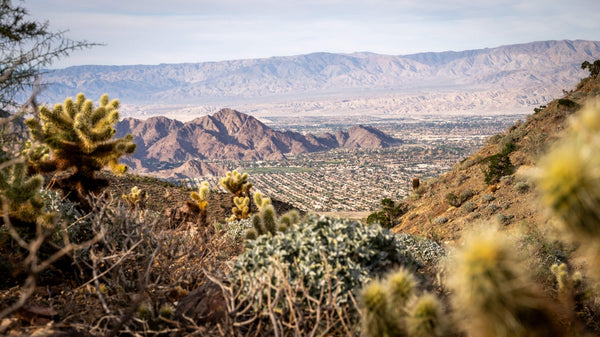
Photo notes: All three photographs are by Mark Miller. Downtown Palm Springs: August 12, 2026. City Hall: 2024. Palm Springs Art Museum: October 20, 2026. These contemporary location photographs do not depict the historical events discussed. No AI-generated images are used in this article.


