
















Gram Parsons and the Joshua Tree Legend
The records, the desert retreat and the events behind one of rock music’s most persistent stories.

Gram Parsons has two stories that can easily become entangled: the music he made and the events surrounding his death during a visit to Joshua Tree.
One leads through the Byrds, the Flying Burrito Brothers and his recordings with Emmylou Harris. The other leads to a motel room, a coffin taken from an airport and a desert landmark that became a place of remembrance.
Both belong in the history. But the second can become so absorbing that the first disappears. Following the records before the legend gives a fuller picture of why Parsons matters—and why people still connect his name with Joshua Tree.
- Listen before following the legend. Parsons’s work with the Byrds, the Flying Burrito Brothers and Emmylou Harris is central to his legacy.
- Keep the locations distinct. The Joshua Tree Inn, the Cap Rock remembrance area and his burial in Louisiana are different parts of the story.
- Separate records from retellings. Accounts of a pact and the exact cremation site require attribution and care.
The musician before the myth
Gram Parsons was born in Florida in 1946 and grew up partly in Waycross, Georgia. Country music, gospel, rhythm and blues, and early rock all belonged to the world he heard as a child. He later moved through the International Submarine Band, the Byrds and the Flying Burrito Brothers before making his solo records.[2]
That path matters because the Joshua Tree story can make him seem like a character who appeared in the desert with a legend already attached. His importance began with the music.
Parsons called his approach Cosmic American Music. The phrase allowed country, soul, gospel and rock to coexist without requiring him to choose one identity. The Rock & Roll Hall of Fame describes that mixture as central to his influence.[1]
He was part of a larger conversation, not the lone inventor of country rock. His particular contribution was the conviction with which he brought those sounds together—and the musicians he brought into that conversation.
A short catalog with a long reach
The recordings provide a useful route through the story. With the Byrds, Parsons contributed to Sweetheart of the Rodeo in 1968. With Chris Hillman, he then co-founded the Flying Burrito Brothers, whose The Gilded Palace of Sin followed in 1969.[1]
The solo albums GP and Grievous Angel brought his singing together with Emmylou Harris. GP appeared in 1973; Grievous Angel was released in 1974, after his death.[2]
Harris is essential to hearing this music as a collaboration. The interaction between their voices gives the recordings much of their character. Listening for that exchange offers a more revealing introduction than treating every song as a clue to how Parsons would die.
There is also a difference between influence and popularity during an artist’s lifetime. Parsons did not live to see the full growth of his reputation. Later musicians and listeners kept finding uses for the records he left behind.
Why Joshua Tree belongs in the story
The desert connection was real. A history prepared for the National Park Service describes Parsons’s visits to what was then Joshua Tree National Monument, including his enjoyment of the Cap Rock and Wonderland of Rocks areas. It also places him in the landscape with friends from the music world, including Keith Richards and Chris Hillman.[4]
This was a place he visited, rather than the source of his entire biography. The distinction helps preserve both sides of the story: the Southern musical background he brought with him and the California landscape that became associated with him.
Joshua Tree’s setting can be an invitation to listen differently. The open space and the distance from a city’s routines give a listener room to pay attention. That is a way to experience the music today, not evidence that a particular boulder inspired a particular song.

The inn and September 1973
Parsons died on September 19, 1973, at age 26, after a drug overdose during a stay at the Joshua Tree Inn. Room 8 became the room most closely associated with that final visit.[5]
The inn and the national park are separate places. The Joshua Tree Inn stands along Twentynine Palms Highway in the town of Joshua Tree. Its own history dates the inn to 1949.[7]
That geography sometimes disappears in compressed retellings. Parsons did not die beside Cap Rock. The park became part of the events that followed his death.
The loss was a young man’s death as well as a turning point in music history. The unfinished possibilities of his life deserve space alongside the stories that later made him famous.
What happened after his death
Parsons’s road manager, Phil Kaufman, and friend Michael Martin removed his coffin from Los Angeles International Airport, where it was awaiting transport to Louisiana. They took it to Joshua Tree and attempted to cremate his body in the desert. The National Park Service’s history records their involvement and the subsequent court fines.[4]
Kaufman’s explanation was that he was honoring a pact with Parsons about what should happen after death. That explanation should be attributed to the people involved, rather than treated as independent proof of every detail in later versions.
The attempted cremation did not consume all the remains. They were recovered and ultimately buried in Louisiana. Cap Rock is not Parsons’s grave.[6]
The difference is substantial. A story about an attempted desert farewell gradually became a story of a musician permanently resting in the place he loved. The latter is a powerful image, but it is not an accurate description of his burial.
Cap Rock and the growth of a legend
Cap Rock became a place where fans remembered Parsons. Over time, that association took on a life of its own.
Reporting by Robert Fulton for LA Weekly in 2013 drew an important distinction: the area attracting fans’ tributes was not necessarily the exact location of the attempted cremation. A National Park Service ranger interviewed for the story placed the actual location elsewhere nearby.[5]
That makes a precise “this happened on this rock” claim harder to support than many retellings suggest. The same reporting describes visitors from around the world seeking Room 8, alongside stories of unusual experiences at the inn. Those accounts document the growth of a fan culture; they do not establish a supernatural explanation.
A place can carry meaning without every story about it being literally true. For Parsons’s admirers, the inn and the park connect an artist heard on records with a landscape that can be visited. That emotional connection is part of the history too.
A listening route beyond the legend
These four albums keep the musical story in view. They follow his work across bands and partnerships, rather than reducing it to a single signature song.[3]
- The Byrds — Sweetheart of the Rodeo (1968). Start with the meeting of a prominent rock band and country material.
- The Flying Burrito Brothers — The Gilded Palace of Sin (1969). Follow Parsons and Hillman into a new group and a more concentrated version of their shared direction.
- Gram Parsons — GP (1973). Listen for the partnership with Emmylou Harris and the mixture of originals and interpretations.
- Gram Parsons — Grievous Angel (1974). Hear the final studio album as a collection of performances, not simply as a postscript to his death.
The official Gram Parsons music archive provides another starting point. His work also connects naturally with the wider desert music histories of Palm Desert’s rock scene and Pappy & Harriet’s. These are different generations and different stories, joined by the region rather than one continuous musical style.
Remembering without leaving a mark
If this history brings you to Joshua Tree, keep the locations distinct: the inn is an operating lodging business, while Cap Rock is a public park landscape. Check with the inn before assuming access to guest areas. For the park, use the National Park Service’s Cap Rock information when planning a visit.
A personal tribute does not need to become a physical mark. Leave rocks unpainted and take objects and litter home. Listening to a record, sharing a song or learning the history can honor the connection without changing the landscape.
Parsons’s recognition continues to grow. The Rock & Roll Hall of Fame named him to its class of 2026, acknowledging the reach of his music more than fifty years after his death.[1]
The Joshua Tree legend may be what draws someone to his name. The songs are a reason to stay.
Frequently asked questions
Who was Gram Parsons?
Gram Parsons was a singer and songwriter who helped shape country rock through the International Submarine Band, the Byrds, the Flying Burrito Brothers and his solo recordings. He called his blend of musical traditions Cosmic American Music.
What connects Gram Parsons to the Joshua Tree Inn?
Parsons stayed at the Joshua Tree Inn, and Room 8 is associated with his final visit. He died on September 19, 1973, at age 26, after a drug overdose. The inn is in the town of Joshua Tree, separate from the national park.
What happened to Gram Parsons’s body after his death?
Phil Kaufman and Michael Martin removed his coffin from Los Angeles International Airport and took it to Joshua Tree, where they attempted a cremation. The remains were recovered and subsequently buried in Louisiana.
Is Gram Parsons buried at Cap Rock?
No. Cap Rock became a place of remembrance, but Parsons’s remains were buried in Louisiana. Reporting that cites a National Park Service ranger also distinguishes the familiar tribute spot from the actual location of the attempted cremation nearby.
Which Gram Parsons records are a good starting point?
Start with Sweetheart of the Rodeo by the Byrds, The Gilded Palace of Sin by the Flying Burrito Brothers, and the solo albums GP and Grievous Angel. The solo recordings feature his vocal partnership with Emmylou Harris.
Sources and image notes
Researched October 27, 2026. This is an original synthesis of published music history, official records and reporting. It does not claim firsthand attendance, new interviews or certainty about every detail in later retellings.
- Rock & Roll Hall of Fame: Gram Parsons: Class of 2026. Musical background, collaborators, recordings and 2026 recognition. The article describes his selection for the class without treating the later induction ceremony as already completed.
- John McLeod / New Georgia Encyclopedia; revised April 9, 2021: Gram Parsons. Biographical and recording chronology. Its account of the attempted cremation is not relied on for the extent of cremation; reporting below documents recovered remains and Louisiana burial.
- Gram Parsons Estate: Official music archive. Recording catalog and suggested starting points.
- National Park Service, March 2015: Joshua Tree National Park: A History of Preserving the Desert. Printed pages 207–208: visits to the monument and events after his death. The account cites contemporary incident reporting and later historical sources.
- Robert Fulton / LA Weekly, August 15, 2013: The Cult of Gram Parsons Lives on in Joshua Tree. Room 8, fan remembrance, Louisiana burial, and ranger George Land’s distinction between the tribute spot and the location of the attempted cremation.
- SFGATE, November 2, 2025: Reporting on Gram Parsons and Joshua Tree. The attempted cremation, recovery of remains and subsequent burial. The pact is treated as the participants’ reported explanation, not an independently established detail.
- Joshua Tree Inn: Official inn and room information. Location and 1949 origins. See also the official Room 8 page. Guest access and availability should be confirmed with the inn.
- National Park Service: Hike Cap Rock. Current visitor information for the park landscape.
- Leave No Trace: Leave What You Find. Guidance to preserve natural settings and avoid leaving alterations or objects.
Image notes
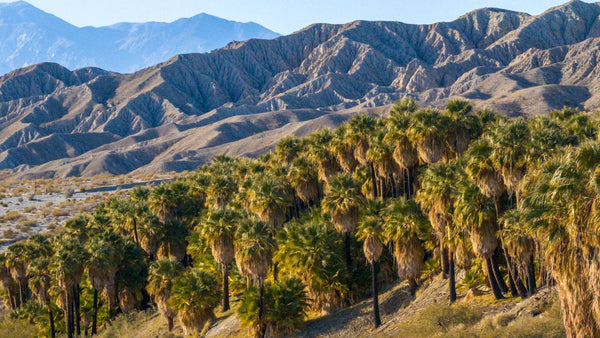
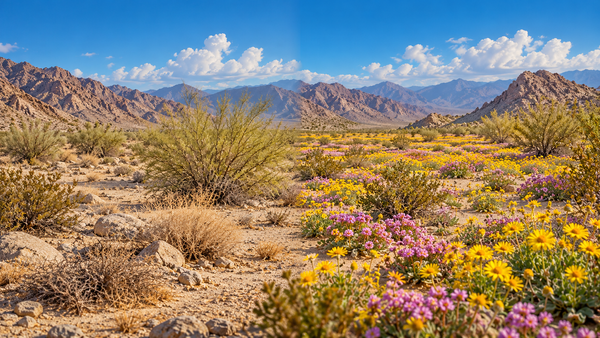
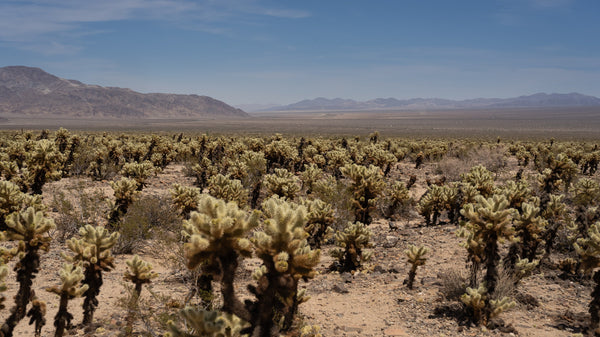
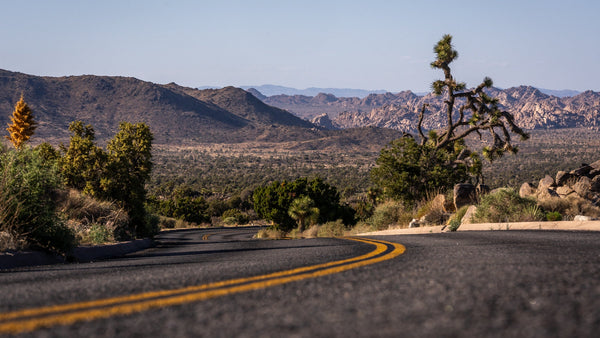
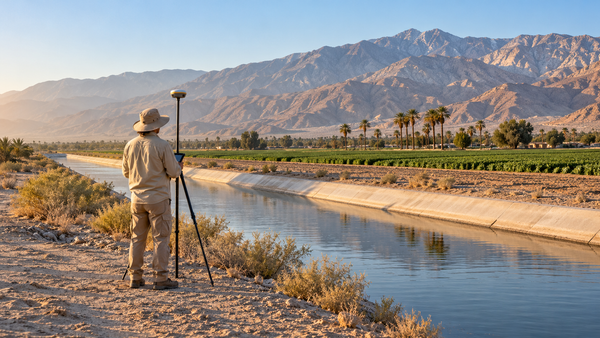
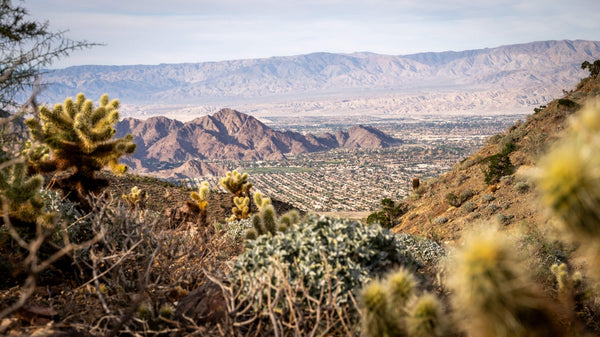
The featured image is an AI-generated imagined portrait scene of Gram Parsons. It uses a portrait reference and Mark Miller’s October 19, 2025 photograph of Joshua Tree’s Hall of Horrors as visual references. It is not a historical photograph, not Cap Rock, and not a depiction of Parsons’s final visit. The landscape photograph within the article is Mark Miller’s original Hall of Horrors image.


