














U2’s The Joshua Tree: The Desert Behind the Photos
The cover, the original tree and the California landscapes behind a lasting musical image.

Some album covers become so familiar that we stop looking at them. U2’s The Joshua Tree is one of them: four musicians, a broad desert landscape and a visual identity that seems inseparable from the music.
Look again, and a small puzzle appears. The tree that gave the album its name is not in the famous front-cover photograph. Nor was that cover made in Joshua Tree National Park.
The story moves between Death Valley, a solitary tree near Darwin and the larger California desert. It is also a story about photography: how a real landscape becomes an image that people carry around for decades.
- Separate the locations. The front cover shows Zabriskie Point; the original album tree stood near Darwin. Joshua Tree National Park is a separate destination.
- Look beyond the silhouette. Corbijn’s photographs and Steve Averill’s design turned a desert journey into a lasting visual identity.
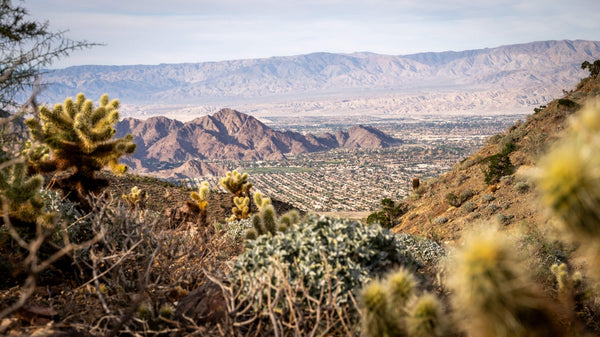
- Explore through original photographs. Mark Miller’s park images show living Joshua trees, with each location distinguished from U2’s 1986 shoot.
One album, three different places
There are three landscapes to keep separate when looking at The Joshua Tree: the place on the front cover, the place where the band posed with the tree, and the national park that shares the album's name.
The cover photograph was made at Zabriskie Point in Death Valley. The solitary Joshua tree associated with the album stood near Darwin, California. Joshua Tree National Park is a different destination farther south. The name ties them together in people's imagination, but it does not put them in the same place. [1]
That distinction makes the story more interesting. The album's visual identity came from a journey through the California desert, rather than one neatly contained location.
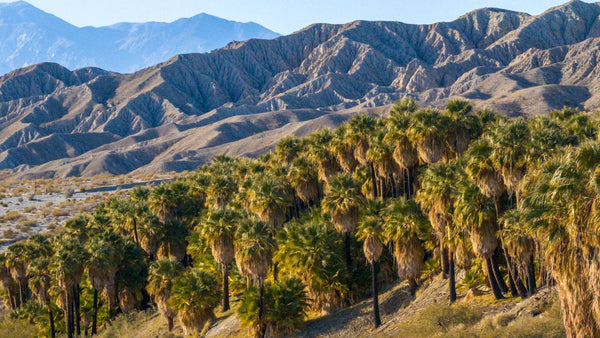
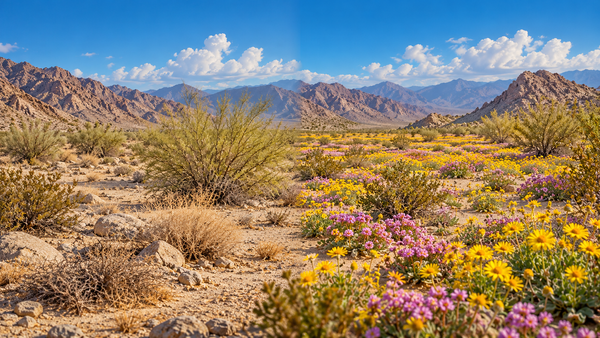
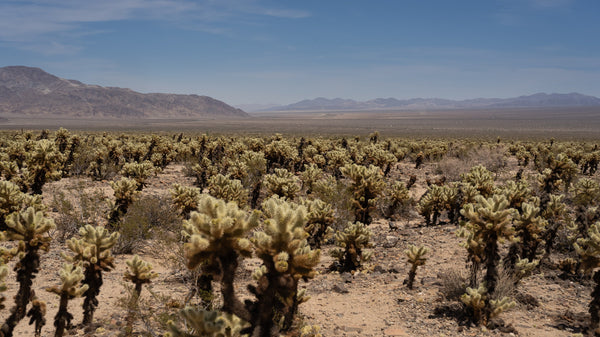
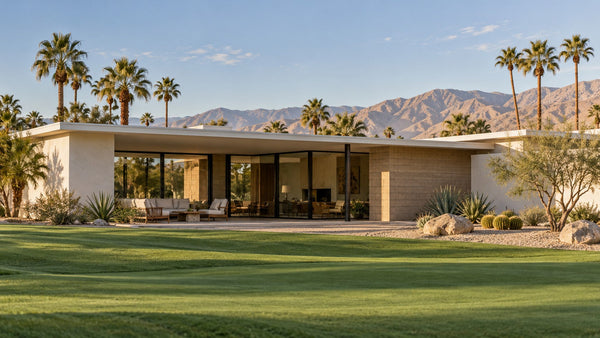
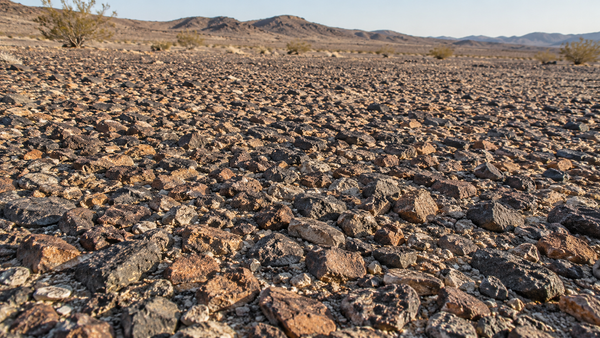
The photographs accompanying this article are my own images of Joshua trees and the landscape around Joshua Tree National Park. They show the living desert that makes the subject so compelling. They are separate from Anton Corbijn's 1986 photographs of U2 and the original album tree.
A search for an image of America
In December 1986, photographer Anton Corbijn traveled through the California desert with U2 and designer Steve Averill. The images they made would accompany an album released on March 9, 1987. [2]
The working title was The Two Americas. In his later account, Averill described a search for places where the country's real and imagined identities could meet. It was an artistic problem as much as a location search: how could a landscape express something the music was reaching toward? [3]
The desert offered scale, distance and visual simplicity. A person could look small in it. A single tree could become the most important shape in the frame. In that setting, the absence of buildings and crowds became an active part of the image.
There is a useful photography lesson here: a location can do more than provide a background. It can change the meaning of the person or object you put in front of it. A band photographed against a city street tells one story; the same band standing before an enormous, spare landscape tells another.
The famous cover does not show the famous tree
Look closely at the front cover and the surprise is straightforward: the image is of the band and a broad desert landscape. The tree appears elsewhere in the album artwork. Averill specifically identifies the tree photographs with the inner sleeve and back cover. [3]
Zabriskie Point gives the front-cover landscape its distinctive character. The National Park Service describes an elevated view across eroded badlands, with Death Valley's salt flats and the Panamint Mountains beyond. The folds and ridges provide a strongly textured foreground against a much larger setting. [4]
My reading of the composition is that the people and the terrain hold each other in tension. The faces make the picture specific. The land opens it outward. You can recognize the musicians, but the frame keeps directing your attention beyond them.
Black and white strengthens that relationship. Color no longer competes for attention in the same way; differences in brightness, texture and silhouette become more prominent. The result feels deliberate and spare, with room for the listener's imagination.
A tree becomes a symbol
The tree near Darwin supplied a different kind of image: an individual form standing against open space. The location was found during the desert journey. The encounter helped shape the visual identity of the record, whose original working title gave way to The Joshua Tree. [1]
The plant is an unusually expressive photographic subject. Its trunk carries clusters of pointed leaves outward in uneven directions. Some branches rise; others bend or divide. A mature specimen can suggest a gesture without needing a person in the picture.
That is interpretation, not botany, but it helps explain why the shape works so well in photographs. You notice the outline first. Then you begin to notice the individual tree.
The original album tree later fell; published accounts date its fall to 2000. Its continuing association with the record is a reminder that an image can outlast its subject. A photograph preserves a particular encounter with a living thing, while the living thing continues to change. [1]

The living tree behind the familiar silhouette
A Joshua tree is a yucca, commonly identified as Yucca brevifolia, and one of the characteristic plants of the Mojave Desert. The National Park Service places it in the agave family. It is botanically quite different from the oaks or pines that many visitors associate with the word “tree.” [5]
Up close, the subject becomes more complicated than its silhouette. There are sharp leaf clusters, rough surfaces and layers of old growth. A wide landscape photograph emphasizes its outline; a closer frame can make the leaves and trunk the story.
There is also a relationship that a still photograph cannot reveal by itself: Joshua trees depend on specialized yucca moths for pollination. Their lives are tied to a small insect as well as to the landscape surrounding them. Our story about the Joshua tree and its moth follows that relationship more closely.
Knowing what you are looking at adds another layer to the photograph. The tree can still be a powerful symbol, while also being a particular living plant with a life beyond the meanings we give it.
More than one photographer was watching
Corbijn made the photographs central to the album's visual identity, but The Edge also photographed the desert trip. U2 later shared his recollections alongside a 2017 exhibition of those images. He described wanting to remember the experience, the landscape and that moment in time, without knowing what the photographs would eventually become. [6]
Those are two different reasons to make photographs. One is working toward an image that will represent a record. The other is paying attention to a journey as it happens.
Both are useful. A planned photograph asks what the frame needs to communicate. A personal photograph can preserve something you do not yet know how to explain. Years later, that apparently small moment may be the part you most want to revisit.

Photographing your own desert
You do not need to find U2's original location to explore what makes desert photography interesting. In Joshua Tree National Park, a different tree, a bend in the road or a gap between boulders can become the beginning of your own picture.
Start with separation. Look for a position where branches stand apart from the background. A small movement can untangle a silhouette that looked confusing a moment earlier.
Notice the space around the subject. The empty portion of a frame can communicate distance, quiet or scale. Filling every part of the picture is not always necessary.
Watch what the light selects. Backlight may emphasize an outline; side light may reveal texture. Before changing settings, notice which part of the scene has become important.
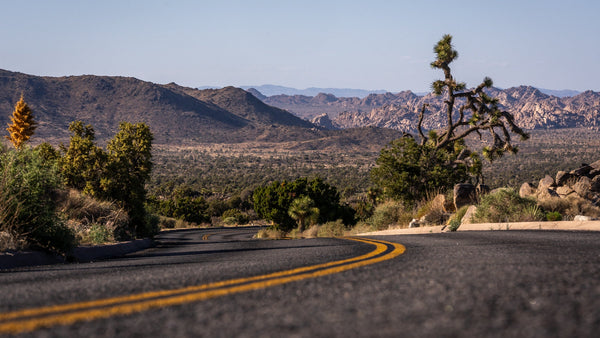
Make an image that belongs to your visit. A recognizable subject does not require a copy of someone else's composition. The road photograph at the top of this story includes the approach to the landscape—the experience of moving toward it—as well as the trees themselves.
For a place to begin exploring, see Keys View or the landscape around Hall of Horrors. These are Joshua Tree National Park destinations, not locations of the original album-cover photograph. Use designated parking, protect plants and stay clear of traffic when photographing near roads.
For the broader setting, Two Deserts, One Park explains why the landscape changes as you travel through the park.
Why the picture lasts
The photographs associated with The Joshua Tree show how a real place can become part of the way we hear music. The desert did not need to illustrate every song literally. It gave the record a visual world: space, weathered surfaces, human figures and the unmistakable shape of a tree.
The most useful thing to take from that story is a way of looking. Pay attention to what a place contributes before deciding what the photograph should be. Sometimes the subject you came to photograph is only part of the picture.
Frequently asked questions
Was U2’s album cover photographed in Joshua Tree National Park?
No. The familiar front-cover photograph was made at Zabriskie Point in Death Valley. The tree pictured elsewhere in the album artwork stood near Darwin, California.
Who photographed The Joshua Tree album artwork?
Anton Corbijn made the photographs, and Steve Averill designed the album artwork. The desert photography trip took place in December 1986.
Is U2’s original Joshua tree still standing?
No. Published accounts date its fall to 2000. The living trees in Mark Miller’s photographs here are different specimens in Joshua Tree National Park.
Why is the album called The Joshua Tree?
The working title was The Two Americas. The encounter with a solitary Joshua tree during the desert photo trip helped give the album its eventual name and visual identity.
Are the photographs in this article from U2’s photo shoot?
No. They are original photographs by Mark Miller from Joshua Tree National Park in 2025. They illustrate the landscape and living trees; they do not depict U2, the original album tree or the 1986 shoot.
Sources and photograph notes
Researched October 27, 2026. Photographic interpretation is the author’s reading of the images. Historical details are attributed below.
- uDiscover Music: U2 Album Covers Explained. May 10, 2026; cover location, tree near Darwin, artwork credits and the reported 2000 fall.
- U2: The Joshua Tree — official album information. Release date: March 9, 1987.
- Steve Averill interview — All About Jazz: The Joshua Tree artwork and the desert trip. April 16, 2017; firsthand designer account of the concept, journey and placement of the tree photographs.
- National Park Service: Zabriskie Point. Geography and landscape of the Death Valley viewpoint.
- National Park Service: Joshua Trees. Botanical identity and relationship with yucca moths.
- U2 / The Edge: Photographs by The Edge. November 23, 2017; recollections and photographs of the late-1986 desert trip.
- U2: The Two Americas. March 20, 2017; working-title context and the band’s conversation with NPR.
Photograph notes
All displayed photographs are by Mark Miller, made in Joshua Tree National Park in May and August 2025. They are not Corbijn’s album photographs, and the trees shown are not the original U2 tree. No AI images are used. The featured photograph is a 16:9 crop of Mark’s desert-road image; it was not used as another article’s featured image in the 445-article inventory checked for this story.


