












The Desert Road Trip Inside Songs for the Deaf
How Queens of the Stone Age turned a changing radio dial and the pull of Joshua Tree into an album.

Before the guitars take over, Songs for the Deaf asks you to enter a smaller space: a car, a radio, a voice coming through the speakers.
Queens of the Stone Age’s 2002 album is often remembered for the force of its playing. But another idea holds it together: an imagined drive from Los Angeles toward Joshua Tree, with the dial moving between stations as the landscape changes.[5]
That journey gives the record a particular kind of desert identity. The place is not simply something to look at. It changes what you hear.
- The road is the frame. A journey from Los Angeles toward Joshua Tree gives the album its changing radio landscape.
- The DJs are performances. The interludes create an imagined broadcast world, not a documentary route.
- Listen in sequence. The transitions and contrasting voices reveal more than the singles alone.
A radio dial for the desert
There is a familiar Southern California experience behind the album: leave the city, keep driving, and discover that the radio seems to inhabit a different world with every turn of the dial.
Josh Homme described that experience in a January 2003 interview with Hot Press. He remembered drives with little to listen to beyond the radio, stations giving way to religious broadcasts, and the release he felt traveling from Los Angeles back toward the desert. He called the journey a “decompression.”[1]
That is a useful word for an album that rarely sounds relaxed. The destination may promise space, but the journey there can still be crowded with noise. On Songs for the Deaf, changing stations becomes a way to move between different intensities, personalities and moods without losing the thread.
You do not need to have driven these roads to recognize the feeling. It can be the late train out of a city, the first empty stretch beyond the suburbs, or the moment a familiar signal starts breaking up. Something is being left behind, even before you know exactly where you are going.
The stations are part of the story
The radio voices are constructed performances. Friends and collaborators played exaggerated DJs, creating the impression of a dial moving through competing stations. They are part of the album’s fiction, rather than a field recording documenting an actual journey.[2]
Listen to what those interruptions do. A voice briefly takes charge, a station establishes its own little universe, and then the music changes the atmosphere again. The listener gets the pleasure of movement without having to follow a conventional plot.
There is humor in that arrangement, too. Radio promises company on a lonely road; here, the company can be ridiculous, abrasive or unsettling. Each station seems convinced it knows what you should hear. The driver’s power is to keep turning the dial.
That makes the record feel different from a playlist of heavy songs. The transitions establish a setting. Remove them, and the songs still work, but some of the imaginary world between them disappears.

One band, several voices
Released on August 27, 2002, Songs for the Deaf was Queens of the Stone Age’s third album. Its central players included Homme, Nick Oliveri, Mark Lanegan and Dave Grohl.[3][4] The changing vocal personalities make the radio premise especially effective.
Homme’s voice can sound composed even when everything around it is pushing hard. Oliveri’s attack on “You Think I Ain’t Worth a Dollar, but I Feel Like a Millionaire” feels like an abrupt change in pressure. Lanegan brings a lower, grainier presence to songs such as “Song for the Dead.” The credits and recordings place these voices within the same album, while each gives the listener a different person to follow.[4]
Grohl’s drums help hold that shifting world together. A useful listening exercise is to follow the rhythm beneath the vocal changes: the songs can feel very different on the surface while remaining physically direct.
Heard this way, that is one reason the road idea works. The view changes; the vehicle keeps moving.
Listen beyond the singles
“No One Knows” and “Go With the Flow” are inviting entry points. But the album becomes more interesting when you hear what surrounds them. Try a complete listen in sequence, with shuffle switched off, and pay attention to the handovers as much as the hooks.
- At the beginning: notice how quickly the radio framing gives way to the force of “Millionaire.” The opening establishes that the journey will have sharp changes in mood.
- Through the middle: follow the different singers and the spaces between the most immediate songs. Ask how the next track changes your memory of the one before it.
- Toward the end: compare the weight of “Song for the Deaf” with the acoustic textures of “Mosquito Song.” The change can feel like stepping out of a loud room into a much larger night.
These are listening suggestions, not a claim that each song corresponds to a particular town or mile marker. The album offers room for your own pictures.
Listen to Songs for the Deaf on Spotify or find the album on Apple Music.
The real desert behind the imaginary drive
For Homme, the desert was also home territory. Before Queens of the Stone Age, he played in Kyuss, part of the Palm Desert music community whose do-it-yourself shows helped shape his early musical life. That longer history is explored in How Palm Desert Helped Create Desert Rock.
There is a Joshua Tree connection in the music’s development as well. Reporting on the album traces some of its material back to the collaborative Desert Sessions at Rancho de la Luna.[5] That connection should not be stretched into a claim that the finished album was recorded entirely in Joshua Tree.
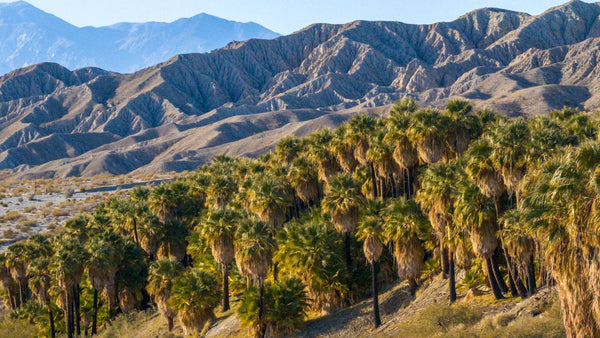
Keep the geography distinct, too. Palm Desert in the Coachella Valley and Joshua Tree in the high desert are different places. The album’s broad journey from Los Angeles toward Joshua Tree connects a musical world; it does not supply a precise sightseeing itinerary.
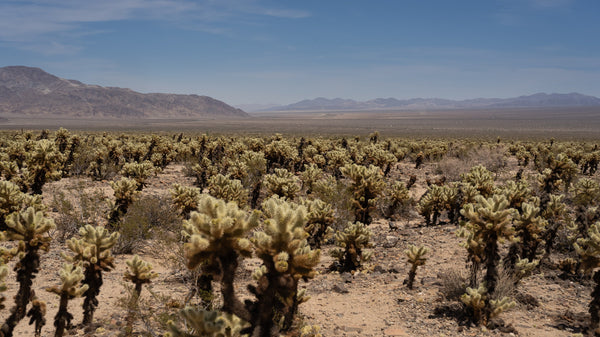
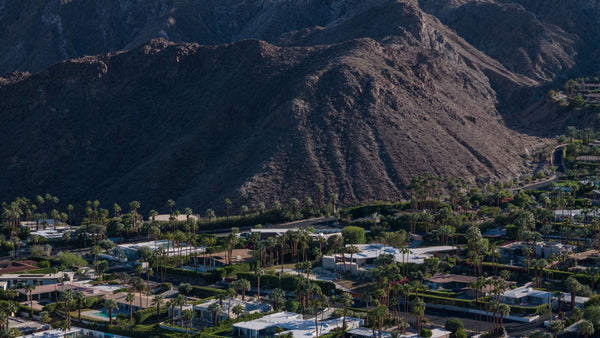
For a visitor, the more rewarding connection may be the change in scale: dense development giving way to open views, roads taking on longer curves, and the feeling of distance becoming harder to ignore. Those are impressions to bring to a listen, not evidence that any particular overlook inspired a particular song.
Why the drive still works
The album came from a world in which the radio could decide what happened next. You could search the dial, but you could not always choose the song. The interruptions, unfamiliar voices and imperfect reception were part of the trip.
That unpredictability survives inside Songs for the Deaf. Even when you know the record well, its sequencing lets one musical personality interrupt another. It turns a collection of performances into a place you can revisit.
The desert matters because it gives that movement a direction. You can imagine the city falling away, the signal getting stranger and the space outside the car growing larger. By the time the music changes again, the road has already done its work.
Frequently asked questions
What is the road trip behind Songs for the Deaf?
The album uses an imagined journey from Los Angeles toward Joshua Tree as a loose frame. Josh Homme connected its radio-dial idea to his experiences driving between the city and the desert. It is not a turn-by-turn route.
Are the radio stations on the album real broadcasts?
The radio interludes are performed pieces featuring exaggerated DJ characters. They evoke changing stations on a drive; they should not be treated as documentary recordings of a particular trip.
When was Songs for the Deaf released?
Queens of the Stone Age released Songs for the Deaf on August 27, 2002. It was the band’s third studio album.
Did Dave Grohl play on Songs for the Deaf?
Yes. Dave Grohl played drums on the album. Josh Homme, Nick Oliveri and Mark Lanegan are also central to the record’s lineup and contrasting vocal personalities.
Was the entire album recorded in Joshua Tree?
The desert connection does not mean the entire finished album was recorded there. Some material had earlier connections to the Desert Sessions at Rancho de la Luna in Joshua Tree. The album’s imagined journey, musical roots and recording history are distinct subjects.
Sources and image notes
Researched October 27, 2026. Historical details draw on the sources below. Descriptions of mood, sequencing and the suggested listening exercise are original editorial interpretation, not claims of a song-by-song geographic itinerary.
- Peter Murphy / Hot Press, January 6, 2003: Screaming Queens. Interview with Josh Homme about radio listening, journeys between Los Angeles and the desert, and the feeling of decompression. The article distinguishes these recollections from a literal track-by-track road map.
- Patrick Lyons / Stereogum, August 25, 2022: Songs for the Deaf Turns 20. Album lineup, performed radio interludes and vocal contributions.
- Apple Music / Interscope catalog: Songs for the Deaf. Album identification, third-album context and August 27, 2002 release date. Edition-specific track totals are not treated as universal.
- Qobuz / Interscope catalog: Songs for the Deaf: track listing and credits. Release metadata, track titles and credits, including Mark Lanegan’s vocal contribution to Song for the Dead.
- Paul Brannigan / Louder, August 27, 2026: The story behind Songs for the Deaf. The Los Angeles-to-Joshua Tree framing, Homme’s recollections, early desert-scene context and connections between earlier Desert Sessions material and the album.
Image notes
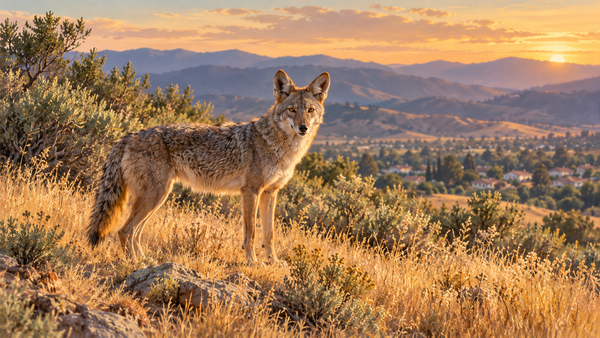
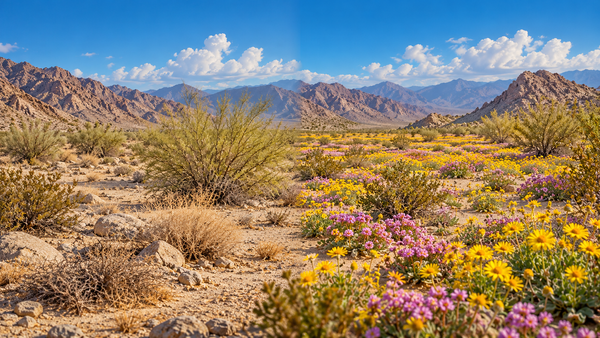
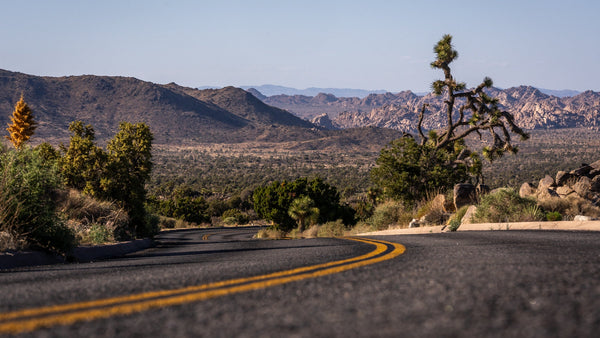
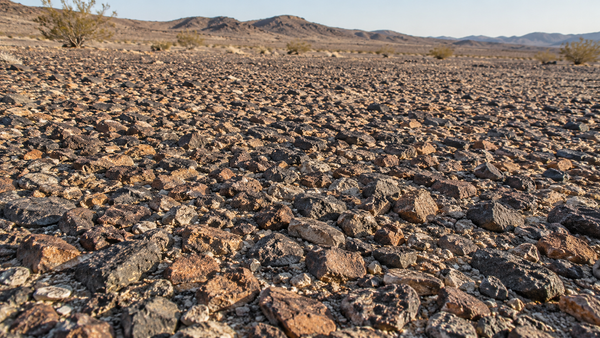
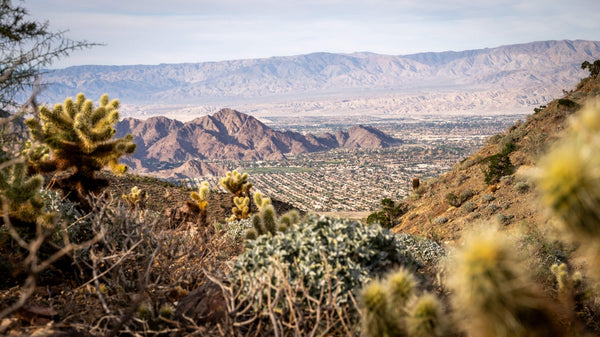
The featured image is an AI-generated illustration based on Mark Miller’s original Joshua Tree road photograph. The dusk lighting, windshield view and car interior are imagined. It is not a photograph of the band, a documented 2002 journey or an identified stop on the album’s route. The daytime landscape within the article is Mark Miller’s original photograph.


