



How Pappy & Harriet’s Became an Unlikely Music Landmark
From a Western movie-set cantina to a High Desert stage shared by local musicians and world-famous artists.

In October 2016, a few days after playing the huge Desert Trip festival in Indio, Paul McCartney took the stage in a much smaller setting: Pappy & Harriet’s Pioneertown Palace.
It was the sort of appearance that could introduce a place to people around the world. But the venue’s history had been building long before that night—through family performances, local musicians, visiting artists and people willing to make the drive into the High Desert.
To understand how this rustic Pioneertown roadhouse became a music landmark, follow the people who gave it an audience, not just the famous names who eventually appeared.
- A venue with several lives. The movie-set cantina became the Cantina bar before Pappy and Harriet Allen opened their namesake roadhouse in 1982.
- Community helped build the reputation. Family performances, local musicians and the work of later operators created an audience beyond the desert.
- A remarkable guest list. Robert Plant’s 2006 appearance and Paul McCartney’s 2016 show are part of a much longer musical story.
A real music venue in a town built for movies
Pappy & Harriet’s is in Pioneertown, the High Desert community northwest of Yucca Valley. Its address is 53688 Pioneertown Road. It is outside Joshua Tree National Park, rather than inside it.[1]
The setting explains part of the first impression. Pioneertown began in 1946 as a Western filming location, with buildings designed to look convincing on camera while also serving people who worked and stayed there. The structure that became Pappy & Harriet’s had an earlier life as a movie-set cantina.[3]
That history gives the venue an unusual backdrop. An Old West exterior might suggest a performance put on for tourists. At Pappy’s, the music developed into a reason for people to make the trip themselves.
The larger town’s story is covered in Pioneertown: Hollywood’s Dream of a Real Western Town. Here, the important change is what happened when a film setting became a gathering place.
The people in the name
Before there was Pappy & Harriet’s, there was the Cantina. In 1972, Francis and John Aleba bought the building and operated a bar known for burritos and a biker clientele. Francis’s daughter Harriet and her husband, Claude “Pappy” Allen, opened Pappy & Harriet’s Pioneertown Palace in 1982.[2]
Food and music belonged together from the start. Visit California’s history describes the couple and their granddaughter Kristina performing for customers. The people cooking, hosting and singing were part of the same small operation.[3]
That matters more than a list of famous guests. A place needs people willing to return on an ordinary night before an extraordinary night can become part of its reputation.
Pappy died in 1994. The venue continued through later ownership changes, carrying the founders’ names and the association between a meal, a gathering and live music.[2]
How a local room became a destination
Robyn Celia and Linda Krantz bought the business in 2003. They were visitors from New York who had become attached to the place, and their years running it helped expand its audience far beyond the surrounding community.[4]
In Caroline Ryder’s 2013 interview for Palm Springs Life, Celia recalled booking Lucinda Williams for an early show under their ownership. The performance took place outdoors in November, and the cold surprised the new operators. Celia also credited KCRW and local publications with helping people discover the venue.[5]
It is a useful glimpse of how a destination is built. The appearance of a major musician does not automatically create a lasting audience. Someone has to book the next show, communicate with listeners and make the long drive feel worthwhile again.
LAist’s 2016 reporting described both the small indoor stage and the outdoor performance space. Those different settings allowed the venue to offer more than one kind of night while retaining its identity as a roadhouse.[4]
The local musicians are part of the main story
It is tempting to describe Pappy’s through the most recognizable names on its concert history. That approach leaves out the musicians who made it a community.
Kim Stringfellow’s reporting for PBS SoCal documents a network that included Victoria Williams, Gram Rabbit, Jesika von Rabbit and Teddy Quinn. House-band performances and open-mic gatherings brought people together between the larger bookings. These were recurring relationships, not simply a succession of touring acts.[6]
Robert Plant’s February 2006 visit illustrates the connection. He joined local musicians during a Sunday-band performance, with Jesika von Rabbit among those sharing the stage. His appearance became memorable partly because it happened within a musical community that was already there.[6]
The broader region’s musicians followed many different paths. Our story of Palm Desert and desert rock follows the Low Desert’s early bands and their connections. Pappy & Harriet’s belongs to the High Desert chapter: a place where local performers, visiting artists and listeners could meet.
October 13, 2016: Paul McCartney in a small room
The best-known example arrived between the two weekends of Desert Trip. On Thursday, October 13, 2016, Paul McCartney played Pappy & Harriet’s.
His official announcement offered tickets through the venue’s box office for $50, cash only, limited to one per person. The contrast with a major festival was immediate: an artist familiar to stadium audiences was appearing in a small Pioneertown venue.[7]
Reporting from inside the show makes the scale tangible. Brian Blueskye of the Coachella Valley Independent described McCartney asking people near the front to sit so those behind could see. The account also places Josh Homme, Brant Bjork and Dave Catching in the audience, connecting the evening to musicians from the desert’s own rock history.[8]
Fans sang along to material spanning his career. For people who got inside, the attraction was not simply hearing songs they knew. It was hearing them in a setting where the distance between performer and audience had changed so dramatically.
McCartney’s official concert archive records the date and venue. The $50 price above belongs to that historical show; it is not a current ticket price.
Why its reputation traveled so far
The venue’s performance history reaches across generations and styles. Its own archive lists Robert Plant, Paul McCartney, Queens of the Stone Age, Vampire Weekend and the Dandy Warhols among the artists who have appeared.[2]
These names help explain the international recognition. The setting helps explain why the stories stay interesting.
A familiar song can feel different in an unfamiliar room. A road trip gives a concert a beginning before the first note: the journey, the arrival and the moment a place seen in photographs becomes real. For an audience, those things become part of the memory alongside the performance.
That is an interpretation of Pappy’s appeal, rather than a claim that every visitor has the same experience. Celia’s published recollections suggest a practical foundation beneath it: sustained bookings, an audience willing to travel and an atmosphere musicians wanted to return to.[5]
What to know if the story makes you want to go
Pappy & Harriet’s operates as both a restaurant and a music venue, with separate arrangements for dining and ticketed shows. According to its visitor information, you do not need a concert ticket to dine, and a meal does not include admission to a performance.[9]
- Choose the show first. Check the official concert listings for the date, ticket terms and performance details.
- Allow time for dinner. Restaurant wait times can vary with the night’s programming.
- Plan the return trip. The venue warns that rideshare availability is limited; arrange transportation ahead of time.
- Check the current guidance. Read the venue’s visitor information for parking, accessibility and weather considerations.
Visitor information was checked October 27, 2026. For a particular performance, the event listing and venue’s current instructions take precedence.
The draw of Pappy & Harriet’s is more than the possibility of a famous person appearing unexpectedly. Its history shows what can happen when people keep making space for music—and give an audience a reason to follow it into the desert.
Frequently asked questions
Where is Pappy & Harriet’s?
Pappy & Harriet’s is at 53688 Pioneertown Road in Pioneertown, California, northwest of Yucca Valley. It is in the High Desert, outside Joshua Tree National Park.
When did Pappy & Harriet’s open?
Harriet and Claude “Pappy” Allen opened Pappy & Harriet’s Pioneertown Palace in 1982. The building had an earlier history as a movie-set cantina and, later, the Cantina bar.
Did Paul McCartney really play at Pappy & Harriet’s?
Yes. McCartney performed on October 13, 2016, between the two Desert Trip weekends. His official concert archive records the show, and the original announcement offered $50 cash-only tickets through the venue’s box office. That was a historical price.
Does dining at Pappy & Harriet’s include a concert ticket?
No. The venue says dining and ticketed live shows are separate. You do not need a show ticket to dine, and eating at the restaurant does not include admission to a performance. Check the current event listing before going.
Why is Pappy & Harriet’s famous?
Its reputation combines a distinctive Pioneertown setting, a long local music community and appearances by artists such as Paul McCartney, Robert Plant and Queens of the Stone Age. The venue’s history reaches beyond its best-known guest performances.
Sources and image notes
Researched October 27, 2026. This article draws on published reporting, interviews and official records; it does not claim firsthand attendance at the historical shows. Older recollections describe their own period and are not a statement of current ownership or programming.
- Pappy & Harriet’s: Official website. Address and venue identity; reviewed October 27, 2026.
- Pappy & Harriet’s: Official history. Cantina origins, the Allens’ 1982 opening, Pappy’s death in 1994 and the performance history.
- Visit California: Pappy & Harriet’s Pioneertown Palace. Filming-location background and the family’s music and hospitality.
- Danny Jensen / LAist, May 22, 2016: Exploring the Music, Movies and Motorcycles of Pioneertown. The 2003 purchase, interview with Robyn Celia and indoor/outdoor performance spaces.
- Caroline Ryder / Palm Springs Life, April 1, 2013: Music Makers. Celia’s recollections of booking Lucinda Williams, outreach and building an audience. Statements about operations describe that period.
- Kim Stringfellow / PBS SoCal Artbound, February 24, 2016: That High Desert Sound. Local musicians, house-band and open-mic history, and Robert Plant’s February 2006 appearance.
- Paul McCartney, October 2016: Pappy & Harriet’s announcement and concert archive. Historical ticket terms. The official concert archive confirms October 13, 2016; the announcement page displays a different publication date but explicitly names that Thursday show.
- Brian Blueskye / Coachella Valley Independent, October 14, 2016: Live: Sir Paul McCartney at Pappy and Harriet’s, Oct. 13. Eyewitness reporting of sightlines, the performance and musicians in the audience. Attendance and set-length estimates vary among accounts, so this article does not assert a precise capacity or song count.
- Pappy & Harriet’s: Current visitor information. Dining and show-ticket separation, transportation, parking and accessibility; reviewed October 27, 2026. See also official show listings.
Image note
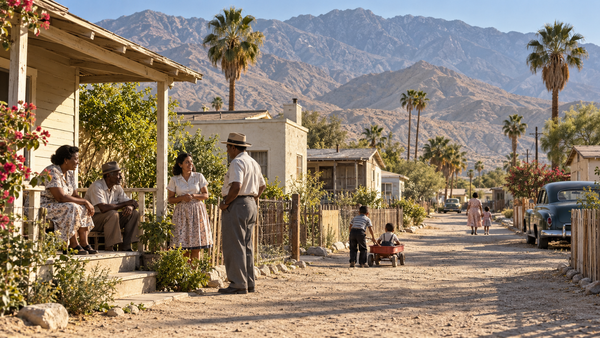
The featured image is an AI-generated illustration informed by exterior reference photographs. It depicts an imagined evening outside Pappy & Harriet’s, not an authentic photograph or a specific historical performance. The people and activity are fictional.


