








How Palm Desert Helped Create Desert Rock
Generator parties, Kyuss and the local connections behind a sound that traveled far beyond the Coachella Valley.

Before desert rock became a label that listeners could search for, someone had to find a place to plug in an amplifier.
That is one way into the story of Palm Desert’s music scene: through the practical work behind a performance. Friends shared equipment, musicians joined one another’s bands, and a generator could turn an informal gathering into a show.
Kyuss and Queens of the Stone Age brought much wider attention to those connections. Looking back through the people around them reveals a richer history—one that runs from the Coachella Valley’s early scene to the recording community in Joshua Tree, without treating the two places as interchangeable.
- A practical beginning. Portable generators helped young bands create places to play outside conventional venues.
- A community before a genre. Mario Lalli, Gary Arce and overlapping bands are essential to the story alongside Kyuss and Queens of the Stone Age.
- Two connected settings. Palm Desert’s Low Desert scene and Joshua Tree’s recording community are related chapters with distinct geography.
The first problem was finding a place to play
A band can rehearse in a bedroom or garage. Playing for other people requires something more: a space, an audience and enough electricity to be heard.
For young musicians in the Coachella Valley during the 1980s, those things did not always arrive together. In published interviews, Kyuss drummer Brant Bjork has described a shortage of clubs where the young scene could perform. Musicians and friends made their own arrangements, taking equipment beyond the usual venues and powering amplifiers with generators.[1]
That practical solution became the name: generator parties. The phrase now sounds like a fully developed musical movement. At the time, it described the work of putting on a show.
There is an important idea inside that distinction. The audience and the musicians were building the occasion together. Before there was a recognizable category to market, there was a reason to gather.
The people came before the label
Start with Josh Homme and it is easy to turn the whole history into a prequel to Queens of the Stone Age. Start a little earlier and a wider community comes into view.
Mario Lalli is central to that story. His work with Across the River, Yawning Man and Fatso Jetson connected different generations of musicians. In a 2014 interview with the Coachella Valley Independent, he recalled organizing generator parties with David Travis after returning from Los Angeles. The same account describes the overlapping musical lives of Gary Arce, Alfredo Hernandez, Larry Lalli, Scott Reeder and others.[2]
Yawning Man developed during the 1980s, with Arce’s guitar, Hernandez’s drumming and the Lallis among its early ingredients. Its long, exploratory playing mattered to the scene well before the band released its first full-length album, Rock Formations, in 2005.[2]
That gap between influence and an album is revealing. A scene can develop through rehearsals, friendships and memorable performances long before a record makes it easy for outsiders to trace.
Lalli later carried that welcoming approach into Rhythm & Brews. In his 2024 interview with RetroFuturista, he described the club as an extension of the atmosphere around his home in La Quinta: a place where people were encouraged to play original music together. Fatso Jetson grew out of that working environment.[3]
Kyuss gave outsiders something to take home
For listeners far from California, records provided the introduction that a local party could not.
Kyuss emerged from the young Palm Desert scene around John Garcia, Josh Homme, Brant Bjork and Nick Oliveri. Its earlier names included Katzenjammer and Sons of Kyuss.[1]
Blues for the Red Sun arrived in 1992. Welcome to Sky Valley followed in 1994, recorded at Sound City in Van Nuys and co-produced by the band and Chris Goss. The latter detail is useful: music associated with the desert did not have to be recorded outdoors, or even recorded in the desert, to carry the experiences of its musicians.[4]
Rhino’s account identifies Sky Valley as Reeder’s first Kyuss album and Bjork’s last. Another studio album, …And the Circus Leaves Town, arrived in 1995 before the band ended.[4]
Those releases made the music portable. Someone hearing it in another country could follow the names in the credits, discover related bands and work backward toward this relatively small Southern California community.
Queens of the Stone Age opened another door
Homme’s next major band expanded the audience again. Queens of the Stone Age grew from the connections around Kyuss; its 1998 debut featured Alfredo Hernandez on drums, and its early touring lineup also included Nick Oliveri and Dave Catching.[5]
The band’s own album page dates the debut to September 22, 1998, and identifies its home as Palm Desert, California.[6]
For a new listener, that creates two useful directions of travel. You can move forward through Queens’ catalog, or back toward Kyuss and the musicians who helped establish the earlier scene. Neither path requires every band to sound the same.
It also changes how you read a place name in an artist biography. Palm Desert is more than a birthplace printed beneath a photograph. In this story, it points toward relationships, places to rehearse and the experience of learning to make an audience.
Palm Desert and Joshua Tree are different chapters
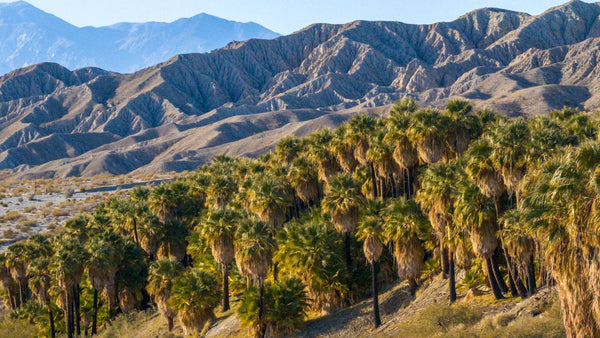
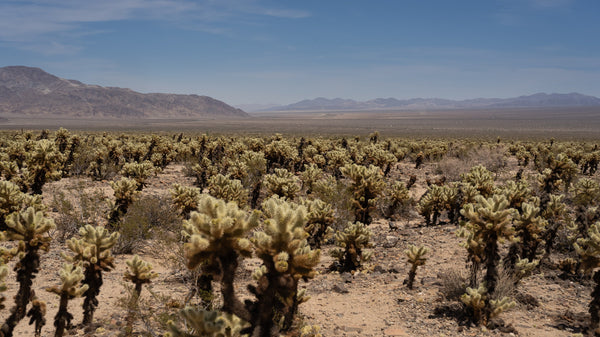
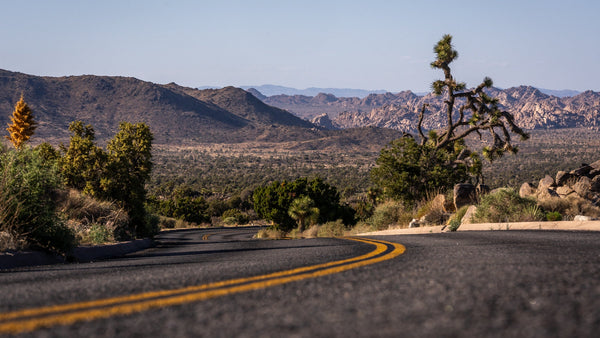
The Coachella Valley is the Low Desert setting at the center of this story. Joshua Tree is in the High Desert to its north. Their music histories connect through people and recording projects, but combining them into one imaginary town erases part of what makes the story interesting.
Rancho de la Luna belongs to the Joshua Tree chapter. Dave Catching and Fred Drake established the recording studio in 1993. In a 2024 interview with Origin Effects, Catching described hosting, producing, engineering and recording bands there, with artists both well known and still unfamiliar to wider audiences.[7]
Josh Homme’s Desert Sessions began in 1997, bringing musicians together to write and record. By the 2019 release of Volumes 11 & 12, the collaborators included Billy Gibbons, Les Claypool, Stella Mozgawa, Carla Azar and others. Those sessions were recorded largely at Rancho de la Luna in December 2018.[8]
Here the connection runs in both directions. Musicians who developed within the desert community took their work outward. Other musicians came into the desert to make something with them.

What did the landscape actually change?
A mountain does not specify a guitar tuning. A hot afternoon does not write a riff. Explaining a musical scene entirely through its scenery leaves out the musicians’ choices.
Yet the setting could affect how they worked. Lalli described improvising with friends in open desert space and gradually making music that suited the experience. As he put it in the RetroFuturista interview: We just started to make music that fit that environment.
[3]
His influences were also broad: surf music, blues, heavy rock and punk were all part of the conversation. The desert scene absorbed music from elsewhere while developing its own habits of collaboration.
That makes “desert rock” most useful as an invitation to explore a community. Treat it as a rigid recipe and you miss the differences between Yawning Man’s instrumental exploration, Fatso Jetson’s varied influences and the different directions taken by Kyuss and Queens.
The parties deserve the same care. Bjork has pushed back against romantic versions of them, recalling danger as well as enjoyment. They were informal gatherings, with all the uncertainty that implies—not a polished festival experience waiting to be discovered.[1]
A listening route into the story
These five starting points follow different branches of the community. They are an introduction, rather than a ranking.
- Yawning Man — Rock Formations (2005). Begin with a band whose local influence preceded its first full-length release.
- Kyuss — Blues for the Red Sun (1992). An early route into the band that brought wider attention to the scene.
- Kyuss — Welcome to Sky Valley (1994). Continue into the album made with Scott Reeder and Chris Goss.
- Queens of the Stone Age — Queens of the Stone Age (1998). Follow the musicians into a new band. The official album page offers the original sequence.
- Desert Sessions — Volumes 11 & 12 (2019). Hear the later collaborative branch of the story, with an international cast working in Joshua Tree.
For the people behind those recordings, Ed Hackimer’s published interview with Mario Lalli provides another entry point into the early bands, generator parties and musical friendships.
Seeing the setting today
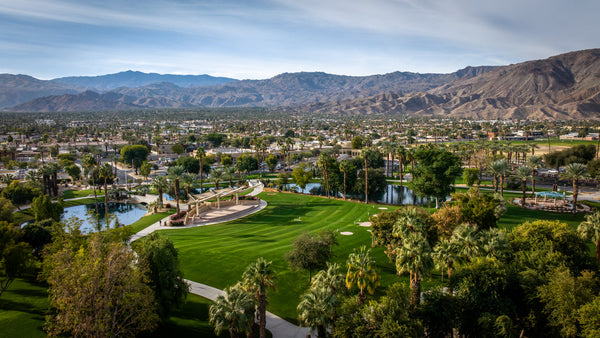
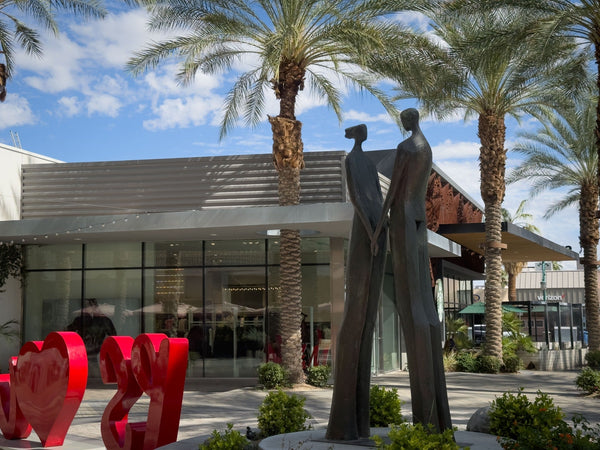
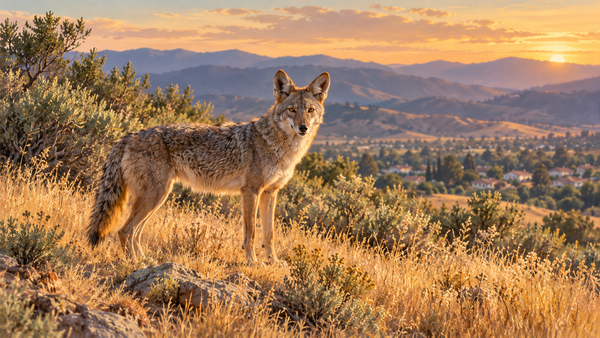
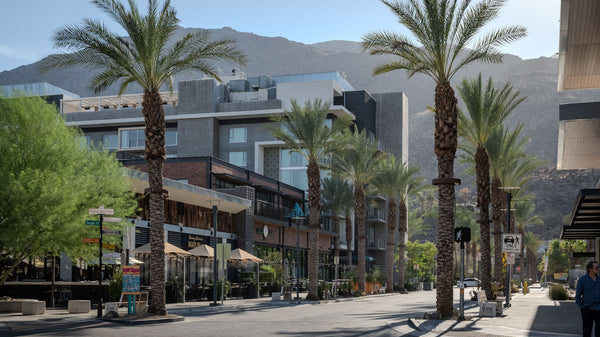
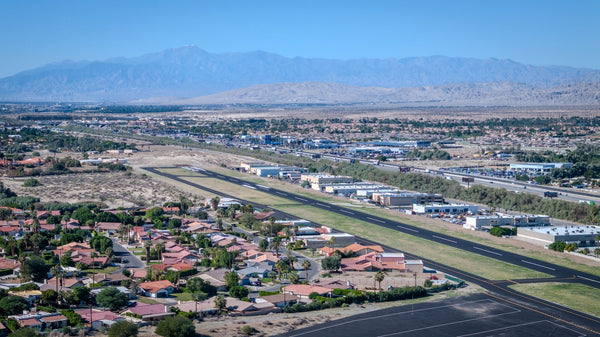
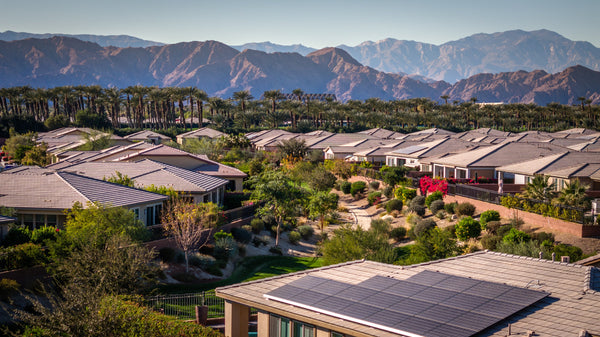
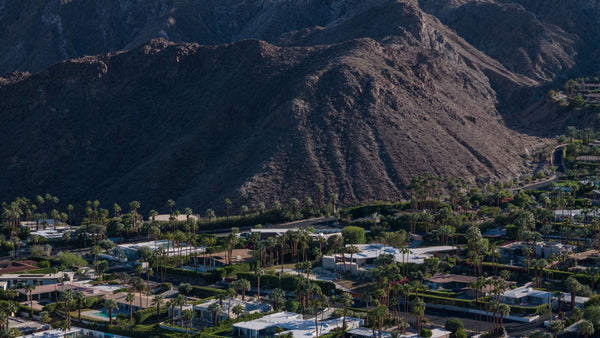
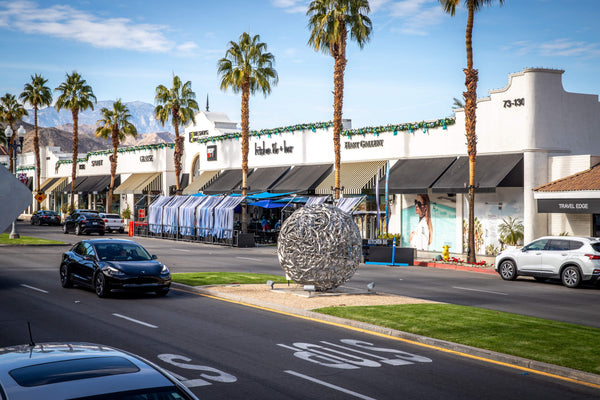
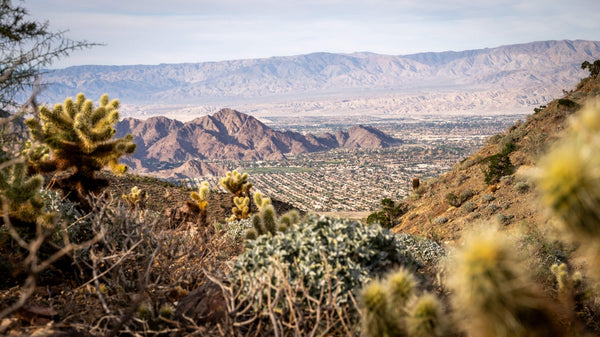
You do not need a secret party location to appreciate the geography. The view from the Palm Desert Cross trail makes the proximity of neighborhoods and rugged hills visible. El Paseo offers a different view of the city whose name traveled with the music. These are present-day places to understand the setting, not sites identified here as historic generator-party venues.
The larger regional music story continues in our history of Coachella. The two histories have different beginnings: one concerns musicians making a local scene; the other follows a major festival’s development.
What makes the Palm Desert story worth knowing is the change in scale. A community made room for its own music. Records, touring and new collaborations carried that music far beyond the people who first gathered to hear it.
Frequently asked questions
Why is Palm Desert associated with desert rock?
Palm Desert and the surrounding Coachella Valley nurtured an interconnected music scene whose bands included Kyuss, Yawning Man and Fatso Jetson. Queens of the Stone Age grew out of those connections and brought them to a much wider audience.
What were generator parties?
They were informal performances powered by portable generators, held outside conventional music venues. Musicians describe them as a practical response to limited places to play, especially for young bands. Later recollections also describe their rough and sometimes dangerous side.
Did Queens of the Stone Age come from Kyuss?
Josh Homme and several other musicians connected with Queens of the Stone Age had played in Kyuss. Queens was a new band with its own direction; its self-titled debut was released in 1998.
Is Rancho de la Luna in Palm Desert?
No. Rancho de la Luna is a recording studio in Joshua Tree in the High Desert. Palm Desert is in the Coachella Valley. The places are connected by musicians and projects, including the Desert Sessions.
Is desert rock one specific musical style?
The term is useful for exploring a regional community, but its bands differ. The story includes punk influences, heavy riffs, improvisation, psychedelic textures and other approaches. It should not imply that every local band follows one formula.
Sources and photograph notes
Researched October 27, 2026. This is an original editorial synthesis of published interviews, artist and label records. It does not claim firsthand attendance at historic performances or new interviews with the musicians. References to older lineups describe their period, not a current roster.
- Mörat / Metal Hammer, July 20, 2017: Brant Bjork interview and Kyuss history. Generator parties, early band names, Blues for the Red Sun and Bjork’s caution about romanticizing the parties.
- Robin Linn / Coachella Valley Independent, June 23, 2014: Mario Lalli and Gary Arce interviews. Early musical community, Lalli and David Travis, Yawning Man and Rock Formations.
- Matteo Damiani / RetroFuturista, July 15, 2024: Interview with Fatso Jetson. Lalli’s firsthand account of collaboration, Rhythm & Brews, influences and improvisation in the desert.
- Rhino, May 17, 2018: Deep Dive: Kyuss, Welcome to Sky Valley. Recording location, producer, June 28, 1994 release, personnel and the final studio album.
- AllMusic: Queens of the Stone Age biography. Kyuss connections, debut personnel and the early touring lineup.
- Queens of the Stone Age / Matador Records: Official 1998 album edition. September 22, 1998 release, original track sequence and the band’s Palm Desert identification.
- Origin Effects, August 16, 2024: Artist Interview: Dave Catching. Catching’s firsthand account of the studio he established with Fred Drake and its work in Joshua Tree.
- Townsend Music: Desert Sessions, Volumes 11 & 12. 1997 beginnings and the October 25, 2019 album release.
- Nasty Little Man, artist publicity archive: Desert Sessions. The 2018 Rancho de la Luna recording sessions and the musicians on Volumes 11 & 12.
- Ed Hackimer / This Day in Metal, March 31, 2025: Interview with Mario Lalli. Further listening: a published video interview with Lalli about the bands, parties and musical relationships.
Photograph notes
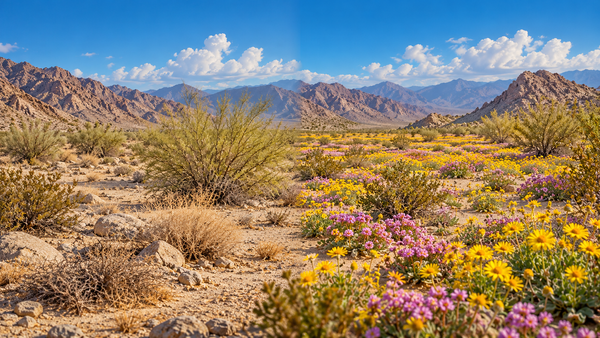
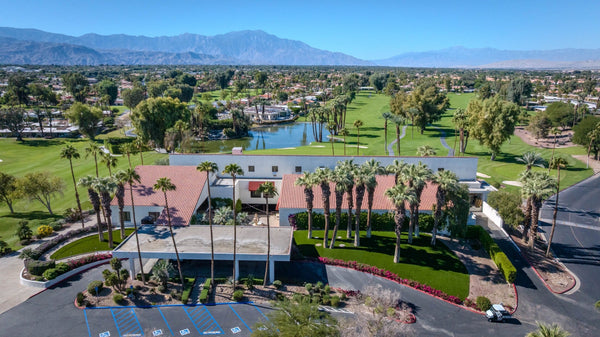
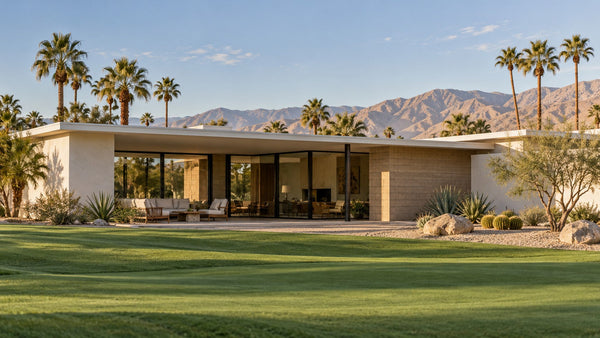
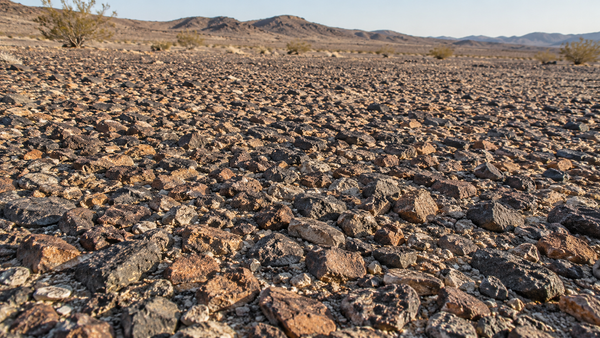
Photographs by Mark Miller. The featured view is from the Palm Desert Cross trail; the road photograph shows the High Desert landscape. Both are contemporary setting photographs. Neither documents a generator party, a particular band performance or Rancho de la Luna. No AI imagery is used in this article.


