







Stargazing Near Palm Springs: Where to Go, When to Look, and What You’ll See
Start in your backyard, join an observatory evening, or plan a darker-sky outing—with a little help from the Moon.

A desert evening does not need to end when the mountains disappear. Let your eyes settle, look away from the patio lights, and another part of the landscape begins to appear.
Stargazing near Palm Springs can mean a quiet half hour at home, a telescope session in Rancho Mirage, or a deliberate trip into Joshua Tree. The right choice depends on what you want to see. A bright Moon can be wonderful through binoculars and disappointing if you were hoping for a sky full of faint stars.
This guide starts with that decision: choose the experience, then choose the place and the night.
- For an easy first experience, check the Rancho Mirage Observatory’s evening programs and registration requirements.
- For fainter stars, look for less artificial light and a useful moon-free viewing window.
- A seasonal guide gives you a starting point; a dated sky chart tells you what is actually above your horizon.
- Bring layers, water and a dim red light, and confirm nighttime access before leaving.
Choose your kind of evening
Start with the amount of effort you want to put into the night. A nearby, comfortable outing you actually take can be more satisfying than an ambitious drive you keep postponing.
Why the same sky can look so different
A clear forecast is a beginning, not the whole plan. Artificial light scattered through the atmosphere brightens the background against which you see stars. The faint ones become difficult to distinguish; the stars themselves have not gone anywhere. NASA explains this effect in its skywatching guidance.
Same sky. Different conditions.
Change two sources of light and watch the faint stars become harder to distinguish. The stars do not vanish; their contrast with the sky changes.
Conceptual illustration, not a star chart, measured brightness scale or forecast. Star positions are decorative. Moon phase, altitude, haze and nearby lighting interact in real life.
At home, try one useful experiment: turn off an unnecessary outdoor light and move out of the direct glare of the lights that remain. Give the view time. Looking repeatedly at a bright phone works against the experience you came outside for.
Away from home, darkness is something to share. Keep screens dim, point lights down and use only the illumination needed to move safely. Let other observers know before introducing a light.
Start from your backyard or patio
You do not need to earn the experience with a long drive. Begin somewhere you are permitted to be, with secure footing and an unobstructed patch of sky. An overhead awning or a close mountain horizon can hide the object you want to see, even if the air above it is clear.
The Moon is an excellent first target. Notice the boundary between its illuminated and dark portions: changing shadows reveal surface detail. Binoculars can make that exploration more absorbing. NASA’s Moon-viewing guide is a useful companion.
Bright planets can also be rewarding from town, when they are above your horizon. Their positions change, so use a current sky chart for your location and time. Do not label every bright point Venus or Jupiter by appearance alone.
A guided evening in Rancho Mirage
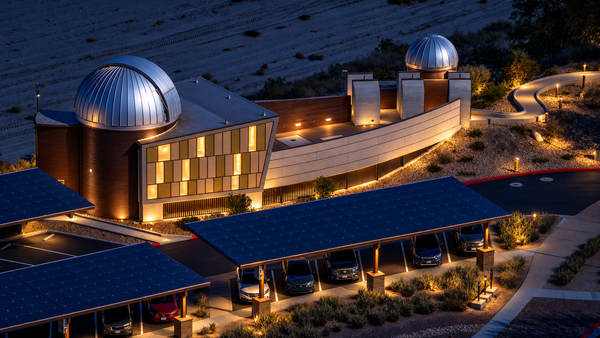
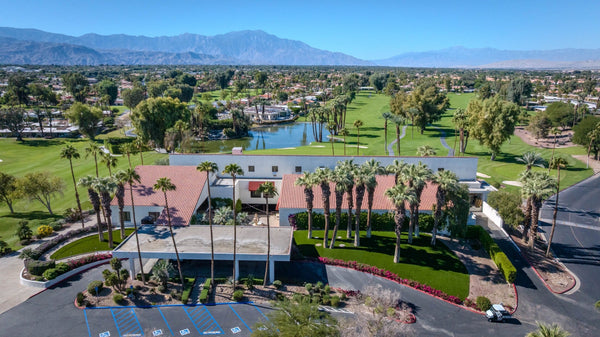
The Rancho Mirage Library & Observatory gives you a local starting point if you want explanations and a telescope experience without arranging your own equipment.
Its official program page distinguishes evening observing events from daytime programs and identifies some sessions, including Guided Stargazing, as requiring registration. Check the current program descriptions and event calendar before leaving. Library opening hours do not establish telescope-viewing hours.
Choose the actual event, then build the evening around it. A dinner reservation should leave room for arrival and any check-in instructions. Telescope targets and outdoor viewing depend on conditions; a scheduled session is not a guarantee of a particular planet or nebula.
Plan a darker-sky outing in Joshua Tree
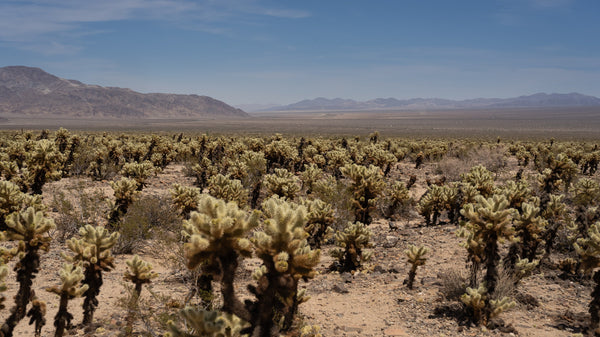
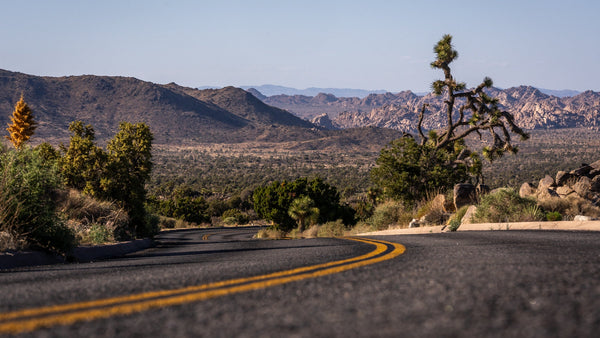
Joshua Tree is a designated International Dark Sky Park. The National Park Service identifies Quail Springs, Hidden Valley, Cap Rock and Ryan Mountain parking lots as designated observing areas. It also points to legal roadside pullouts along Pinto Basin Road between Cholla Cactus Garden and Cottonwood for darker surroundings. [Park guidance]
From the eastern Coachella Valley, consider the southern approach when planning your route; from Palm Springs, compare the western approach with your chosen viewing area. The entrance and observing spot are separate decisions. Check the complete drive, including the return, instead of assuming the first dark-looking turnout is your destination.
At viewing areas, follow the park’s direction to remain awake and within 20 feet of your vehicle. Parking lots and roadsides are not overnight campsites, and day-use-only areas close from dusk to dawn. Check current park conditions and posted restrictions before traveling.
Keep the first trip simple. Choose a legal stopping place before leaving, arrive while you can inspect the ground, and identify your return route. Remote darkness is enjoyable when the ordinary logistics are already handled.
Choose the window, not just the date
For faint stars, consider when the Moon is below the horizon, not only its phase. A partly illuminated Moon can still affect your viewing window; a moonrise later in the night can change the experience while you are outside. A bright lunar evening is better treated as a different kind of outing. [Natural night light]
Sunset is also not the moment the sky becomes fully dark. Twilight fades gradually. Check astronomical twilight along with moonrise, moonset, cloud cover and wind for the place you intend to visit. A plan for early evening may produce a different view from one for the hours before dawn.
What can you look for through the year?
Choose a season, find a starting point
These are familiar Northern Hemisphere targets—not a live view of tonight’s sky. Date, time and your horizon determine visibility.
Orion and Sirius
Start with the three stars of Orion’s belt, then use a dated chart to locate bright Sirius. Earlier darkness makes a short evening easier to fit in. Dress for sitting still, not for the afternoon temperature.
Use the season to choose a first target, then confirm its location with a dated chart. A single success—recognizing a shape you can find again—is enough for an evening. Build familiarity over several nights rather than trying to memorize the sky at once.
The Milky Way is our view through our own galaxy. Its band changes orientation through the night and year. In darkness it can look subtle to the eye; it is not necessarily the bright, richly colored ribbon shown in an edited photograph. [Natural night light]
What your eyes see and what a camera records
A photograph can gather light over a longer exposure and reveal color and faint structure differently from your eyes. That does not make the photograph false, but it does make it a poor promise of precisely what a visitor will see.
For a first outing, spend some time simply looking before setting up a tripod. Decide what the evening is for: enjoying the view, learning a constellation, or making a photograph. Each asks for a different kind of attention. Never point binoculars or a telescope at the Sun without proper solar equipment and qualified guidance.
A simple check before you leave
- Access: confirm the location allows nighttime use and read current closures or event instructions.
- Conditions: check clouds, wind, temperature, moonrise and moonset for the destination.
- Comfort: pack water, layers, closed-toed shoes, a chair and a dim red light.
- Navigation: save the route for offline use and tell someone your plan if heading into a remote area.
- Expectations: choose one or two targets that fit the sky you will actually have.
For regional orientation, use the DOI regional map. For a broader day around your evening, open the trip planner. Neither replaces the destination’s nighttime access rules or current conditions.
Stargazing questions, answered
Where should a beginner go stargazing near Palm Springs?
Start at home with the Moon or a bright, identifiable target, or check the Rancho Mirage Observatory’s scheduled programs. For a darker-sky outing, choose a permitted Joshua Tree observing area and plan the full return drive.
Can I see the Milky Way from Palm Springs?
Urban lighting makes its faint band harder to see. Darker surroundings, clear conditions and a moon-free window improve the opportunity. Check seasonal timing; the bright central region is not visible on every night.
Do I need a telescope?
No. Learning the Moon’s phases and a few recognizable star patterns is a worthwhile beginning. Binoculars can add detail without a telescope setup. An observatory program lets you try guided observing.
Is a full Moon a bad night to go?
It depends on the goal. A bright Moon reduces contrast for faint stars, but the Moon itself can be a rewarding target. Choose a different window if your main aim is faint objects or the Milky Way.
Can I stay overnight in a Joshua Tree parking lot?
Not as a substitute for authorized camping. The park prohibits overnight camping in parking lots and along roadsides. Follow its stargazing guidance, current restrictions and designated camping requirements.
Sources & details checked
Checked October 25, 2026. Program schedules, access and closures can change. The demonstrations explain general relationships; they do not predict observing conditions.
- National Park Service — Joshua Tree stargazing — Designated viewing areas, vehicle proximity, access rules and seasonal targets; page updated January 29, 2026.
- Rancho Mirage Library & Observatory — Observatory Programs — Program types and advance-registration distinction.
- NASA — Skywatching FAQ — Artificial light, skywatching and observing equipment.
- NASA — Moon Viewing Tips — Observing lunar features and the changing illumination of the Moon.
- National Park Service — Natural Light in the Night Sky — Moonlight, seasonal orientation and the visible Milky Way.
- NASA — Skywatching — Current monthly observing guidance; use dated guidance for individual targets.


