























Living Near Bermuda Dunes Airport: What Homebuyers Should Know
How to read the official maps, assess aircraft noise during a showing and ask better questions about a nearby home.

You can study a home’s floor plan, look across the patio and imagine an ordinary morning. Near an airport, it is worth spending part of that morning listening.
Bermuda Dunes’ airport is part of the community’s identity. For a homebuyer, the next step is understanding how that working airport relates to a specific property: what the official maps mean, what the documents say and what you notice when you spend time there.
Here is a practical way to investigate those questions before making a commitment.
- Use official maps, property documents and repeat visits together.
- Keep the airport influence area, compatibility zones and noise contours separate.
- Test the rooms and outdoor spaces you would use; one quiet showing is one sample.
A home beside a working airport
An airport can be part of the appeal of Bermuda Dunes. For someone who flies, aviation access may be a reason to look here. For someone who works from home or spends much of the day outdoors, aircraft activity may deserve more attention during the search.
Neither response tells you whether a particular house is right for you. The useful question is smaller and more concrete: What is it like to use this home, at the times and in the ways you expect to use it?
Start with the address, your likely daily routine and the current planning information. A short distance on a listing map is a reason to investigate. It is not a complete description of the experience.
Three map concepts, three different questions
Airport-related boundaries are easy to confuse. Keep these concepts separate when reviewing the Riverside County Airport Land Use Commission’s current-plan library:
Airport influence area
The wider area considered in airport land-use planning. Being inside it does not, by itself, tell you the sound level at a house.
Compatibility zones
Areas used with land-use policies to evaluate development. Read the zone together with the applicable policies; a letter or color is not an individual home’s safety rating.
Noise contours
Lines showing modeled noise exposure under stated assumptions. Check the metric, activity assumptions and date before drawing a conclusion.
The county’s listed Bermuda Dunes policy document was adopted in December 2004. Its noise assumptions use ultimate activity on an average day of the peak season. That is planning information—not a measurement of today’s flights or this afternoon’s sound at a property.
Open the originals: Bermuda Dunes policies and map exhibits (PDF), plus the countywide policies in the plan library. Ask county planning staff or ALUC staff to confirm how the current documents apply to the parcel and any proposed project.
What a noise contour cannot tell you
The FAA distinguishes individual sound events from exposure averaged over time. Its explanation notes that different combinations of louder, less frequent flights and quieter, more frequent flights can produce the same average. California’s CNEL metric is related to DNL, with different treatment of evening and nighttime sound.
The practical implication for a buyer: a planning contour is not a promise that every flight will sound the same—or that aircraft cannot be heard outside the line. It also does not establish what you will hear through a particular window, during a call or at the patio table.
Use the map to frame better questions. Then visit the house to understand its spaces. If noise is central to your purchase decision and the available information leaves you uncertain, consider a qualified acoustic assessment tailored to the property.

How to use a property visit
Make the visit resemble an ordinary day you might spend there. A quick walk from the driveway to the kitchen leaves several important questions unanswered.
- Start outside. Spend time where you would sit, eat, garden or swim. Notice whether aircraft draw your attention and whether a passing flight interrupts conversation.
- Try the rooms you would actually use. Listen from the bedroom and likely work area. With the owner’s permission, compare normal open- and closed-window conditions. Note the condition of doors and seals without assuming their appearance proves acoustic performance.
- Return at another time. If possible, arrange visits on different days and at different times. Ask what the first visit may have missed, including seasonal differences. One quiet showing is a useful observation, not a year-round sample.
- Keep a simple record. Write down the date, time, room or outdoor location, window position, visit length and what you noticed. Record interruptions in plain language rather than trying to turn a phone reading into a formal noise study.
For example: “Patio, 4:10–4:40 p.m.; three flights noticed; paused conversation once” is more useful to revisit than “seemed fine.” It is a sample note format, not an observation from a Bermuda Dunes property.

Ask about guidelines and actual activity
Dunes Air publishes traffic-pattern and noise-abatement guidance intended to reduce impacts on neighbors. Its page also lists FBO staffing hours. Those are different kinds of information: staffing hours are not a guarantee of an aircraft-free evening.
The operator describes overnight turbine activity as discouraged in its guidance, and says FAA regulations and operational safety take precedence. Do not read a noise-abatement request as a promise of silence. Ask the airport manager for current information about operating restrictions, activity patterns and the process for raising a noise concern.
A useful question is: “What should someone evaluating a nearby home understand about normal activity, occasional busy periods and overnight operations?” Keep the answer dated. Avoid turning a general description into a guarantee for an individual house.
Questions before making a commitment
Bring the exact address and parcel information to the conversation with your agent and the relevant planning office. Suggested questions include:
- Which current airport influence area and compatibility-zone documents apply to this parcel?
- What airport-related notices or disclosures are included in the transaction documents?
- Does the title review identify an avigation easement or another airport-related recorded document? If so, what does its actual wording mean for this property?
- If I am considering an addition, ADU, taller structure or a different use, which planning or airport-related reviews should I investigate before relying on that plan?
- What do the seller and neighbors say they experience, and how does that compare with my own visits?
These questions do not assume that every nearby property has the same easements, restrictions or sound exposure. Have the appropriate professionals explain the documents that actually apply, rather than transferring an answer from another listing.
Make the decision about your daily life
Bring your findings back to the features that made you consider the home: its layout, outdoor space, location and the way you expect to spend your time. Which parts of the airport setting appeal to you? Which observations would change your decision?
A useful decision rests on three things together: current official information, property-specific documents and your own experience of the home. If one of those is missing, identify the unanswered question before treating the location as settled.
Frequently asked questions
Does being inside the airport influence area mean a home is noisy?
That boundary alone does not establish the sound level at an individual house. Review the applicable planning documents, their assumptions and any noise contours, then evaluate the property itself. Treat the boundary as a prompt for investigation.
Do noise contours show how loud every passing aircraft will be?
No. They describe modeled exposure using a specified noise metric and assumptions. An average does not describe each individual flight. The county’s listed Bermuda Dunes policy document uses ultimate activity on an average peak-season day, rather than a measurement of current conditions at a house.
Is one showing enough to judge aircraft noise?
One visit gives you one sample. If aircraft activity matters to your decision, arrange additional visits at different times when possible. Compare the patio, living area, bedroom and likely work space, and ask about conditions your visits may have missed.
Do the FBO’s business hours mean the airport is silent afterward?
No. Published staffing hours and aircraft operating restrictions answer different questions. Dunes Air’s noise-abatement page describes guidelines for pilots; buyers should ask the airport manager about current restrictions and activity rather than assume business hours guarantee quiet.
What should I ask before planning an addition or ADU near the airport?
Give the planning office the exact parcel and a description of your proposed work. Ask which current land-use, height or airport-related reviews may apply. Review the property’s disclosures and title documents with the appropriate professionals; an answer for a neighboring listing may not apply to yours.
Sources and image notes
Official sources checked October 26, 2026. The county currently lists the Bermuda Dunes policy document adopted in December 2004. Its planning assumptions should not be presented as today’s measured flight totals.
- Riverside County Airport Land Use Commission — Current Compatibility Plans — Official directory for the Bermuda Dunes and countywide policy documents.
- Bermuda Dunes airport policies and compatibility-map exhibits — adopted December 2004 — Page 1, sections BD.1.3–BD.1.4, identifies the activity assumptions and influence-area basis. Use the original exhibits and full policies for review; this article does not assign a zone to a parcel.
- Caltrans — Airport Land Use Planning — Purpose of compatibility planning and the distinction between noise, ground safety and airspace concerns.
- Federal Aviation Administration — Fundamentals of Noise and Sound — Individual events, average exposure, DNL, CNEL and noise contours. Page last updated March 29, 2022.
- Dunes Air — Noise Abatement Procedures — Operator guidance, the distinction from FBO staffing hours, and the airport manager as a contact for current information.
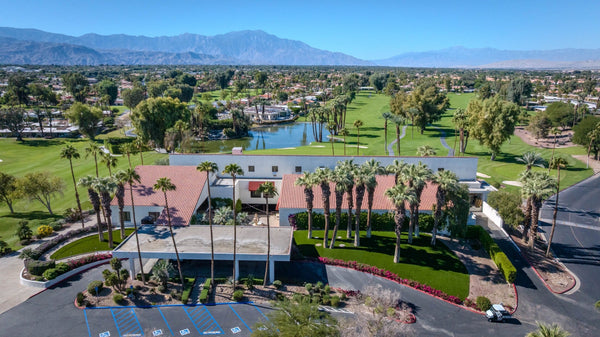
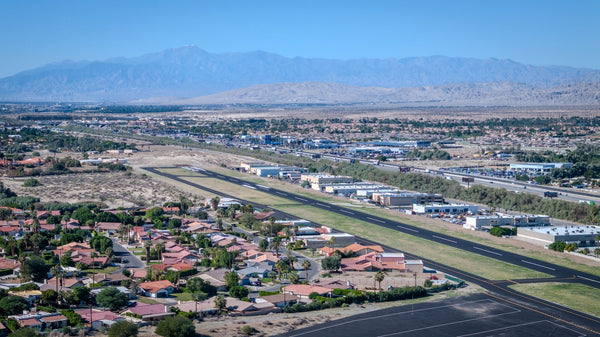
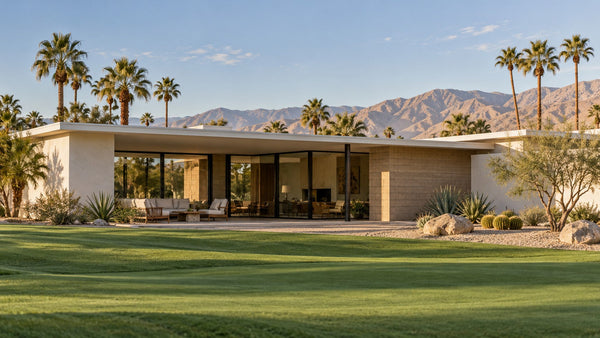
Images: The featured runway-and-neighborhood view and the apron photograph are original photographs by Mark Miller, October 26, 2026. They show the airport’s setting, not measured sound levels or parcel-specific flight paths. The remaining notebook illustration is AI-generated and depicts an invented residential setting. The visit checklist is editorial guidance; no parcel-level legal, acoustic or development determination is made here.


