





















Plantation Golf Club: The Story Behind Its Men-Only Policy
A 1996 beginning, a palm-lined course and the private membership policy that sets it apart.

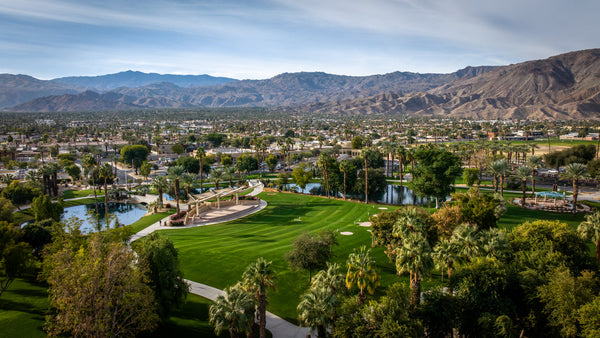
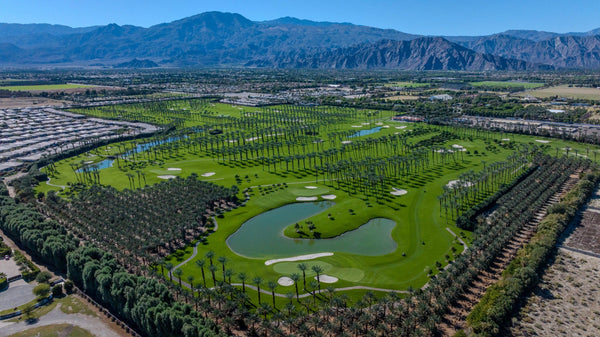
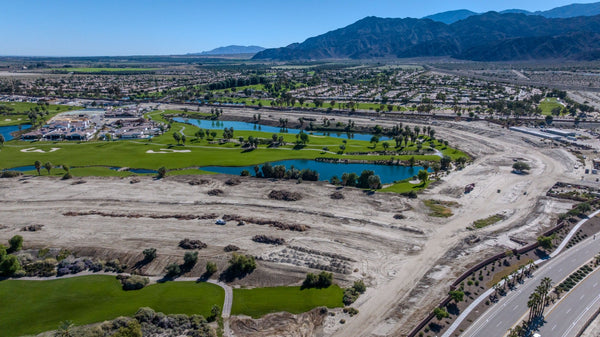
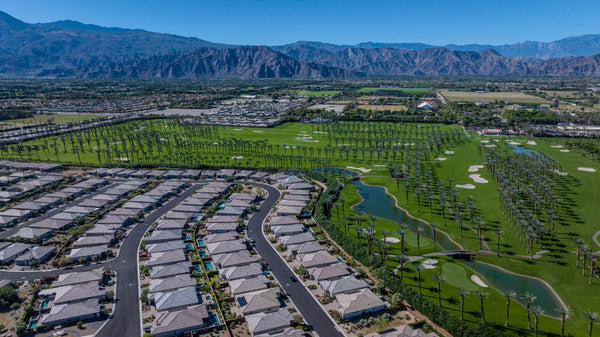
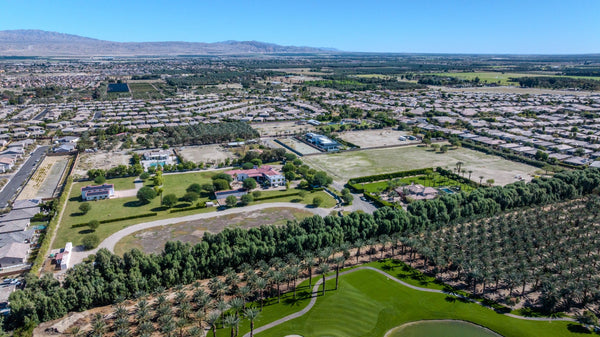
From above, Plantation Golf Club is a landscape of long palm shadows, bright bunkers and water bending around the fairways. My November 2 photographs show how neatly it sits within south Indio: a concentrated green world beside neighborhoods and the valley’s agricultural landscape.
Its boundaries are more than physical. Plantation is widely documented as a men-only private golf club, an unusual identity that raises an obvious question: how did a club like this come to exist here?
The answer begins in 1996 with a group of golf enthusiasts. It also requires separating three things often blurred together: the history of a golf course, the membership rules of a private club and the laws that may apply to its activities.
- Founded in 1996; designed by Brian Curley with Fred Couples consulting.
- Widely documented as a men-only private club; no men-only zoning designation was verified.
- Private-club status, federal tax treatment and California civil-rights law are separate questions.
- Original aerial photographs by Mark Miller, captured November 2, 2026.
A 1996 beginning, with golf at the center
Plantation’s own account dates its founding to 1996. It credits Brian Curley with the course design and Fred Couples with consulting. The architect’s website also identifies 1996 as the beginning and notes the club’s Pro-Scratch tournament tradition.
This was a late-twentieth-century arrival, rather than an institution handed down intact from golf’s earliest days in the desert. Its creation belongs to a period when private golf was already firmly established in the Coachella Valley, but Plantation built a particularly narrow identity around the game.
The club’s public description today is straightforward: private and member-owned. Applicants are directed to existing members. There is no public tee-time booking process, and guests must be accompanied by a member.
The publicly available founding account is short. It does not identify a complete founding group or explain the internal decision that produced the men-only policy. A more elaborate origin story would require club archives or firsthand interviews. What the record does show is a club founded for golf, with a selective membership structure and a deliberately private character.

What “men-only” means at Plantation
The description is not simply shorthand for a men’s league or a reserved competition day. Golf Digest’s course profile describes Plantation as men-only and reports restrictions on women entering the club. KESQ likewise identified it as one of the country’s remaining men-only clubs in its 2025 and 2026 coverage.
For a golfer, that distinction matters. A men’s golf association within an otherwise mixed club is one thing; a club organized around male membership and restricted access is another. Plantation is discussed in the latter category.
Is it the only one in the Coachella Valley? It is the clearest documented local example found for this story. That is a stronger statement than treating an unverified valley-wide superlative as a fact. Public reporting supports its unusual status, but this article does not claim to have audited the current bylaws of every private club in the region.
The policy also has a long paper trail. A 2003 Los Angeles Times report already identified Plantation as men-only.
It is a club policy—not a verified men-only zoning designation
“Zoned for men only” would suggest that a city land-use approval established who may join or enter. No such designation was found in the sources reviewed for this article. The documented issue is the club’s membership and access policy.
Three different systems help make sense of the distinction:
- Land-use regulation concerns how a property may be developed and used.
- Club rules govern membership, guests and conduct.
- Civil-rights and tax law can affect how a club operates, depending on the applicable rules and its actual activities.
Those systems are connected, but they are not interchangeable. Nor is federal tax exemption a blanket authorization to exclude people under state law.
In Warfield v. Peninsula Golf & Country Club (1995), the California Supreme Court distinguished a truly private social club from a club whose regular business dealings with nonmembers brought it within the Unruh Civil Rights Act. The court found that the particular club before it was covered by the Act. That decision concerned Peninsula, not Plantation; it explains why the word “private” alone does not settle the question.
Separately, IRS guidance allows qualifying social clubs to seek exemption under section 501(c)(7), with conditions concerning their purposes, finances and operations. That federal tax framework and California’s civil-rights framework ask different questions.
The palms are part of the story, too
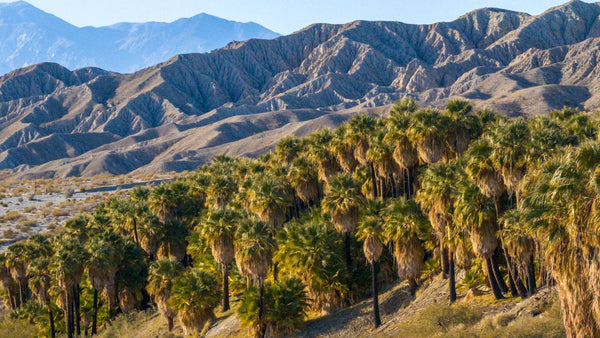
In my photographs, the trees are not occasional accents around a green. They form ranks across the property, with long trunks and shadows creating a pattern as prominent as the fairways themselves. Water and sand interrupt that pattern; the mountains stretch across the distance.
Seen this way, Plantation belongs to two recognizable desert landscapes at once: the cultivated geometry of agricultural land and the carefully composed scenery of golf. The photographs make that relationship visible without needing to invent a history for every tree.

The trees also connect to a more recent chapter. In March 2026, KESQ reported that litigation involving Plantation and JCM Farming, together with its parent company Equity Ag Financial, arose from a disputed venture involving date palms. The report also described a federal challenge to the club’s men-only policy.
These were allegations in litigation, not findings of wrongdoing. Plantation’s attorney declined to comment to KESQ on active litigation. This history does not present a final court resolution: the reporting reviewed establishes the dispute, but a current disposition has not been verified.
That distinction is essential. The landscape can be photographed. Claims about the conduct of the people and organizations behind it require a different kind of evidence.
A golf reputation beyond the gate
The membership policy is the obvious talking point, but Plantation also has a place in golf’s record of memorable rounds. Golf Digest reported that Phil Mickelson shot 58 here during a casual round in March 2010. Its account identified Couples and former NFL quarterback John Brodie as honorary founding members.
A remarkable score does not explain the membership rules. It does help explain why golfers know the name independently of the controversy. Plantation has both a sporting identity and an exclusionary policy; an honest account has room for both.
The club’s public ban on cell phones in the clubhouse and on the course adds another dimension to its atmosphere. It suggests an emphasis on being absorbed in the round and the people playing it. That interpretation concerns the setting, not a justification for who is allowed to share it.
The course beside the neighborhood
For people exploring this part of Indio, Plantation is also a neighbor. Some Trilogy Polo Club homes back toward its landscape. From the air, the boundaries between rooftops, gardens and fairways are easy to study; from a patio, walls and hedges change what can actually be seen.
That proximity does not make Plantation part of Trilogy’s club offering. Buying a nearby home does not itself provide Plantation membership or permission to enter the course. I cover that residential relationship separately in Trilogy Polo Club Homes Backing to Plantation Golf.
For more photographs, the hole-by-hole explorer and practical club information, visit the Plantation Golf Club guide.
Plantation’s story is compelling because the view and the institution invite different questions. The view asks us to look closely at the desert’s cultivated landscape. The institution asks who gets to participate in the experience that landscape supports. Both belong in its history.
Questions about Plantation’s history and membership
Is Plantation Golf Club in Indio men-only?
Golf Digest and KESQ describe it as a men-only private club with restricted access for women. Confirm any proposed visit directly with the club; its public rules page is not a complete set of membership bylaws.
Is Plantation the only men-only golf club in the Coachella Valley?
It is the clearest documented local example found in the research for this story. A definitive current claim would require checking every private club’s policies, so this article avoids that unverified superlative.
Was Plantation zoned for men only?
No men-only land-use designation was verified. The published accounts concern private membership and access rules. Zoning, tax status and civil-rights obligations are separate matters.
When was Plantation founded, and who designed it?
The club dates its founding to 1996 and credits Brian Curley as architect, with Fred Couples consulting.
Does owning a Trilogy Polo Club home provide Plantation access?
No. The residential community and Plantation Golf Club are separate. A home beside the fairways does not itself include membership, playing privileges or permission to enter.
Sources and photography
Research reviewed November 2, 2026. Original photographs by Mark Miller, captured November 2, 2026. Landscape descriptions are observations of those images; no on-course visit or interview is implied.
- The Plantation Golf Club — Golf Course — Official founding date and design credits.
- The Plantation Golf Club — Membership & Contact Us — Official member-owned status and inquiry process.
- The Plantation Golf Club — Rules and Information — Official guest and cell-phone policies.
- Schmidt-Curley Design — The Plantation Golf Club — Architect’s founding and tournament context.
- Golf Digest — The Plantation Golf Club — Independent description of male-only access.
- Los Angeles Times — Private Investigation — April 10, 2003; historical documentation of the policy.
- Golf Digest — Mickelson shoots 58 in casual round in desert — March 26, 2010; reported round and honorary founding members.
- KESQ — The Plantation Golf Club faces federal lawsuit over ‘men only’ policy — March 12, 2026; attributed litigation reporting and club attorney’s response, not a final disposition.
- California Supreme Court — Warfield v. Peninsula Golf & Country Club — June 29, 1995; judicial opinion reproduced by Stanford Law School.
- Internal Revenue Service — Social clubs — Federal social-club tax framework; not a ruling on Plantation.
Scope: No complete founder list, original bylaws, men-only zoning approval or final litigation disposition was verified. No claim is made that the policy is lawful or unlawful in Plantation’s particular circumstances. The 2003 newspaper is used only for historical identification, not current fees or policy details.


