














Katherine Siva Saubel: A Life of Cahuilla Knowledge
The scholar and Malki Museum co-founder whose work connected language, plants and generations of learners.

Some people change a place by building its most recognizable landmarks. Others change what the rest of us are able to understand about it.
Katherine Siva Saubel belongs in that second group. The Cahuilla scholar, educator and museum co-founder devoted her life to language and cultural knowledge that Southern California had too often dismissed. Her story connects the mountains above Warner Springs, Palm Springs and the San Gorgonio Pass. It also changes a familiar question: when we learn the history of the desert, whose knowledge are we learning from?
- Cahuilla scholar and educator, 1920–2011.
- Malki Museum co-founder and its first president.
- Her legacy connects language, plant knowledge and public education.
A life worth knowing
Saubel lived from 1920 to 2011, spanning a period when the modern resort valley grew around communities with much older histories. She was not simply a witness to that transformation. She helped determine how Cahuilla knowledge would be recorded, taught and understood.
The National Women’s Hall of Fame describes a school environment that punished her language and resisted her objections to the way Indigenous people were portrayed. Her later educational work gives that experience a larger meaning: she helped create places where the knowledge she carried could be heard on different terms.
That is why she belongs among the people who shaped this region. A cultural institution, a reference book and a generation of better-informed students leave a legacy even when they do not change the skyline.

Explore her life
Select a chapter to explore. Each can also be opened with the keyboard.
1920A Cahuilla childhood
Born March 7 near Warner Springs, Saubel first learned within a Cahuilla-speaking family. Her earliest education began at home.
1964–65A museum takes shape
She helped establish Malki Museum in 1964. Its public opening followed in February 1965. Founding and opening are two different milestones.
1972Temalpakh reaches readers
Temalpakh: Cahuilla Indian Knowledge and Usage of Plants, co-authored with Lowell John Bean, brought extensive plant research into print.
1993National recognition
The National Women’s Hall of Fame honored her work in arts, education and the humanities.
2002A university honors a teacher
UC Riverside awarded her the Chancellor’s Medal. Its later remembrance emphasized her service and the knowledge she shared with students.
2011A life ends; learning continues
Saubel died November 1 at age 91. Her publications and the institutions she helped build remain starting points for learning.
Mountains, valley and pass
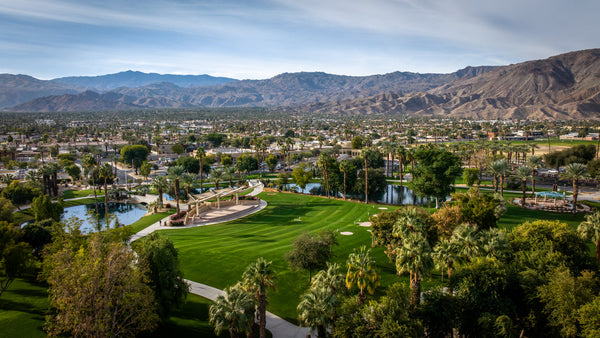
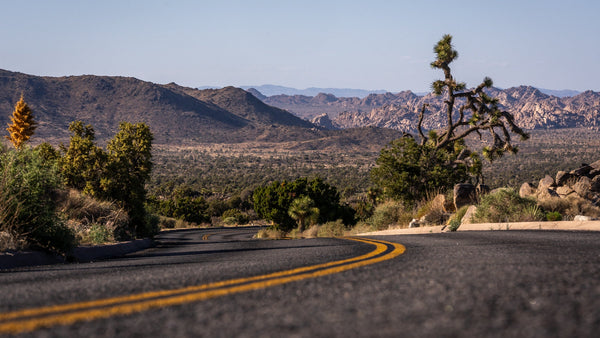
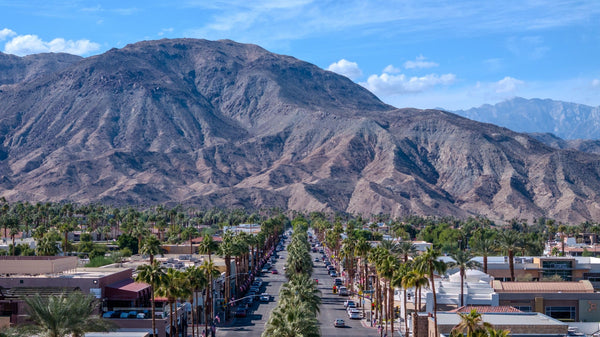
Her biography crosses landscapes that modern visitors often experience separately. Following those connections makes this a regional story: the mountains are not merely a backdrop to the valley, and the pass is more than a road into it.
Select a chapter to explore. Each can also be opened with the keyboard.
MountainsLos Coyotes and Warner Springs
Her birthplace connects the biography to mountain country beyond the valley. This is an orientation to her life, not an invitation to enter reservation land or visit private sites.
ValleyPalm Springs
Her family moved to the Agua Caliente Reservation during her childhood. The National Women’s Hall of Fame identifies her as the first Indigenous girl to graduate from Palm Springs High School.
PassMorongo Reservation and Malki Museum
Malki became an institutional home for cultural education. Learn from the museum’s public programs and check its current visitor information before planning a visit.
Malki Museum and the importance of partnership
Saubel’s achievements should not make the people beside her disappear. Malki Museum’s own history puts Jane Penn at the center of its founding story, with Saubel becoming its first president. Their collaboration, family support and wider community effort helped turn the museum into a reality.
The distinction between founding in 1964 and opening to the public in 1965 matters. Institutions take shape through organizing and practical work before their doors open.
A museum also makes a statement about authority. Who chooses what is preserved? Who explains an object? Who decides what visitors should learn? Malki offered a place where Native people could take an active role in answering those questions.
Plants, language and teaching
Temalpakh is one of the clearest ways to encounter the scale of Saubel’s work. Co-authored with Lowell John Bean, it studies Cahuilla plant knowledge in depth. The publisher’s description emphasizes sustained fieldwork and ecological understanding.
Its significance is larger than identifying useful species. Knowing a plant can involve recognizing it in different seasons, understanding its place in a landscape, and knowing how people relate to it. Printing that knowledge does not turn it into an anonymous resource; authorship and cultural context still matter.
Malki’s garden adds another way to learn. Its account connects Saubel’s plant education to her mother and presents the garden as a living companion to the book. Looking from a page to a plant can make an abstract subject tangible.
Select a chapter to explore. Each can also be opened with the keyboard.
BookKnowledge in print
Temalpakh documents more than 250 plants. Its publisher describes more than ten years of fieldwork and collaboration. Read it as evidence of detailed expertise, rather than a list of desert curiosities.
GardenKnowledge in a living landscape
Malki’s Temalpakh Garden connects the book to living plants. The museum explains uses across food, housing, clothing, tools and the arts. A plant can belong to many parts of daily life.
This is an educational introduction, not a foraging or medical guide.
TeachingKnowledge shared between people
UC Riverside remembered Saubel’s contributions to its Native American Advisory Committee, her participation in the Medicine Ways Conference and her teaching about Cahuilla art, language and culture.
A book can preserve words. A teacher can answer questions, correct misunderstandings and show why the words matter.
Whose account becomes history?
Saubel’s work also raises a question that reaches beyond one biography: what happens when written accounts are treated as authoritative while Native oral histories are overlooked?
UC Riverside’s discussion of the Willie Boy story offers an example. It describes how historian Clifford Trafzer drew on Native testimony, including Saubel’s account of what tracker Segundo Chino told her. The article also records her involvement in the 1969 film as a consultant and with its music.
That does not make every account interchangeable or settle every historical dispute. It shows why responsible history needs to identify its sources and listen beyond the version that became famous first.
Recognition, and the work behind it
National recognition came with her 1993 induction into the National Women’s Hall of Fame. UC Riverside later awarded her the Chancellor’s Medal in 2002. The university’s remembrance described years of service and teaching, giving the honor a practical context.
When Saubel died on November 1, 2011, she was 91. PBS SoCal’s remembrance described her continuing to meet with younger learners and noted the bilingual memoir she created with Eric Elliott, A Dried Coyote’s Tail.
It would be a mistake to turn that life into a story about a vanished culture. Readers can encounter her work through institutions and publications, while Cahuilla people continue to teach and make decisions about their own communities today.
Where to continue learning
Begin with the organizations and publications that preserve the context around her work. Malki Museum offers its own history, educational material and visitor information. Read the authors’ names when approaching Temalpakh; look for the voices behind an exhibition as carefully as you look at the objects.
For a broader regional introduction, read Who Are the Cahuilla? and How the Cahuilla Read the Desert.
The invitation is simple: learn enough about Saubel to recognize her name, then let her work change the questions you bring to this landscape.
Questions about Katherine Siva Saubel
Who was Katherine Siva Saubel?
A Cahuilla scholar, educator, author and Malki Museum co-founder whose work centered on language and cultural knowledge.
When did Katherine Siva Saubel live?
She was born March 7, 1920, and died November 1, 2011, aged 91.
Did she found Malki Museum alone?
No. Jane Penn, Saubel and others established it together. Saubel became its first president; its public opening took place in February 1965.
What is Temalpakh?
A book co-authored by Lowell John Bean and Katherine Siva Saubel about Cahuilla plant knowledge. Malki’s teaching garden is a living companion to that work.
Why is she a Coachella Valley Legend?
Her education and childhood connect her to Palm Springs, while her teaching and publications helped change public understanding of the region. DOI uses Legends as an editorial series, not an official designation.
Sources and further reading
Researched November 1, 2026. This is a source-based biography; no original interview or access to private cultural knowledge is implied.
- Malki Museum — Museum History
Family geography, Jane Penn, museum founding in 1964 and public opening in February 1965. The page combines older texts; present-tense biographical statements and conflicting dates are not treated as current facts.
- National Women’s Hall of Fame — Katherine Siva Saubel
Education, cultural work, lifespan and 1993 induction.
- Malki Ballena Press — Temalpakh
The book’s scope, joint authorship and more than a decade of research.
- Malki Museum — Temalpakh Garden
The relationship between family plant knowledge, the book and the teaching garden.
- UC Riverside Magazine — Winter 2012, We Remember
University teaching and service, age at death and the 2002 Chancellor’s Medal.
- PBS SoCal — Katherine Siva Saubel, Cahuilla Elder
November 1, 2011 death, continued teaching and bilingual memoir.
- UC Riverside Magazine — Willie Boy, Summer 2023
Saubel’s participation in historical interpretation and the importance of listening to Native oral histories.


