














Cahuilla Bird Songs: A Living Tradition in the Desert
Language, memory and community—and an invitation to listen through what Tribal communities share.

A public performance can introduce us to a tradition. It cannot tell us everything that tradition means to the people who carry it.
Cahuilla Bird Songs bring language, memory and community into a shared act of singing and dancing. To approach them well, begin with the people and institutions choosing what to share. In Palm Springs, the Agua Caliente Band of Cahuilla Indians provides one such invitation through its Singing the Birds festival.
- Bird Songs carry language and accounts of journeys, memory and community.
- Begin with what the particular Tribal community chooses to share publicly.
- Agua Caliente’s calendar currently lists Singing the Birds for January 30, 2027.
Begin with a public invitation
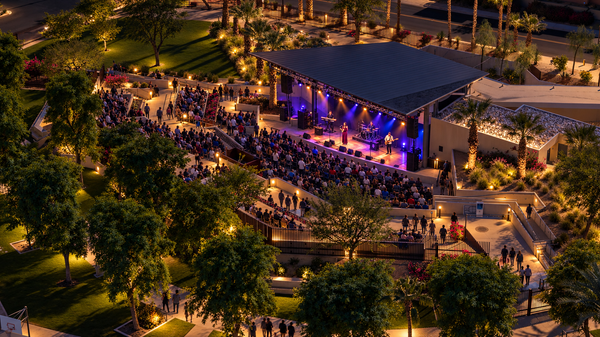
Agua Caliente describes Singing the Birds as a gathering of bird singers and dancers from Southern California and the Southwest. Its public festival combines singing and dancing with a Native American market and food vendors. That framing matters: this is a Tribal-hosted occasion where communities share on their own terms. [1]
Video presented on the Agua Caliente Band’s official Singing the Birds page. Use the original player to watch and listen. No audio has been extracted or adapted.
What do Bird Songs carry?
The Augustine Band explains that Bird Songs are sung in Cahuilla and passed between generations. Its public account connects them with origins, journeys and return, and says that the stories often take the perspective of birds. This is a human cultural tradition, not a collection of recordings of wild birds. [3]
The Smithsonian’s description of Agua Caliente’s bird singers likewise emphasizes a repertoire of hundreds of songs recalling the people’s history and migration. That is a useful correction to the idea that a short performance is simply a musical interlude. What a visitor hears belongs to a much larger body of knowledge. [5]
For the wider regional context, begin with Who Are the Cahuilla? A shared name does not erase the distinct identities of Tribal nations, families or song traditions.
Watch and listen with context
Three ways to pay closer attention
An optional viewing companion. These prompts guide observation; they do not decode a song.
Listen for a language being carried
The Augustine Band describes Bird Songs as a way of passing Cahuilla language to younger generations. You do not need to invent a translation to recognize that singing can carry words, memory and relationships together. [3]
What do the singers themselves choose to explain about the words and the story?
Notice how sound and movement meet
Morongo’s public description identifies a gourd rattle, rather than a drum, as the timekeeper for these songs, and connects dancers’ steps with its changing rhythm. Notice the relationship without treating this short introduction as dance instruction. [4]
How do the singers, rattles and dancers respond to one another?
Look beyond a single performer
The Smithsonian’s Agua Caliente program records name singers, dancers and participants from more than one Tribal community. A performance is also a gathering of people, with relationships that a visitor may not see. [6]
Who is introduced, thanked or acknowledged, and what does the host tell the audience?
Knowledge moves between people
Learning is part of the story, not something that happened once in the distant past. The Cahuilla Band’s November 2023 cultural newsletter advertised language and bird-singing classes. It is a dated example of organized transmission; it is not a schedule of classes a reader can attend today. [7]
The Smithsonian’s 2024 Agua Caliente program also documents a community discussing and presenting its traditions in a national public setting. Its participant record preserves names, rather than reducing the performance to an anonymous label such as “Native music.” [5]
That suggests a better habit for an audience: pay attention when people introduce themselves. Remember the name of the group and the community, not only the sound. If a singer explains who taught them, that relationship is part of what is being shared.
Do not turn one account into a universal rule
Public sources are not identical. Augustine’s Bird Songs section describes participation by women and men, young and old. Morongo’s account emphasizes designated song keepers, family transmission and a ceremonial history. [3][4]
Those differences should prompt careful attribution, not an attempt to declare one short web page the rule for everyone. A visitor guide cannot decide who may sing a particular body of songs or what a specific community considers appropriate. Listen to the host’s explanation of the occasion in front of you.
Likewise, a public festival should not be used to make assumptions about a private gathering. What is welcomed in one setting may not describe another. Learning the distinction is part of being a thoughtful guest.
Singing the Birds: a local starting point
We have not carried forward the hours advertised for the January 2026 event. A recurring festival is not necessarily an identical schedule every year. [2]
How to approach a public gathering
Arrive ready to listen before deciding what to photograph, record or join. Follow announcements about audience participation. If the instructions do not answer your question, ask an organizer rather than guessing.
For photography or recording, be specific about your intended use. Making a personal picture, posting a clip and producing a commercial video are different requests. A public performance is not, by itself, an invitation to remix its sound or use a person’s image in an advertisement.
This is DOI’s practical advice for visitors, not a claim that every event has the same policy. The host’s current instructions come first.
Keep learning from the source
Use the Tribe’s own festival page to return to its videos and future announcements. The Smithsonian’s public catalog is useful for learning who took part in its 2024 program, but the archive specifies that publication of collection materials requires permission; a catalog entry is not a free audio library. [5]
There is room for a future conversation with a willing singer about teaching, preparation and what they want visitors to understand. Such an interview would add a person’s perspective; it should not be invented from what an observer thinks a song means.
For now, the invitation is already meaningful: encounter a living tradition through what its communities choose to share, and let attentive listening be the beginning of learning.
Questions about Cahuilla Bird Songs
Are Cahuilla Bird Songs recordings of birds?
No. They are a human singing tradition in the Cahuilla language. Augustine’s public account explains that stories often take the perspective of birds.
What is Singing the Birds?
A public bird song and dance festival hosted by the Agua Caliente Band of Cahuilla Indians, bringing together participants from Southern California and the Southwest.
When is the next Singing the Birds festival?
As checked November 1, 2026, Agua Caliente’s calendar lists January 30, 2027 at Palm Springs High School. Check the organizer’s current listing before travel; hours and other details may change.
May visitors sing, dance or record at the festival?
Follow the host’s instructions and ask an organizer when unsure. Participation and recording permissions should not be assumed from a general visitor article.
Does every Cahuilla community describe Bird Songs in the same way?
No. Public accounts emphasize different histories and participation practices. Attribute information to its source and follow the guidance of the community hosting the particular gathering.
Sources and further reading
Sources checked November 1, 2026. This is a reported introduction based on publicly shared Tribal and institutional material, not an original interview. Community accounts are attributed individually. No lyrics, translations, archival audio or restricted knowledge have been reproduced.
- Agua Caliente Band of Cahuilla Indians — Singing the Birds
Public festival description and the original YouTube player used below. The video is embedded from the source, not downloaded or re-edited.
- Agua Caliente Band — Events
January 30, 2027 date and Palm Springs High School listing, checked November 1, 2026. Recheck before travel; no 2026 hours or admission terms carried forward.
- Augustine Band of Cahuilla Indians — History & Heritage
The Bird Songs section describes language, intergenerational transmission, origins and journeys, and singing participation.
- Morongo Thunder & Lightning Pow Wow — Bird Singing & Dancing
Public account of song keeping, gourd rattles, dancing and ceremonial history. Its 2026 festival schedule is historical, not a current invitation.
- Smithsonian Folklife Archives — Community Spotlight: Agua Caliente
June 29, 2024 community discussion record, repertoire and transmission context. The archive recording is not reproduced here; its record requires publication permission.
- Smithsonian Folklife Archives — Agua Caliente Bird Singers
June 30, 2024 participant record and intertribal gathering context; no audio extracted.
- Cahuilla Band of Indians — November 2023 Cultural Newsletter
Historical example of publicized language and bird-singing classes. Not presented as a current class schedule.


