

















How Desert Plants Survive Between Rainstorms
A little rain sets very different strategies in motion. Look below the surface to see how roots, stems and leaves make the most of it.

A bare ocotillo. A barrel cactus still standing firm. A mesquite with leaves above a wash that looks completely dry.
They share a desert, but they are not using the same survival plan. Some plants keep water inside their tissues. Some temporarily reduce the leaf area that loses it. Others spread roots through a large volume of soil, reaching moisture that is invisible from the surface.
In the Coachella Valley, looking for those differences turns a dry landscape into something much more interesting: a collection of living responses to water that arrives unevenly, then becomes harder to reach.
- Rain is an opportunity, not a guarantee. Soil, runoff, roots and growing conditions determine how useful a storm becomes.
- A cactus is one solution. Water storage, leaf shedding, reflective foliage and extensive roots solve different parts of the problem.
- Dry-looking does not always mean dead. Seasonal leaf loss can conserve water, although prolonged drought can still harm adapted plants.
The challenge: water arrives in pulses
A rainstorm changes the surface first. Some water enters the soil; some runs elsewhere. How far it penetrates depends on the storm and the soil. A dark patch of wet ground is not proof that the whole root zone has been replenished. [1]
That makes timing important. A plant with roots near the surface can intercept a brief wetting. A plant with access to deeper moisture may have a supply that persists after the topsoil dries. Neither strategy works everywhere: soil depth, rock layers and previous weather shape the opportunity. [1,2]
Explore a rain pulse, then let the ground dry
One rain pulse. Four responses.
Bring rain to the landscape, then advance through the drying conditions.
Dry ground
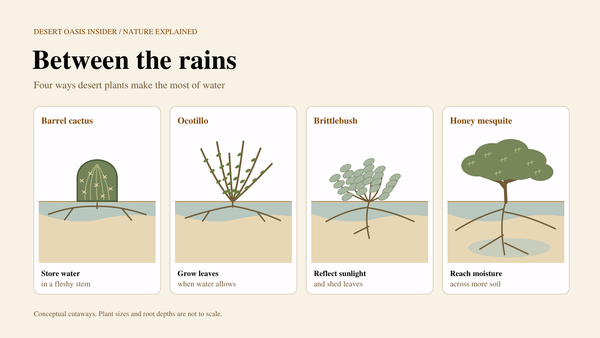
The surface looks dry. A cactus can draw on stored water; leafless ocotillo and sparse brittlebush reduce their exposed leaf area. A mesquite may still access moisture below the dry surface.
Barrel cactus
Store it in the stemStored water buffers the dry spell.
Ocotillo
Grow leaves, then let them goBare stems can be a normal dry-season state.
Brittlebush
Reflect sun and shed leavesSparse foliage reduces the leaf area losing water.
Honey mesquite
Explore a larger soil volumeDeeper moisture may remain after the surface dries.
Conceptual cutaways, not measured root maps or a watering model. Plant sizes, root depths and time are not to scale. Blue soil shows possible available moisture; it is not a water table. The deep mesquite moisture does not refill from a single rain pulse. The comparison assumes suitable growing-season temperatures.
The barrel cactus: keep a reserve in the stem
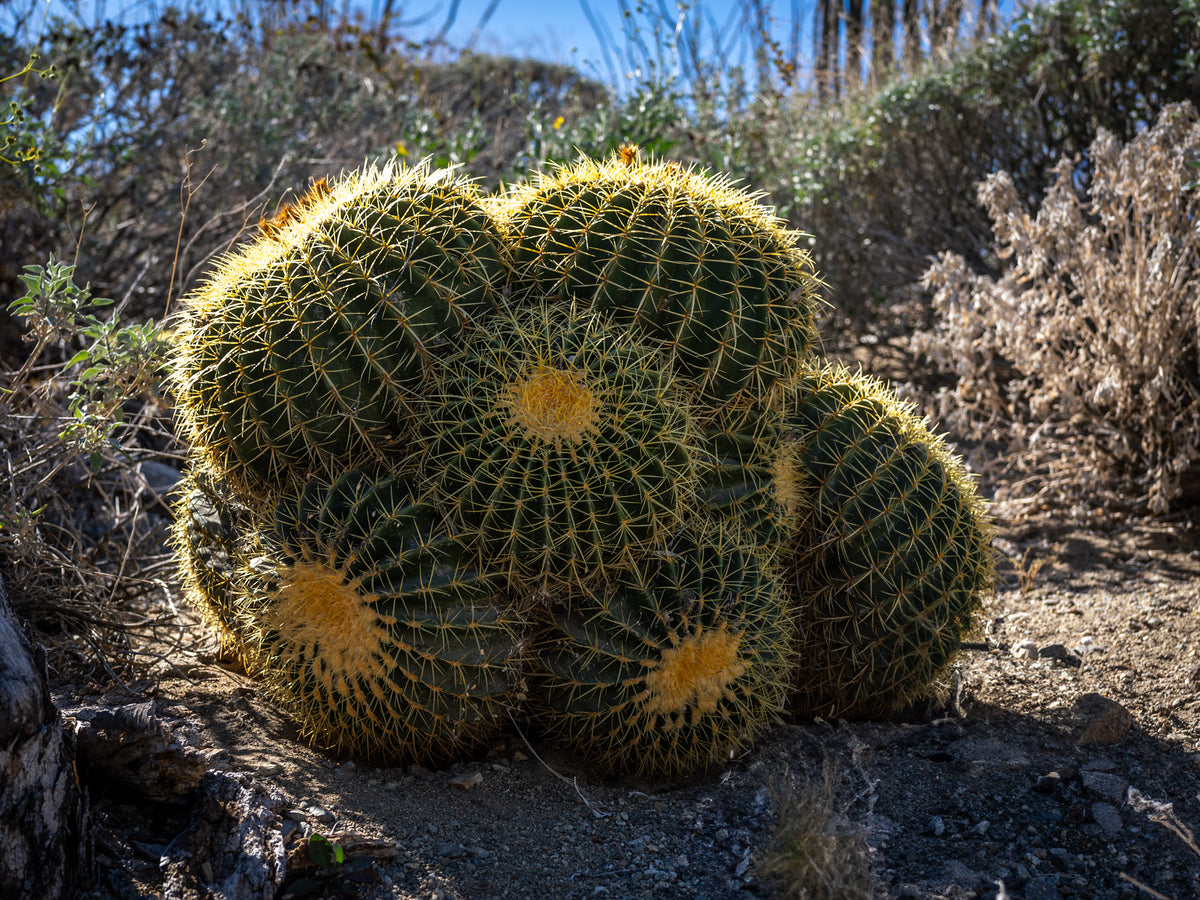
A barrel cactus makes the storage strategy easy to see. Its fleshy stem holds water, and its ribs allow the body to expand as it takes water up and contract as the reserve is used. A network of relatively shallow roots can capture water near the surface. [3]
Storage works better when losses are limited. Cactus spines are modified leaves; the green stem handles much of the photosynthesis. Many cacti also use CAM photosynthesis: they open their gas-exchange pores, called stomata, mainly at night, take in carbon dioxide and store it for use in daylight. This reduces the water cost of acquiring carbon in hot, dry conditions. It does not mean the plant only photosynthesizes at night. [3,4]
The cactus is using a reserve, not an unlimited tank. Its survival still depends on the balance between water gained and water lost.
The ocotillo: use leaves when conditions allow
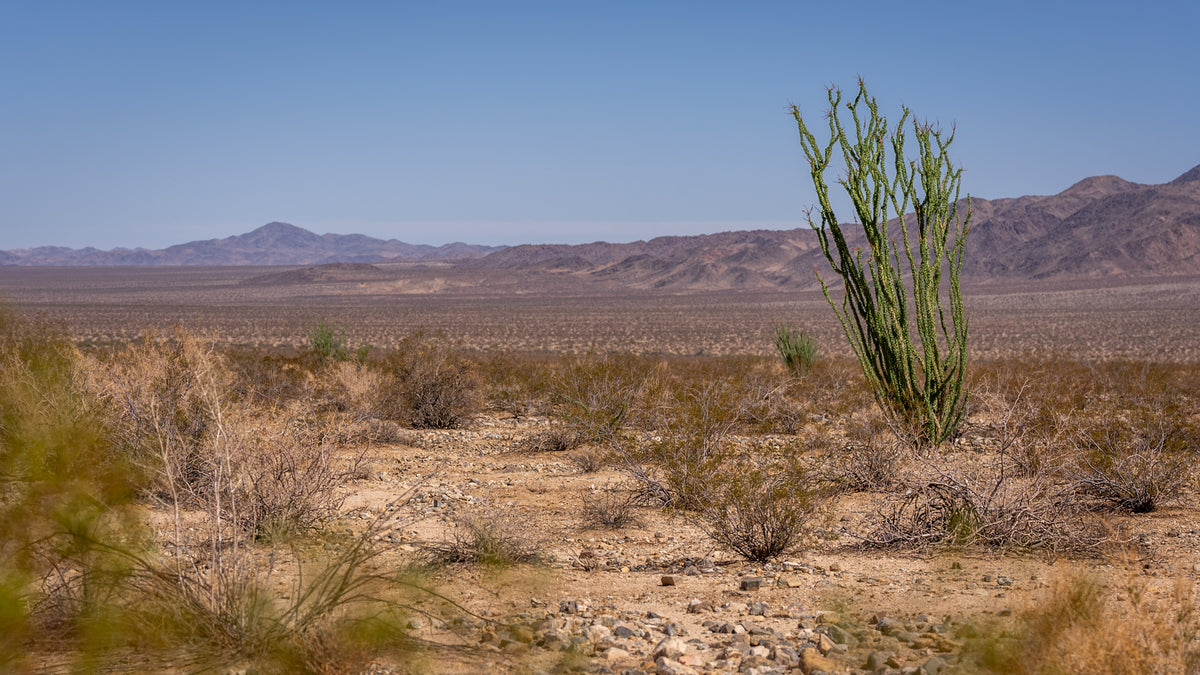
An ocotillo is not a cactus. Its long, spiny stems can stand bare through dry periods, then carry new leaves when rain and growing conditions permit. Shallow, widespread roots help it use water near the surface. As conditions dry, shedding leaves reduces the area through which water can escape. [5]
Leaves offer a tradeoff: they collect light and support growth, but they also lose water. Ocotillo can take advantage of a favorable interval, then pull back. A bare plant therefore tells you something about its current appearance; it does not, by itself, prove the plant is dead.
The interactive separates the arrival of rain from the later growth response for that reason. It also keeps flowering out of the sequence: a rain pulse is not a promise of immediate flowers.
Brittlebush: reflective leaves, with an exit strategy
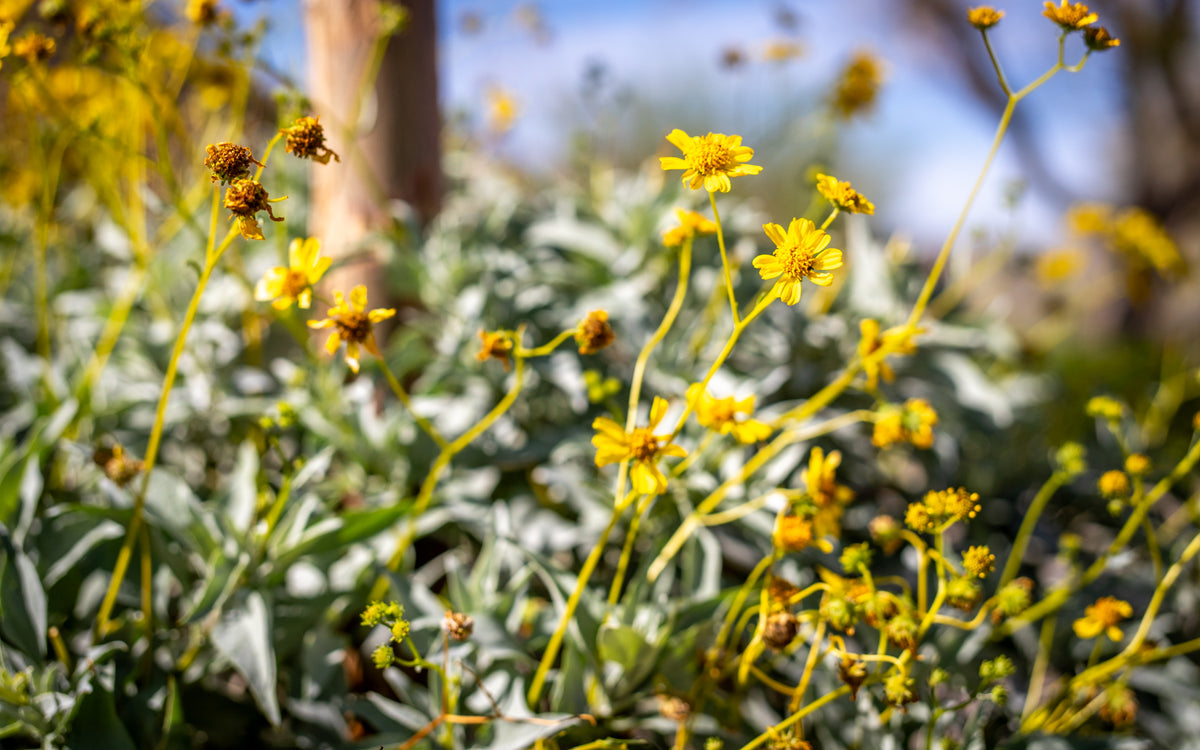
Brittlebush combines several approaches. Fine hairs give its leaves a pale, silvery appearance and reflect sunlight. That surface helps moderate the leaf’s exposure and reduce water loss. Below ground, the plant can use both a taproot and spreading lateral roots. [6]
But reflective foliage does not remove the need for water. Brittlebush can drop leaves under drought stress and become dormant. The contrast between a leafy shrub after favorable rain and a sparse one later is part of its response to changing conditions. [7]
Here, the important observation is leaf area. Compare how much foliage the shrub carries, rather than expecting the color of one leaf to reveal exactly how much water remains in the soil.
Mesquite: explore a larger volume of soil
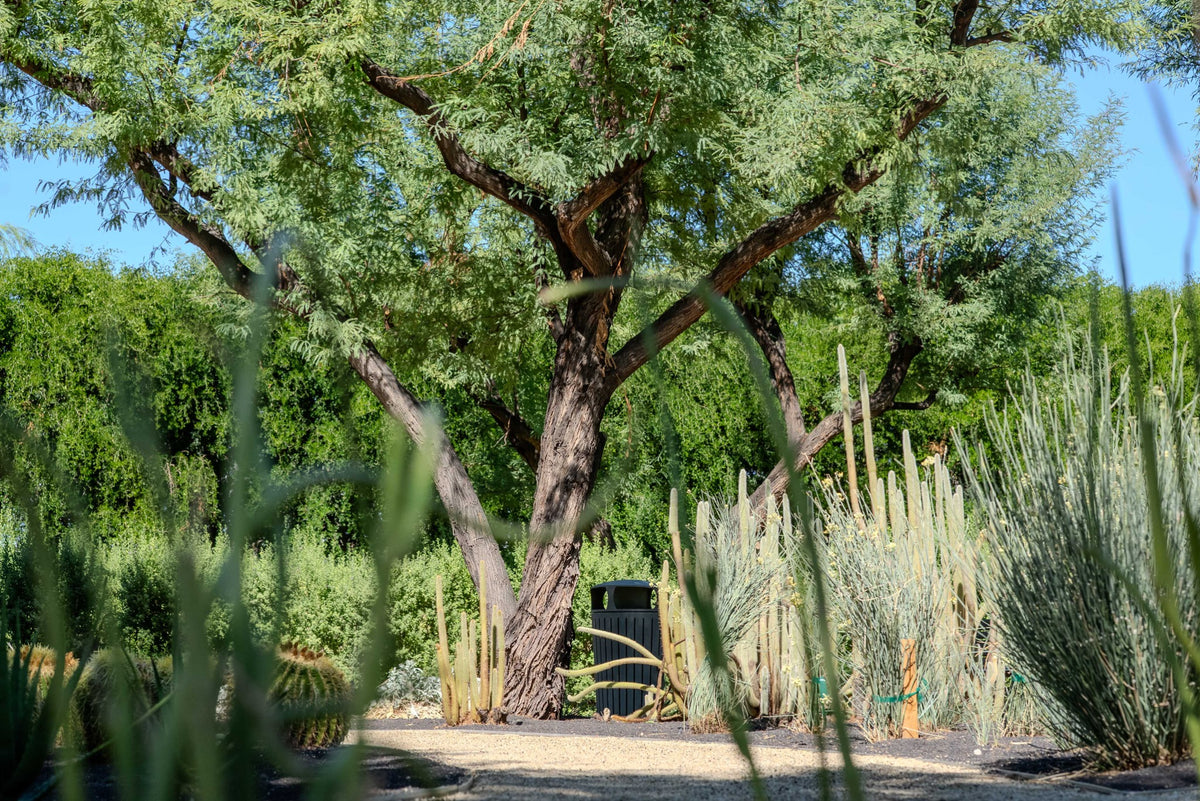
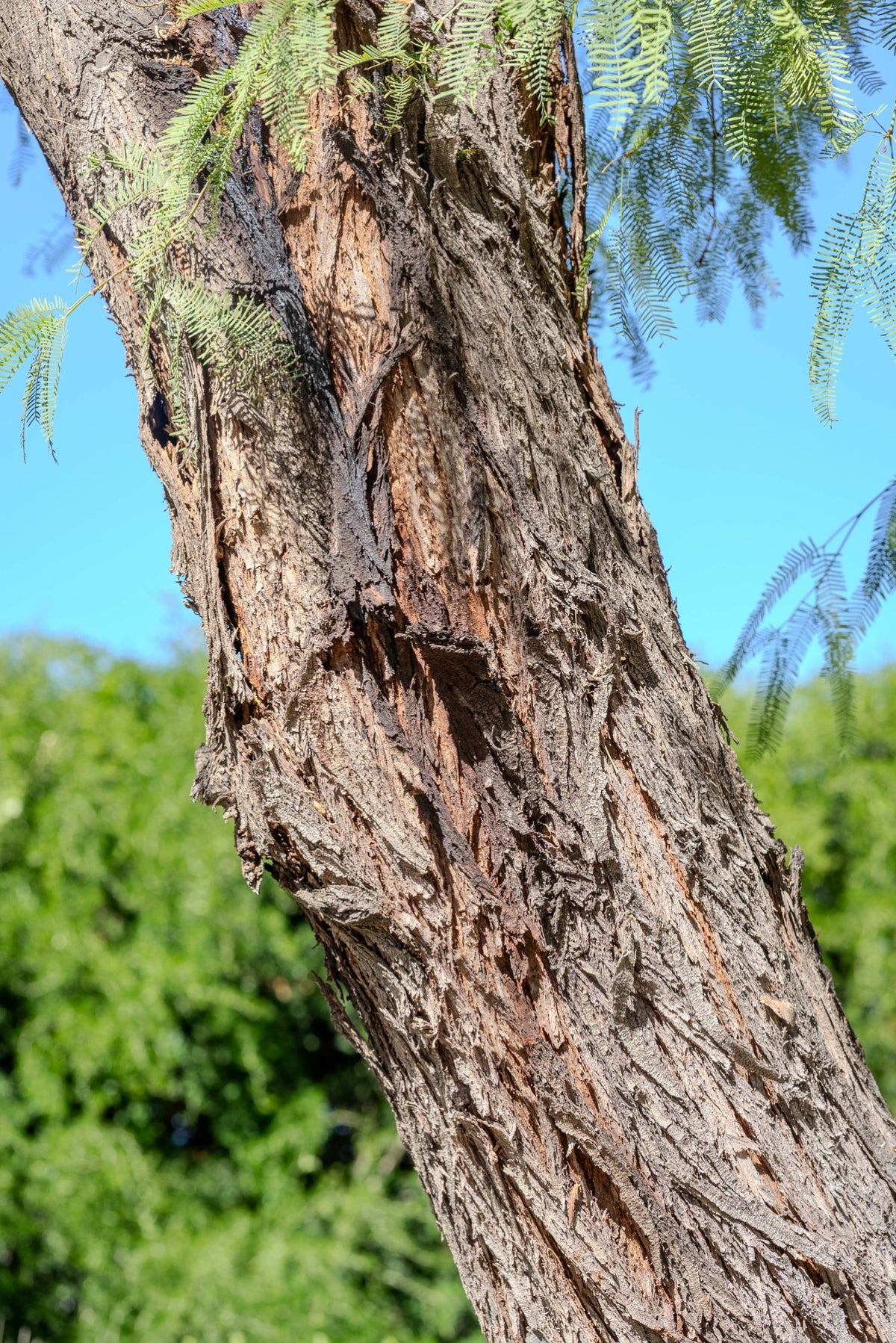
Honey mesquite adds another strategy: an extensive root system. Lateral roots can exploit shallower water, while deeper roots may reach longer-lasting moisture where the soil and water conditions allow. That helps explain why a tree can carry a canopy above a dry-looking surface. [2]
It does not mean every mesquite reaches groundwater. Root development varies with soil depth and barriers, and the water available at one location may be absent at another. A single dramatic root-depth number would conceal those differences.
The cutaway therefore shows possible deeper moisture, not a universal underground reservoir. It also depicts a growing-season comparison: mesquite is deciduous, so winter leaf loss should not be read as the same signal as summer drought stress. Even an established tree can reduce activity or suffer damage when a drought outlasts its accessible supply. [2]
Read the landscape without turning it into a watering schedule
On your next walk, look for three things: where runoff gathers, how much leaf area a plant carries, and whether the plant stores water in a fleshy structure. These are clues to a strategy, not a complete diagnosis.
Adaptation is also not immunity. Long or severe drought can overwhelm a desert plant. And a newly planted nursery specimen has a different root situation from an established wild plant. This comparison explains survival mechanisms; it cannot tell you when to irrigate a particular plant. [4,8]
The most useful change in perspective is simple: the desert is not waiting for every plant to turn green at once. Different plants take different opportunities—and accept different limits—between the rains.
Questions about desert plant survival
Are all desert plants succulents?
No. Succulents store substantial water in fleshy tissues, but desert plants also use strategies such as seasonal leaf shedding, reflective leaves and extensive roots. A mesquite and a barrel cactus do not solve the water problem in the same way.
Does a leafless ocotillo mean it is dead?
Not necessarily. Ocotillo commonly sheds leaves during dry conditions and can grow new ones when conditions improve. Appearance alone is not a complete health diagnosis.
Do all desert plants have deep roots?
No. Relatively shallow, spreading roots can capture a brief wetting near the surface. Other plants explore deeper soil. Many combine root types, and actual depth depends on the site.
Why can a mesquite stay green when the ground looks dry?
The surface can dry while moisture remains elsewhere in the root zone. An established mesquite may reach that moisture, but not every tree reaches groundwater. Season and drought severity also affect its canopy.
Does the interactive show how often I should water?
No. It shows conceptual responses without a fixed time scale. Species, establishment, soil, drainage and weather determine garden water needs; the cutaways are not an irrigation schedule.
Sources and illustration notes
Sources checked November 3, 2026. The illustrations compare broad strategies using simplified plant forms. They do not depict a surveyed site, measured rooting depths, plant water percentages or a forecast. Species can combine strategies, and individual responses vary.
- Arizona-Sonora Desert Museum — Desert Soils. Water entry, soil differences and the persistence of moisture below the surface.
- USDA Forest Service — Honey mesquite species review. Peter Steinberg, 2001. Root-system variability, soil constraints, moisture use and deciduous growth.
- National Park Service — Cacti and Desert Succulents. Cactus ribs, storage, roots, spines and gas exchange.
- Arizona-Sonora Desert Museum — Plant Ecology of the Sonoran Desert Region. Mark A. Dimmitt. Succulence, CAM, drought tolerance and the limits of adaptation.
- Joshua Tree National Park — Ocotillo. Ocotillo identity, shallow roots and foliage changes with moisture.
- Arizona-Sonora Desert Museum — Brittlebush. Leaf hairs, roots and drought-deciduous behavior.
- USDA NRCS — Brittlebush plant guide. Encelia farinosa; leaf loss and dormancy under extreme drought.
- Arizona-Sonora Desert Museum — Desert FAQs. Desert plant survival and the consequences of severe drought.


