














A Desert Tree Is a Whole Neighborhood: Life Around a Mesquite
Flowers, pods, perches and shade: learn to see the connections around one familiar desert tree.

Look at a mesquite and you may see a shade tree. Look again through the seasons and you begin to see a meeting place: insects at the flowers, animals using the pods, birds among the branches, and a different patch of ground beneath the canopy.
One tree links these lives without holding them all in view at once. Learning to notice those connections changes what an ordinary walk can reveal.
- Flowers, leaves, pods and branches offer different resources to different animals.
- Shade and fallen material help change the conditions beneath a mesquite.
- The Sunnylands photographs show a cultivated mesquite; native honey mesquite has its own local story.
A tree is more than its outline
A mesquite is easy to reduce to a shape: a spreading crown, fine leaves, branches reaching over the ground. Stay with it longer and that outline becomes a set of possibilities. Flowers offer nectar and pollen. Leaves become food. A branch becomes a lookout. A fallen pod begins a different story at ground level.
The tree does not have to be covered in visible wildlife to matter. Some relationships are seasonal; others happen inside a seed or beneath the soil. The useful question is not only “What tree is this?” but “What does this tree make possible?”
My Sunnylands photographs give us a place to begin. They show a cultivated mesquite in Rancho Mirage, photographed October 14, 2026. Its exact hybrid has not been confirmed from a plant label. Our landscape mesquite profile and native honey-mesquite guide explain that distinction; here, we are following the relationships around the tree.
Look around one mesquite
FOUR PLACES TO LOOK
From the crown to the ground
Select a number to explore one part of the tree. The markers identify places to look, not flowers or animals documented in this photograph.

1. Crown: flowers and foliage
When flower spikes open, look for insects moving between them. At other times, watch the leaves: foliage can feed herbivores even when the tree has no blossoms. These are seasonal possibilities, not activity confirmed in this image.
2. Branches: perches and shelter
A bird may pause, hunt from a perch or shelter among branches. Some birds nest in mesquite. Record the behavior you see; a bird sitting in a tree is not evidence of a nest.
3. Beneath the canopy: shade and soil
Compare the shaded patch with the exposed ground nearby. Fallen plant material and the tree’s influence on light and soil help make the ground beneath a mesquite a different place to live.
4. Ground: fallen pods and seeds
In pod season, look without collecting. Feeding marks or small round exit holes can be clues to another animal’s use of the tree. A pod may feed an animal, lose its seeds to insects, or contribute to a future seedling.
Photograph: Mark Miller · Sunnylands, Rancho Mirage · October 14, 2026. A cultivated mesquite; exact hybrid unconfirmed. Select the photograph itself to enlarge. The sections below explain the ecology behind each observation.
Flowers open a seasonal table
What looks like a pale, fuzzy spike is a cluster of small flowers. Mesquite flowers are visited and pollinated mainly by bees; after successful reproduction, pods develop. The bloom is a temporary opportunity that connects the plant’s next generation with insects seeking food. [1]
A photograph of one visitor tells only part of that story. Watch whether it moves from flower to flower or simply rests. You may hear activity before you can distinguish the individual insects. Flowering changes with the kind of mesquite and conditions; an October photograph of foliage should not be used as evidence of a spring bloom.
Sunnylands describes its thornless hybrid mesquite as flowering in late spring and early summer. That garden reference is useful for the cultivated plants there, not a calendar for every native mesquite in the valley. [2]
Pods carry more than seeds
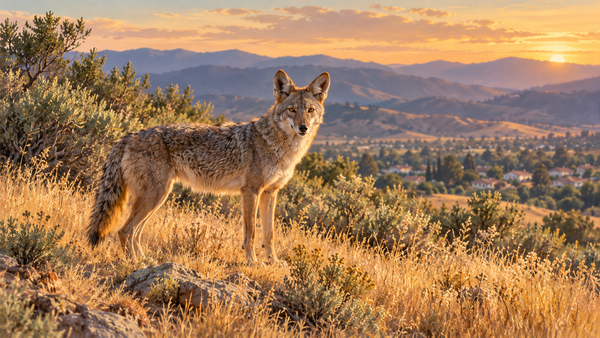
For the tree, a pod packages the next generation. For an animal, it can be a meal. The Living Desert documents Gambel’s quail, jackrabbits and coyotes among the wildlife that eat mesquite pods. Its Coachella Valley Preserve restoration account connects that feeding with seed dispersal and germination. [3]
Being eaten does not always mean the same outcome. A seed may be destroyed, moved, or survive passage through an animal. Honey-mesquite research describes hard seeds that can remain viable after being eaten by large mammals. Whether a surviving seed establishes depends on where it arrives and the conditions it meets. [4]
There is a smaller story inside some pods. Seed beetles, often called bruchids, develop within mesquite seeds; adults leave round exit holes. The National Park Service describes this in Arizona’s mesquite woodland. That offers a clue to investigate on a fallen pod, not a reason to assume every hole or damaged seed has the same cause. [5]
Leaves, insects and birds connect the branches
Flowers are not the only food in the canopy. The Living Desert notes that butterfly larvae consume mesquite foliage and that birds use the canopy for nesting. A plant can therefore support wildlife both directly, as food or structure, and indirectly through the insects it sustains. [3]
From the path, choose one branch and follow the activity around it. Does a bird inspect leaves? Leave the perch to catch something? Return with food? Those distinctions are more informative than simply counting birds in the crown. Our insect guide is a useful companion when the smallest visitors become the most interesting part of the scene.
Some mesquites also host desert mistletoe, whose berries feed Phainopeplas. Those berries belong to the mistletoe, not the mesquite. That additional relationship has its own costs and benefits, explored in our Phainopepla story. No mistletoe or Phainopepla is being identified in the Sunnylands photograph above. [6]

Shade changes the ground
The canopy alters the light reaching the surface. Mesquites can act as nurse plants, helping some other plants establish beneath them. That does not mean every seedling benefits or every shaded patch becomes a nursery; plant species and local conditions matter. [7]
There is chemistry beneath the structure, too. Honey mesquite can associate with nitrogen-fixing bacteria in root nodules. Research describes changes in soil nitrogen and organic matter around it. The tree participates in shaping its surroundings, rather than merely occupying a patch of ground. [4]
Look at the boundary between shade and sunlight. Notice the leaf litter, the texture of the surface and any young plants. Resist the temptation to assign a temperature difference or a root depth from a photograph. The visible pattern gives you a question; a measurement would give you a different kind of evidence.
A local tree worth restoring
These relationships help explain why restoring a mesquite means more than adding a tree to a landscape. In 2021, The Living Desert collected honey-mesquite seed from ten parent plants at the Coachella Valley Preserve. Its account describes raising and planting 100 trees around a desert-pupfish pond in October 2022, using local seed sources while retaining genetic variation. The young trees needed protection from herbivores while they established. [3]
Mesquite also belongs to the valley’s human story. The Augustine Band of Cahuilla Indians describes its importance as food, construction material and habitat for game animals. That understanding of a tree through several connected uses runs much deeper than a modern garden label. Continue with How the Cahuilla Read the Desert for that broader context. [8]
Return to the same tree
Try making three photographs on each visit: the whole tree, one canopy detail, and the ground beneath it. Note the date, flowers or pods present, and one behavior you actually witnessed. A quiet visit still counts. Over time, absence and change become part of the record.
The first photograph may give you a tree. The next few visits may give you a neighborhood.
Frequently asked questions
Is every mesquite in the Coachella Valley a native tree?
No. Native honey mesquite occurs in the region, while gardens also contain cultivated species and hybrids. The Sunnylands tree shown here is a cultivated mesquite whose exact hybrid has not been confirmed. See the honey-mesquite profile and landscape-mesquite profile for identification context.
Which animals use mesquite pods?
The Living Desert’s local restoration account lists Gambel’s quail, jackrabbits and coyotes among the animals that eat them. Use varies by place and season. [3]
Do small holes mean a mesquite pod was used by insects?
Round holes can be evidence of seed beetles emerging. Their larvae develop inside seeds, but a hole alone is not a complete identification of the insect responsible. [5]
Are all berries in a mesquite part of the tree?
No. A mesquite can host desert mistletoe, which produces its own berries. Phainopeplas feed on those berries. The Phainopepla and mistletoe article explains that relationship.
What is the best way to observe life around a mesquite?
Stay on an established route, pause at a comfortable distance, and look at the crown, branches and ground separately. Note the season and the behavior actually visible. Return another day; a tree’s relationships are easier to understand over several visits.
Sources and further reading
Research checked October 23, 2026. Photographs by Mark Miller at Sunnylands, October 14, 2026. The ecological examples describe mesquites in the cited settings; they are not a wildlife inventory of the photographed garden tree.
- Arizona-Sonora Desert Museum — Fabaceae, by Mark A. Dimmitt. Mesquite flowers, pollination and seeds.
- Sunnylands — Thornless Hybrid Mesquite fact sheet. Garden plant context and flowering.
- The Living Desert — Propagation in the Coachella Valley Preserve. Local honey-mesquite restoration, wildlife use and the 2021–2022 project.
- U.S. Forest Service — Prosopis glandulosa, by Peter Steinberg (2001). Honey-mesquite seed dispersal, root symbioses and soil effects. A species review, not a measurement of the photographed tree.
- National Park Service — Tumacácori: Forests. Seed beetles and mesquite woodland ecology; Arizona context, mainly velvet mesquite.
- Cornell Lab — Phainopepla: Life History. Desert mistletoe, host trees and bird feeding.
- Arizona-Sonora Desert Museum — Natural History of the Desert Ironwood Tree. Comparative discussion of mesquite and other nurse trees.
- Augustine Band of Cahuilla Indians — History & Heritage. Tribal account of mesquite’s food, material and habitat significance.


