
Honey Mesquite
Prosopis glandulosa var. torreyana
Feathery leaves, long seed pods and spreading shade connect this tree to desert habitat.
- In this guide
- Native
- Plant group
- Trees & palms
- Typical setting
- Washes & mesquite dunes
- Explore the collection
- Desert flora guide
A closer look.
Open a photograph to see the details. Use the arrows or swipe to explore the gallery.
Photographs from Desert Oasis Insider’s plant collection. Locations are shown where recorded in the original gallery.
Get to know this plant.
About this classification: Native
Native to the California desert region or nearby mountains. The setting listed above matters: a mountain native may not belong to the hot valley floor.
Honey mesquite is one of the Coachella Valley’s most important native desert trees. Its open canopy, fine compound leaves and long tan seed pods make it easy to recognize in washes, dunes and other places where its roots can reach moisture below the surface. Older botanical references commonly identify the local native form as Prosopis glandulosa var. torreyana; newer references may place honey mesquite within the genus Neltuma.
How to recognize it
- Form: A broad, irregular tree or large shrub with low, spreading branches and a rounded canopy.
- Leaves: Small paired leaflets reduce the surface area exposed to intense desert heat.
- Flowers: Pale yellow flower spikes provide nectar and pollen for native insects.
- Seed pods: Long, narrow pods mature from green to tan. The mostly straight pods help distinguish honey mesquite from screwbean mesquite, whose pods are tightly coiled.
- Thorns: Young branches may carry sharp thorns, so the tree should be approached carefully.
A tree built for the desert
Honey mesquite survives extreme heat through an extensive root system that can use both brief surface moisture and deeper underground water. As a member of the legume family, it also forms relationships with soil bacteria that help make nitrogen available in nutrient-poor desert soils. Its canopy creates cooler ground beneath the tree, while fallen leaves and pods add organic material to the surrounding habitat.
Ecological role
- Provides shade, nesting structure and refuge for birds and small animals.
- Produces flowers used by bees and other pollinators.
- Supplies pods and seeds eaten by desert wildlife.
- Helps stabilize sandy ground and supports the mesquite-dune habitat found in parts of the valley.
Cahuilla significance
Mesquite was far more than a shade tree for Cahuilla communities. Its seasonal pods were gathered, dried and pounded into meal that could be eaten or formed into cakes for storage. The tree also supplied durable wood and fuel. Understanding mesquite helps explain how Cahuilla life was organized around close observation of water, harvest seasons and plant communities—not around the idea of an empty desert. Learn more in Who Are the Cahuilla of the Coachella Valley? and Why Indian Wells Exists.
Native mesquite versus landscape mesquite
Several mesquite species and hybrids are planted throughout Southern California. A tree seen in a landscaped neighborhood is not automatically the same native honey mesquite found in natural desert habitat. Pod shape, thorns, leaves, flowers and location should be considered together when identifying an individual tree.
Explore related Coachella Valley resources
More native plants to know.
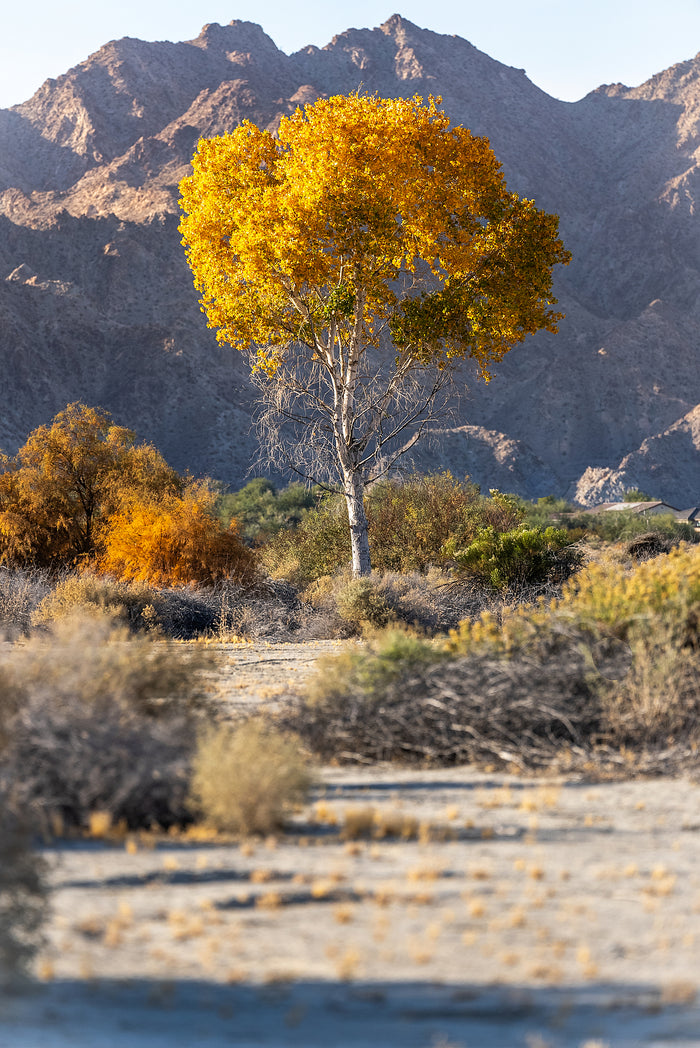
Fremont Cottonwood
Broad leaves and an open canopy mark this tree of places with dependable moisture.
Meet this plant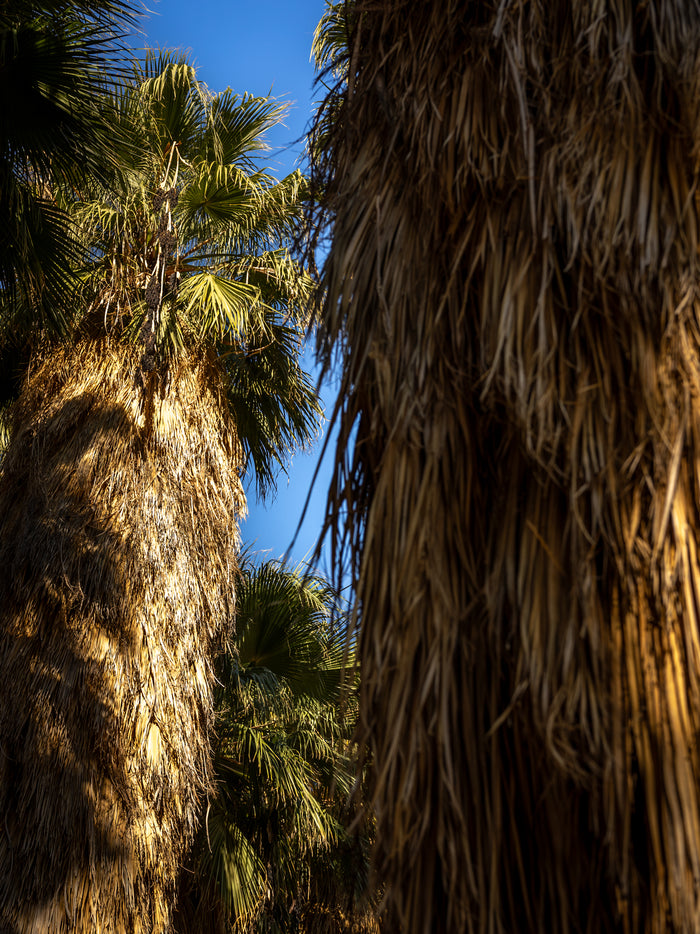
California Fan Palm
The native fan palm of our desert oases; a different plant from the many imported palms.
Meet this plant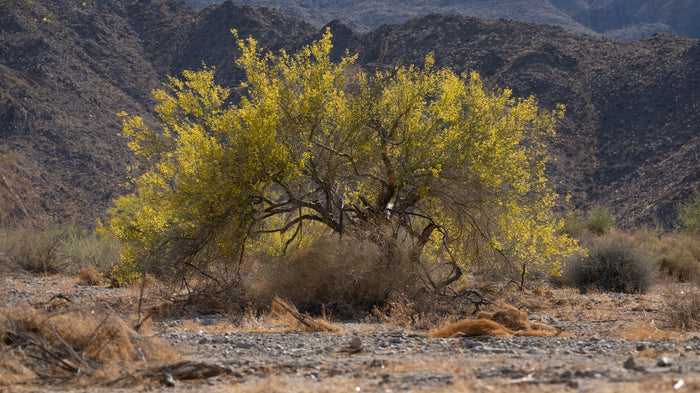
Palo Verde
Native palo verde species grow in the region; garden selections may also be hybrids.
Meet this plantFollow the story outside.
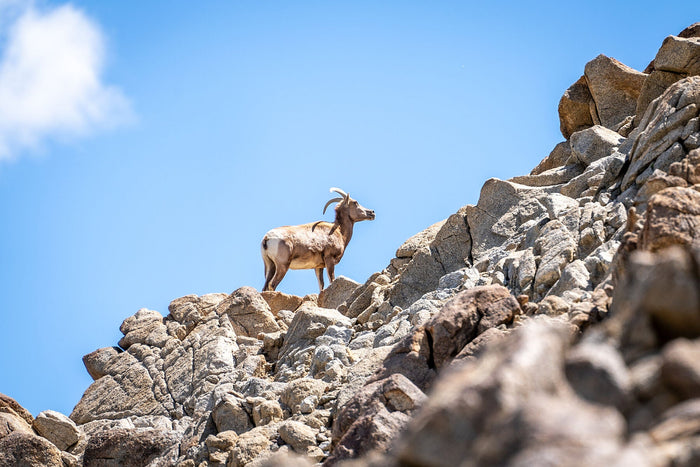
Bighorn Sheep of the Coachella Valley
Discover the bighorn sheep that share this landscape and the desert plants connected to their lives.
Read the story
La Quinta Cove Hiking Trails: Three Routes and What to Know Before You Go
Take the plant guide into the landscape with a closer look at the trails around La Quinta Cove.
Read the story
Hiking in Palm Desert: Trails, Views & Safety Guide
Continue exploring Palm Desert’s trails, open views and the outdoor spaces just beyond town.
Read the story