
California Fan Palm
Washingtonia filifera
The native fan palm of our desert oases; a different plant from the many imported palms.
- In this guide
- Native
- Plant group
- Trees & palms
- Typical setting
- Desert oases
- Explore the collection
- Desert flora guide
A closer look.
Open a photograph to see the details. Use the arrows or swipe to explore the gallery.


Photographs from Desert Oasis Insider’s plant collection. Locations are shown where recorded in the original gallery.
Get to know this plant.
About this classification: Native
Native to the California desert region or nearby mountains. The setting listed above matters: a mountain native may not belong to the hot valley floor.
The only palm species native to the western United States and is a defining feature of desert oases in the Coachella Valley and surrounding mountain ranges. This majestic palm, also known as the Desert Fan Palm, thrives in the region's arid environment and plays a crucial role in local ecosystems.
Identification & Appearance
- Height: Can grow up to 60 feet (18 meters) tall.
- Trunk: Thick, columnar, and typically gray-brown, often covered with a shaggy skirt of old, dried fronds.
- Leaves: Large, fan-shaped, bright green fronds (3-6 feet wide) with long, thread-like fibers along the edges.
- Flowers: Cream-colored, small flowers grow in clusters on long stalks in spring.
- Fruit: Small, black, berry-like drupes (edible) that ripen in late summer to fall.
Ecological Role & Adaptations
- Found naturally in desert oases where underground water sources sustain them.
- Provides vital habitat and food for birds, insects, and mammals.
- The shaggy skirt (dead fronds) protects against extreme temperatures and shelters birds and bats.
- Fire-resistant and well-adapted to desert heat.
Cultural & Historical Significance
- Indigenous peoples, such as the Cahuilla, utilized the fruits as a food source, weaving fronds into mats, sandals, and roofing materials.
- Historically, oases with fan palms were critical water sources for travelers in the desert.
Growing & Landscaping Uses
- Frequently planted as an ornamental tree in parks and gardens due to its iconic desert aesthetic.
- Prefers full sun and well-drained soil but can tolerate poor soils and drought.
- Unlike the closely related Mexican Fan Palm (Washingtonia robusta), it has a shorter, thicker trunk and is more cold-hardy.
Conservation
- Though not endangered, its natural habitat is limited to desert springs and oases, making water conservation crucial for its survival.
- Threatened by habitat loss and competition from non-native palms in urban landscapes.
The California Fan Palm stands as a symbol of resilience and life in the desert, making it an essential part of the Coachella Valley’s natural beauty and ecological heritage. 🌴
More native plants to know.
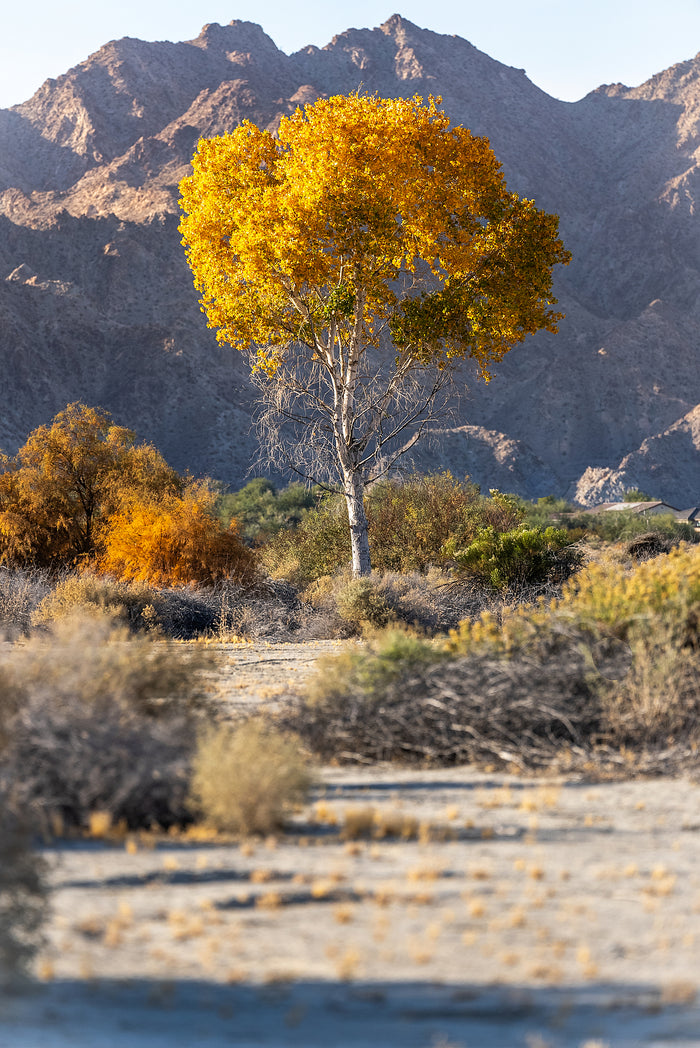
Fremont Cottonwood
Broad leaves and an open canopy mark this tree of places with dependable moisture.
Meet this plant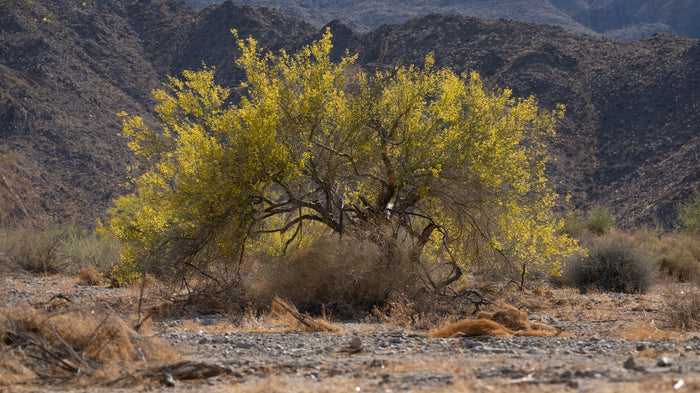
Palo Verde
Native palo verde species grow in the region; garden selections may also be hybrids.
Meet this plant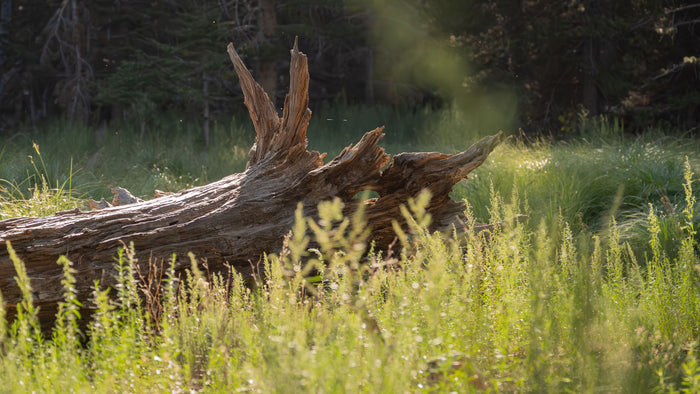
Jeffrey pine
A mountain tree of the San Jacinto region, rather than a native of the hot valley floor.
Meet this plantFollow the story outside.
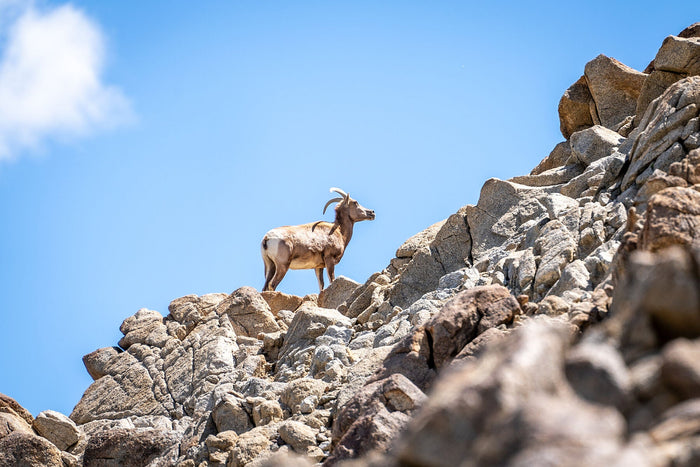
Bighorn Sheep of the Coachella Valley
Discover the bighorn sheep that share this landscape and the desert plants connected to their lives.
Read the story
La Quinta Cove Hiking Trails: Three Routes and What to Know Before You Go
Take the plant guide into the landscape with a closer look at the trails around La Quinta Cove.
Read the story
Hiking in Palm Desert: Trails, Views & Safety Guide
Continue exploring Palm Desert’s trails, open views and the outdoor spaces just beyond town.
Read the story