
Palo Verde
Parkinsonia species
Native palo verde species grow in the region; garden selections may also be hybrids.
- In this guide
- Native
- Plant group
- Trees & palms
- Typical setting
- Desert washes
- Explore the collection
- Desert flora guide
A closer look.
Open a photograph to see the details. Use the arrows or swipe to explore the gallery.


Photographs from Desert Oasis Insider’s plant collection. Locations are shown where recorded in the original gallery.
Get to know this plant.
About this classification: Native
Native to the California desert region or nearby mountains. The setting listed above matters: a mountain native may not belong to the hot valley floor.
Palo Verde, meaning "green stick" in Spanish, is a distinctive tree native to the deserts of the southwestern United States and northern Mexico. It is particularly well-adapted to the arid environment of the Coachella Valley and surrounding mountain ranges, where it thrives in dry washes, alluvial plains, and xeric landscapes.
Identification & Appearance
Palo Verde trees are easily recognizable by their bright green bark, a key adaptation that allows them to photosynthesize even when they shed their small leaves during extreme drought. Their delicate, airy canopy provides dappled shade, making them an excellent choice for desert landscaping.
- Leaves: Small, pinnate, and deciduous, typically shed in drought conditions.
- Flowers: Brilliant yellow, five-petaled, and appear in profusion in spring, attracting pollinators such as bees and butterflies.
- Bark & Branches: Smooth, green, and capable of photosynthesis.
Species Found in the Region
There are two primary Palo Verde species found in the Coachella Valley and surrounding areas:
-
Blue Palo Verde (Parkinsonia florida)
- More common in natural desert washes.
- Has a bluish-green tint to its bark and slightly larger leaves.
- Tends to be a shorter, shrubbier tree than the Foothill Palo Verde.
-
Foothill Palo Verde (Parkinsonia microphylla)
- Found at slightly higher elevations.
- Slower-growing, with a more compact, twisting structure.
- The leaves are smaller, and its green bark is more yellowish in tone.
A hybrid between these two, known as “Desert Museum” Palo Verde, is commonly planted in cultivated landscapes due to its thornless nature and extended blooming season.
Adaptations to Desert Life
Palo Verde trees are masters of drought survival, exhibiting several adaptations to thrive in extreme conditions:
- Photosynthetic Bark: Ensures the tree continues producing energy even after shedding leaves.
- Deep Root System: Reaches underground moisture in dry washes and alluvial soils.
- Drought Deciduous: Drops leaves during water stress, reducing transpiration.
- Nitrogen Fixation: Enhances soil fertility by hosting beneficial bacteria in its root system.
Ecological Importance
Palo Verde trees are a crucial part of the desert ecosystem, providing habitat, food, and shade.
- Pollinators: The flowers attract bees, butterflies, and native insects, supporting biodiversity.
- Wildlife Support: Birds, including Verdins and hummingbirds, use the canopy for nesting.
- Seed Dispersal: Desert mammals like rodents and jackrabbits eat the seed pods.
Cultural & Landscape Uses
- In native gardens, Palo Verde trees provide filtered shade for understory plants like brittlebush, chuparosa, and desert marigold.
- Used in xeriscaping for their low-water needs and aesthetic appeal.
- Indigenous peoples traditionally used their seeds for food, ground into flour or roasted.
Potential Drawbacks
- Short-lived compared to other desert trees (typically 30-50 years).
- Litter from seed pods and flowers can require occasional cleanup in urban landscapes.
- Thorns on native species can be an issue in pedestrian areas (though thornless cultivars exist).
Conclusion
Palo Verde trees are iconic desert natives with stunning seasonal blooms, an ecological role in sustaining desert life, and practical applications in landscaping. Whether growing wild in washes or as ornamental trees in gardens, they embody the resilience and beauty of the Coachella Valley’s arid landscapes.
More native plants to know.
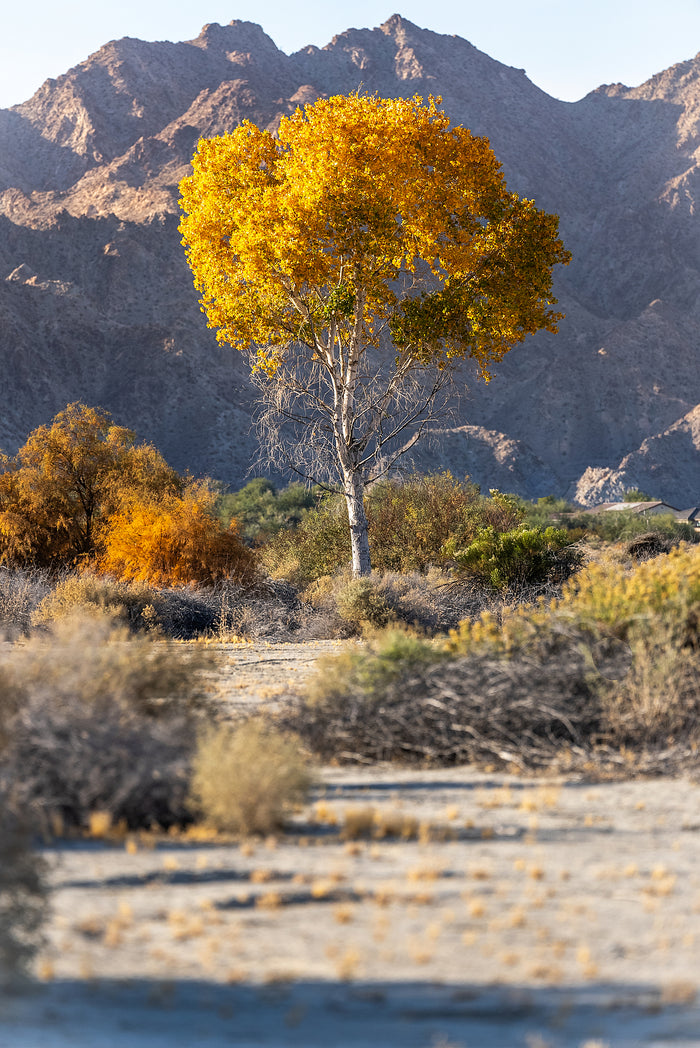
Fremont Cottonwood
Broad leaves and an open canopy mark this tree of places with dependable moisture.
Meet this plant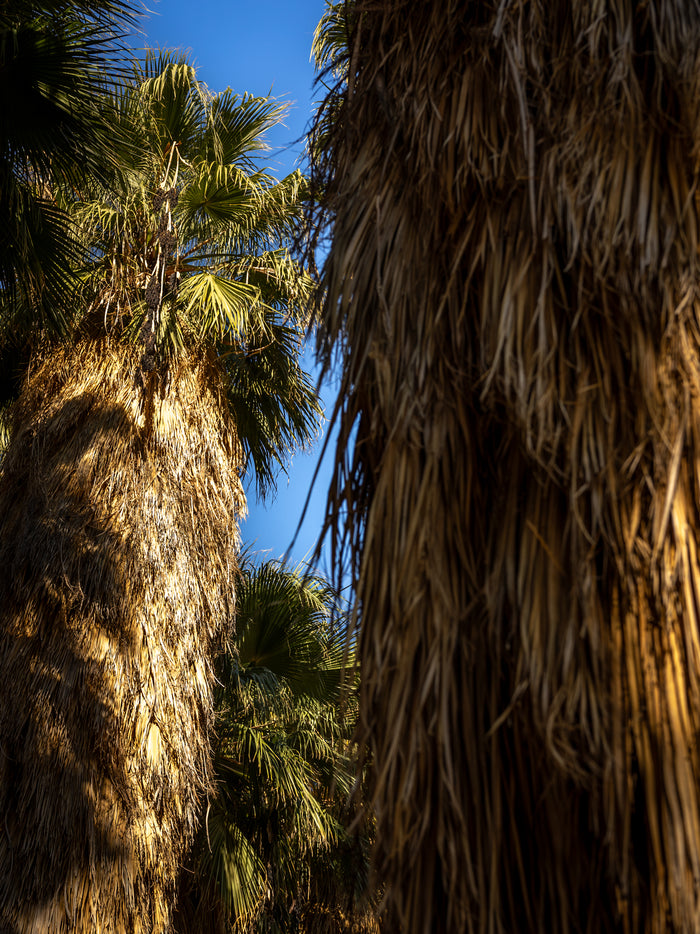
California Fan Palm
The native fan palm of our desert oases; a different plant from the many imported palms.
Meet this plant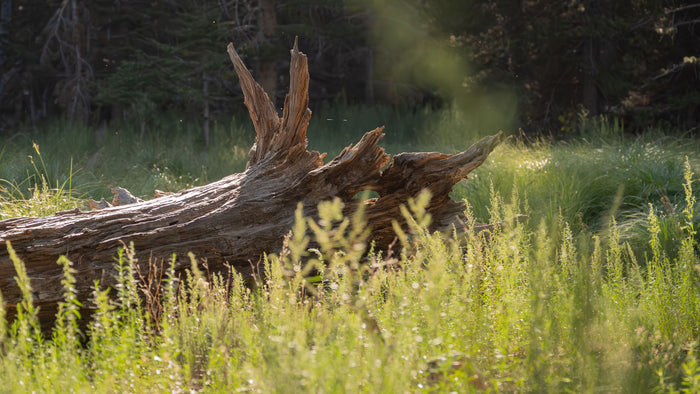
Jeffrey pine
A mountain tree of the San Jacinto region, rather than a native of the hot valley floor.
Meet this plantFollow the story outside.
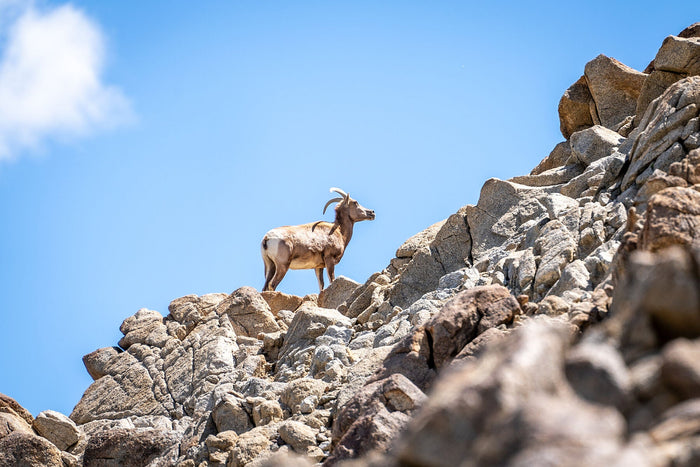
Bighorn Sheep of the Coachella Valley
Discover the bighorn sheep that share this landscape and the desert plants connected to their lives.
Read the story
La Quinta Cove Hiking Trails: Three Routes and What to Know Before You Go
Take the plant guide into the landscape with a closer look at the trails around La Quinta Cove.
Read the story
Hiking in Palm Desert: Trails, Views & Safety Guide
Continue exploring Palm Desert’s trails, open views and the outdoor spaces just beyond town.
Read the story