




























Why Cottonwoods Turn Gold in the Desert
The yellow was there before we could see it. Follow a cottonwood leaf from green to gold through original photographs and an interactive lesson.

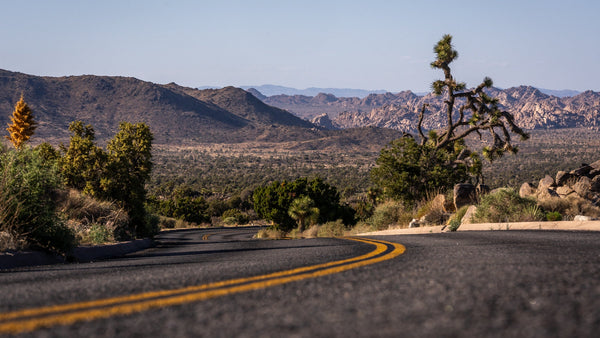
In my photograph from La Quinta, a golden cottonwood rises against the rocky mountains. The surrounding landscape is subdued; the tree seems to hold the season’s brightest color in one place.
The surprise is not just that autumn happens in the desert. It is that some of the yellow we finally notice was already present inside the green leaves.
- Yellow pigments can be present even while a leaf looks green.
- Seasonal color and leaf shedding are connected processes, but they are not the same event.
- A cottonwood’s setting helps explain how a water-loving tree lives in a desert landscape.
The gold was already there
A green leaf is not made of one green substance. It contains several kinds of pigments, including green chlorophyll and yellow-to-orange carotenoids. During the growing season, chlorophyll usually dominates what we see. As it breaks down in autumn, the other colors become more apparent. [1]
That is the first useful shift in perspective: a cottonwood is not simply putting a new coat of yellow over a green leaf. Much of the autumn show comes from a change in which existing pigments are visible.
Fremont cottonwood (Populus fremontii) is a deciduous tree whose leaves characteristically turn yellow in fall. [2] In my La Quinta photograph, that color stands against the much quieter tones of the mountains and surrounding vegetation. One tree makes the change of season easy to see.
Explore the color change
Select a stage to follow the idea from green to gold. The drawing is a teaching illustration; the photographs elsewhere in this article preserve the colors recorded by the camera.
Inside the autumn color change
One leaf, a changing balance of pigments
Green dominates the view
During the growing season, chlorophyll gives the leaf its familiar green appearance. Yellow and orange carotenoid pigments are present too, but their colors are less apparent.
The yellow does not have to arrive from somewhere else. Its pigments are already in the leaf.
Schematic colors and a simplified leaf shape, not measured pigment levels, a microscope view, or a forecast. Pigments are intermixed within leaf tissues, not stacked as separate coats of paint. The article below explains the same process without using the controls. [1] [5]
Try looking at the same photograph two ways
First, notice only the yellow canopy. Then look at the trunk, bare branches, surrounding shrubs and mountain backdrop. The leaf color is striking, but the tree’s structure and setting tell a different part of the story. A photograph records all of those details at once; you choose where to look.
Shorter days, not a frost switch
Autumn brings longer nights as well as changing temperatures. Seasonal changes in day length help cue the process in deciduous trees; weather and growing conditions influence how the display unfolds. A hard frost is not required to make leaves change color. [3] [4]
That matters in the desert. A warm afternoon does not cancel the shortening days. Nor should we expect every cottonwood to turn on the same date. Species, individual trees and local conditions all complicate the calendar. The University of California’s Southern California explanation emphasizes both seasonal timing and the effects of weather and soil moisture. [1]
These photographs document earlier visits, not today’s conditions or a predicted peak. If you want to learn the rhythm of one place, revisit the same tree and note what has changed. A date attached to your own observation is more useful than assuming someone else’s photograph represents this week.
A leaf finishes a season; the tree continues
A leaf and a tree have different lifespans. As the season progresses, changes at the base of the leafstalk help separate it from the twig. A protective boundary forms where the leaf was attached, leaving a leaf scar after it detaches. Botanists call the shedding process abscission. [4]
The three ideas belong together, but they are not identical. A yellow leaf can still be attached. A bare branch does not, by itself, establish that the tree is dead. Look at the whole tree and its seasonal pattern.
Once leaves reach the ground, the scene changes again. Fallen material can provide shelter for small animals and, as it decomposes, contribute to the soil. [5] In the Whitewater photograph below, leaves under the canopy make the season visible at your feet as well as overhead.

A water-loving tree in a desert landscape

Step back from the gold and ask another question: why is this kind of tree growing here?
Fremont cottonwoods are associated with riparian habitats—the places around rivers, streams and other water-supported corridors. That setting is part of their identity, not merely a convenient backdrop. [2]
The photograph invites you to notice a contrast between a tall, broad-leaved tree and the more open vegetation around it. It does not reveal a water-table depth or prove the source supplying this particular tree.
That is where observation becomes a better question. Look for a channel, a drainage corridor or a managed landscape. Then use the site’s history and habitat information to investigate further. Our guide to trees in apparently dry desert washes follows that connection between plants and water.
Seasonal color and stress are different questions
Not every yellow leaf is an autumn announcement. Unusually early color, browning or premature leaf drop can accompany stress. Water problems, root damage, pests and disease are among the possible causes; color alone cannot tell you which is responsible. [3]
Context helps: what kind of tree is it, what time of year is it, and is the change gradual across the canopy or concentrated in a few branches? Those are observations to record, not a diagnosis from a single photograph.
The desert also has more than one way of losing leaves. Our ocotillo story follows leaf changes tied closely to rain and dry periods. Here, the focus is a cottonwood’s autumn cycle. Recognizing the plant matters before interpreting its behavior.
Make a small seasonal record
Choose a cottonwood you can observe from a public path or a place you have permission to visit. On each visit, make three photographs: the whole tree, a section of canopy and the ground beneath it. Keep a similar viewpoint, and record the date.
Look for changes in the proportion of green and yellow leaves, the amount of visible branching, and the leaves gathering below. Note the light too: sunlit leaves and shaded leaves can look different even in the same canopy. Your pictures will describe one tree through time, without turning a single visit into a rule for the entire valley.
For identification, continue with the Fremont Cottonwood field guide. For the wider landscape, explore Whitewater Preserve and the native-plant guide. Let the gold catch your attention, then stay long enough to notice what surrounds it.
Frequently asked questions
Why do cottonwood leaves turn yellow?
As green chlorophyll declines in autumn, yellow carotenoid pigments already in the leaves become more visible. Fremont cottonwood is known for yellow fall foliage. The tree is not simply coating green leaves with new yellow paint. See the UC explanation of fall color.
Does it have to freeze before leaves change color?
No. Seasonal color can begin before frost. Changing day length is an important cue, while weather and growing conditions affect the display. An early hard frost can damage foliage and shorten it.
Does a yellow or leafless cottonwood mean the tree is dead?
No. Fremont cottonwood is deciduous, so seasonal leaf loss is part of its life cycle. However, a photograph of yellow leaves cannot establish the health of a particular tree. Timing, the pattern of change and other evidence matter.
When will cottonwoods reach peak color in the Coachella Valley?
There is no single date established by these photographs. Watch a particular tree through autumn and into the cooler season, recording the date and conditions. The images in this article show past visits and should not be read as a current foliage report.
Can I use the interactive leaf to identify a cottonwood?
No. The drawing explains pigment changes with a simplified shape. Identify a real tree using several features, including leaves, bark and growth form. The Fremont Cottonwood field guide is a starting point.
Sources and photo notes
Research checked October 23, 2026. Original photographs by Mark Miller, selected from the existing DOI Fremont Cottonwood collection. The La Quinta photograph is cataloged as 2024; an exact capture day is not established here. The Whitewater photograph is cataloged December 15, 2025. They document earlier visits, not current foliage conditions.
The featured image is a horizontal crop of the La Quinta photograph; the full composition appears in the article. Photo colors have not been changed for the lesson. The interactive leaf is an original, simplified illustration. Its color transitions are explanatory, not measured pigment concentrations, microscope imagery, a timed growth record or a forecast.
- University of California Agriculture and Natural Resources — Fall Colors Explained. Janet S. Hartin, October 23, 2023. Chlorophyll, carotenoids, seasonal cues and the influence of growing conditions.
- National Park Service, Arches — Fremont’s Cottonwood. Species account, updated April 29, 2025. Deciduous habit, yellow autumn foliage and riparian habitat. Its Arches flowering calendar is not used as a Coachella Valley calendar.
- Iowa State University Extension — The Science Behind Fall Color. Cynthia Haynes and Aaron Steil; reviewed October 2026. Seasonal pigment changes, weather effects and premature color associated with stress. General physiology, not a local foliage forecast.
- USDA Forest Service — Why Leaves Change Color. Fact sheet on seasonal pigments, frost and the separation of a leaf from its twig.
- USDA Forest Service — The Joy and Science of Fall Colors. Pigment overview and the roles of fallen leaves in soil and wildlife habitat.


