




















How Canal Water Becomes Electricity: IID Hydropower
Follow the water from a controlled drop to a spinning turbine—and follow the energy to the grid.

A canal can do more than carry water to a farm. Where the water drops to a lower elevation, a generating plant can capture part of that energy before the water continues downstream.
That is the idea behind IID’s All-American Canal hydropower facilities. The canal moves Colorado River water through Imperial Valley; its power plants turn some of the water’s downhill energy into electricity.
- Head and flow: height difference and moving water provide the energy.
- Two machines: a turbine turns; a generator produces electricity.
- The water continues: power generation captures energy while water moves downstream.
- IID connection: All-American Canal hydro plants began operating in 1941.
Start with height, not a giant waterfall
Hydropower depends on two things: the amount of water flowing and the elevation difference available at the plant. Engineers call that difference head. A controlled drop in a canal can provide useful head without looking like a mountain waterfall. More flow or more usable head can increase the energy available, within a plant’s operating limits. [1]
Follow the water—and then the energy
- Water arrives at a higher level. An intake directs flow toward the generating equipment.
- The turbine turns. Water moving through the turbine transfers energy to its runner.
- The shaft drives a generator. Rotation is converted into electrical energy.
- Electricity joins the grid. Transformers and electrical equipment connect the generator to the wider system.
Water exits the turbine at a lower level and continues along its water route. The generating equipment takes energy from the flow; it does not burn the water as fuel. [1, 2]
A turbine and a generator do different jobs
The turbine is the water-driven machine. The generator is the electrical machine driven by that motion. The shaft connects them, allowing the moving water to do useful work without sending canal water through a power line.
Turbine designs vary with head and flow. Reaction turbines, often used for lower-head, higher-flow settings, extract energy from pressure and moving water. A schematic can explain the principle, but it cannot identify the exact runner design inside a particular IID plant. [3]
Where IID puts the idea to work
The All-American Canal begins at Imperial Dam and carries water toward Imperial Valley. IID describes an approximately 80-mile gravity-flow canal with a total elevation fall of about 175 feet. That fall is spread across the system; it is not a single 175-foot drop at one generating station. [4]
IID’s canal facilities include Drops 1 through 5. Its Pilot Knob plant has a different arrangement: a bypass channel links the All-American Canal and Colorado River. Different sites have different waterways, equipment and operating constraints. [4, 5]
How the canal power system developed
| Year | Milestone |
|---|---|
| 1941 | The first All-American Canal hydro plants are completed at Drops 3 and 4. |
| 1953 | Drop 2 joins the generating system. |
| 1957 | Pilot Knob begins operating on its bypass channel. |
| 1982 | Drop 5 is completed. |
| 1984 | Drop 1 and the East Highline turnout plants are commissioned. |
Milestones follow IID’s canal history. The district began selling electricity in 1936, before these canal hydro plants were operating. For that earlier chapter, read the IID origin story. [4, 6]
Why the water can still serve another purpose
Generating electricity changes the water’s energy and elevation; it does not make the water disappear. Irrigation-canal hydropower can therefore combine power generation with an existing water-delivery route. Water management and plant operation still have to work together.
Hydropower should not be confused with a guarantee of constant output. Changes in available flow, head, equipment condition and operating limits can affect generation. A plant’s rated capacity is not a promise that it produces that amount every hour. [1, 2]
Recognizing the wider system around you
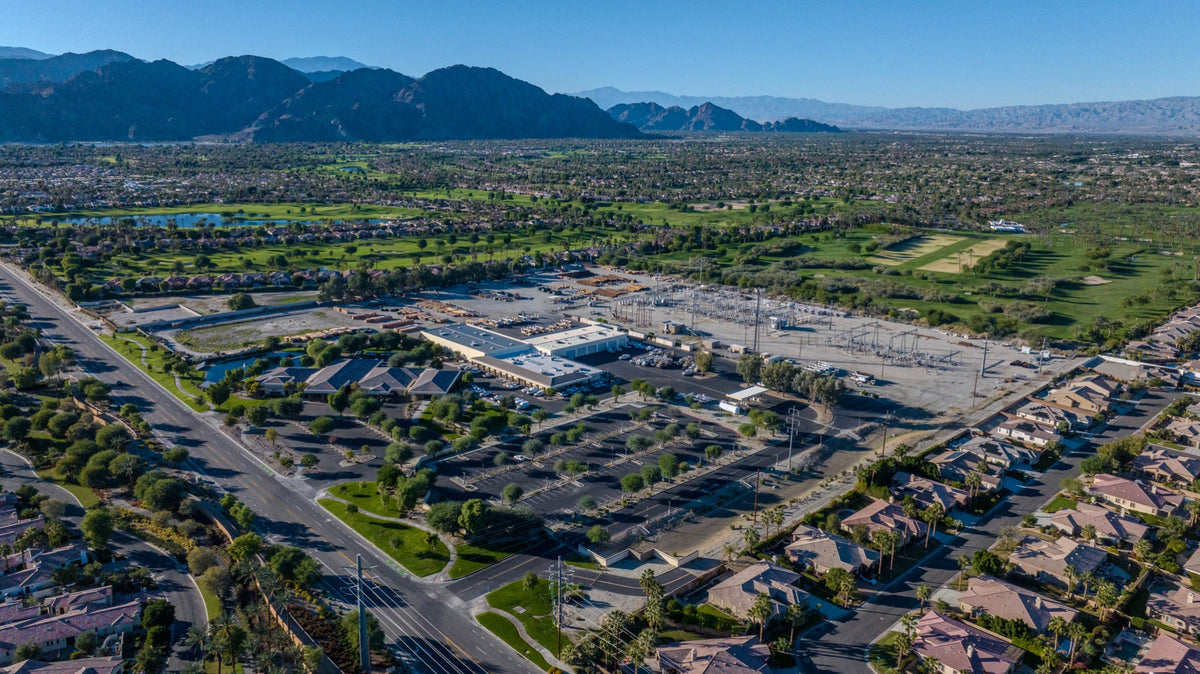
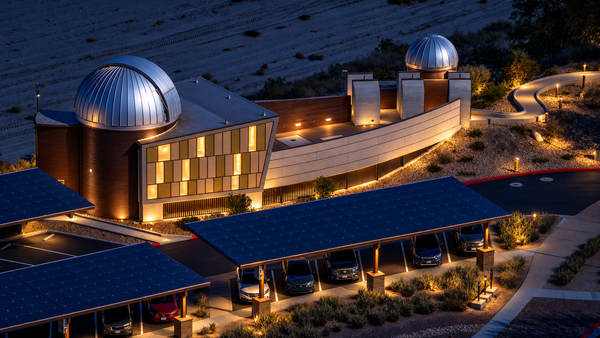
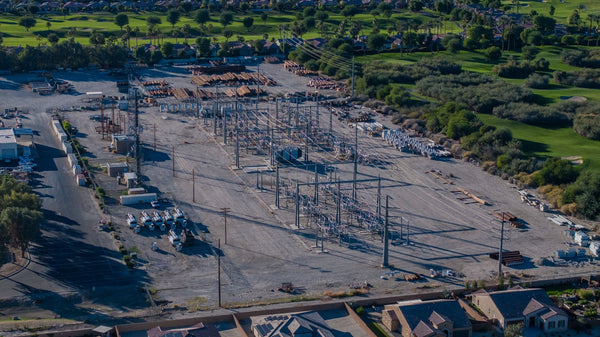
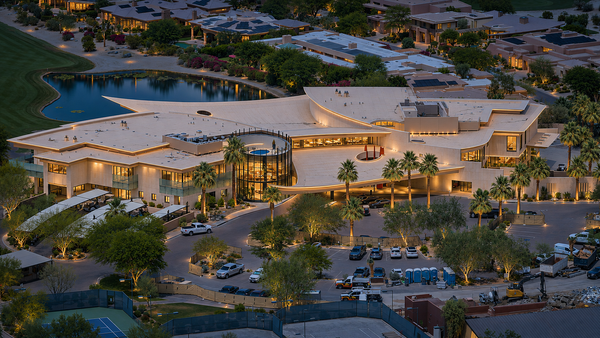
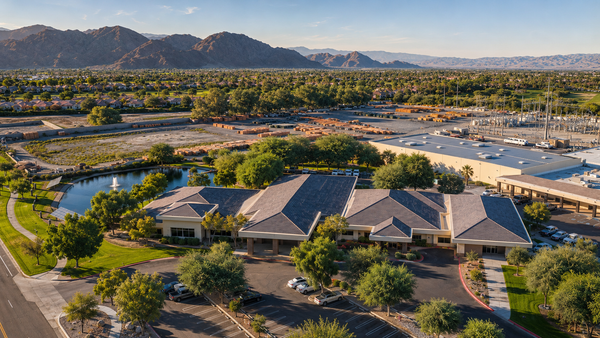
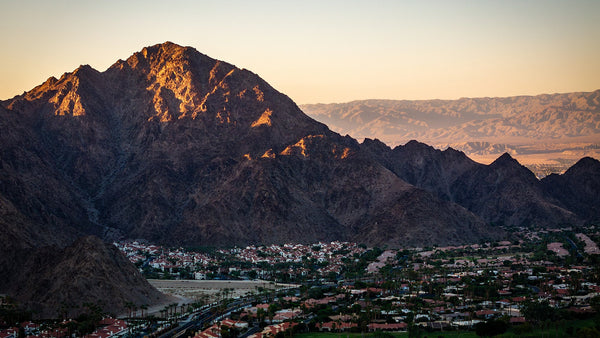
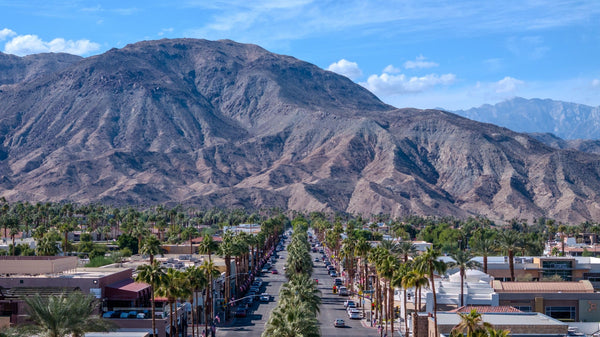
The electrical equipment in my La Quinta photographs belongs to the broader utility landscape. It should not be mistaken for one of the canal powerhouses. The connection is the system: generating electricity, moving it through the grid and delivering it to customers.
For the water’s other regional connections, continue to IID and the Salton Sea or the Coachella Canal story.
Frequently asked questions
Does hydropower use up the water?
The turbine extracts energy from moving water. Water leaves at a lower level and continues downstream; it is not consumed as fuel.
Does a canal need a huge waterfall to make electricity?
No. Useful generation can come from controlled elevation differences and sufficient flow. Head and flow together determine the available energy.
Are the turbine and generator the same machine?
No. Water turns the turbine; the turbine drives the generator, which produces electricity.
When did IID begin generating canal hydropower?
IID’s canal history dates the first All-American Canal plants at Drops 3 and 4 to 1941. Its electric-service business began earlier, in 1936.
Are the La Quinta photos pictures of a hydroelectric plant?
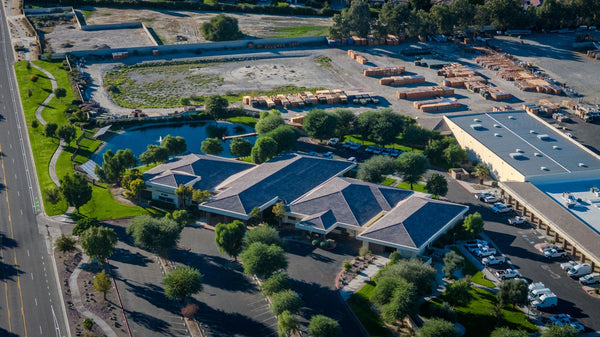
No. They show IID’s La Quinta utility campus. The diagram explains the generating principle; it is not a drawing of that campus.
Sources and photo notes
Research checked November 9, 2026. Plant milestones are historical; no live generation, rate or output claim is made.
- Department of Energy — How Hydropower Works
- Federal Energy Regulatory Commission — Hydropower Primer
- Department of Energy — Types of Hydropower Turbines
- IID — All-American Canal
- IID — 2024 Integrated Resource Plan
- IID — Hydro Works Here
Photographs © Mark Miller, November 7, 2026. Diagram by Desert Oasis Insider; simplified water and energy paths, not an engineering plan.


