























What’s Flying Over the Pond After Sunset?
Water, insects and a world mapped in returning sound.

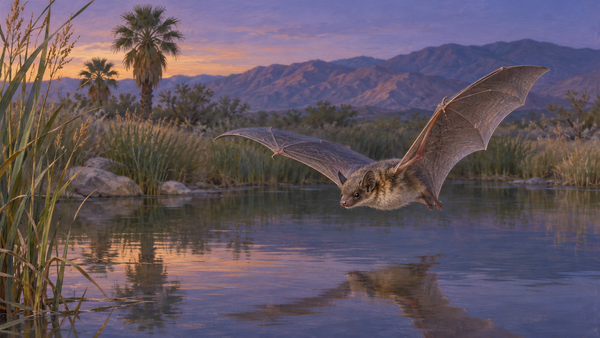
The pond is losing its color. Mountains become a silhouette, the last birds settle down, and a small shape cuts across the water. It turns, disappears, then comes through again.
It may be a bat. And what looks like a flicker in the evening light can be an animal finding food, finding water and reading its surroundings through returning sound.
- A bat over a pond may be hunting insects, drinking or passing through.
- Echolocation uses returning sound; a longer journey means a longer delay.
- A silhouette can start a good observation without providing a species identification.
A different evening shift
A desert pond does not stop being habitat when daylight fades. Insect-eating bats can use the air above water as a feeding area, while the water itself offers a place to drink. National Park Service researchers in the Mojave Desert region place acoustic detectors near open drinkable water and springs because these are promising places to record bats. Vegetation around springs also attracts insects. [1]
That makes a pond a useful place to understand the connection between water and wildlife. It does not mean every pond supports the same species, or that every evening guarantees a sighting. A bat passing through also does not prove it roosts nearby.
Why the flight keeps changing
A feeding bat may turn sharply as it pursues insects. Some catch prey with a wing or the membrane near the tail before bringing it to the mouth. That helps explain why a flight path can look so irregular to someone watching from the bank. [2]
But a sharp turn is a clue, not an identification. Birds can turn abruptly too. In poor light, the most honest description may be simply “a small flying animal over the water.” Watching repeated passes can give you more information than trying to name the first silhouette.
Send a call. Wait for an echo.
Many bats produce high-frequency calls and listen for sound reflected from objects around them. This is echolocation. The time between a call and its returning echo provides information about distance. As an insect-hunting bat closes in on prey, its calls can arrive in a rapid sequence called a feeding buzz. [3]
Try moving the insect. The sound has to travel to it and back, so doubling the distance doubles the modeled return time.
FOLLOW THE SOUND
How far away is the insect?
At 20 feet, the sound travels 40 feet in total and returns in about 35.5 milliseconds.
Animation slowed 30×. Sound is shown visually, not played. This simplified model holds the bat and insect still and uses sound traveling at 343 meters per second (about 20°C / 68°F air). Real flight, temperature, echoes and call patterns are more complex. Drawings are schematic. [3, 4]
Hearing does not replace eyes
Bats are not blind. They have eyes and can use vision as well as hearing. Echolocation adds another way to gather information, especially when an animal is navigating or hunting in dim light. [3, 5]
Nor is echolocation just a single ping followed by a perfect picture. A flying animal receives a changing stream of echoes. Our interactive isolates one relationship—distance and travel time—so that you can see it clearly. It does not reproduce a bat’s complete sensory experience.
Many echolocation calls are above the range of human hearing. The quiet you experience beside a pond does not tell you whether a passing bat is calling. Researchers use specialized microphones and recordings to study those sounds. [1, 3]
A drink on the wing
Water has a second role beyond bringing insects into reach. Bats can drink while flying low over the surface, dipping the lower jaw into the water. A study of frequency-modulated echolocating bats documented changes in call timing during approaches and drinking passes. That study took place at a pool in northeastern India; it explains a behavior, not which species you are seeing in the Coachella Valley. [6]
From shore, a low pass may be over before you can tell what happened. A bat close to the surface could be drinking or pursuing prey. Unless you actually see the contact or catch, it is better to leave that part open.
Water in a dry landscape

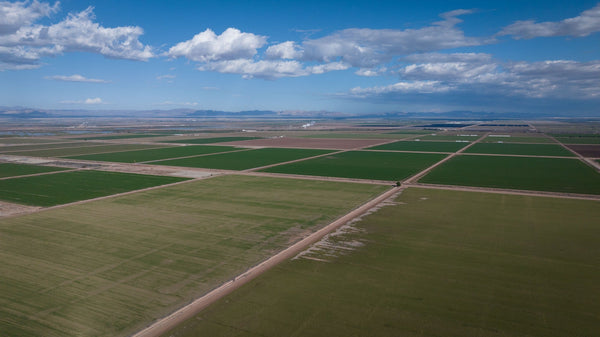
A broad view makes the water easy to notice. The less visible story is what a water source can mean for animals moving through a dry region. Open water can offer a drinking opportunity, while vegetation and insects add other reasons to visit. Those connections are why desert monitoring programs pay attention to springs and water sources. [1]
Natural springs, neighborhood ponds and reservoirs are different habitats. Their presence alone does not tell us how useful they are to bats. Access to the surface and the surrounding setting matter; a photograph cannot establish how an animal uses a particular site.
For the daytime side of the same story, explore what one desert pond taught me about birdwatching. For the larger water story, see how a palm oasis can exist in the desert.
Watch without needing a species name
From an established, permitted viewing area, let your eyes adjust and watch the open sky just above the water. Notice whether an animal makes repeated passes, changes height or briefly touches the surface. Keep space around its flight path, leave roosts undisturbed and do not handle bats.
A quick silhouette rarely provides enough detail for a confident species identification. Researchers can use acoustic recordings and other evidence; even a close-looking illustration cannot identify a bat that flashed past you. [1]
You do not need a species name to notice the change. A pond that held ducks and dragonflies in daylight can become part of a different animal’s evening. The landscape is familiar. The way it is being used is changing.
Frequently asked questions
Why do bats fly over desert ponds?
Open water can provide a place to drink, and insects around water and vegetation can provide food. A pass over a pond does not by itself reveal what the bat was doing or where it roosts.
How does echolocation tell a bat about distance?
A call travels outward and an echo returns. The delay contains information about distance. Our model uses distance = sound speed × return time ÷ 2, because sound covers the route twice.
Are bats blind?
No. Bats have eyes and can use vision. Echolocation is an additional way of gathering information, not evidence that they cannot see.
Can bats drink without landing?
Yes. Bats can fly low over water and dip the lower jaw to drink. A low pass alone does not prove drinking occurred; it can be hard to see from shore.
Can I identify a bat by its silhouette at dusk?
A brief silhouette usually does not provide enough detail for a confident species identification. Researchers use additional evidence, including acoustic recordings. Watch from a permitted area without handling bats or disturbing roosts.
Sources and visual notes
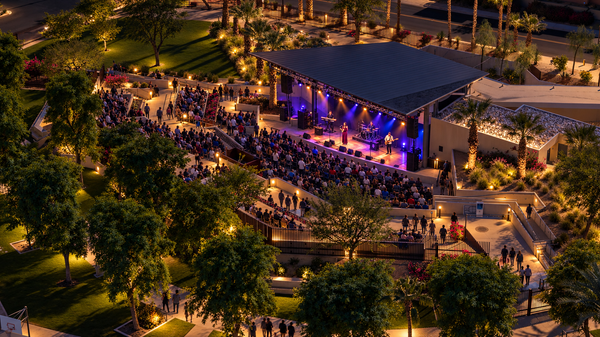
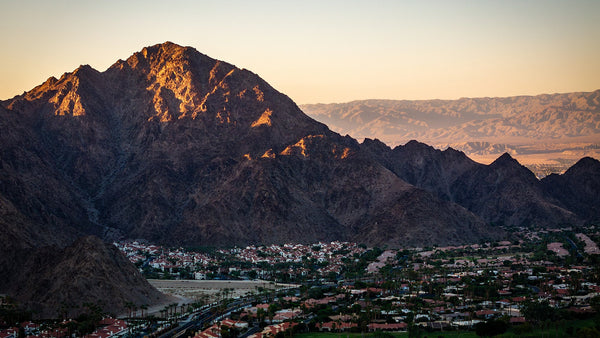
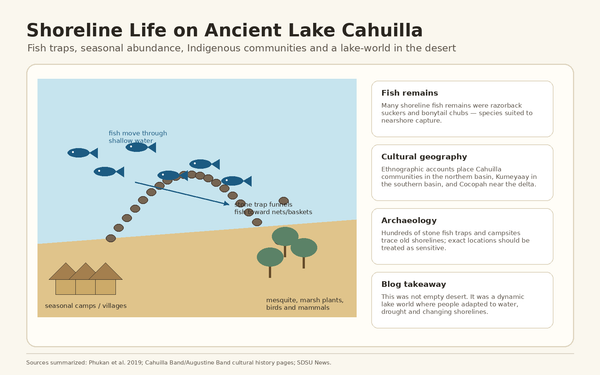
Sources checked November 8, 2026. The featured scene is an AI-generated natural-history illustration, not a photograph or a species identification. The Lake Cahuilla image is original photography by Mark Miller and supplies landscape context, not evidence of a bat sighting. The sound diagram is an original schematic. Its 30× slower animation models a stationary source and target at a constant sound speed; it is not a bat recording.
- National Park Service — Mojave Desert Network Bat Monitoring. Regional monitoring methods and the role of open water, springs and insects.
- USGS — What do bats eat?. Insect hunting, wing and tail membranes, and feeding-related flight.
- National Park Service — Echolocation. Ultrasound, returning echoes, feeding buzzes and acoustic recordings.
- NASA — Introductory physics activities. Reference sound speed of 343 meters per second used in the simplified model. Temperature and conditions affect sound speed.
- USGS — Are bats blind?. Bats use vision; they are not blind.
- Echolocation while drinking: Pulse-timing strategies by high- and low-frequency FM bats (2019). Primary research in PLOS ONE on drinking flight and call timing. The study site was in northeastern India, not the Coachella Valley.


