


















Golf Courses in La Quinta: A Visual Tour
A photographic journey through mountain-side fairways, desert golf and private clubs—with a clear path to the courses visitors can play.

Golf in La Quinta can mean a green beneath a wall of rock, a lake wrapped by fairways, or palm-lined corridors stretching through a neighborhood. Seen together, those settings tell a richer story than a list of course names.
This visual tour brings together my photography from across La Quinta, with selected AI-enhanced scenes, pairing the views with clear public, resort and private-club access labels. Start with the visitor options if you are planning a round, or follow the photographs to get to know the city through its golf landscapes.
- Eight public and resort courses—including a par-3 walking option—give visitors a starting point.
- Private clubs are included for their place in La Quinta’s landscape, with access clearly labeled.
- Original photographs and disclosed AI-enhanced scenes show the settings; use the Golf Explorer for official booking links.
Looking for a public tee time?
Start with these eight named courses in La Quinta. “Public” and “resort” describe a visitor booking route, not a promise of availability on your date. This tour includes private clubs farther down the page so you can understand the wider landscape without confusing them with bookable visitor rounds.
Public & resort golf
Find your kind of round
Choose a course setting, then explore its story or check its official booking route.
8 courses to explore
Pete Dye Stadium
The Alcatraz island-green landmark.
Nicklaus Tournament
Water, island greens and tournament golf.
Greg Norman
Desert textures around the fairways.
Pete Dye Dunes
Golf woven through La Quinta’s neighborhoods.
Pete Dye Mountain
A course at the mountain edge.
Trilogy Golf Club at La Quinta
South La Quinta scenery and a neighborhood setting.
Palm Royale Country Club
A walking round and short-game focus.
Public access describes a booking route. Confirm availability, maintenance and the terms for your chosen date with the golf shop.
Open the Golf Explorer filtered to La Quinta for course profiles and official tee-time links. Confirm seasonal maintenance, the exact course and clubhouse, and the terms of your chosen reservation.
Where the mountains meet the fairways
A distant mountain can make a lovely backdrop. A rock face rising immediately beyond the grass changes the entire scale of a scene. That relationship is a useful place to begin understanding golf in La Quinta: some courses press against the foothills, while others spread across the open valley floor.
Pete Dye Mountain: a separate mountain-side round
Public resort golf
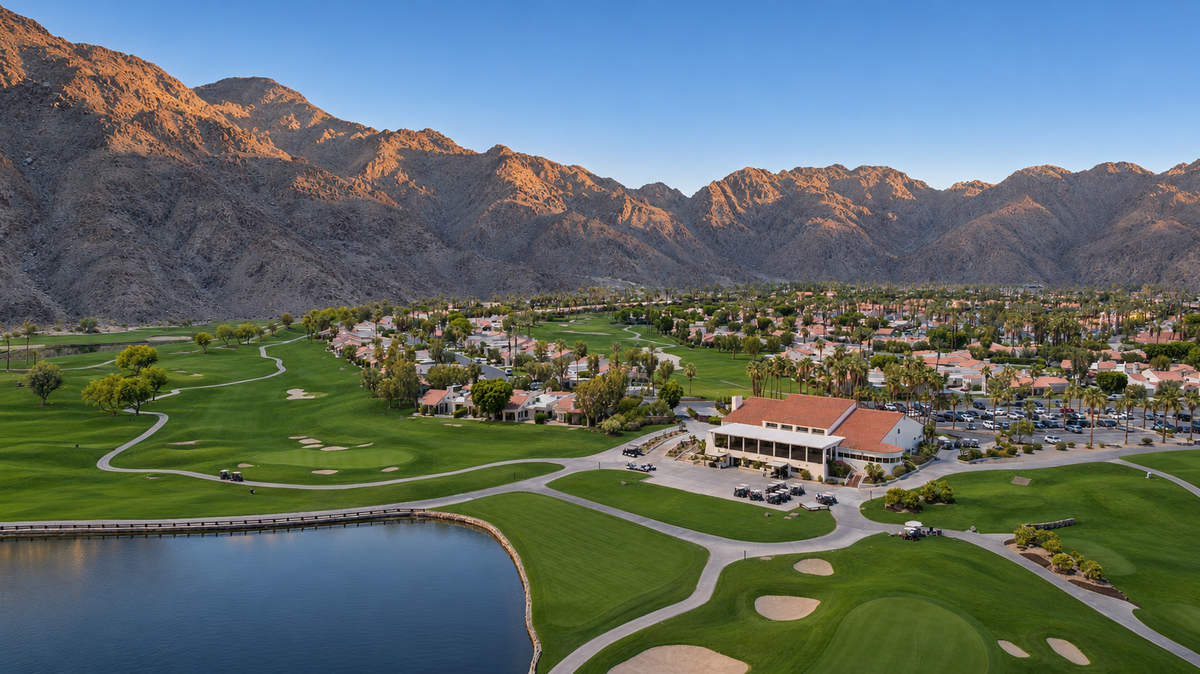
The Mountain Course is a separate course from Dunes, with its own routing at the base of the Santa Rosa Mountains. Compare it with SilverRock if the close mountain setting is what draws you to La Quinta.
Mark’s photograph shows the Pete Dye Clubhouse, formerly known as the Mountain & Dunes clubhouse, with golf and the Santa Rosa Mountains around it. Mountain and Dunes use this shared clubhouse, while remaining separate courses.
SilverRock: the scale of the desert
Public golf
At SilverRock, the rocky slopes compete with the golf for your attention. In the featured image at the top of this guide, the golfer gives the landscape a human scale: the grass is familiar, but the wall of desert behind it feels immense.
The City of La Quinta owns the course, and the design is the Arnold Palmer Classic Course. For a visitor choosing a setting, the immediate mountain presence is the clearest reason to put SilverRock on the shortlist. The wider resort-development story has its own development tracker.
PGA West: three different resort-course landscapes
PGA WEST is a family of courses, not one layout. Its five public resort choices include Stadium, Nicklaus Tournament, Greg Norman, Mountain and Dunes. The three below show how much the visual character can change within the same golf destination.
Pete Dye Stadium: the island-green landmark
Public resort golf
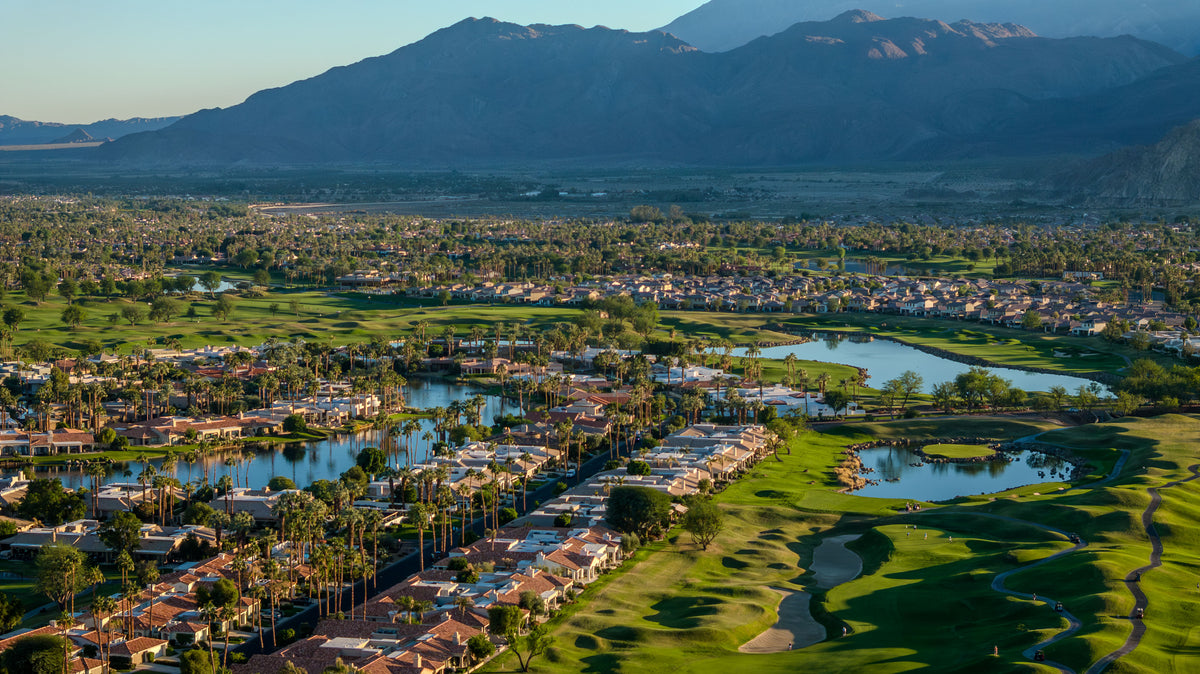
The Stadium photographs move from a broad panorama of lakes and homes to a very specific landmark: the rock-lined island green known as Alcatraz. Seeing those two scales together is useful. One shows the setting around the course; the other shows why a single hole can become the image people remember.
Alcatraz is Stadium’s 17th hole. The wide aerial includes surrounding residential scenery, so it should be read as landscape context rather than a boundary map.

Nicklaus Tournament: another island, another course
Public resort golf

The island green in this photograph has its own identity: sand, a wooden bridge and water define the approach to the putting surface. It is a useful counterpoint to Stadium’s rock-lined Alcatraz.
The important booking distinction is in the name. Nicklaus Tournament is a public resort option; Nicklaus Private is a different course. Make sure the reservation and directions refer to the one you intend to play.
Greg Norman: green against desert ground
Public resort golf
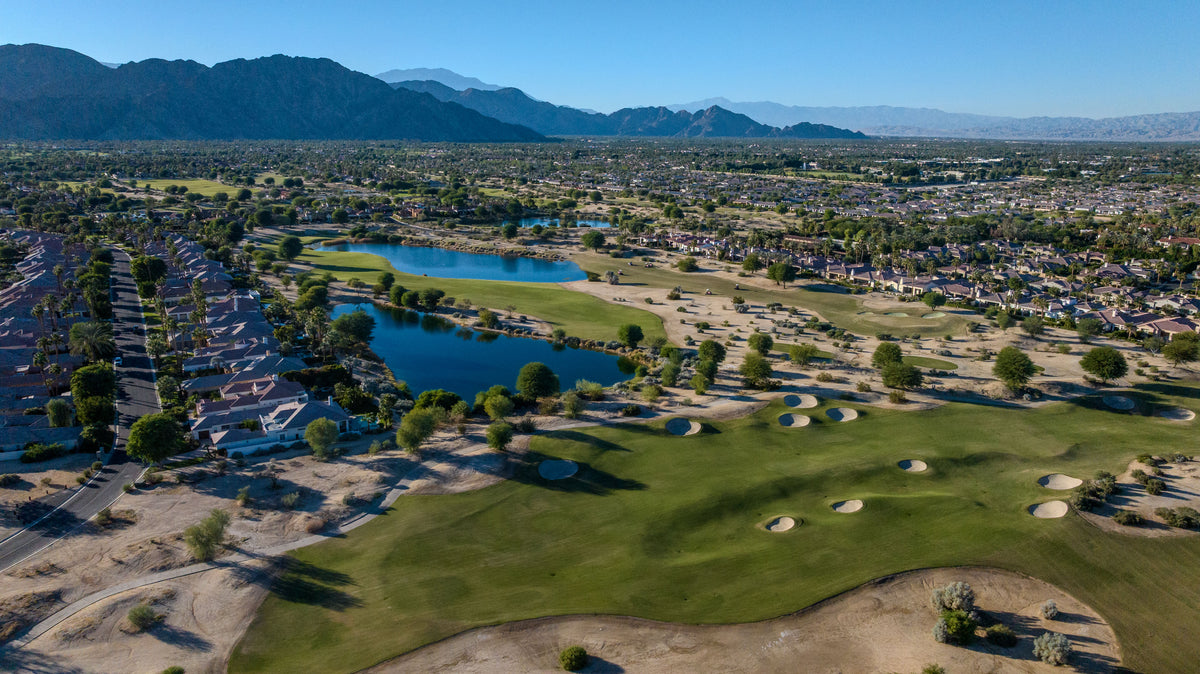
The Greg Norman setting changes the palette. Sandy ground and more open spaces sit beside the manicured grass, while water and residential roofs add their own shapes to the wider panorama.
This is one of the most useful contrasts in the tour: compare the ground surrounding the fairways here with the more continuously landscaped scenes elsewhere. The attraction is as much the desert left visible between the golf corridors as the green itself.
Golf woven into the neighborhoods
From above, a course becomes part of a larger pattern of homes, streets, lakes and open space. At ground level, the same landscape becomes a place where people practice, play and spend an afternoon. These two perspectives tell different parts of La Quinta’s golf story.
Pete Dye Dunes: fairways among the homes
Public resort golf
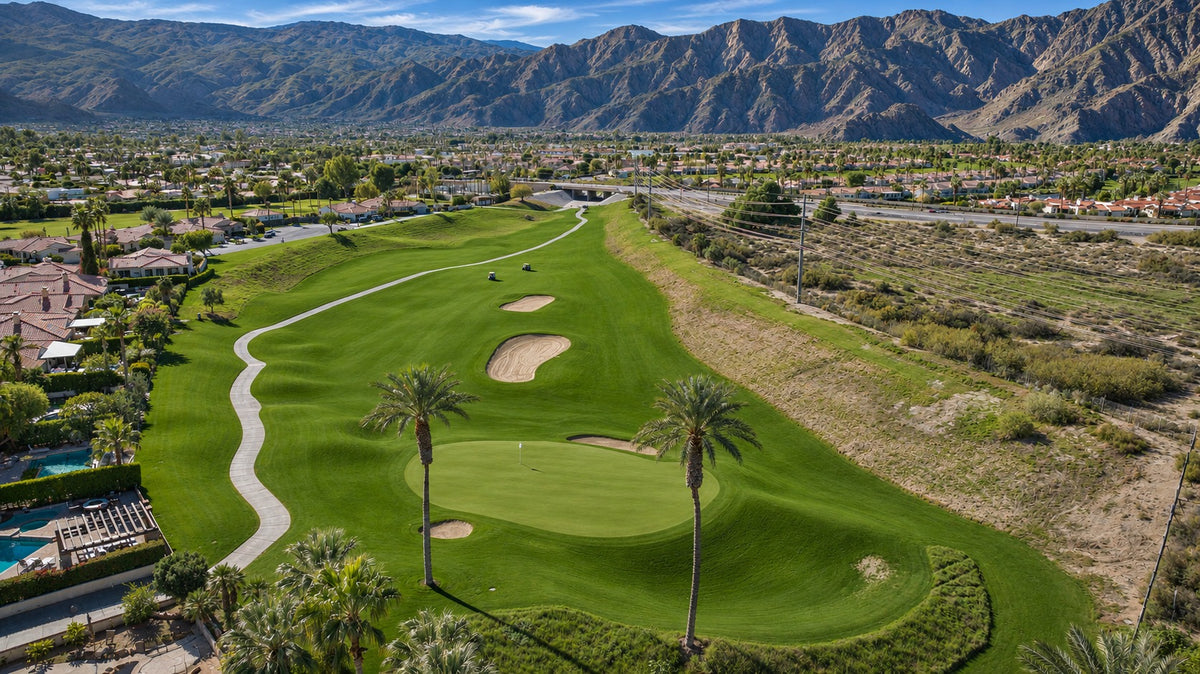
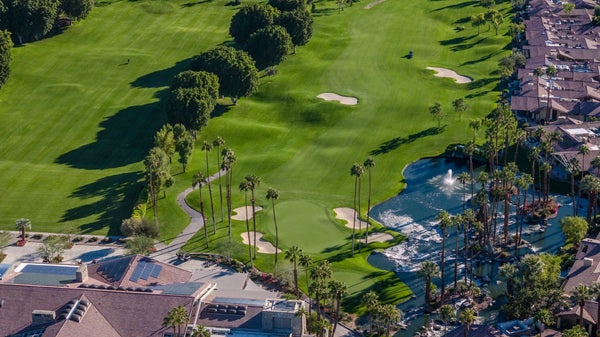
The Dunes photographs show golf in conversation with the surrounding neighborhood: homes frame the green corridors, while palms, bunkers and mountains give the view depth.
These images were captured around La Quinta Fairways. They show this part of the Dunes setting, not every hole or the entire course. Dunes and Mountain are separate courses, even though their names are often encountered together through La Quinta Resort and PGA WEST.
Trilogy Golf Club at La Quinta: the human scale
Public golf
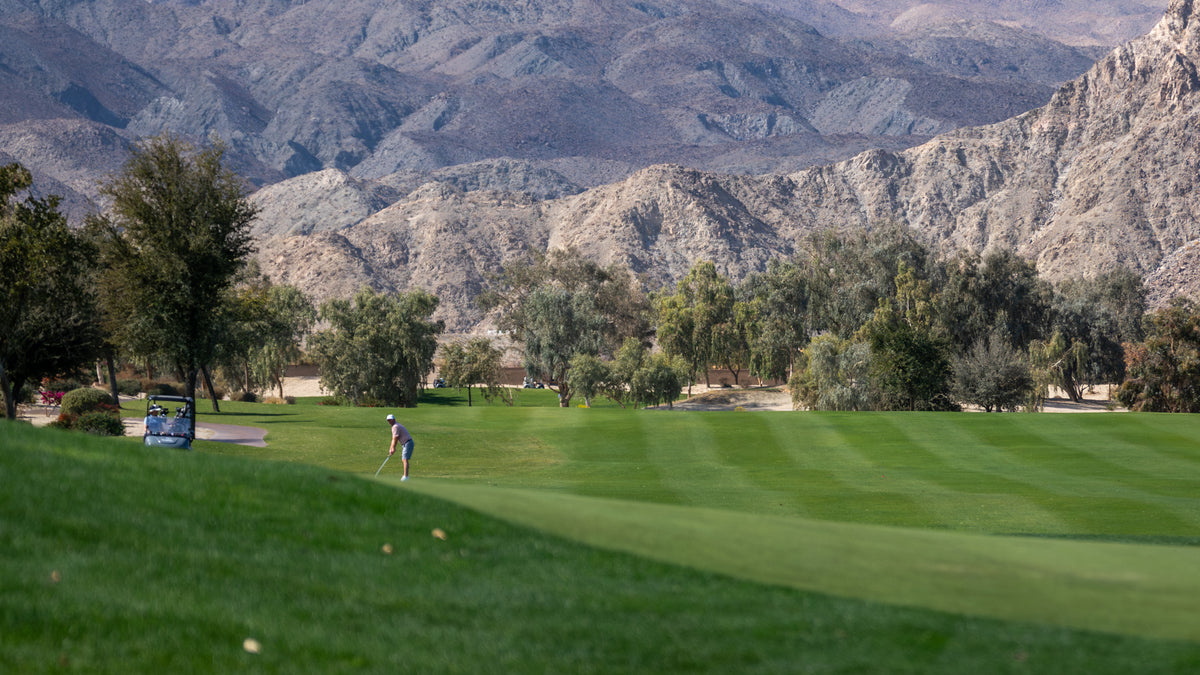
After the wide aerial views, a photograph of golfers beneath the mountains brings the story back to the people on the grass. Trilogy’s fairways, homes and distant slopes create a distinctly south La Quinta scene.
The golf course welcomes public players. That does not make every amenity inside the surrounding residential community public. For another layer of context, read the history of Trilogy Golf Club and its changing ownership.
Palm Royale: a different kind of round
Public par-3 golf · Walking only
La Quinta golf also includes a smaller-scale option. Palm Royale is an 18-hole, par-3 walking course, giving visitors an alternative to the full-length courses pictured throughout this tour. It can suit someone looking to work on shorter shots or spend a round on foot.
This edition does not include a Palm Royale photograph. Compare its profile and official booking link in the La Quinta Golf Explorer.
The private-club side of La Quinta
The following settings belong to the visual story of golf here, but they are not ordinary public tee-time choices. Arrange any visit or golf access through the club or an approved host. A home beside a fairway, a rental reservation or a real-estate tour does not by itself establish playing privileges.
PGA West Palmer Private: water below the mountain edge
Private club golf
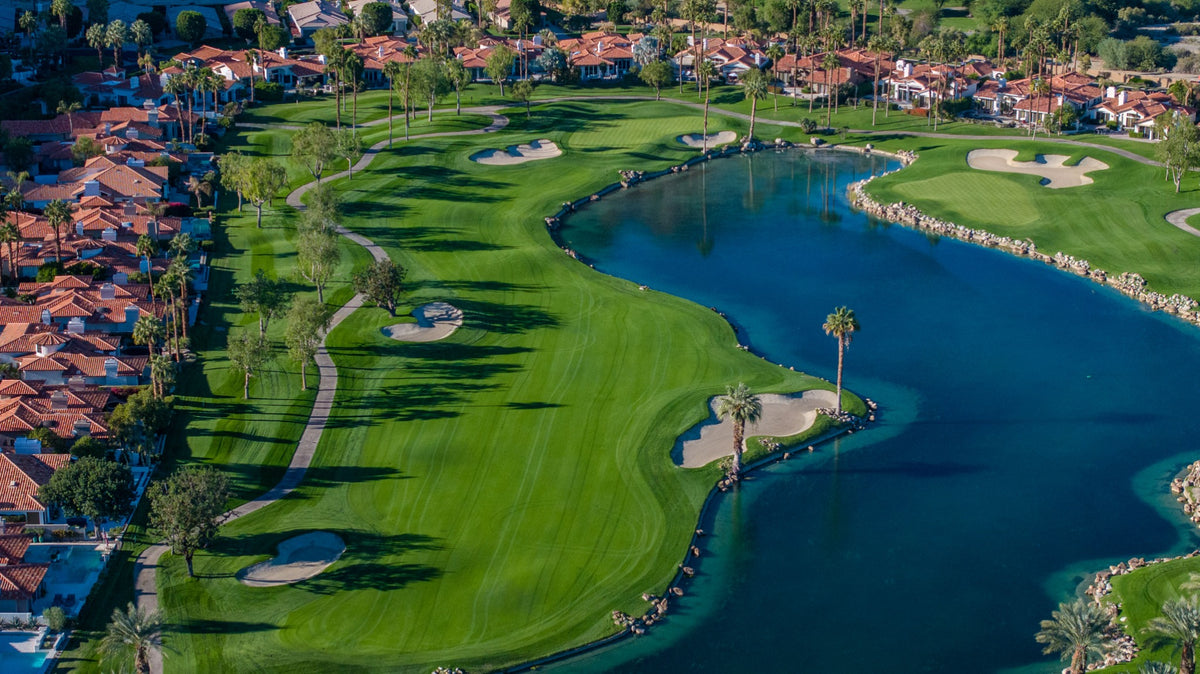
A blue lake bends around grass and sand, with homes defining the edges. The Palmer photographs show how golf and residential water features create long, open outlooks within the neighborhood.
This is Palmer Private, not SilverRock’s Arnold Palmer Classic Course. The architect’s name alone is not enough to identify either the destination or its access.
PGA West Nicklaus Private: golf beside Lake Cahuilla
Private club golf
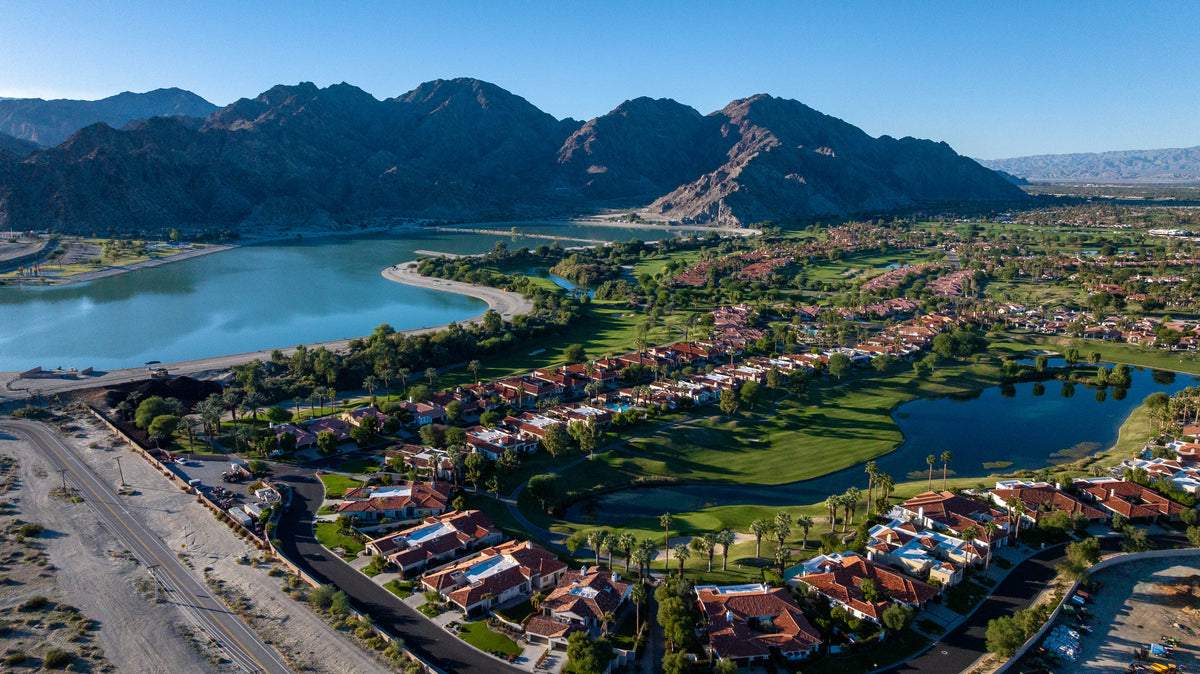
This wider view places the course-and-home landscape beside Lake Cahuilla and the rocky mountain edge. It helps explain where this part of PGA WEST sits within south La Quinta.
The photograph is orientation rather than a routing diagram. Nicklaus Private and Nicklaus Tournament have different access arrangements; the presence of the same designer’s name should never blur that distinction. Weiskopf Private is another separate private course in the PGA WEST family.
The Citrus: fairways and water through the neighborhood
Private club golf
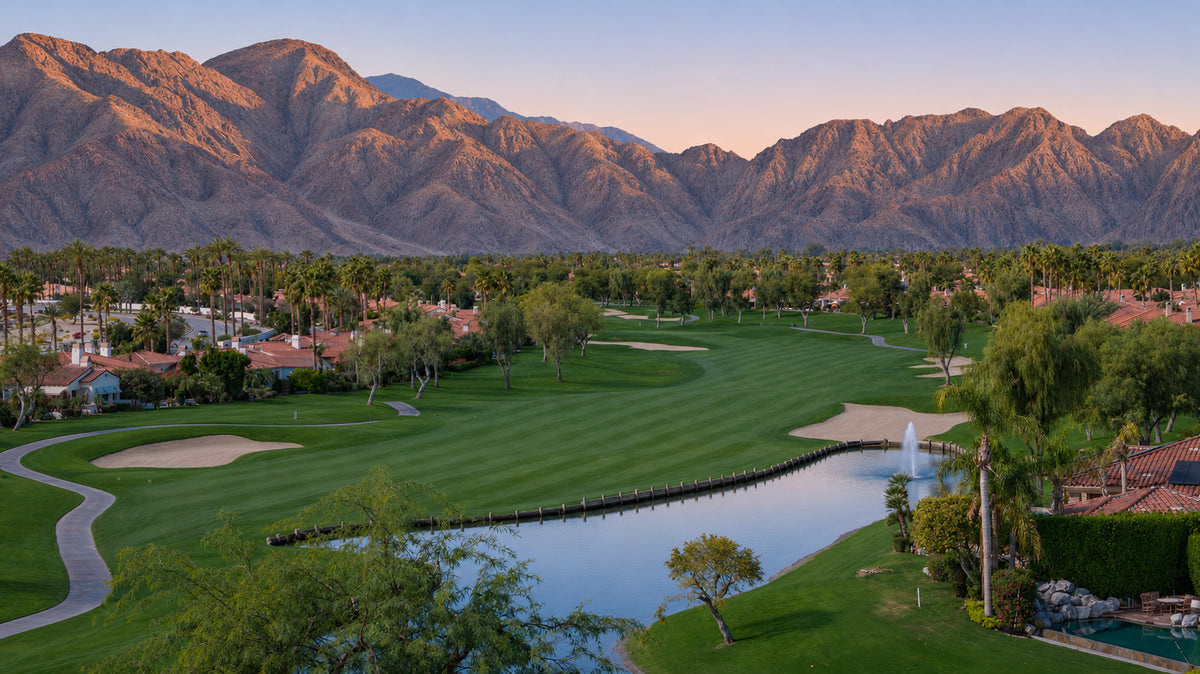
A lake and fountain sit below the fairways, with homes and palms framing the view toward the mountains. Soft morning light on the rocky slopes brings out the depth of this familiar study-guide composition.
The Citrus is PGA WEST’s private Pete Dye Citrus Course. It is separate from Mountain and Dunes, the public resort courses associated with the La Quinta Resort area.
La Quinta Country Club: an established, tree-lined setting
Private club golf
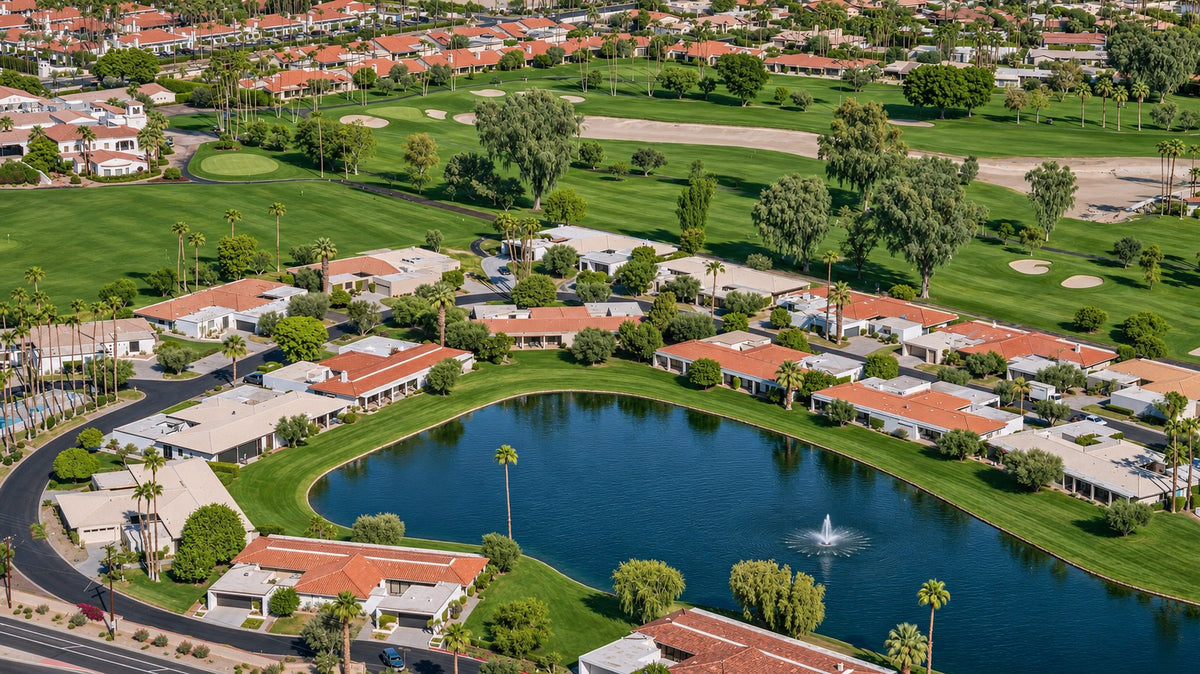
A lake opens the foreground while the fairways, bunkers and mature trees stretch through the established neighborhood beyond. This wider view gives more of the golf landscape room in the composition.
La Quinta Country Club is its own private club. It is not La Quinta Resort & Club, and the similar names do not imply the same golf access.
Rancho La Quinta: two courses within a larger community
Private club golf
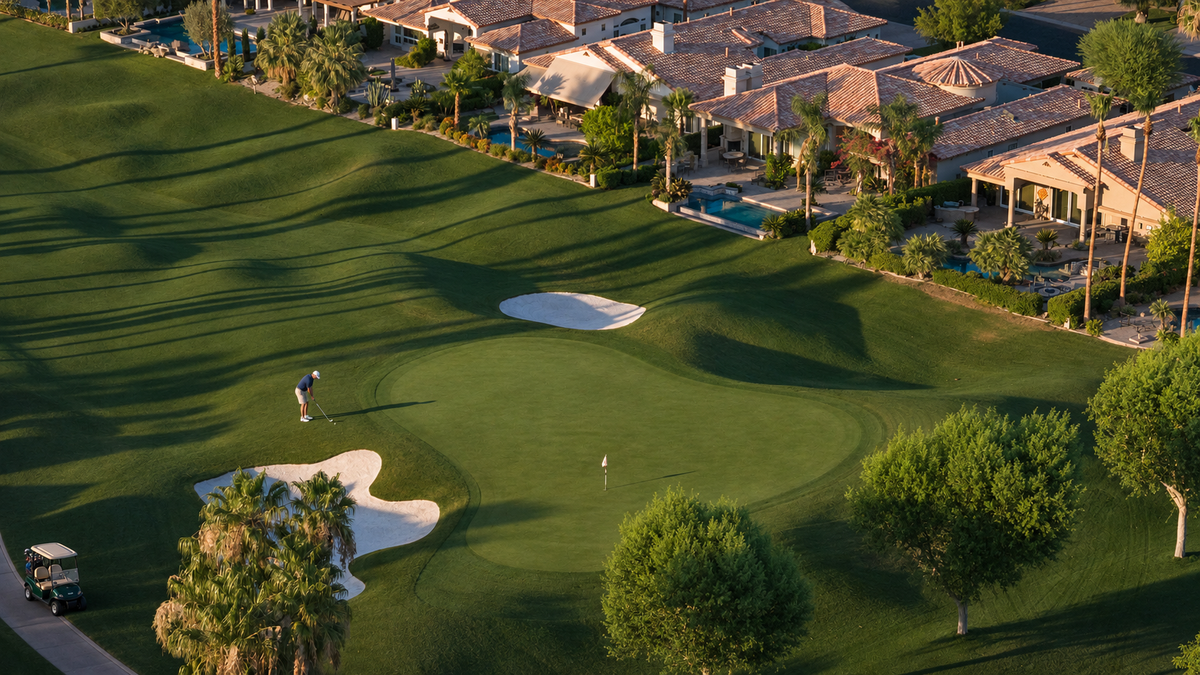
The closer crop brings the green and its surrounding bunkers into focus, with palms and the existing fairway homes behind. The original photograph preserves the relationship between the golf course and its neighborhood.
Rancho La Quinta has two courses, designed by Robert Trent Jones Jr. and Jerry Pate. This photograph is presented as a community golf setting; it is not assigned to a particular course or hole without a confirmed identification.
Mountain View Country Club: water opens the view
Private club golf
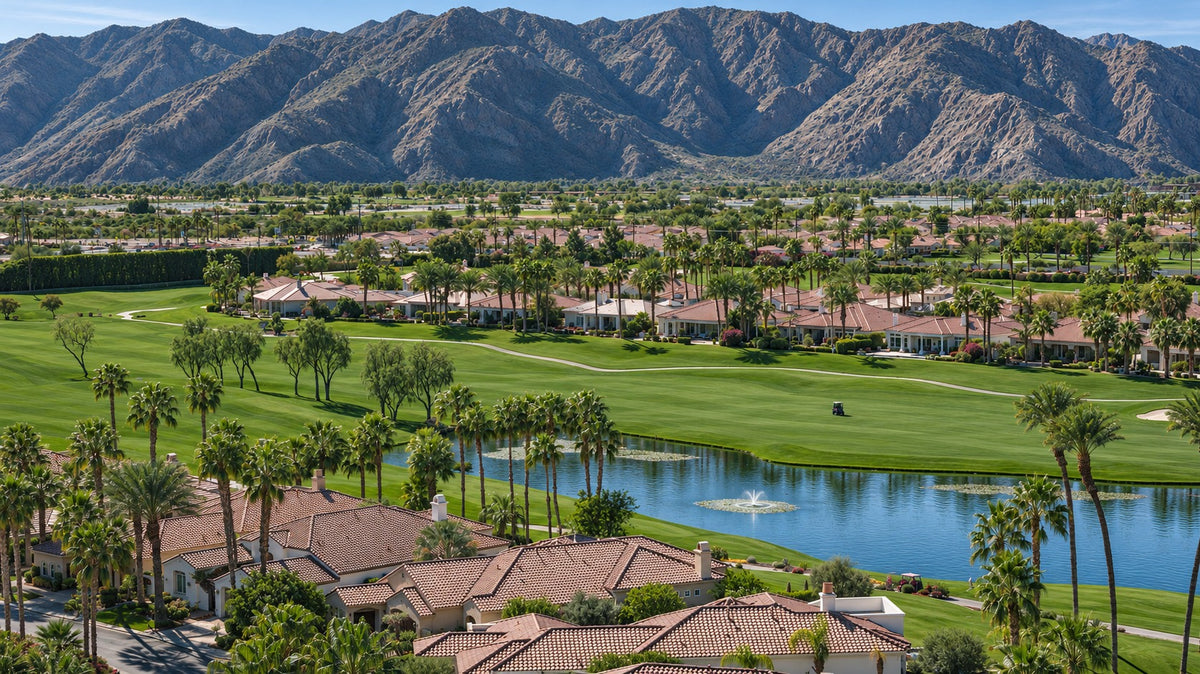
A lake creates a broad foreground before the eye reaches the fairway and mountains. Water does more than mark a golf feature in a photograph: it opens the composition and reflects the scale of the sky.
Mountain View Country Club has an Arnold Palmer Signature course. Despite the similar wording, it is a different destination from the public Pete Dye Mountain Course.
Tradition: homes beneath the rock face
Private club golf
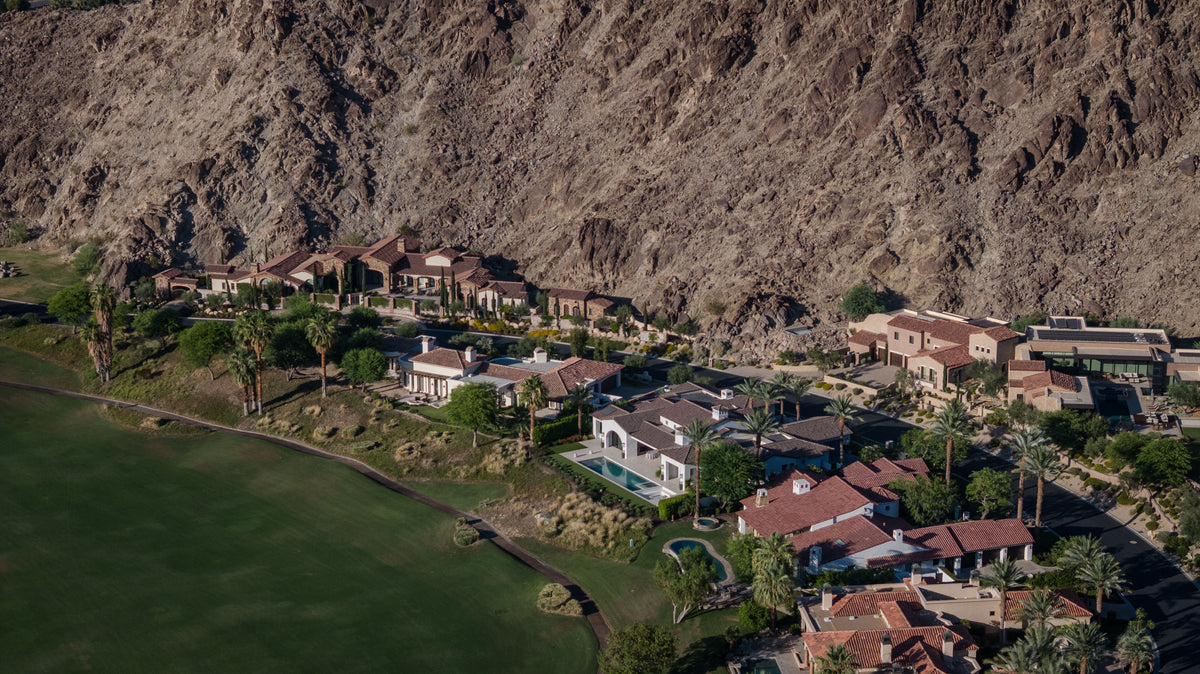
The slopes appear close enough to dominate the scene. Homes and golf occupy a narrow-looking band below the rock, creating one of the most striking changes of scale in this tour.
The photograph invites a slower look at the mountain edge, the roofs below it and the green space between. For the story of the land before the club, explore Marshall Ranch and Tradition’s earlier chapter.
The Hideaway: terraces, homes and water
Private club golf
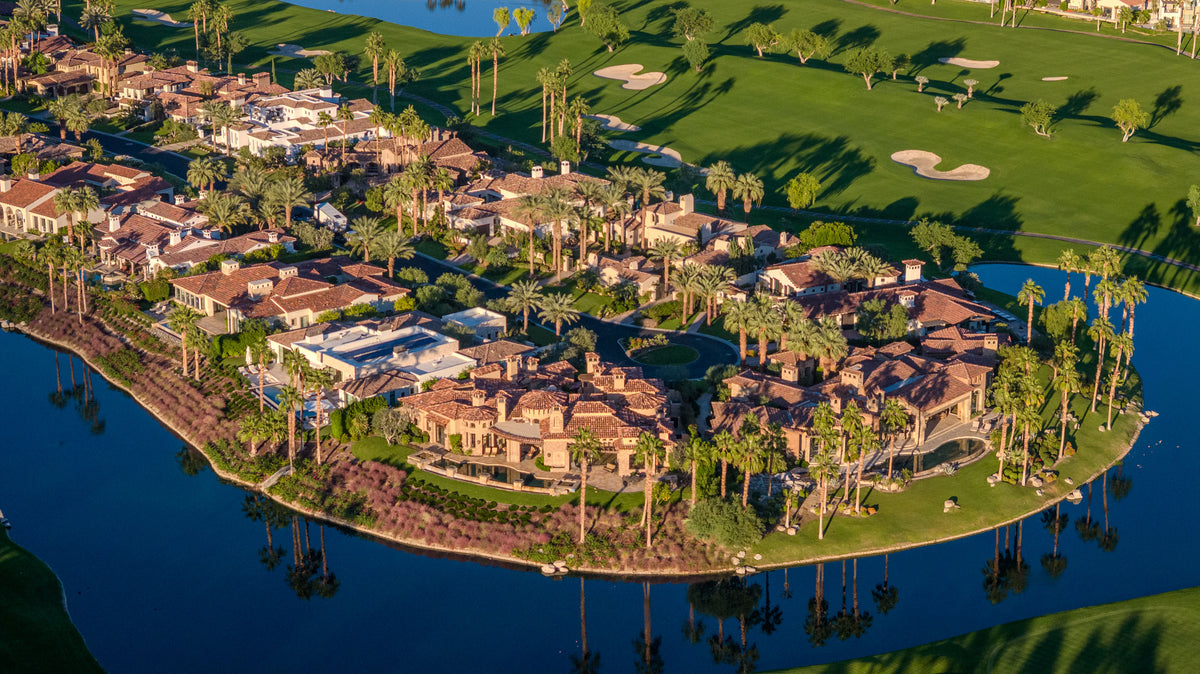
The closer view brings private pools, terraces and lake edges into focus. It shows a residential dimension that can disappear in a broad golf panorama.
The club has separate Clive Clark and Pete Dye courses. This image illustrates the wider community setting; it is not labeled as a specific hole or one of those two routings.
Andalusia: the panorama beyond a single fairway
Private club golf
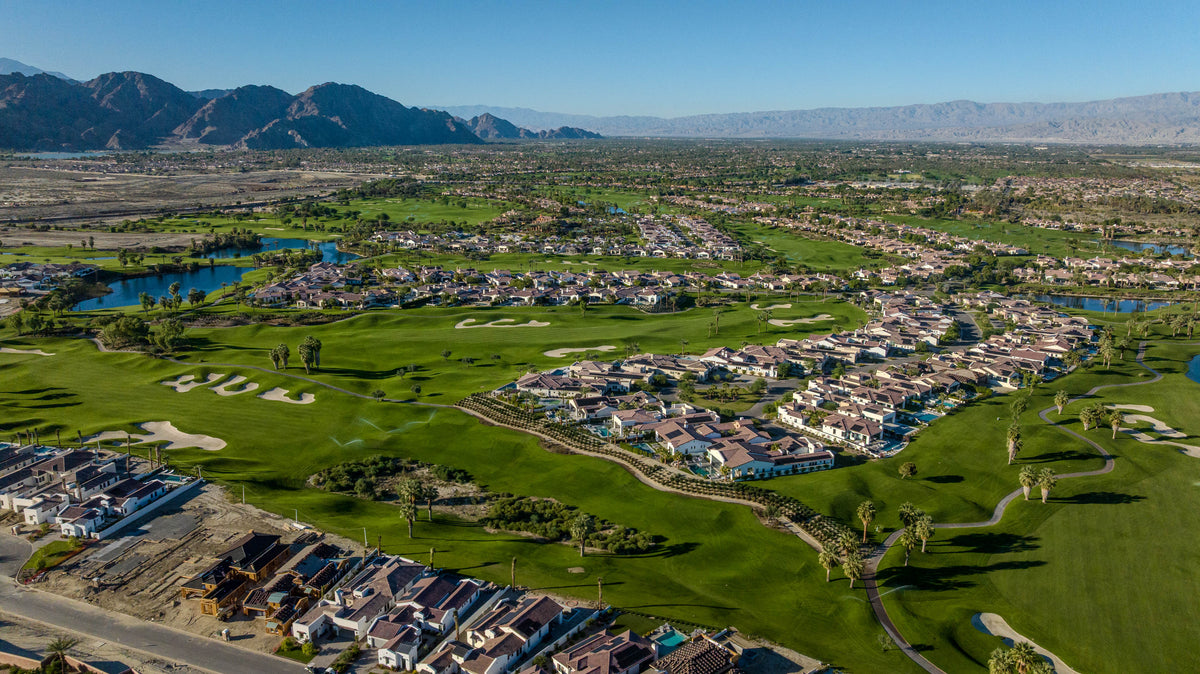
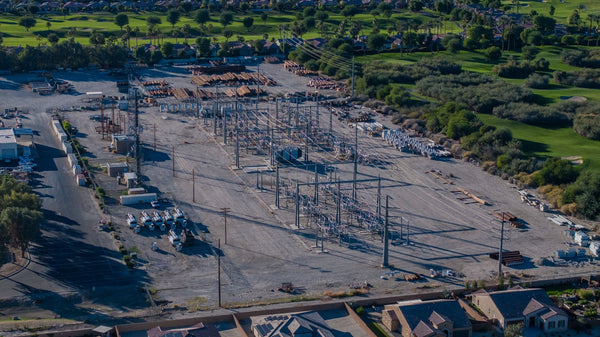
This broad view shows homes and the larger community landscape, including areas of construction visible when the image was captured. It gives the golf setting context rather than cropping everything down to perfect grass.
Andalusia’s golf course is a Rees Jones design. The photograph records a moment in the community’s appearance, not a statement that construction or playing conditions remain the same today.
The Quarry: a clubhouse against the foothills
Private club golf
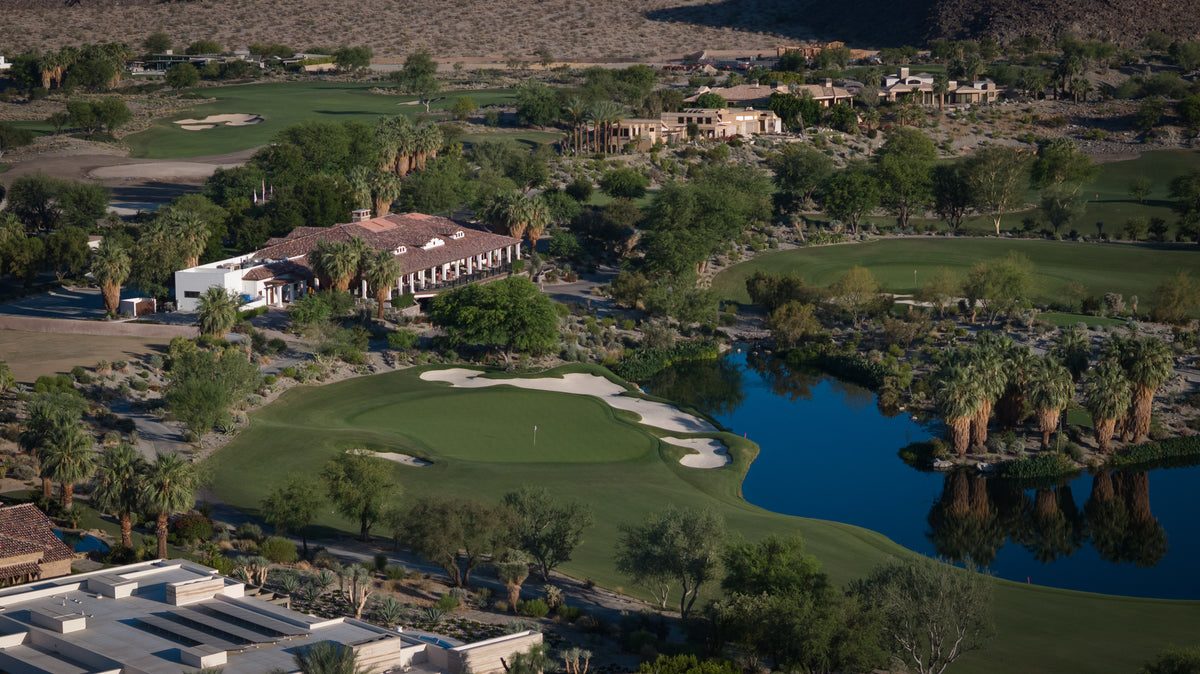
A lake, putting green and clubhouse sit beneath the rugged slopes. The composition brings together the softer, maintained landscape and the rough texture of the mountain behind it.
The Quarry rounds out the mountain-edge side of this tour. Its private-club access is separate from nearby public recreation and golf options; proximity does not make it a public stop.
The Madison Club: a close look at the golf landscape
Private club golf
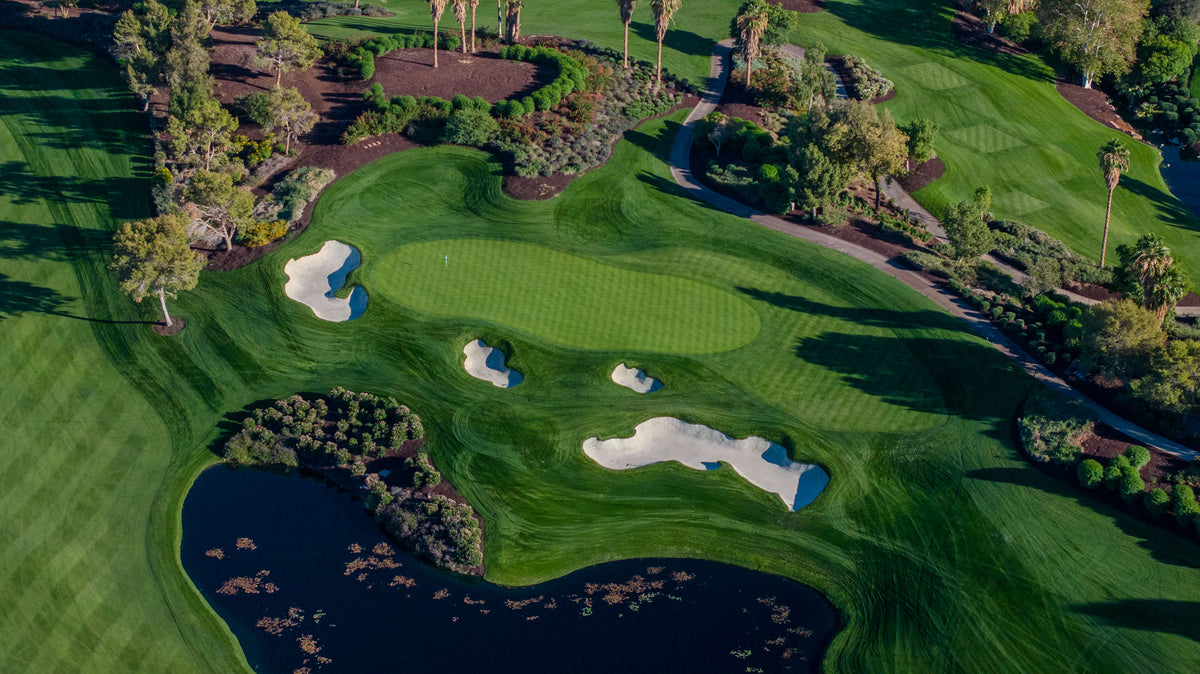
This closer aerial draws attention to the shape of a green, the curves of the bunkers and the adjacent water. It is a study of the golf landscape itself rather than a list of clubhouse amenities.
The Madison Club’s course is a Tom Fazio design within a private residential club setting. The image helps show its character without implying public visitor play.
The Palms: repeated lines across the fairways
Private club golf
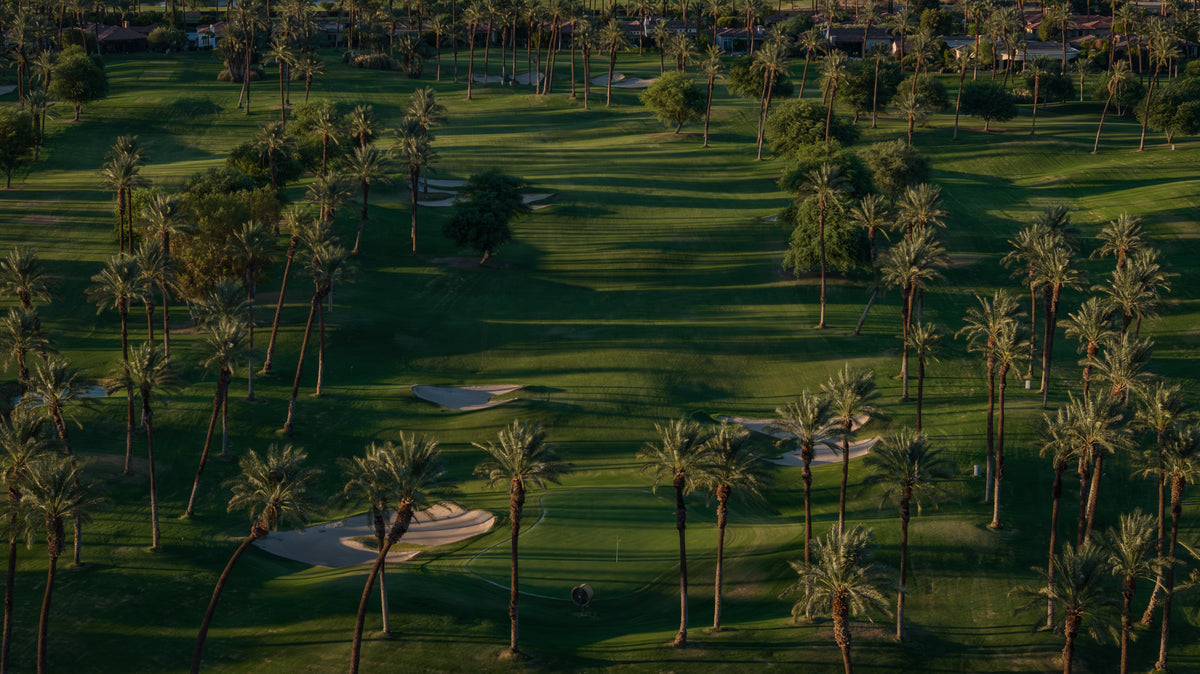
Rows of palms create a rhythm across the aerial view. Homes and golf corridors sit within that repeated pattern, giving The Palms a different visual signature from the rock-heavy scenes earlier in the tour.
That is the value of seeing these places together: the same city contains very different combinations of grass, desert, trees, water and architecture. The Palms is a private golf club; this photo stop is not an invitation to enter the course.
Choose your next round—or keep exploring
If you are planning to play, return to the public-course comparison and choose the setting that interests you, then use the Explorer to check the practical details. If you are getting to know La Quinta, follow the individual photo guides to see more of each place.
These photographs were taken on different dates and in different seasons. They show the landscapes Mark captured, not live course conditions. This is a visual selection, not a ranking or a complete hole-by-hole inventory.
Find a La Quinta course in the Golf Explorer · Explore more of La Quinta
Questions about golf in La Quinta
Which golf courses in La Quinta can the public play?
Palm Royale’s par-3 course, SilverRock, Trilogy Golf Club at La Quinta, and PGA WEST’s Stadium, Nicklaus Tournament, Greg Norman, Mountain and Dunes courses offer public or resort booking routes. Confirm availability and seasonal maintenance for your date.
Are all PGA West courses open to the public?
No. PGA WEST lists five public resort courses and four private courses. Palmer Private, Nicklaus Private, Weiskopf Private and Citrus are private. Nicklaus Tournament and Nicklaus Private are separate courses.
Is La Quinta Country Club the same as La Quinta Resort?
No. La Quinta Country Club is a private club. La Quinta Resort & Club is a separate resort destination associated with the public Mountain and Dunes golf options.
Is this a ranking or a guide to current course conditions?
Neither. This is a visual tour photographed on different dates. It does not rank course quality, guarantee playing conditions or show every hole. Confirm maintenance, carts and reservation terms with the golf shop.
Where can I compare courses and find official tee times?
Use the Golf Explorer filtered to La Quinta. For nearby cities, clear the city filter and compare the wider Coachella Valley.
Sources & photography
Course identities and general access categories reviewed November 13, 2026. This does not verify day-of-play availability. Landscape observations are based on Mark Miller’s existing photographs; capture dates vary.
- PGA WEST — Resort and private course identities.
- SilverRock — Ownership and course identity.
- Trilogy Golf Club — Public golf.
- La Quinta Country Club — Private access.
- Rancho La Quinta — Private club and two designers.
- Mountain View — Private club and course identity.
- Tradition — Membership access.
- The Hideaway — Private courses and designers.
- Andalusia — Course identity.
- The Quarry — Club access.
- The Madison Club — Private setting and designer.
- The Palms — Private club.
- Palm Royale Country Club — Public par-3 and walking-only format.
- PGA WEST clubhouse directions — Shared Mountain and Dunes clubhouse identity.
Photography by Mark Miller, reused from DOI’s existing course and community galleries. Nine images have AI enhancements, identified in their captions. The golfers added to the Alcatraz, Nicklaus Tournament and Rancho La Quinta scenes, and the Rancho La Quinta cart, are illustrative; lighting and turf treatments do not document current conditions. Individual photographs are not a boundary survey or complete routing record.


