Farshid Mirzaee
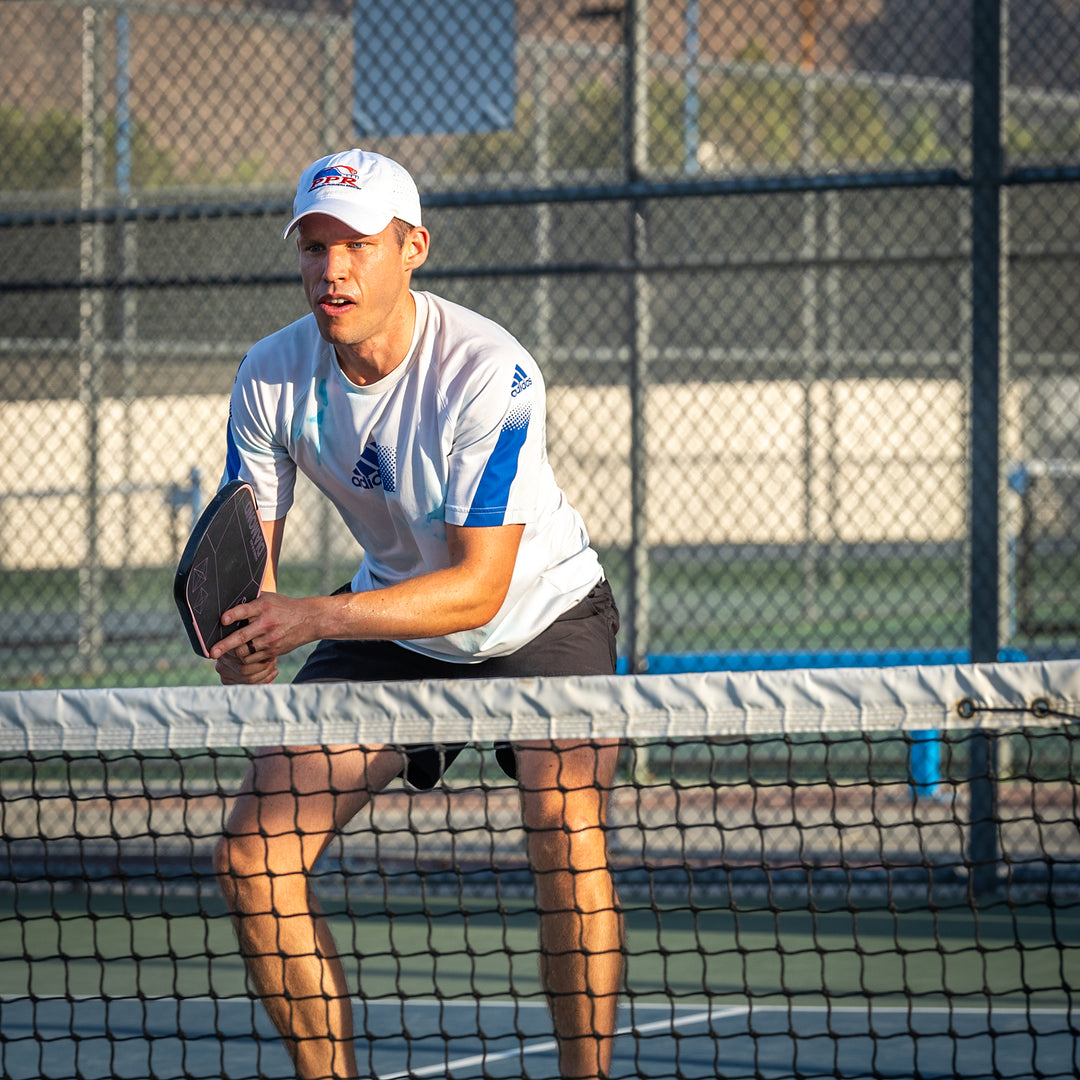
Farshid Mirzaee is the kind of player who makes a pickleball court feel smaller the moment he steps onto it.
A high-level tennis background is obvious in his movement and decision-making, but what’s more impressive is how completely he’s translated that foundation into modern, high-level pickleball. Over the last several years, Farshid and his brother Farhad haven’t just “picked up the game”—they’ve climbed it, quickly earning a reputation in local top-tier runs as a duo that belongs in the conversation anytime the level gets serious.
The Mirzaee signature: calm pressure that turns into checkmate
Farshid doesn’t win points by looking busy. He wins them by making you feel like you have no safe options.
At the kitchen, he’s known for extremely narrow dinks—the kind that don’t just land in the kitchen, they land in the one square inch you didn’t protect. And he does it with a two-handed dink that’s less of a “shot” and more of a steering wheel. He’ll quietly push you wider and wider until your spacing breaks… and then you realize the rally ended three shots ago—you just didn’t know it yet.
If you try to hold your ground, he’ll start working the forehand dink — not just placing it, but rolling it with topspin so it pushes you wider and wider off the court. It’s not a bailout shot; it’s a slow displacement. One side you’re defending against the two-handed geometry that pins you in place. The other side you’re getting spun off the sideline. You’re not safe on either wing. It’s tight control one moment, off-balance survival the next.
The backhand slice dink that separates levels
One of Farshid’s most serious weapons is his ability to slice the backhand while dinking—a shot that looks simple until it isn’t.
That slice doesn’t just “stay low.” It behaves differently off the paddle and off the bounce—floating, skidding, and bending the rally in ways that punish players who haven’t faced it at a high level. The result is predictable: pop-ups, late contacts, and misreads that feel like unforced errors… until you realize they were forced the moment the slice showed up.
The speed-up you never see coming
And then there’s the part everyone talks about after the game:
the low-profile speed-ups.
Farshid’s acceleration shots don’t come with the usual warnings. No big backswing. No obvious tell. Just a subtle change in intent—then the ball is suddenly on you, right at the most uncomfortable spot, before your hands have time to organize. It’s the kind of speed-up that makes good players freeze for half a beat, because they’re still processing the fact that the dink rally already turned into a firefight.
What makes him “timeless”
A lot of players have hot hands. A lot of players can bang. A lot of players can look sharp in a highlight.
Farshid is different because his game is built on things that never go out of style:
-
control of space
-
control of tempo
-
unpredictable touch
-
and pressure that doesn’t look like pressure until it’s too late
If you’re playing Farshid Mirzaee, understand this: you’re not just playing a player. You’re playing a system—one that starts with precision dinks, traps you with angles, disrupts you with slice, and finishes the point with a speed-up you swear wasn’t even there a second ago.
In other words: you can call it skill. You can call it tennis IQ.
But on the court, it feels like something else entirely.
It feels like inevitability.