
White-breasted Nuthatch
Sitta carolinensis
A white face and blue-gray back; watch it creep headfirst down a tree trunk.
- Bird group
- Songbirds & flycatchers
- Where to look
- Mountain oak & pine woodland
- Explore the region
- Coachella Valley bird guide
Through the lens.
Select any photograph for a closer look. Move through the gallery with the arrows or a swipe.
This is a regional bird guide; photographs may also come from places beyond the valley. Locations are noted when available.
Know what to notice.
The White-breasted Nuthatch (Sitta carolinensis) is a compact, tree-clinging songbird that resides year-round in the higher elevations of the Coachella Valley's surrounding mountain ranges, particularly in mature pine and oak woodlands of the San Jacinto and Santa Rosa Mountains.
Identification
This bird measures about 5 to 6 inches in length. It has a bright white face, throat, and underparts, contrasting sharply with a black or dark gray cap and nape. The back and wings are bluish-gray, and the undertail may show a rusty or chestnut tint. Its long, slightly upturned bill and strong feet are adapted for gripping bark, allowing it to forage in a distinctive head-down position along trunks and branches.
Habitat in the Region
The White-breasted Nuthatch prefers mature coniferous and mixed woodlands, especially areas with large pines and oaks. In the Coachella Valley region, it is typically found at elevations above 4,000 feet in locations like Mt. San Jacinto State Park, Idyllwild, and along forested ridges and canyons.
Diet and Behavior
Its diet includes insects, spiders, seeds, and nuts, with a preference for acorns and pine seeds in fall and winter. It often wedges food into bark crevices to hammer them open or store them for later. This caching behavior is crucial to its winter survival and helps with seed dispersal.
Nesting
Nuthatches nest in natural tree cavities or old woodpecker holes, often using fur, bark strips, and feathers to line the nest. The female typically lays between five and nine eggs and incubates them while the male forages.
Ecological Role
As an insectivore, it helps regulate populations of bark-dwelling insects and wood-boring beetles. Its food caching contributes to forest ecology by potentially allowing stored seeds to germinate.
Interesting Adaptation
This species has been observed smearing crushed insects or sap around its nest entrance, possibly to deter predators or mask the nest's scent from competitors—an example of complex, possibly tool-like behavior.
| Attribute | Details |
|---|---|
| Scientific Name | Cyanocitta stelleri |
| Family | Corvidae (crows, ravens, jays, magpies) |
| Size | ~11–13 inches (28–34 cm) in length |
| Wingspan | ~17 inches (43 cm) |
| Weight | 3.5–4.9 oz (100–140 g) |
| Plumage | Deep blue body; blackish head, crest, and upper back; faint forehead streaks in some populations |
| Crest | Prominent, tall, expressive crest (often raised when alert) |
| Voice | Harsh "shaaak!" calls, raspy chatter, and skilled mimicry (including hawk calls) |
| Diet | Omnivorous—acorns, pine seeds, nuts, berries, insects, small animals, eggs |
| Behavior | Bold, inquisitive, opportunistic feeder; caches food |
| Habitat | Coniferous and mixed forests, usually above 4,000 ft (San Jacinto, San Bernardino mountains) |
| Range (local) | Mountain forests around Coachella Valley; not common on desert floor |
| Ecological Role | Important acorn and pine seed disperser; insect control |
| Cultural Significance | Named after Georg Steller; often seen as a trickster in Native traditions |
Another bird to discover.
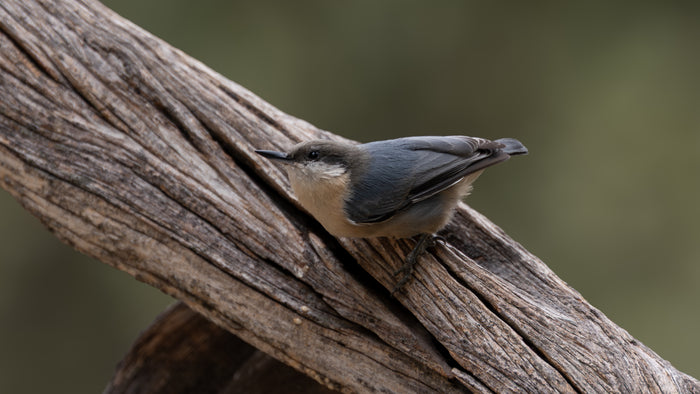
Pygmy Nuthatch
Tiny, busy birds travel through pine branches in chattering groups above the desert.
Meet this bird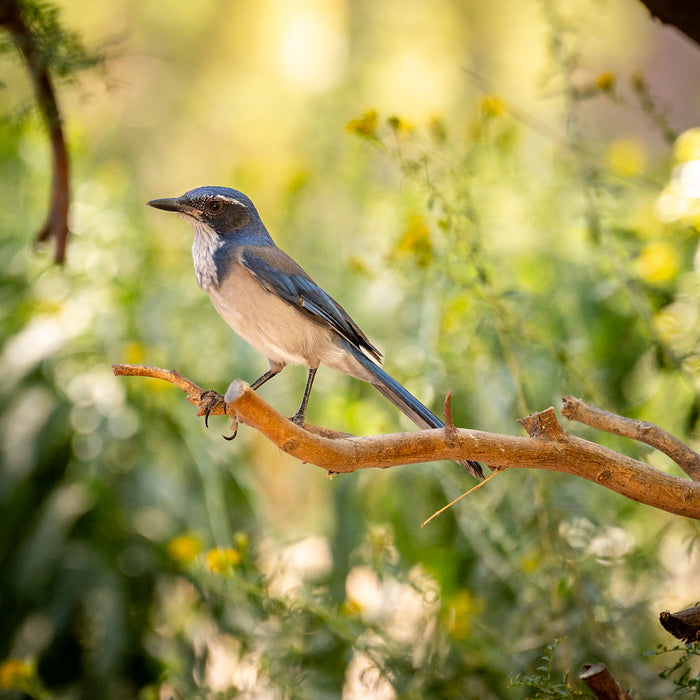
California Scrub-Jay
Blue wings, a gray-brown back and no crest distinguish it from the mountain Steller’s Jay.
Meet this bird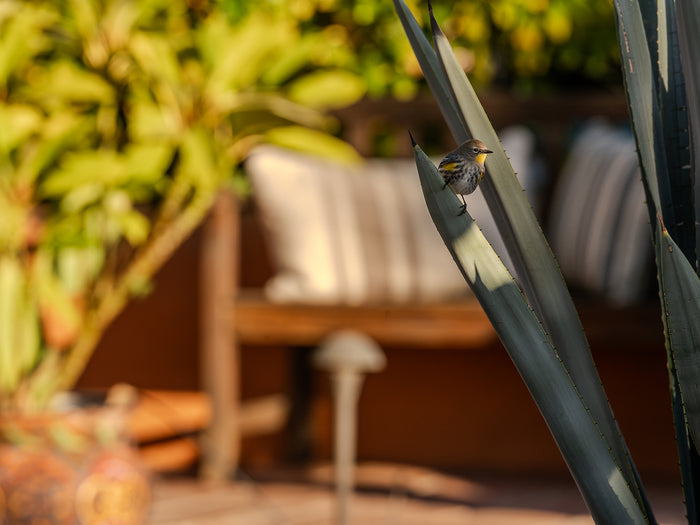
Yellow-rumped Warbler
Yellow flashes at the rump and sides help pick out this active little winter visitor.
Meet this birdSee the bigger picture.
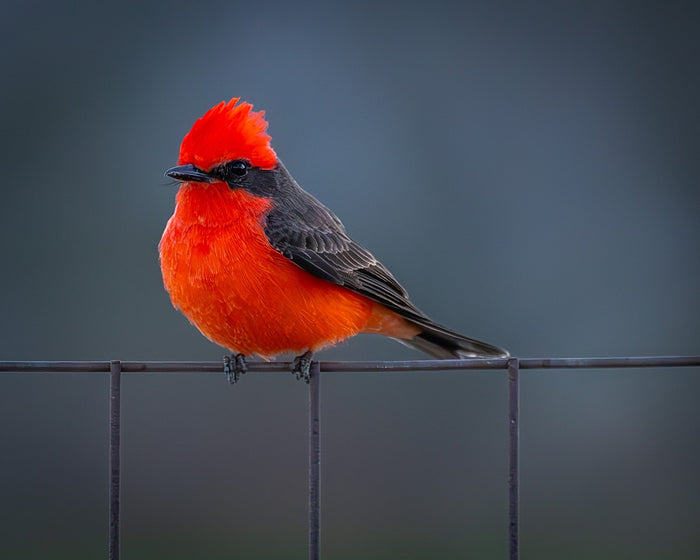
The Pacific Flyway: Coachella Valley’s Living Migration Path
Follow the larger migration story connecting desert oases, open water and the birds passing through the valley.
Read the story
Layers of a Desert Lake: Birds of Lake Cahuilla in Winter
Explore a winter visit to Lake Cahuilla, from close encounters along the shore to movement above the water.
Read the story
Salton Sea Bird Watching: Where to Go & What to See
Continue south to the Salton Sea for a broader look at birding places, habitats and seasonal variety.
Read the story