
Western Grebe
Aechmophorus occidentalis
A long white neck, dark cap and slender bill mark this diving bird of open water.
- Bird group
- Waterfowl & waterbirds
- Where to look
- Open lakes & reservoirs
- Explore the region
- Coachella Valley bird guide
Through the lens.
Select any photograph for a closer look. Move through the gallery with the arrows or a swipe.
This is a regional bird guide; photographs may also come from places beyond the valley. Locations are noted when available.
Know what to notice.
A striking waterbird known for its elegant appearance, elaborate courtship dances, and expert diving abilities. While not a year-round resident of the Coachella Valley, it can be found in nearby lakes, reservoirs, and wetlands, particularly during migration and winter.
Identification & Appearance
- Size: Large for a grebe, about 22-30 inches (56-76 cm) long with a wingspan of 31-40 inches (79-102 cm).
- Body: Slender with a long, swan-like neck.
- Coloration: Black upperparts and contrasting white underparts.
- Head: Distinct black cap extending down to the red eyes.
- Bill: Long, straight, and sharp yellow-green.
- Legs & Feet: Positioned far back on the body, making it an exceptional swimmer but awkward on land.
Behavior & Adaptations
- Expert diver, using its powerful legs to chase fish underwater.
- Performs elaborate courtship dances, including the famous "rushing" display, where pairs run across the water in synchronized motion.
- Rarely flies except during migration, relying on water bodies for movement.
- Floats low in the water, often appearing as a dark shape with just its head and neck visible.
Habitat & Range
- Found in large freshwater lakes, reservoirs, and slow-moving rivers.
- Breeding populations are primarily in California, the Pacific Northwest, and the Great Basin.
- Winters along coastal areas and inland water bodies, sometimes venturing into Salton Sea or reservoirs near the Coachella Valley.
Diet
- Primarily fish, caught by diving and spearing with its sharp bill.
- Occasionally eats invertebrates, crustaceans, and amphibians.
- Swallows prey underwater and regurgitates indigestible parts.
Nesting & Reproduction
- Builds floating nests anchored to reeds or vegetation.
- Lays 3-5 pale blue eggs, incubated by both parents.
- Chicks are precocial, able to climb onto their parents' backs shortly after hatching for protection.
Conservation Status & Threats
-
Not endangered, but populations are affected by:
- Habitat loss due to wetland drainage and water pollution.
- Entanglement in fishing lines and nets.
- Climate change impacts on breeding and wintering habitats.
The Western Grebe is a graceful and fascinating species, known for its incredible courtship displays and strong swimming abilities. While it may not be a frequent sight in the Coachella Valley, nearby water bodies provide important stopover and wintering habitats for this remarkable bird. 🦆💦
Places Seen 📍: Lake Cahuilla.
Another bird to discover.
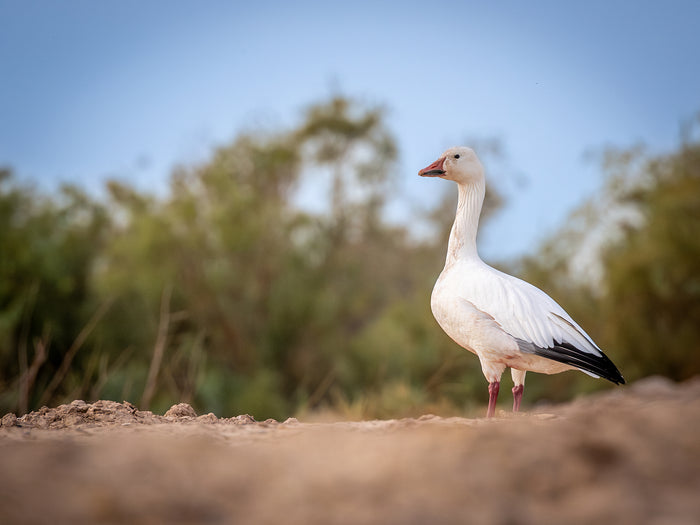
Snow Geese
White birds with black wingtips gather in winter flocks around refuge fields and wetlands.
Meet this bird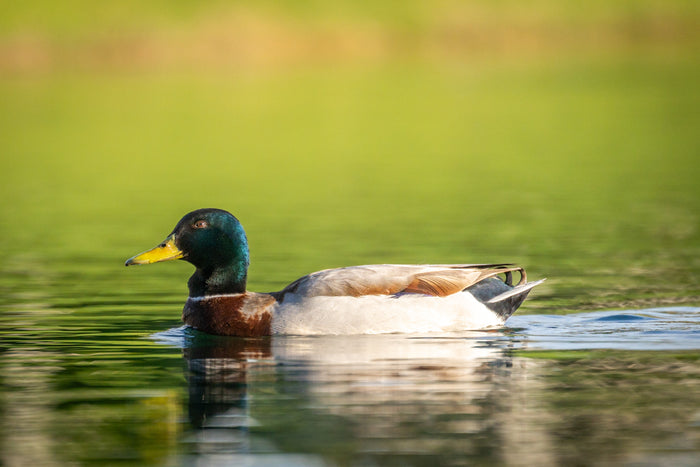
Mallard Duck
Adult males have green heads; females are mottled brown. Both show a blue wing patch.
Meet this bird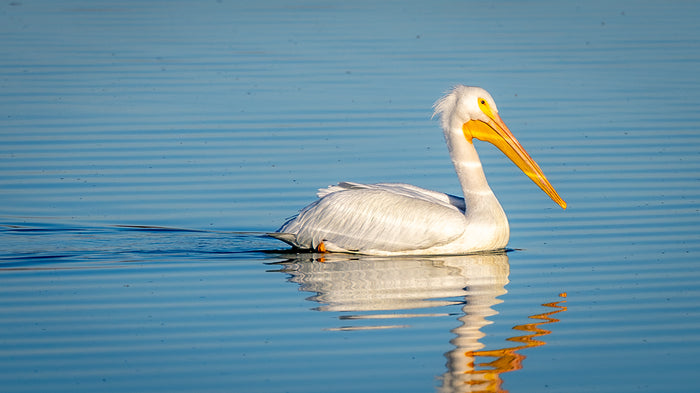
American White Pelican (Pelecanus erythrorhynchos)
Huge white birds with orange bills; black flight feathers stand out when the wings open.
Meet this birdSee the bigger picture.
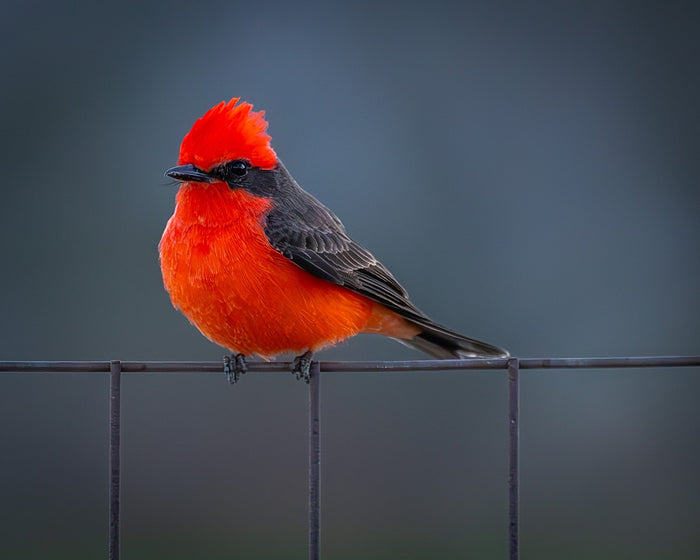
The Pacific Flyway: Coachella Valley’s Living Migration Path
Follow the larger migration story connecting desert oases, open water and the birds passing through the valley.
Read the story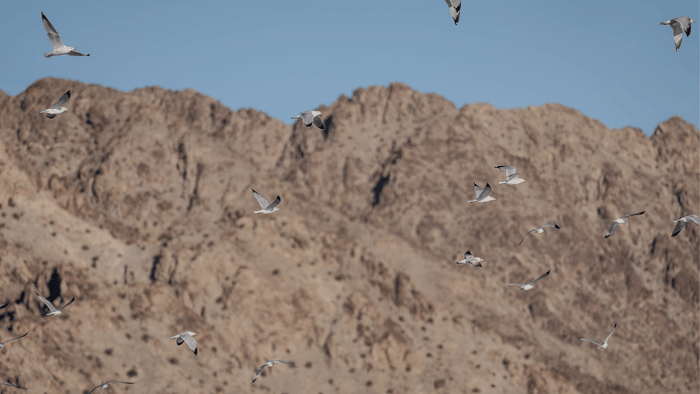
Layers of a Desert Lake: Birds of Lake Cahuilla in Winter
Explore a winter visit to Lake Cahuilla, from close encounters along the shore to movement above the water.
Read the story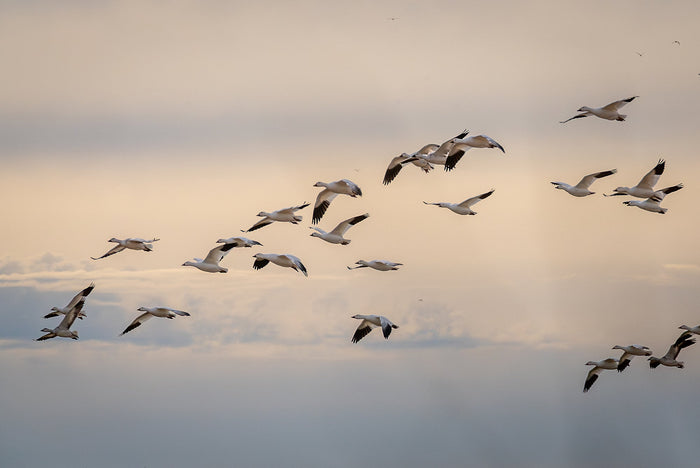
Salton Sea Bird Watching: Where to Go & What to See
Continue south to the Salton Sea for a broader look at birding places, habitats and seasonal variety.
Read the story