
Vermilion Flycatcher
Pyrocephalus rubinus
Adult males flash scarlet red; watch for short flights out from an exposed perch.
- Bird group
- Songbirds & flycatchers
- Where to look
- Parks & water edges
- Length
- 4.8–5.4 in · 12.3–13.8 cm
- On the menu
- Flying insects
Through the lens.
Select any photograph for a closer look. Move through the gallery with the arrows or a swipe.


This is a regional bird guide; photographs may also come from places beyond the valley. Locations are noted when available.
Know what to notice.
The unmistakable male.
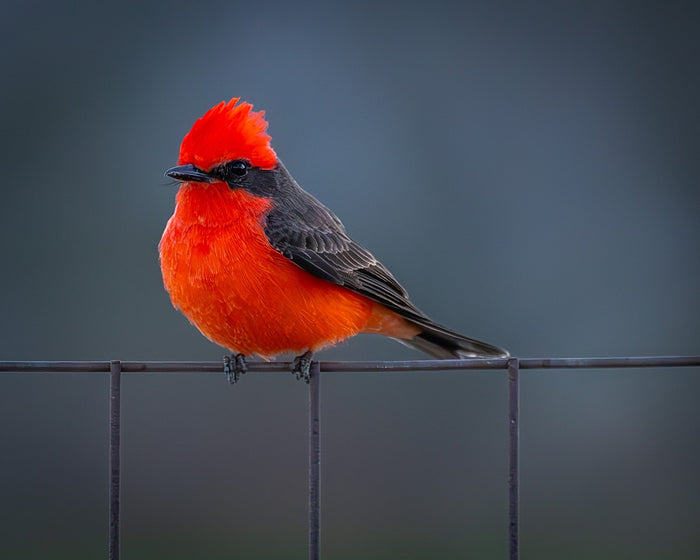
Look for a vivid red crown and underside, a dark eye mask, and a brown-black back, wings and tail. The compact body and upright posture are useful clues even when the light mutes the red.
The quieter palette.
Females are gray-brown above with a pale breast, fine streaking and a peach to salmon wash below. Young birds can look similarly subdued; the absence of bright red does not rule out this species.
Open space, a perch, and insects.
Look along open parks, agricultural edges and desert water corridors with scattered trees. The featured photograph records a male on a fence in Thermal. Suitable habitat is a starting point for a search, not a guarantee of a sighting.
A small hunter with a favorite lookout.
Vermilion Flycatchers scan from exposed branches or fence lines, then launch short flights to catch insects. Watch for the return to a familiar perch. Their meals include flies, beetles and larger insects such as grasshoppers.
Could it be a Say’s Phoebe?
The female Vermilion’s muted colors can invite a second look. Say’s Phoebe is larger and more slender, with a longer tail, gray breast and cinnamon belly. Compare overall shape as well as the color underneath.
Compare with Say’s PhoebeCourtship & nesting
A male’s display can include an ascending, fluttering flight with song. The shallow cup nest is built in a tree fork using grasses and small twigs held together with spiderweb. A clutch usually contains two to four eggs; both parents feed the chicks.
Habitat & conservation
Protecting desert stream corridors matters. Changes in water use and land development can reduce the habitat this bird relies on, even where the species remains widespread. Healthy riparian trees and insect life are part of the story.
Photo notes & identification sources
Photographs are from Mark Miller’s existing species gallery. The main image is labeled Thermal, California; the Huntington Beach location is recorded in the original image filename. Identification and natural-history details were checked against the Cornell Lab of Ornithology. This page does not report current sightings.
Meet more insect hunters.
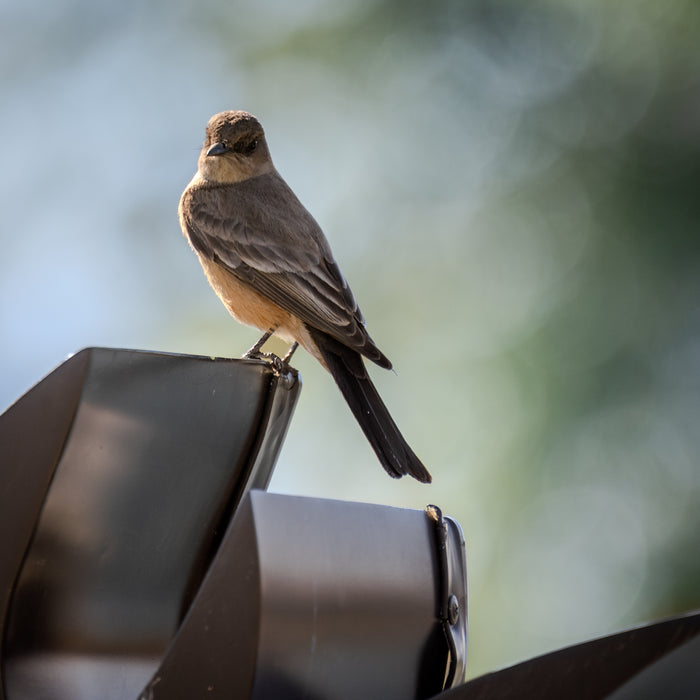
Say's Phoebe
Soft gray above and warm peach below, with a dark tail that often dips from a perch.
Meet this bird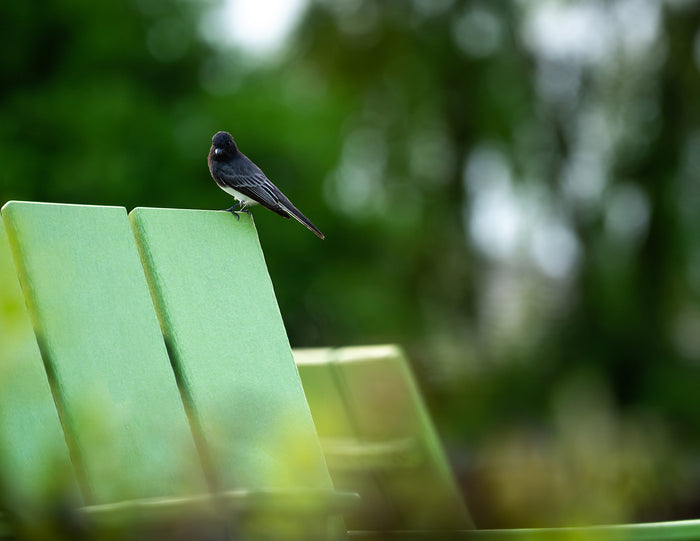
Black Phoebe
A black chest and white belly; often returns to the same low perch after catching insects.
Meet this bird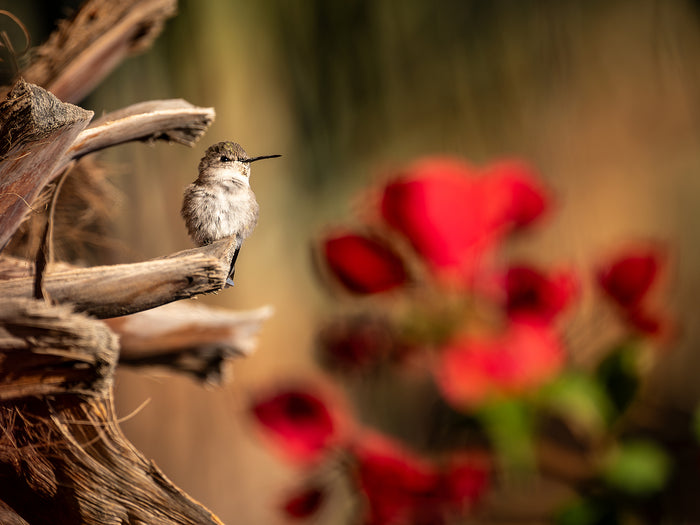
Anna’s Hummingbird
Look for an adult male’s rose-pink head and throat; color changes with the light.
Meet this birdSee the bigger picture.
The Pacific Flyway: Coachella Valley’s Living Migration Path
Follow the larger migration story connecting desert oases, open water and the birds passing through the valley.
Read the story
Layers of a Desert Lake: Birds of Lake Cahuilla in Winter
Explore a winter visit to Lake Cahuilla, from close encounters along the shore to movement above the water.
Read the story
Salton Sea Bird Watching: Where to Go & What to See
Continue south to the Salton Sea for a broader look at birding places, habitats and seasonal variety.
Read the story