
Black Phoebe
Sayornis nigricans
A black chest and white belly; often returns to the same low perch after catching insects.
- Bird group
- Songbirds & flycatchers
- Where to look
- Ponds, parks & oases
- Explore the region
- Coachella Valley bird guide
Through the lens.
Select any photograph for a closer look. Move through the gallery with the arrows or a swipe.
This is a regional bird guide; photographs may also come from places beyond the valley. Locations are noted when available.
Know what to notice.
A small, flycatching bird known for its bold black-and-white plumage and habit of perching near water while hunting for insects. It is a year-round resident in the Coachella Valley, commonly seen in urban parks, wetlands, and desert oases.
Identification & Appearance
- Size: About 6.5 inches (16-18 cm) long, with a wingspan of 10-11 inches (25-28 cm).
-
Coloration:
- Mostly black, with a white belly and undertail.
- Slightly fluffy crest on its head.
- Dark, thin bill suited for catching insects in flight.
- Flight: Quick, darting movements with frequent short flights from perches.
Behavior & Adaptations
- Flycatcher—hunts by darting out from a perch to snatch flying insects.
- Often bobs its tail, a signature behavior while perched.
- Highly territorial, often defending its favorite perches.
- Adaptable to human presence, commonly found near buildings, bridges, and irrigation ditches.
Habitat & Range
- Prefers areas near water, including:
- Streams & ponds
- Golf courses
- Parks with fountains or canals
- Wetlands and desert oases
- Non-migratory in Southern California, including the Coachella Valley.
Diet
-
Insectivore, eating:
- Flies
- Beetles
- Mosquitoes
- Small grasshoppers
- Occasionally eats small fish or aquatic invertebrates when near water.
Nesting & Reproduction
- Builds mud nests, often attached to buildings, bridges, or cliffs.
- Lays 3-6 white eggs, incubated by the female for about 15-17 days.
- Both parents help feed the young, which fledge in about 18-21 days.
- Often raises multiple broods per year in warm climates.
Conservation & Threats
- Stable populations, benefiting from urban structures for nesting.
- Threatened by:
- Loss of water sources in dry regions.
- Pesticides reducing insect populations.
- Beneficial to humans, as it helps control flying insect populations.
Where to See in the Coachella Valley
- Parks and golf courses (near fountains and ponds).
- Canals and irrigation ditches.
- Lake Cahuilla and the Salton Sea shoreline.
- Riparian areas with willows or tamarisk.
The Black Phoebe is a charming and active insect hunter, bringing constant motion and energy to desert wetlands, urban parks, and backyard gardens. Its distinctive tail-bobbing and sharp “tsip” calls make it easy to identify, making it a favorite among birdwatchers in the Coachella Valley. 🐦✨
Another bird to discover.
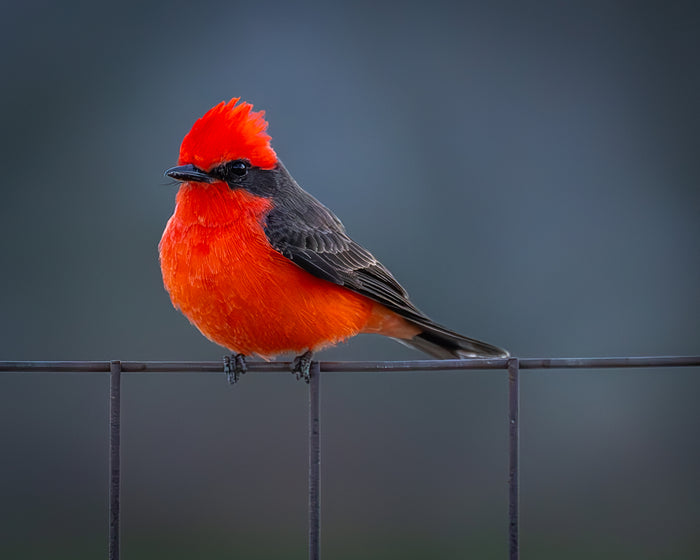
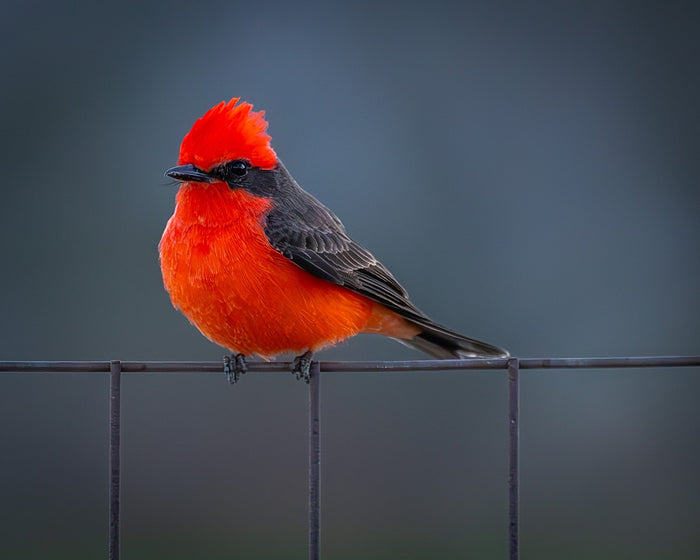
Vermilion Flycatcher
Adult males flash scarlet red; watch for short flights out from an exposed perch.
Meet this bird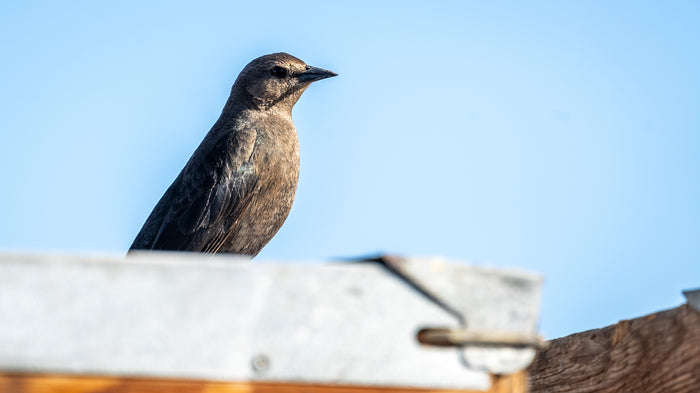
Brown-headed Cowbird
Males pair a brown head with a dark body; females are plain gray-brown.
Meet this bird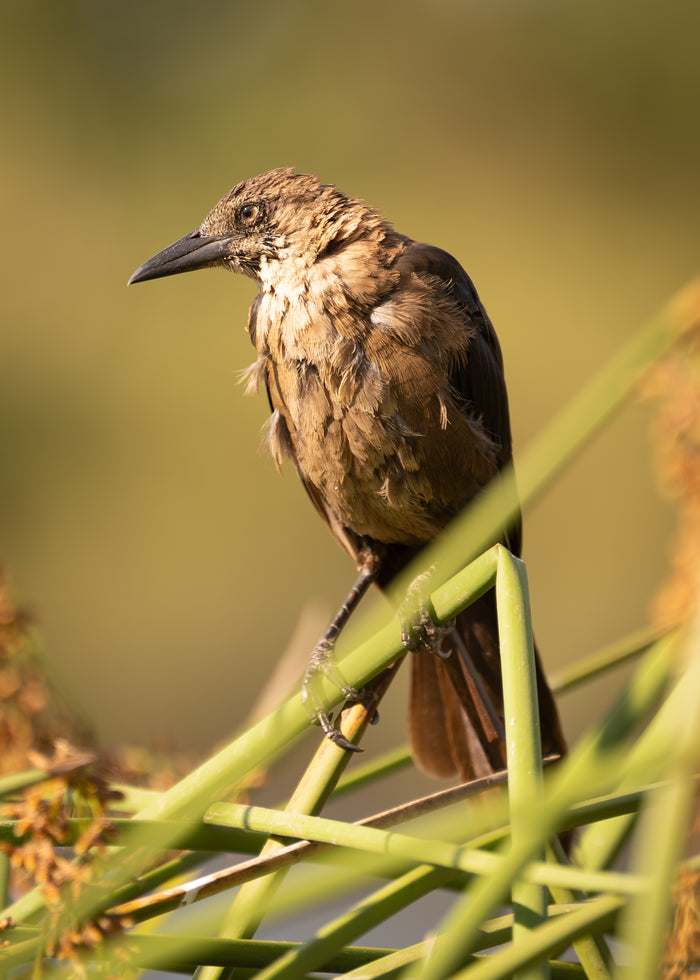
Great-tailed Grackle
Long tails and yellow eyes stand out; males are glossy black, females brown.
Meet this birdSee the bigger picture.
The Pacific Flyway: Coachella Valley’s Living Migration Path
Follow the larger migration story connecting desert oases, open water and the birds passing through the valley.
Read the story
Layers of a Desert Lake: Birds of Lake Cahuilla in Winter
Explore a winter visit to Lake Cahuilla, from close encounters along the shore to movement above the water.
Read the story
Salton Sea Bird Watching: Where to Go & What to See
Continue south to the Salton Sea for a broader look at birding places, habitats and seasonal variety.
Read the story