


























Brown-headed Cowbird
Molothrus ater
Males pair a brown head with a dark body; females are plain gray-brown.
- Bird group
- Songbirds & flycatchers
- Where to look
- Fields & open woodland edges
- Explore the region
- Coachella Valley bird guide
What to notice
- Males pair a brown head with a dark body; females are plain gray-brown.
Where to look
Fields & open woodland edges
When to look
Local seasonal timing is not specified in these field notes. Use the habitat clues as a starting point and check current conditions.
Next time you are outside
Males pair a brown head with a dark body; females are plain gray-brown.
Habitat guidance is not a guaranteed sighting. Photographs may have been taken outside the valley.
Through the lens.
Select any photograph for a closer look. Move through the gallery with the arrows or a swipe.
This is a regional bird guide; photographs may also come from places beyond the valley. Locations are noted when available.
Know what to notice.
A short, sturdy blackbird found across much of North America—including the Coachella Valley—and is famous for its unusual habit of laying eggs in other birds’ nests. Males have glossy black feathers and a striking chocolate-brown head, while females are subtly mottled gray-brown. Roughly 6–9 inches long with a 12–15 inch wingspan, they thrive in open areas such as grasslands, farmland, desert scrub, and even suburban settings—often gathering near water sources where other birds congregate. Their diet of seeds, grains, and insects makes them adaptable to diverse habitats, including arid deserts. The females’ remarkable ability to sneakily find and “parasite” other birds’ nests has significant ecological repercussions: cowbird chicks typically hatch first, grow fast, and demand more food, putting host species at risk. Historically tied to nomadic herds of bison, these birds evolved brood parasitism to keep pace with constant movement. Though not threatened themselves, their prolific egg-laying can negatively impact some vulnerable songbird populations, prompting conservation efforts like egg removal in places where rare species need extra protection.








Another bird to discover.
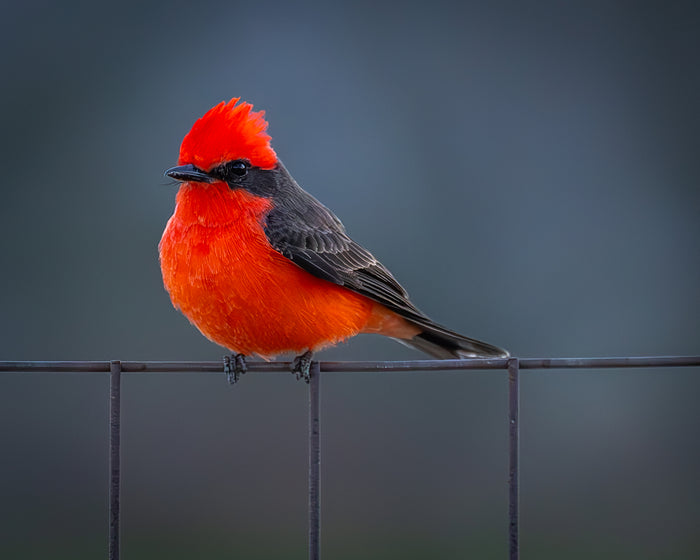
Vermilion Flycatcher
Adult males flash scarlet red; watch for short flights out from an exposed perch.
Meet this bird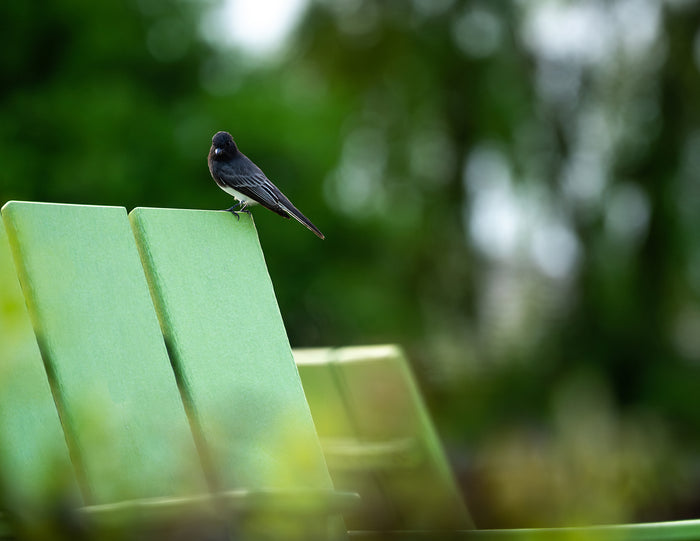
Black Phoebe
A black chest and white belly; often returns to the same low perch after catching insects.
Meet this bird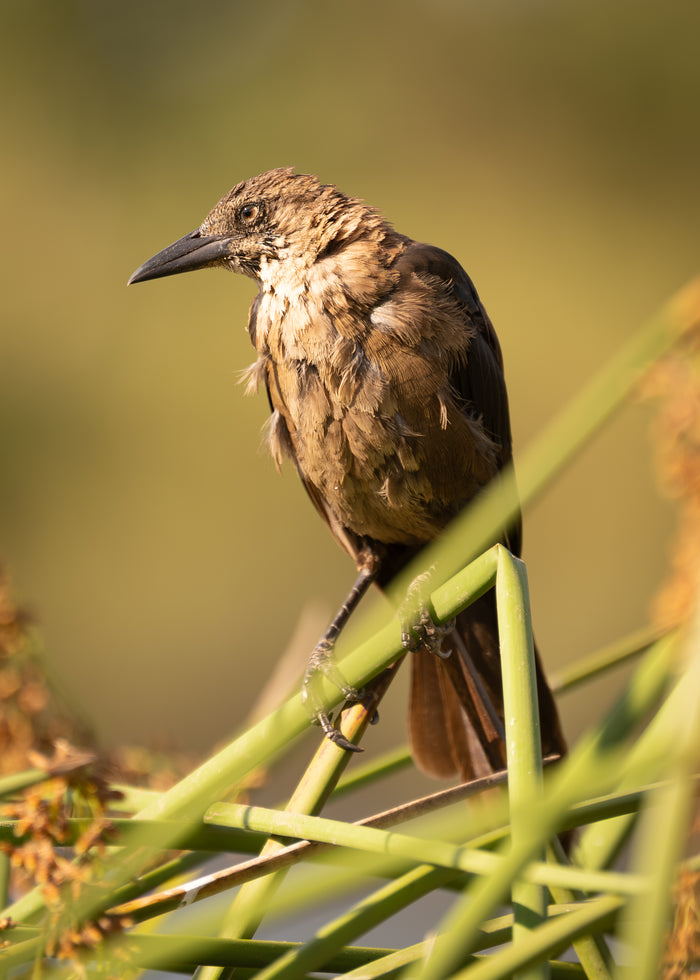
Great-tailed Grackle
Long tails and yellow eyes stand out; males are glossy black, females brown.
Meet this bird