




























Costa’s Hummingbird
Calypte costae
Adult males show a flared purple throat patch; females are much more subtly colored.
- Bird group
- Hummingbirds
- Where to look
- Desert scrub & gardens
- Explore the region
- Coachella Valley bird guide
What to notice
- Adult males show a flared purple throat patch; females are much more subtly colored.
- Male: Iridescent purple crown and gorget that flare outward like a collar; metallic green back; grayish-white underparts.
- Female: Subtler in color—green above and pale below with a faint buffy wash on the sides; no flashy purple.
Where to look
Desert scrub & gardens
When to look
It's one of the most striking hummingbirds of the Southwest, and a year-round resident in the region.
Next time you are outside
Adult males show a flared purple throat patch; females are much more subtly colored.
Habitat guidance is not a guaranteed sighting. Photographs may have been taken outside the valley.
Through the lens.
Select any photograph for a closer look. Move through the gallery with the arrows or a swipe.

This is a regional bird guide; photographs may also come from places beyond the valley. Locations are noted when available.
Know what to notice.
A dazzling little desert specialist, perfectly adapted to the arid landscapes of the Coachella Valley and surrounding scrublands. It's one of the most striking hummingbirds of the Southwest, and a year-round resident in the region.
Look a little closer
🌵 Identification
-
Size: Tiny—about 3.5 inches long.
-
Male: Iridescent purple crown and gorget that flare outward like a collar; metallic green back; grayish-white underparts.
-
Female: Subtler in color—green above and pale below with a faint buffy wash on the sides; no flashy purple.
When the male turns his head in the light, his head feathers ignite with brilliant purple, making him unmistakable.
🌺 Habitat & Behavior
Costa’s Hummingbirds thrive in desert scrub, washes, and edges of Joshua tree woodlands. They’re often spotted darting between chuparosa, desert lavender, and ocotillo blooms—plants they help pollinate.
-
Highly territorial—males will defend flowering plants aggressively.
-
During courtship, the male performs a dramatic u-shaped dive, emitting a sharp, high-pitched “zing” created by air rushing through his tail feathers.
🔬 Adaptations
-
Efficient nectar feeders with tongues that flick 10–15 times per second.
-
Can enter torpor, a state of lowered metabolism, to survive cold desert nights or food scarcity.
🌍 Ecological Role
Costa’s Hummingbirds are key pollinators for a variety of desert flora. Their relationship with native plants is mutualistic: they get nectar, and in return, spread pollen as they move flower to flower.







Read the related story: Why a Hummingbird’s Throat Goes From Black to Brilliant.
Another bird to discover.
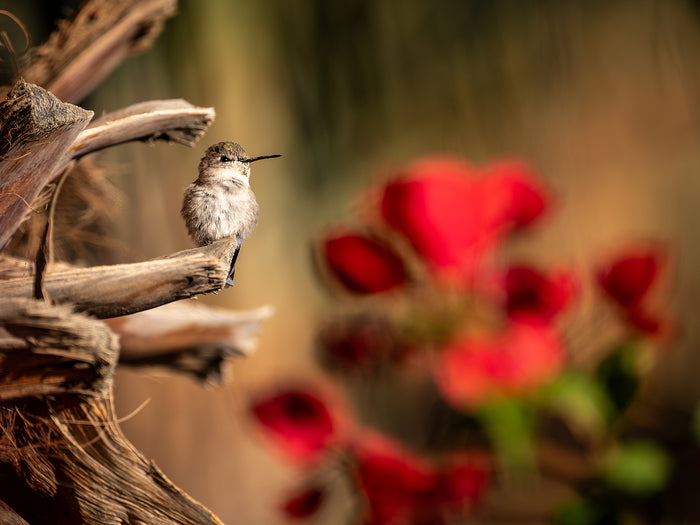
Anna’s Hummingbird
Look for an adult male’s rose-pink head and throat; color changes with the light.
Meet this bird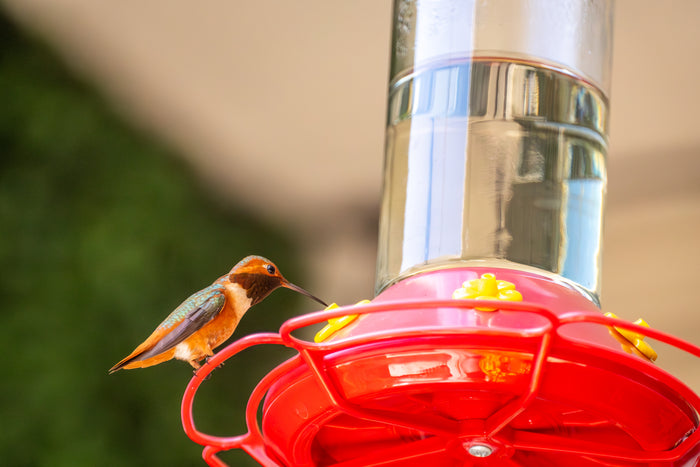
Rufous Hummingbird
Coppery tones can be a clue; females and young birds can be hard to separate from Allen’s.
Meet this bird