
Mountain Chickadee
Poecile gambeli
A white eyebrow cuts through the black cap of this active mountain forest bird.
- Bird group
- Songbirds & flycatchers
- Where to look
- High-elevation conifers
- Explore the region
- Coachella Valley bird guide
Through the lens.
Select any photograph for a closer look. Move through the gallery with the arrows or a swipe.
This is a regional bird guide; photographs may also come from places beyond the valley. Locations are noted when available.
Know what to notice.
The Mountain Chickadee (Poecile gambeli) is one of the most charming and lively small birds of the higher elevations surrounding the Coachella Valley, particularly in the San Jacinto, San Bernardino, and San Gabriel Mountains. While absent from the desert floor itself, this species is a familiar resident of montane forests, where its quick movements and cheerful calls enliven pine stands and mixed conifer woods.
Appearance
-
Size: About 5–6 inches long, weighing around 11 grams.
-
Coloration: Grayish above with lighter underparts. The back and wings are soft gray, while the flanks may be tinged with buff.
-
Head: Distinctive black cap and throat, white cheeks, and—most importantly—a narrow white eyebrow stripe above the eye, which separates it from the nearly identical Black-capped Chickadee.
-
Tail: Long and slightly notched, often flicked in animated fashion.
Behavior & Ecology
-
Foraging: Mountain Chickadees are energetic insect hunters, gleaning caterpillars, beetles, and spiders from bark and foliage. They also consume seeds, including pine seeds and those from feeders.
-
Caching: Like other chickadees, they cache food in bark crevices and recall hundreds of hiding spots thanks to remarkable spatial memory.
-
Flocks: Often travel in small mixed-species flocks in winter, associating with nuthatches, kinglets, and warblers.
-
Vocalizations: Their familiar “chick-a-dee-dee-dee” call is harsher than that of lowland relatives, and their song is a descending, whistled “fee-bee-bay”.
Nesting
-
Sites: Nest in natural cavities, old woodpecker holes, or nest boxes if available.
-
Material: Line nests with moss, fur, and plant down, making them soft and insulated.
-
Breeding season: Typically May–July in Southern California’s mountains.
Adaptations
-
Cold tolerance: Fluff their plumage and sometimes enter shallow nocturnal torpor to conserve heat during alpine nights.
-
Memory: Seasonal brain plasticity allows them to expand memory capacity in fall when food caching peaks.
Role in the Ecosystem
Mountain Chickadees are vital insect predators in conifer forests, helping regulate pest populations. They also disperse seeds by carrying and caching them, sometimes forgetting stores that later sprout.
Where to See Them Near the Coachella Valley
-
Common at Idyllwild and Mount San Jacinto State Park.
-
Also found in Big Bear, Lake Arrowhead, and higher ridges of the San Bernardino Mountains.
-
In winter, they may move slightly downslope but remain tied to forests with pines, firs, or cedars.
Another bird to discover.
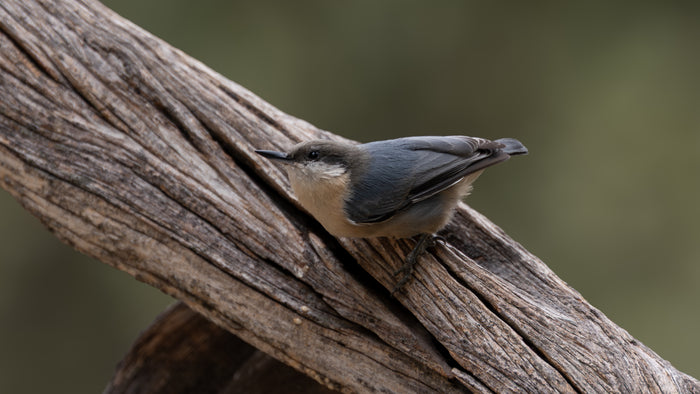
Pygmy Nuthatch
Tiny, busy birds travel through pine branches in chattering groups above the desert.
Meet this bird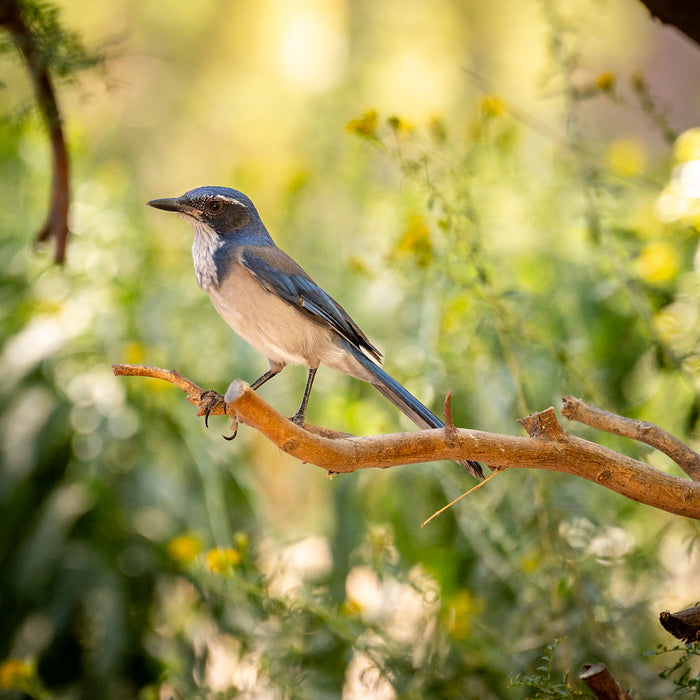
California Scrub-Jay
Blue wings, a gray-brown back and no crest distinguish it from the mountain Steller’s Jay.
Meet this bird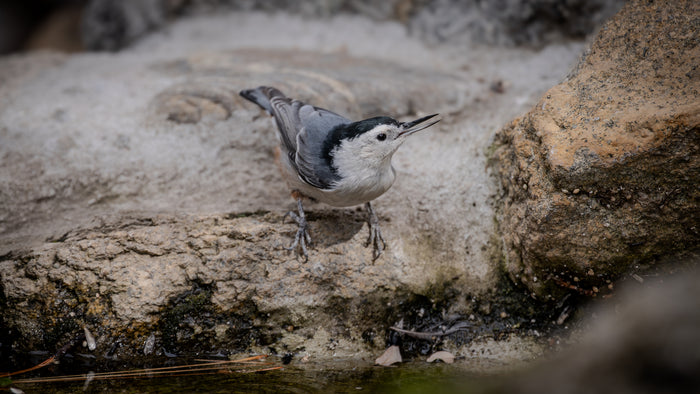
White-breasted Nuthatch
A white face and blue-gray back; watch it creep headfirst down a tree trunk.
Meet this birdSee the bigger picture.
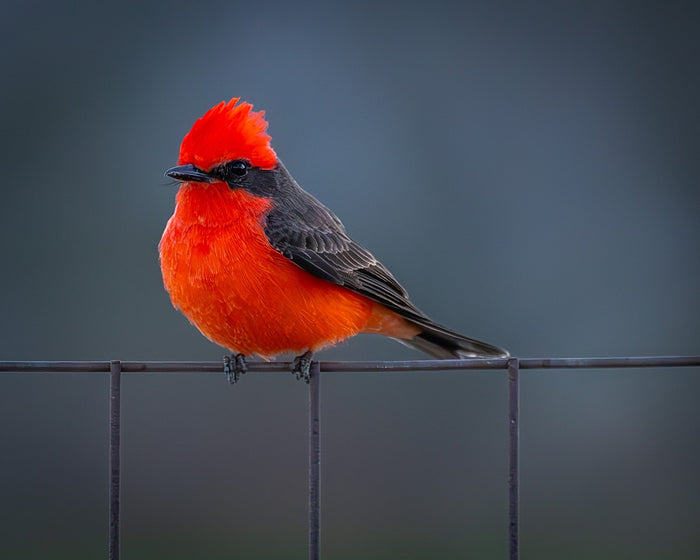
The Pacific Flyway: Coachella Valley’s Living Migration Path
Follow the larger migration story connecting desert oases, open water and the birds passing through the valley.
Read the story
Layers of a Desert Lake: Birds of Lake Cahuilla in Winter
Explore a winter visit to Lake Cahuilla, from close encounters along the shore to movement above the water.
Read the story
Salton Sea Bird Watching: Where to Go & What to See
Continue south to the Salton Sea for a broader look at birding places, habitats and seasonal variety.
Read the story