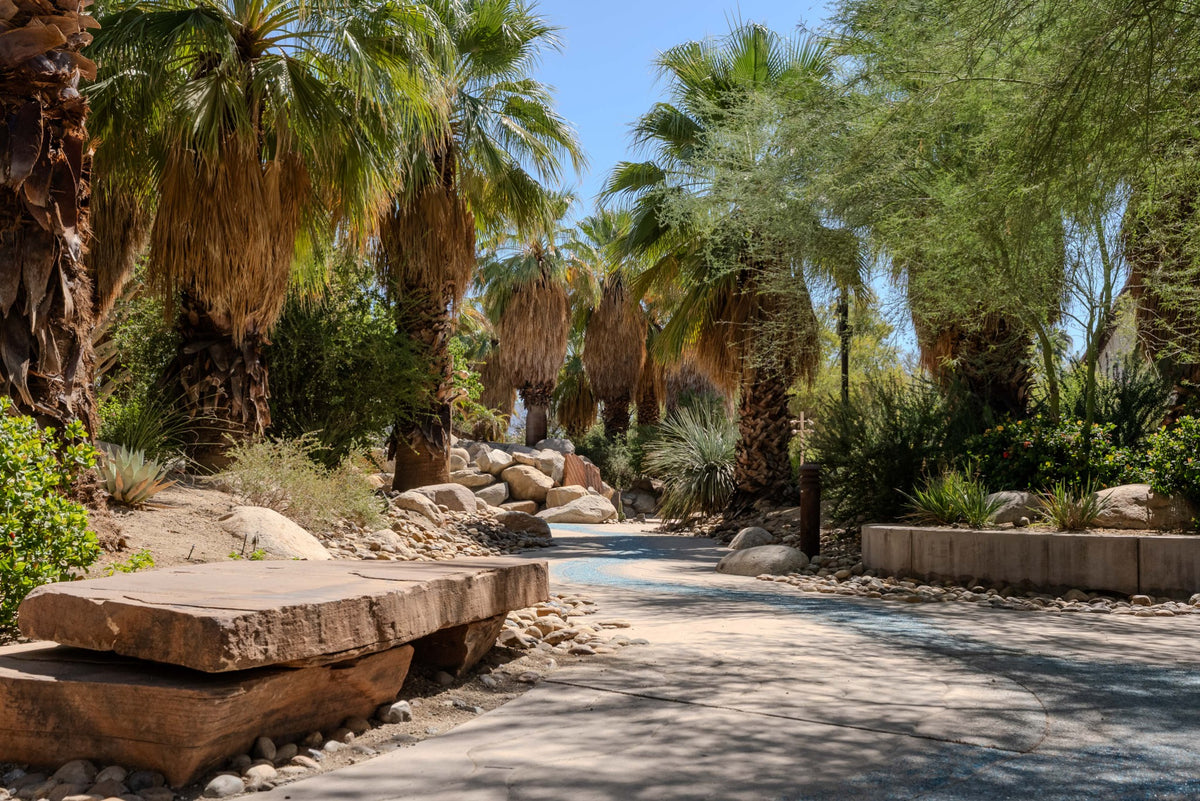
Why Your Desert Community’s Landscaping Changes Through the Year
What changing lawns, mature trees and summer shade reveal about life in the Coachella Valley—with examples from Sun City Shadow Hills.

Come back to the desert after a few months away and the neighborhood can look surprisingly different. A lawn is changing color. Palms have been trimmed. Flower beds have been replanted, and a neighbor has put shade cloth over a vulnerable plant.
These changes deserve different explanations. Some follow the growing season, some protect plants through extreme weather, and others belong to a construction project with its own timetable. Understanding which is which makes it easier to judge a community’s appearance—and ask useful questions about your own yard.
Five months of Sun City Shadow Hills’ The View, from June through October 2026, offer a window into that rhythm. Paired with guidance from the Coachella Valley Water District and University of California, they help explain what residents across the valley may notice.
- Identify the change: seasonal work, plant stress and major renovations follow different timelines.
- Ask about responsibility: private yards, common areas and golf courses may have different maintenance arrangements.
- Think beyond winter: shade, irrigation and time-away care deserve a place in your homebuying questions.
What am I seeing in my landscape?
Choose a season and a change you have noticed. Use the result to prepare for a conversation about your yard or common area.
Fall · Brown or changing turf
What it could mean
Grass color can change with dormancy, overseeding preparation or a problem that needs checking. The grass type and the maintenance notice matter more than color alone.
For this season: Check the overseeding schedule first. Also ask whether any separate renovation is affecting the area.
What to check
- Is the change uniform, or limited to patches?
- Is there a posted overseeding, closure or renovation notice?
Ask your gardener or HOA
Which grass is here, what work is planned, and what recovery or reopening date should we expect?
Possible explanations, not a plant diagnosis or a watering schedule. Local conditions and species matter. Photograph changes from a safe position; keep clear of unstable trees and hanging limbs.
A desert landscape runs on several calendars
The grass, trees and flower beds outside your window do not all need attention at the same time. A community also has maintenance contracts, resident-use schedules and occasional renovation work to coordinate. The result is a landscape that changes in stages.
Use this as a way to read those changes, rather than a maintenance schedule for every property:
| Season | What to look for | A useful question |
|---|---|---|
| Winter | The difference between green overseeded turf and dormant warm-season grass. | Is this area intended to stay green through winter? |
| Spring | How the yard’s shade and exposure change as the days lengthen. | Which plants will face direct afternoon sun in summer? |
| Summer | Protective shade, seasonal planting and signs of heat stress. | Is this planned protection, or a plant that needs assessment? |
| Fall | Turf preparation and temporary restrictions where overseeding is planned. | Is this routine seasonal work or part of a larger project? |
The most useful comparison is often the same place in the same month a year earlier. A January listing photograph and an August visit show different chapters of the landscape’s year.
Why a green lawn can become a work zone
Sun City Palm Desert: a turf trial alongside seasonal overseeding
Sun City Palm Desert’s 2026 reports describe conversion of selected areas to Zoysia, including San Gorgonio’s sixth hole and the separate putting-course area. At the same time, September’s maintenance schedule lists fall overseeding closures for the championship courses and several parks. Both processes can occur in one community.
For a buyer looking at bare ground or restricted access, the useful question is specific: is this ordinary seasonal preparation, a grass-conversion trial, or another project? Do not assume the whole community has changed turf or eliminated overseeding. October’s reports even differ on when the putting course reopened, which is another reason to confirm access directly before visiting.
Warm-season Bermuda grass is common in desert landscapes. Some properties overseed it with cool-season grass to maintain a green winter appearance. Others allow it to become dormant. CVWD emphasizes that overseeding is optional: skipping it can save water and money, while dormant Bermuda still needs occasional watering.
Where overseeding takes place, the transition requires preparation and a period for new grass to establish. CVWD’s residential guidance recommends a mid-October to mid-November planting window to reduce germination water needs compared with earlier planting. Irrigation changes during establishment, then needs to be reduced again. The district’s household guidance is not a golf-course operating calendar; ask the community about its own schedule and access restrictions.
That distinction mattered at Sun City Shadow Hills in 2026. The South Course had a separate renovation project. October’s pro-shop report said the course and driving-range work was complete and attention was moving toward overseeding, with reopening scheduled for November 6. That was a reported completion milestone followed by a future reopening date—not evidence that the course was already open.
For the broader project history, see our Sun City Shadow Hills capital-improvements guide. When a large area looks unfinished, the first question should be which project or seasonal process you are seeing.
Summer can change the planting—and add protection
July’s issue reported that summer flower installation was underway, using a vinca mix around the community. August’s Design Review column discussed garden shade cloth. Together, those updates show two different responses to the season: changing the planting display and temporarily protecting vulnerable plants.
UC’s pest-management guidance explains that intense sun can injure foliage and bark, particularly when plants are water-stressed or newly exposed. Removing shade or pruning away too much canopy can expose tissues that were previously protected. Suitable plant placement and carefully chosen protection matter alongside irrigation.
A scorched-looking leaf is not, by itself, an instruction to run the irrigation longer. UC also notes that sunburn can occur when soil is saturated. Identify the plant and check its growing conditions before deciding what to change.
Shade cloth also has a neighborhood-design dimension. The August magazine described SCSH requirements for its use. Before putting up a structure or covering, check the association’s current design rules, including permitted materials, timing and approvals.
To explore the seasonal patterns of plants growing naturally around the valley, see our native-plants guide and interactive bloom calendar. It provides a useful companion to the managed flower beds and lawns within a community.
For a homebuyer, this is a reason to study the yard beyond its winter presentation. Our backyard-exposure guide explores how orientation affects the way you use your outdoor space.
Mature shade brings an ongoing responsibility
A mature tree can make a patio feel established and comfortable. It also creates a maintenance commitment that is easy to overlook when admiring the canopy.
The July Design Review column discussed the expense of maintaining the community’s maturing trees and damage associated with high winds. September’s column returned to trees after reported losses from severe weather, asking owners to review the condition of those remaining on their lots.
Those reports are a reason to pay attention, not a universal pruning prescription. Palms and broad-canopied trees should not be treated as interchangeable, and a recently trimmed tree is not automatically a healthier one. Ask a qualified arborist what a particular tree needs and why.
For residents, a useful starting point is responsibility: which trees are on your lot, which belong to a common area, and who receives a report when something looks wrong? Photographs and a precise location make that conversation more productive than a general complaint that the landscaping looks different.
The biggest adjustment may be out of sight
Sprinklers and drip lines do much of their work while residents are indoors or away. A landscape can therefore look unchanged even while its irrigation needs are shifting.
CVWD’s watering guide varies its recommendations by month and landscape type, and tells residents to account for soil and local conditions. A single timer setting left untouched all year misses that seasonal variation. The district also recommends checking sprinklers monthly.
For your own yard, ask the person maintaining it how seasonal adjustments are made and how faults are found. Are emitters reaching the plants they serve? Is water escaping onto pavement? Does somebody inspect the system while you are away? These are more useful questions than asking whether the timer is simply “on.”
Keep private-yard service separate from common-area maintenance when assigning responsibility. If you use a home-watch provider, agree on what they will observe, photograph and report, and who is authorized to arrange repairs. Our Coachella Valley home-watch guide covers that broader handoff.
For the larger water-supply picture, our guide to where Coachella Valley water comes from includes an interactive explorer with a golf-and-landscape view.
Five questions before you judge the view
Whether you are touring a home or returning for the season, use the changing landscape as a starting point for conversation:
- What is planned? Ask for the current maintenance or project notice before interpreting bare ground, changed turf or temporary closures.
- What is seasonal? Find out whether winter color, replacement flowers or temporary shade are part of the property’s usual approach.
- Who maintains it? Establish the boundary between your yard, shared areas and golf-course property.
- What happens while I am away? Identify who checks irrigation and reports plant or tree problems.
- What will this space feel like in another season? Consider usable shade and exposure as well as appearance.
A well-kept desert community will still change through the year. What matters is understanding the reason for a change, who is responsible for it, and what should happen next.
For the broader rhythm of resident life, read what it is actually like to live in Sun City Shadow Hills.
Explore the communities and landscape destinations below to put those observations in context.
Five common questions
Does a brown lawn mean it is dead?
Not necessarily. Warm-season Bermuda can go dormant in winter, and some properties choose not to overseed. Color alone does not establish the cause; ask what grass is present and whether dormancy is expected before assuming damage.
Does every desert community overseed its lawns?
No universal schedule applies. Ask the particular association which areas it overseeds, when work is planned and what temporary access restrictions to expect.
Should every tree be trimmed on the same schedule?
A community work schedule is not a care prescription for every species. Ask a qualified arborist to assess the tree, its condition and the purpose of any proposed pruning.
Can I put shade cloth over plants in my yard?
Check your association’s current design requirements first. SCSH’s August 2026 Design Review column discussed restrictions on garden shade cloth; use the current rules and approval process for a new installation.
What should I arrange before leaving for the summer?
Name the person responsible for landscape and irrigation checks, agree on photographs and reporting, and decide who can authorize repairs. Clarify separately what your gardener, home-watch provider and HOA each cover.
Sources and reporting notes
This original DOI guide draws on a review of the June–October 2026 issues of The View. The community examples below come from specific board, Design Review and pro-shop updates; they do not constitute a complete monthly maintenance calendar. General explanations are supported by CVWD and UC guidance. Sources reviewed October 2, 2026.
- The View, July 2026, page 3: summer flower installation; page 7: Agi Kessler’s Design Review discussion of mature trees and maintenance.
- The View, August 2026, page 7: Agi Kessler’s garden shade-cloth discussion.
- The View, September 2026, page 10: Agi Kessler’s “Trees and Stumps” column.
- The View, October 2026, page 15: Jason Mohr’s South Course and driving-range update; November 6 was the scheduled reopening date.
- CVWD: Overseeding and residential overseeding guidelines: dormancy, water use and establishment timing.
- CVWD: Watering Guide: seasonal irrigation and system checks.
- University of California IPM: Sunburn: sun exposure, plant stress and prevention.
- SCSH Design Rules: consult the association’s current requirements for a proposed landscape change.
- University of California IPM: Water Deficit and Excess: soil saturation and irrigation assessment. The interactive guide combines these sources with DOI’s suggested observations and questions; it does not identify a specific plant’s condition.
October 2, 2026 update
Reviewed the May–October 2026 association magazines for this update. The additions below use the issue and page references shown. Published plans are distinguished from confirmed completion; older fee estimates and MLS dates retain their original limitations.
- SCPDCA, News & Views, May 2026, p. 25: early selected-area Zoysia project description; inconsistent planting date not relied upon.
- SCPDCA, News & Views, September 2026, p. 23: course and park overseeding calendar.
- SCPDCA, News & Views, October 2026, pp. 25 and 50: Zoysia project and conflicting putting reopening reports.