
California Scrub-Jay
Aphelocoma californica
Blue wings, a gray-brown back and no crest distinguish it from the mountain Steller’s Jay.
- Bird group
- Songbirds & flycatchers
- Where to look
- Foothills & oak woodland
- Explore the region
- Coachella Valley bird guide
Through the lens.
Select any photograph for a closer look. Move through the gallery with the arrows or a swipe.
This is a regional bird guide; photographs may also come from places beyond the valley. Locations are noted when available.
Know what to notice.
A striking, intelligent songbird commonly found in the Coachella Valley and throughout much of California. This medium-sized jay is known for its bold personality, striking blue and gray plumage, and loud, raspy calls.
Identification
- Size: About 11–12 inches long, with a wingspan of 15 inches.
- Color: Deep blue head, wings, and tail, contrasted by a grayish-brown back and a clean white underbelly.
- Distinct Features: No crest (unlike the Steller’s Jay), long tail, and a sharp, stout black bill.
Habitat & Range
California Scrub-Jays thrive in oak woodlands, chaparral, coastal scrub, and suburban areas. They are frequently seen in gardens, parks, and desert edges, especially where there are trees or shrubs for cover. Though not as common in the low desert, they can be found in nearby foothills and mountainous areas surrounding the Coachella Valley.
Behavior & Diet
- Omnivorous: Their diet consists of acorns, seeds, insects, fruits, and small vertebrates. They are well known for caching food, particularly acorns, which helps shape oak forest ecosystems by unintentionally planting trees.
- Smart & Social: These birds exhibit remarkable intelligence. They engage in complex problem-solving and even recognize individual human faces.
- Territorial: Unlike some jays, they do not form large flocks but instead stay in pairs or small family groups.
Ecological Role
As seed dispersers, California scrub jays play a crucial role in the health of oak woodlands. Their habit of burying acorns, many of which they never retrieve, helps regenerate forests. Additionally, they help control insect populations by preying on pests.
Vocalizations
Their calls are harsh, scratchy, and loud, often described as "shreep" or "shack-shack-shack." They are quite vocal, using a variety of sounds to communicate with their mates and defend their territories.
Interesting Facts
- Mimicry: While not as skilled as some other jays, they can mimic hawk calls to scare away competitors.
- Memory Masters: Studies show they can remember specific hiding places for food for months.
- Cultural Symbolism: In Native American folklore, jays are often seen as tricksters or symbols of cleverness.
Another bird to discover.

Yellow-rumped Warbler
Yellow flashes at the rump and sides help pick out this active little winter visitor.
Meet this bird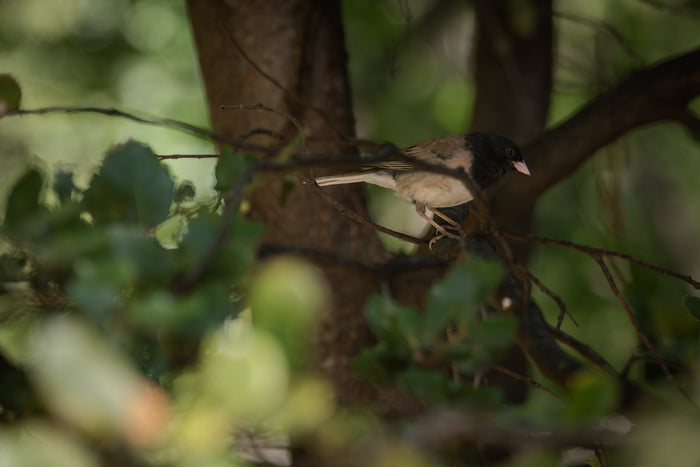
Dark-eyed Junco
Ground-feeding sparrows that flash white outer tail feathers when they fly.
Meet this bird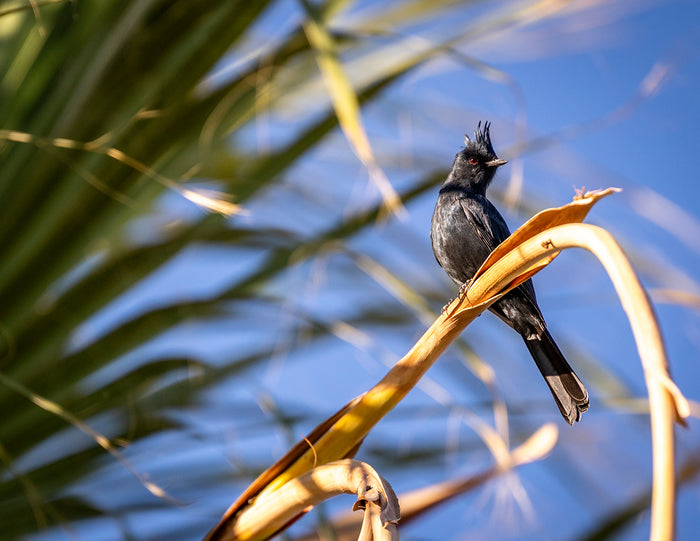
Phainopepla
A sleek crest and red eyes; males are black, females gray. Mistletoe berries are a key food.
Meet this birdSee the bigger picture.
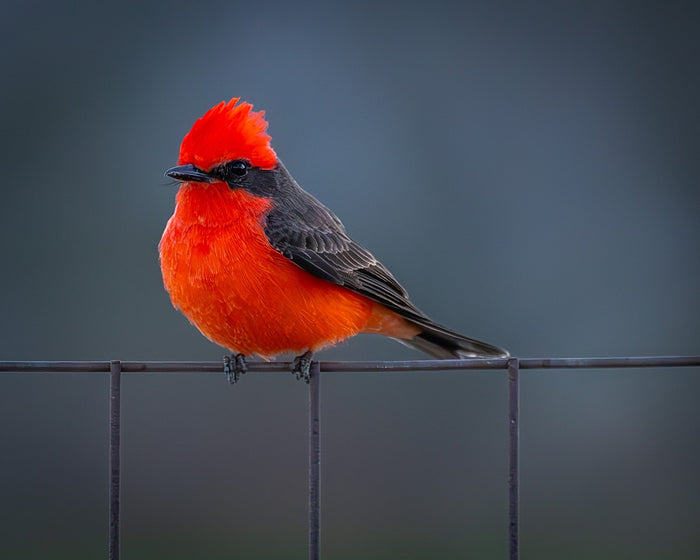
The Pacific Flyway: Coachella Valley’s Living Migration Path
Follow the larger migration story connecting desert oases, open water and the birds passing through the valley.
Read the story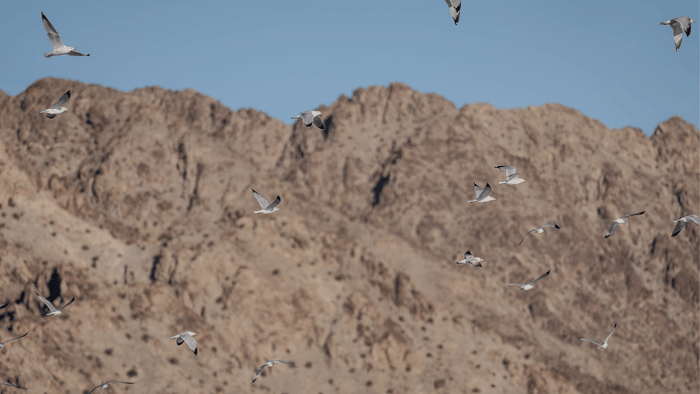
Layers of a Desert Lake: Birds of Lake Cahuilla in Winter
Explore a winter visit to Lake Cahuilla, from close encounters along the shore to movement above the water.
Read the story
Salton Sea Bird Watching: Where to Go & What to See
Continue south to the Salton Sea for a broader look at birding places, habitats and seasonal variety.
Read the story