
Cheesebush / Burrobrush
Field note · La Quinta Cove, September 28, 2026. The rounded, straw-colored shrub in these photographs is presented as a provisional identification of cheesebush / burrobrush (Ambrosia salsola). The wider frames show...
- In this guide
- Native
- Explore the collection
- Desert flora guide
A closer look.
Open a photograph to see the details. Use the arrows or swipe to explore the gallery.


Photographs from Desert Oasis Insider’s plant collection. Locations are shown where recorded in the original gallery.
Get to know this plant.
About this classification: Native
Native to the California desert region or nearby mountains. The setting listed above matters: a mountain native may not belong to the hot valley floor.
Field note · La Quinta Cove, September 28, 2026. The rounded, straw-colored shrub in these photographs is presented as a provisional identification of cheesebush / burrobrush (Ambrosia salsola). The wider frames show the surrounding wash and shrubland, where more than one plant species is visible. A close view of fresh leaves, flower heads, or fruit would make the identification firmer.
- Also called: Cheesebrush, burrobrush; the older scientific name Hymenoclea salsola also appears in field references.
- Plant type: Native, drought-deciduous desert shrub in the sunflower family (Asteraceae).
- Habitat: Sandy washes, alluvial fans, and rocky slopes in the southwestern deserts.
What to look for
Cheesebush often grows as a broad, rounded, sometimes open shrub of many slender twigs. Its leaves are narrow and can be sparse or absent through dry periods, leaving a pale, twiggy silhouette. Small flower heads are much less showy than the yellow daisies of brittlebush. Look for new leaves and flowering growth after favorable seasonal moisture rather than assuming a dry shrub is dead.
Why it fits this landscape
Desert washes and alluvial fans carry brief pulses of water and sediment. Burrobrush is among the shrubs associated with these well-drained places, and it can be common where soils have been disturbed. The repeated tan mounds in these La Quinta Cove views make a compelling field question, but the wide photographs alone do not establish that every mound is the same species.
Seasonal field notes
This shrub may leaf out after winter or summer rains and shed leaves during drought. Flowering is generally reported in spring, with local timing varying by rainfall and conditions. Returning to the same plants after rain would make a useful photographic comparison.
Five quick questions
Is cheesebush native to California?
Yes. Calflora lists Ambrosia salsola as native to California.
Are cheesebush and burrobrush the same plant?
They are common names used for Ambrosia salsola. “Cheesebrush” is another spelling found in references.
Why does it look dry in these photos?
Burrobrush is drought-deciduous and may lose its leaves during dry periods. Appearance alone cannot confirm the identity or health of an individual shrub.
How could I confirm the identification?
Photograph a leafy twig and the small flower heads or fruit close up, then compare them with a regional botanical key or verified specimens.
Are all the shrubs in the landscape photos burrobrush?
Not confirmed. Those frames document habitat and the abundance of similar-looking shrubs; they also include other plants.
Sources
More native plants to know.
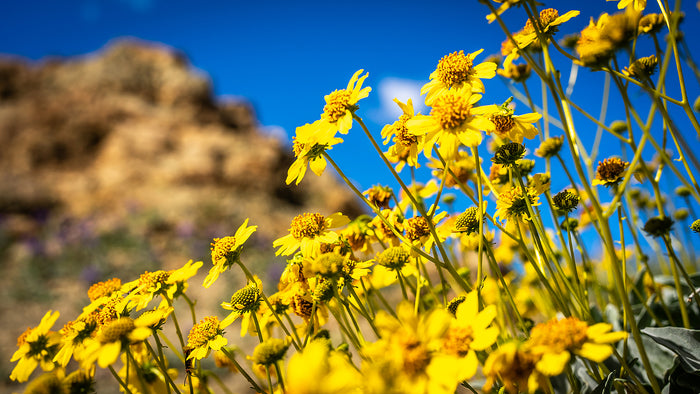
Brittlebush
Silver leaves and bright yellow flowers make this a familiar desert shrub.
Meet this plant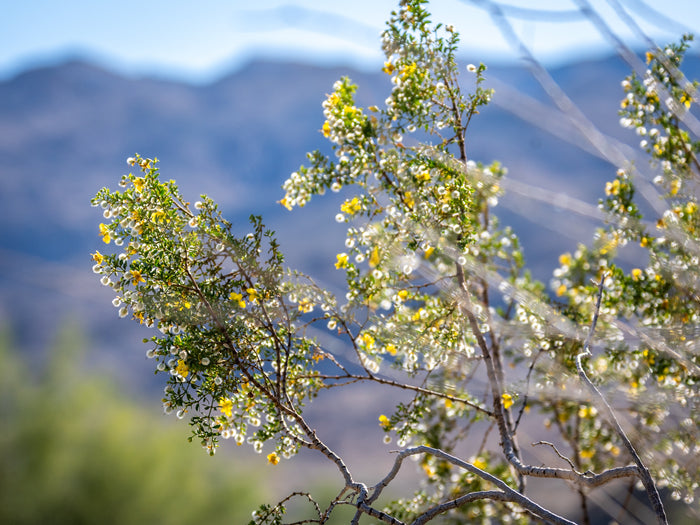
Creosote Bush
Small resinous leaves and yellow flowers belong to one of the desert’s defining shrubs.
Meet this plant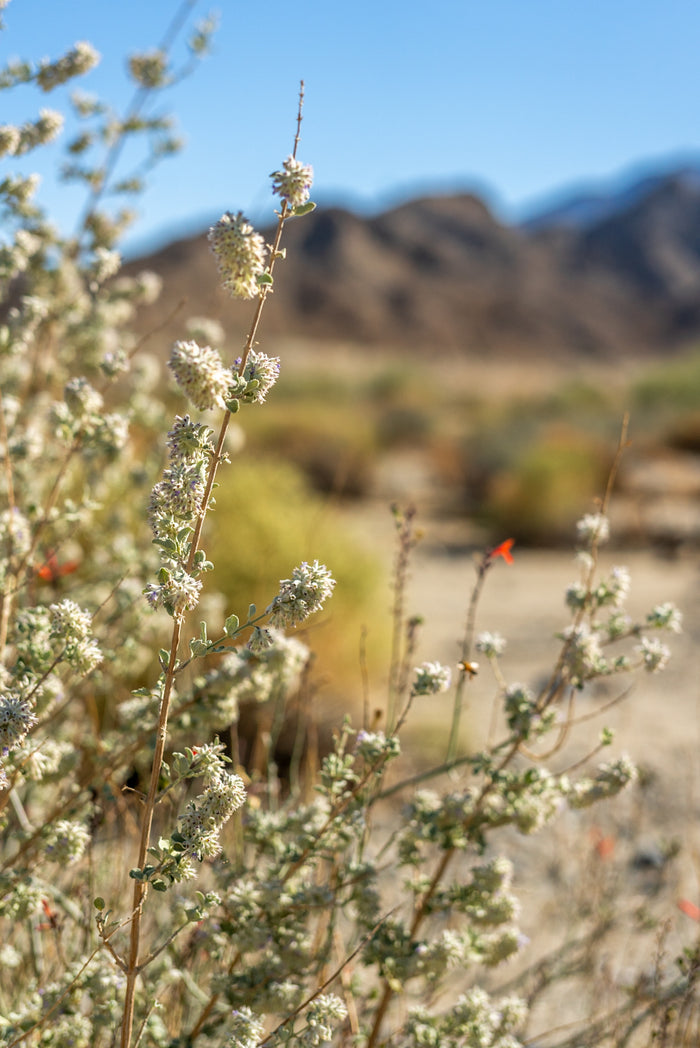
Desert Lavender
Pale purple flowers and soft gray foliage distinguish this aromatic desert shrub.
Meet this plantFollow the story outside.
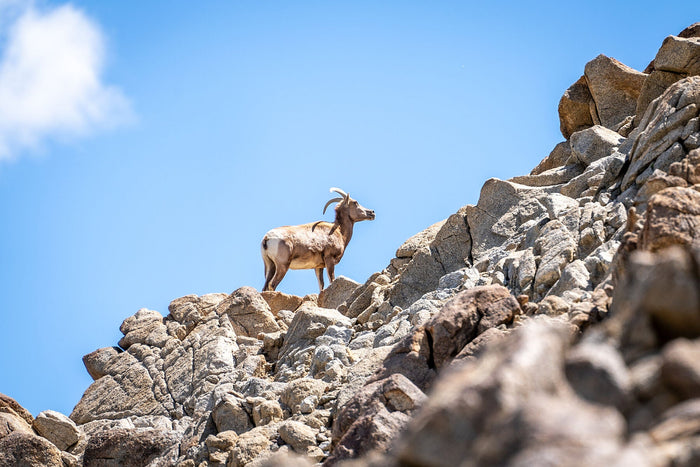
Bighorn Sheep of the Coachella Valley
Discover the bighorn sheep that share this landscape and the desert plants connected to their lives.
Read the story
La Quinta Cove Hiking Trails: Three Routes and What to Know Before You Go
Take the plant guide into the landscape with a closer look at the trails around La Quinta Cove.
Read the story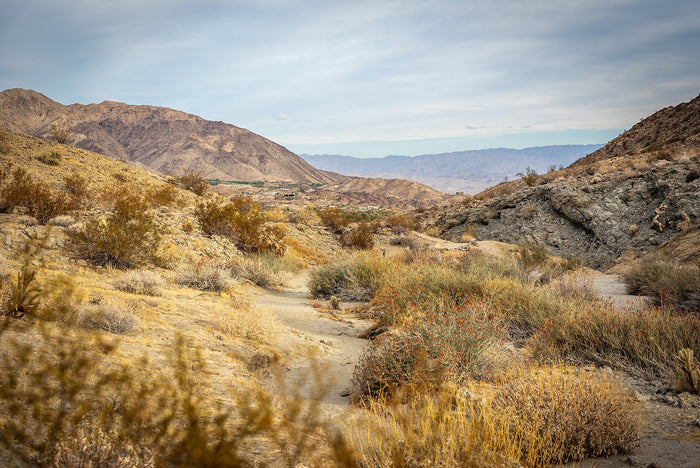
Hiking in Palm Desert: Trails, Views & Safety Guide
Continue exploring Palm Desert’s trails, open views and the outdoor spaces just beyond town.
Read the story