
Joshua Tree
Yucca brevifolia
A tree-like yucca of the Mojave Desert, best associated with higher desert country.
- In this guide
- Native
- Plant group
- Agaves, yuccas & succulents
- Typical setting
- High desert
- Explore the collection
- Desert flora guide
A closer look.
Open a photograph to see the details. Use the arrows or swipe to explore the gallery.

Photographs from Desert Oasis Insider’s plant collection. Locations are shown where recorded in the original gallery.
Get to know this plant.
About this classification: Native
Native to the California desert region or nearby mountains. The setting listed above matters: a mountain native may not belong to the hot valley floor.
An iconic species native to the Mojave Desert, including the high desert edges of the Coachella Valley.
Botanical Profile:
-
Family: Asparagaceae (formerly Agavaceae)
-
Form: Tree-like yucca; can grow up to 40 feet tall
-
Leaves: Rigid, spine-tipped, dagger-like, and clustered in tufts at the end of branches
-
Flowers: Bell-shaped, creamy white to greenish, bloom in spring (usually February to April)
-
Growth Rate: Extremely slow; it can take decades to mature
Ecological Role:
-
Provides habitat and nesting sites for birds like the Scott’s oriole and ladder-backed woodpecker
-
Animals, especially rodents, primarily disperse seeds
-
Dependent on the yucca moth (Tegeticula spp.) for pollination, a classic example of mutualism
Adaptations:
-
Thick, waxy leaves reduce water loss
-
An extensive root system allows it to access deep and wide water sources
-
The fibrous trunk can store moisture during drought periods
Range:
-
Native to the Mojave Desert but found in higher elevation parts of the Coachella Valley and adjacent mountain slopes (like the Little San Bernardino Mountains)
Conservation Note:
-
Joshua Trees are under threat from climate change, habitat fragmentation, and wildfire
-
As of recent assessments, Yucca brevifolia is a candidate for protection under the California Endangered Species Act
More native plants to know.
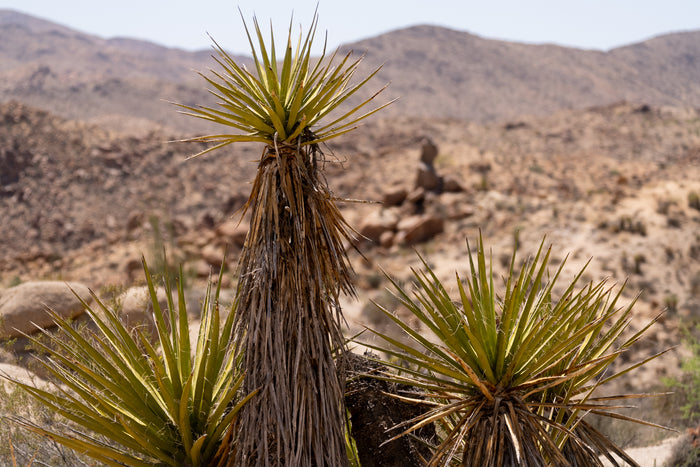
Mojave Yucca
Rigid sword-shaped leaves and a rugged trunk give this desert yucca its silhouette.
Meet this plant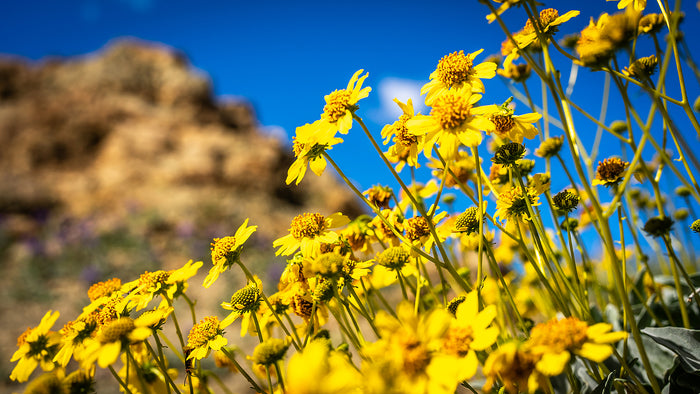
Brittlebush
Silver leaves and bright yellow flowers make this a familiar desert shrub.
Meet this plant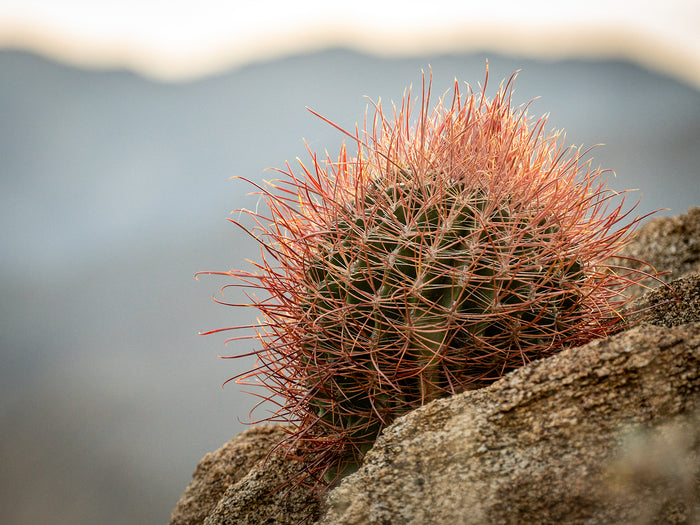
Fishhook Barrel Cactus
The Art Smith Trail photograph shows a local barrel cactus. California barrel cactus occurs along this trail.
Meet this plantFollow the story outside.
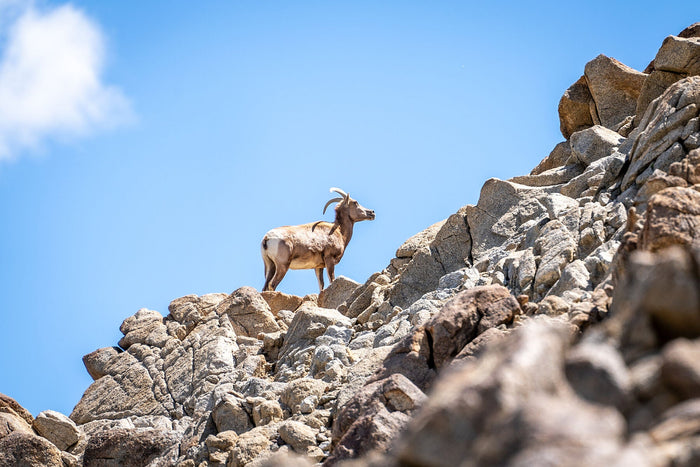
Bighorn Sheep of the Coachella Valley
Discover the bighorn sheep that share this landscape and the desert plants connected to their lives.
Read the story
La Quinta Cove Hiking Trails: Three Routes and What to Know Before You Go
Take the plant guide into the landscape with a closer look at the trails around La Quinta Cove.
Read the story
Hiking in Palm Desert: Trails, Views & Safety Guide
Continue exploring Palm Desert’s trails, open views and the outdoor spaces just beyond town.
Read the story