The National Date Festival: How Indio Turned a Crop Into a Celebration
From date groves to an imagined oasis: the agriculture, pageantry and community traditions behind Indio’s winter fair.

At sunset, the palms above the midway look almost like another row of fairground decorations. Below them are food stands, families, carnival games and the familiar business of deciding what to see next. Look up, though, and the name of this fair begins to make sense: a desert crop helped give Indio a celebration of its own.
The Riverside County Fair & National Date Festival has never had just one identity. It is an agricultural showcase, a community gathering and a production built around an imagined oasis. Its history is most revealing when those strands are followed separately, then brought back together.
- Two beginnings: the first official festival in 1921 and the annual era from 1947.
- Several strands: agriculture, pageantry and community exhibits developed together.
- A changing program: old attractions, present offerings and future announcements are identified separately.
- Original photographs: Mark Miller’s February 2025 visit, with full-screen viewing.
Before the midway, there was a crop
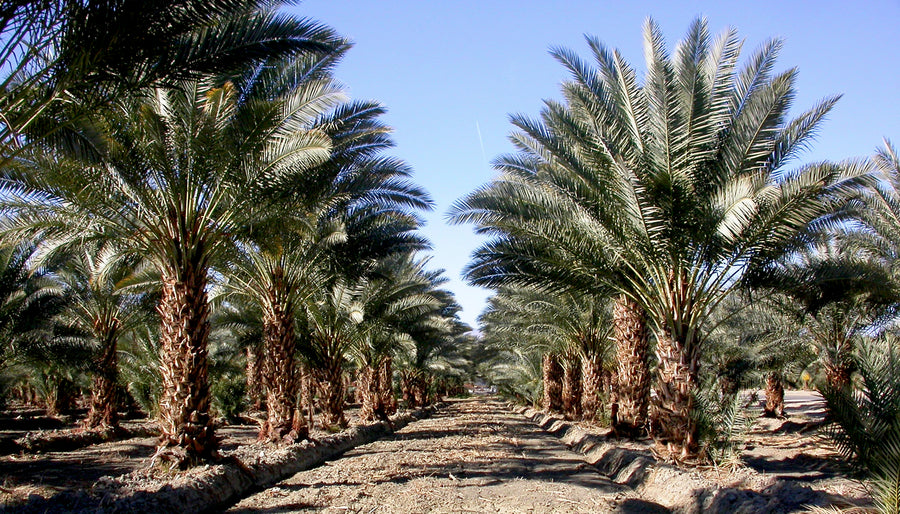
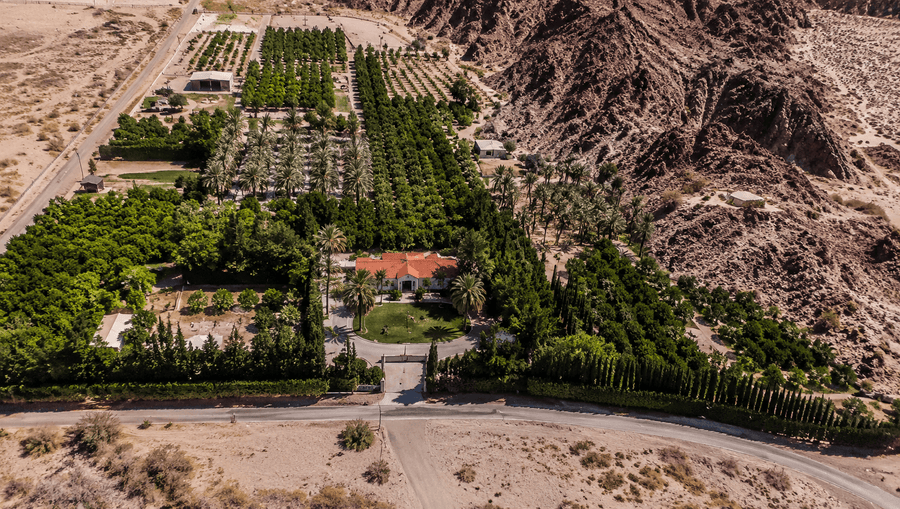
To understand the festival, start with the work beyond its gates. Commercial date growing connected the Coachella Valley to growers and planting material from the Middle East and North Africa. Imported palms, agricultural experimentation and local investment helped turn that connection into an industry. The deeper account is in How Dates Built the Coachella Valley.1
For a grower, a date is the result of a year’s attention. Hand pollination helps the trees set fruit; harvesting takes repeated human effort. Foodwise places the California harvest broadly in September through December. A winter festival celebrating dates therefore should not be mistaken for a demonstration that the entire crop is being picked in February.4
There is a useful change of perspective here. At the fair, a date can be a sweet treat and a symbol. In the grove, it is a crop with a demanding calendar. The festival’s agricultural meaning depends on keeping those two views in touch.
1921 and 1947: two beginnings worth keeping
Indio’s first official International Festival of Dates took place in 1921. Early celebrations were intermittent; the annual era began in 1947. Those dates answer different questions: one marks the first event, the other the modern recurring institution.12
Calling it simply “a festival founded in 1947” loses the earlier local ambition. Calling it an uninterrupted annual tradition since 1921 loses the interruptions. A better account gives both dates their place, without making every later attraction part of the original program.
That distinction also helps explain the larger story of Indio. A town could grow crops for distant buyers and also invite those buyers to come and see the place. The festival made a local product into a reason to visit.
Follow the festival’s changing traditions
Drag the slider, choose a year or follow one strand of the story. These are selected milestones, with labels distinguishing a first event, a dated historical snapshot and an announced future program. The spacing follows the sequence of chapters, not equal intervals of time.
A crop becomes an occasion
Indio gave its date crop a public celebration. This beginning predates the annual festival that developed after World War II.
Read the complete timeline
- 1921 — A crop becomes an occasion. Indio gave its date crop a public celebration. This beginning predates the annual festival that developed after World War II. 12
- 1947 — The annual era begins. After sporadic early celebrations, 1947 marks the annual festival’s modern starting point. It should not be confused with the first event in 1921. 12
- By 1949 — Queen Scheherazade on stage. A 1949 account describes the Queen Scheherazade contest against an imagined Baghdad backdrop. “By” identifies dated evidence, not a claim about the first contest. 1
- 1984 — A fair with many identities. Desert Magazine describes a theatrical pageant and camel and ostrich races alongside a junior fair, livestock, home arts, gems and agricultural exhibits. 3
- 2019 — An old attraction leaves the program. Contemporary reporting identifies 2019 as the first year without the camel and ostrich races, while noting that camel rides remained. A ride and a race are different attractions. 2
- 2022 → 2023 — A new agreement, a return. The county approved a five-year operating agreement with Pickering Events in June 2022, announcing a full-scale festival for February 17–26, 2023. 5
- 2023 — Scholarships take a different form. The published program opened eligibility to qualifying Riverside County high-school seniors, with selection through school records, a community essay and an interview. 6
- 2026 — The history gets its own space. The county announced the National Date Festival Museum inside the Sands of Time building, bringing date farming and festival history into the refreshed fair presentation. 7
- 2027 — Students inherit the stage. The official Arabian Nights Showcase invites local school performing-arts groups to develop short productions. As of this article’s October 2026 review, this is an announced future program. 11
How the fair became an imagined oasis
The Arabian imagery did not suddenly appear in the postwar years. Costumes were already part of the 1921 presentation, and a Queen Scheherazade contest is documented in 1949. The crop’s real geographic connections became material for an American fantasy of “Arabia.”1
The postwar theatrical pageant gave that fantasy a substantial stage. Historical reporting credits Louise Dardenelle with conceiving the Arabian Nights production and Hollywood art director Harry Oliver with the Baghdad Stage. Domes, arches and theatrical settings made the fairground itself part of the show.2
Those settings deserve to be read as scenery. They mixed references from different places and traditions; they were not a faithful portrait of one Middle Eastern society. Remembering the show fondly and recognizing its stereotypes are compatible ways of looking at the same history.
The distinction is especially important in a story about food. The knowledge and plants behind date farming came from real people and places. A costume or stage set cannot stand in for those communities. The festival’s visual identity tells us much about how Californians marketed the desert to themselves.
The county fair inside the spectacle
A period account in the February 1984 Desert Magazine describes more than theatrical entertainment. Its festival included a junior fair and livestock show, home arts, gems and minerals, and agricultural and horticultural displays. These were different ways for a community to put its work on view.3
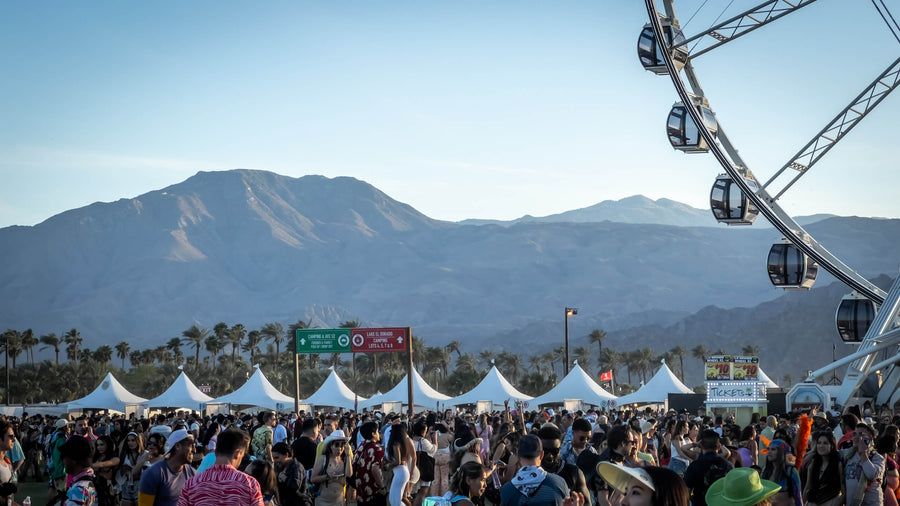
The contrast is visible in the photographs here. A crowded midway invites movement; a livestock pen asks you to stop and look closely. The sheep’s curled wool is as much a part of this fairground visit as the bright games outside. This photograph records an animal in the livestock area, not a claim about its exhibitor, award or competition class.
The official 2027 competition listings continue that broad invitation. They include photography, textiles, baked and preserved foods, flowers and plants, alongside agricultural exhibits and newer creative categories. The department guides explain who can enter and how the work is judged.9
For a visitor, these exhibits change the pace of a fair. Instead of purchasing a few minutes of entertainment, you are looking at something someone made, tended or practiced. The ribbon is small; the effort behind the entry can be considerable.
Traditions change, even when the name stays
Old photographs can create the impression that a festival repeats itself unchanged. The record shows otherwise. Reporting in 2019 identified that season as the first without the camel and ostrich races, while camel rides remained. That is a specific change in a specific year, not a statement that camels disappeared from the fair.2
The distinction still matters when planning a visit. The current animal-attractions page lists camel rides and other animal encounters; it should not be read as confirmation that the historic races are back. An archival picture explains a past program, while an official schedule tells you what to expect now.10
Scholarships offer another example. The official 2023 Date Festival Scholarship application opened eligibility to qualifying Riverside County high-school seniors, with school records, a community essay and an interview forming the selection process. Ten recipients were to receive $2,000 each. That documented program should be distinguished from the older Queen Scheherazade contest.6
As of this article’s October 2026 review, the fair has also announced a 2027 Arabian Nights Showcase for local school performing-arts groups. It invites short productions involving music, dance, theater or storytelling. That is a future opportunity carrying the stage tradition forward in a particular form; it is not evidence that every feature of the old pageant continues.11
A return, and a renewed place for the crop
The county’s June 2022 agreement with Pickering Events set out a new five-year operating arrangement and a full-scale festival return for February 17–26, 2023. The announcement placed the fair within a larger plan to use and improve the grounds throughout the year.5
By February 2026, the county described that season as the operator’s fourth. Its opening announcement included the blessing of the dates and the Presidents’ Day parade: two reminders that the event is also made through ceremonies, local participation and a shared calendar.8
The county’s January 2026 preview announced a National Date Festival Museum in the Sands of Time building, focused on date farming, festival history and the valley’s agricultural roots. The same announcement described a refreshed oasis presentation with a mid-century influence. The museum was introduced in that announcement as new for 2026; access should be checked against the current program rather than assumed year-round.7
For a history-minded visitor, that is a promising pairing: enjoy the spectacle, then look for the work and decisions that made it possible. The name on the gate carries a responsibility to explain the fruit as well as sell an enjoyable day.
How to read the fair on your next visit
Begin with the dates. Look for the varieties, growing information and displays that connect what you taste to what happens in a grove. Then give the exhibit halls and livestock areas some of the time you would normally reserve for the midway. Finally, look at the stage settings as artifacts of the fair’s own changing imagination.
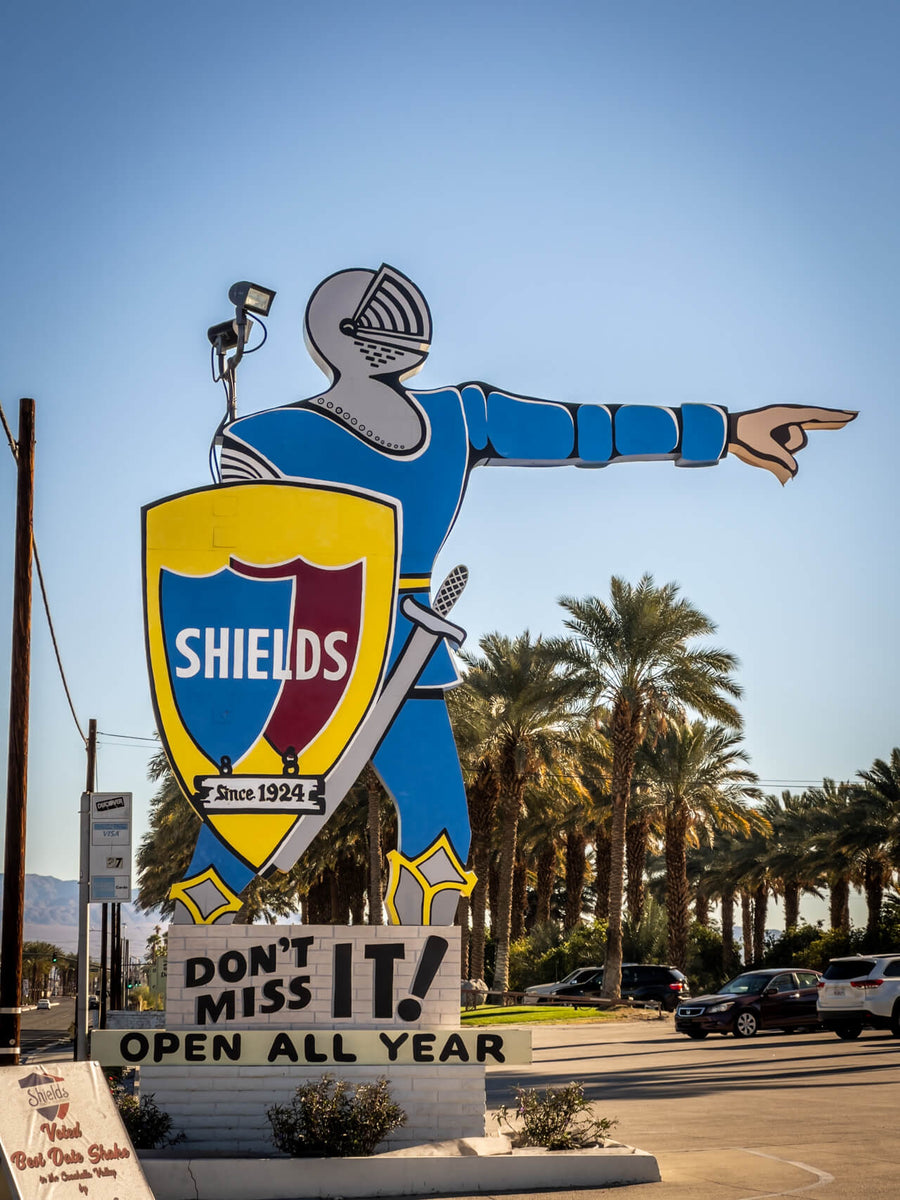
Beyond the grounds, Shields Date Garden offers another way into the valley’s date story. The history of Clarke Ranch at Point Happy extends it into La Quinta, while our Indio and Coachella day trip puts the festival city in a wider local setting.
Planning a visit: Start with our Date Festival destination page, then confirm dates, opening days, tickets and individual attractions on the official festival website. This article follows the history; programs change from one season to another.
The most interesting thing about this fair is the way a place presents itself. A crop became an invitation. A stage became a local tradition. Generations of exhibitors and visitors made those ideas their own, even as the program changed around them. Beneath the lights, the agricultural story is still there to be found.
Questions about Date Festival history
When did the National Date Festival begin?
The first official International Festival of Dates in Indio was held in 1921. The modern annual era began in 1947 after intermittent early celebrations. These are different milestones, not competing dates for the same event.12
Why is a winter fair named for dates?
It celebrates a crop associated with the Coachella Valley. California dates are generally harvested in the fall, extending into December; a February fair does not mean February is the main picking season.4
Where did the Arabian Nights theme come from?
The festival turned the date industry’s real overseas connections into a theatrical desert identity. Its imagined oasis blended settings and cultural references; it should be understood as American promotional scenery, not a documentary representation of the Middle East.1
Are the camel races and Queen Scheherazade contest still held?
Can I visit the Date Festival Museum all year?
The county announced the museum for the 2026 festival inside the Sands of Time building. That announcement does not establish year-round public hours. Confirm access with the fairgrounds before making a separate trip.7
Sources, chronology and photo notes
Researched and reviewed October 15, 2026. Historical descriptions are dated deliberately. An event advertised for 2027 remains a future announcement at this review date.
- Sarah McCormick Seekatz, PBS SoCal / Artbound. Harem Girls and Camel Races: Middle Eastern Fantasies in the Deserts of Southern California. February 5, 2013. Historical synthesis with period newspaper references; early festivals, annual status and the 1949 Queen Scheherazade contest.
- Rohini Chaki, Atlas Obscura. Before the Music Festival, Coachella Valley Promoted Itself With an Arabian Fantasy. April 16, 2019. Interviews and historical reporting on the postwar stage, pageantry and changing attractions. Its description of the 2019 program is not a current schedule.
- Desert Magazine. February 1984 issue: National Date Festival feature. Period description of the pageant, races, agricultural exhibits, junior fair and home arts. This is evidence of what was described in 1984, not a reliable source for every tradition’s first year.
- Foodwise. Dates. Crop calendar and the work of hand pollination and harvesting. Accessed October 15, 2026.
- County of Riverside. Supervisor Perez Announces New Partnership to Bring Back National Date Festival, Revitalize Fairgrounds. June 8, 2022, reporting the June 7 agreement and planned full-scale return February 17–26, 2023.
- Riverside County Fair & National Date Festival. 2023 Date Festival Scholarship Program. Official application: eligible Riverside County high-school seniors, academic requirements, community essay and interview; ten awards of $2,000.
- County of Riverside. From Midway to Oasis: A New Era for the Fair & Date Fest. January 30, 2026. Announcement of the museum in the Sands of Time building and the refreshed 2026 presentation.
- County of Riverside. Riverside County Fair & National Date Festival Opens Tomorrow, with New Fun for Fairgoers. February 11, 2026. Documents the opening blessing, parade and fourth year of Pickering Events operation.
- Riverside County Fair & National Date Festival. Blue Ribbon Competitions and Contests. Official 2027 department listings, accessed October 15, 2026. Consult the department guide for actual entry rules.
- Riverside County Fair & National Date Festival. Animal Attractions. Current listing accessed October 15, 2026; camel rides and animal shows are distinct from the historic camel and ostrich races.
- Riverside County Fair & National Date Festival. Arabian Nights Showcase. 2027 school performing-arts opportunity announced by October 15, 2026. A future program, not a completed performance.
- Greater Coachella Valley Chamber of Commerce. Ribbon Cutting & Grand Opening: Riverside County Fair & National Date Festival. 2026 event announcement; corroborates the distinction between 1921 beginnings and the annual festival by 1947.
Chronology note: Sources use “began” in different ways. This article distinguishes the first official festival (1921), the annual era (1947) and dated evidence for individual traditions. The 1984 magazine is used as a snapshot of that era, not to settle its differing claim about an earlier harvest celebration.
Photographs: All four photographs are Mark Miller originals from February 20, 2025. They document that visit, not the appearance of the 1921 or 1947 festivals. The small timeline illustration is decorative vector artwork, not an archival image. No AI-generated historical photographs are used.