Tamarisk Country Club: The Club That Offered a Different Welcome
From Wonder Palms to Ben Hogan and desert modernism, the story of the Rancho Mirage club built around a different idea of belonging.

Tamarisk Country Club began with a question that a beautiful golf course could not answer by itself: who would be welcome there? When the club opened in February 1952, it added more than another set of fairways to the desert. Its founders were creating a club around a different membership ideal.1,12
That distinction belongs at the center of the story. So do Ben Hogan, the Hollywood friendships and the modern houses opening toward mountain views. Together they explain why Tamarisk matters to Rancho Mirage—and why it deserves its own chapter beside neighboring Thunderbird.
- Opened in 1952: Tamarisk grew from the Wonder Palms landscape, beside an already changing Rancho Mirage.
- A founding distinction: its membership ideal challenged religious and social exclusions in private-club life.
- Golf and design: William P. Bell, Ben Hogan, William F. Cody and other designers shaped different parts of its identity.
- A larger legacy: fairway homes, tournament golf and the incorporation movement connect the club to the city around it.
Before Tamarisk, there was Wonder Palms
The history does not begin with an empty desert. This is Cahuilla homeland, with a history reaching far beyond the ranches and resorts that later appeared in the valley. By 1912, Everett Knox DaVall had established Wonder Palms Ranch and planted date palms. The name would persist as the area changed from agriculture to recreation.4
Tamarisk was developed on land associated with the Wonder Palms Hotel and Guest Ranch. That setting supplied a natural meeting place for people imagining a new club: a desert retreat could become a community, with golf at its center and homes along its edges.3
Nearby Thunderbird followed its own path from guest ranch to golf club, opening its course in 1951. Tamarisk followed in February 1952. The two are closely connected in the history of Rancho Mirage, but Tamarisk was not a later name for Thunderbird Ranch.11,12
What “a different welcome” meant
The Southern California Golf Association’s history describes Thunderbird’s early membership restrictions as excluding Jewish applicants and certain entertainers. Tamarisk’s founders responded by establishing another club. Religious exclusion was part of the reason this new institution existed; leaving it out would turn a consequential story into a simple tale of golf-course expansion.2
Tamarisk’s own account traces the idea to Los Angeles business investors meeting at Wonder Palms. Its founding mission called for “democracy and tolerance, with the requisite of integrity, character, love of golf and companionship with fellow men.”1
That language gives the title of this story its meaning. It describes a deliberate rejection of particular barriers in private-club life. It should not be stretched into a claim that the club was public, inexpensive or accessible to everyone. An inclusive founding purpose and a selective private club could—and did—exist together.
Preservation Mirage identifies 65 founding investors, including George Burns, Jack Benny, Danny Kaye and members of the Marx family, alongside businessmen Lou Halper and Tom May of the May Company. The familiar names matter, but so does the coalition: entertainment, business and personal friendship helped turn the idea into a place.3
Two clubs, one changing desert
Move through the years to compare the two stories. Each stop shows a documented milestone or the club’s place in the wider chronology; it does not imply that both clubs had a major event every year.
Read the complete timeline
| Year | Tamarisk | Thunderbird |
|---|---|---|
| 1946 | Wonder Palms is part of the ranch-and-resort landscape from which Tamarisk will emerge. | Frank Bogert’s Thunderbird Ranch begins its guest-ranch chapter. 3,11 |
| 1951 | The Tamarisk story is taking shape around a different membership ideal. Its golf course has not yet opened. | Thunderbird Country Club opens its 18-hole course in January. 1,11 |
| 1952 | Tamarisk opens in February, with an inclusion-minded founding mission, William P. Bell’s course and Ben Hogan as its first professional. | Thunderbird is already in its second golf season. 1,2,7,12 |
| 1953 | Hogan wins three majors during his Tamarisk years. The club also hosts an early LPGA event in the desert. | Thunderbird continues establishing its tournament and celebrity-golf identity. 2,8,9 |
| 1960 | Tamarisk joins the inaugural Palm Springs Golf Classic rotation. | Thunderbird is also an original host, alongside Bermuda Dunes and Indian Wells. 9 |
| 1973 | Tamarisk representatives have participated in the incorporation effort. | Thunderbird representatives have participated too. Rancho Mirage incorporates in August. 10 |

Bell’s course, Hogan’s standard
William P. Bell designed Tamarisk’s original golf course. William F. Cody designed its original clubhouse. Those are two different design jobs, and the distinction helps untangle a history crowded with famous names.2,6
The club’s first golf professional was Ben Hogan; Ellsworth Vines succeeded him. Vines brought an extraordinary sporting background of his own, having won at Wimbledon before building a professional golf career. Tamarisk’s early identity rested on serious golf as well as social life.7
Hogan’s 1953 season gives the connection its historical weight. He won the Masters, the U.S. Open and The Open at Carnoustie. The R&A records his final-round 68 in Scotland and four-stroke victory. His only appearance in The Open produced a championship.8
Those victories were not Tamarisk tournaments, and the club should not receive credit for achievements made elsewhere. The important connection is that one of golf’s most remarkable seasons belongs to the same period in which Hogan was helping establish Tamarisk’s golfing identity.
A fairway became a front-row view
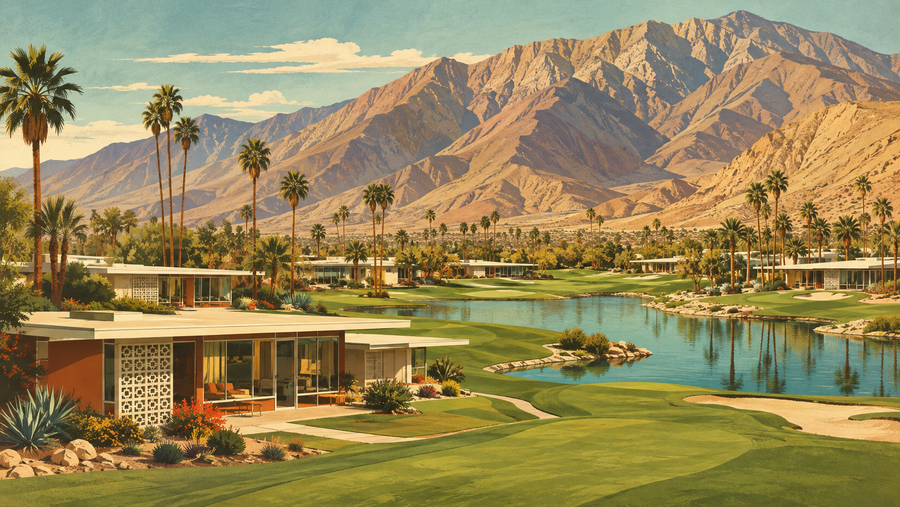
Golf also changed what people expected from a desert house. A fairway offered a long, maintained foreground; the mountains supplied the distance. Architects could organize a home around that view, using shade, glass and carefully placed outdoor rooms to connect daily life with the landscape.3
Cody worked across Thunderbird, Tamarisk and Eldorado, and designed homes for buyers drawn to their fairways. His role places Tamarisk within a larger network of desert architecture rather than an isolated collection of striking houses.6
Preservation Mirage also documents Donald Wexler’s work with Cody on the Tamarisk clubhouse. At the Charney Residence, Wexler and Richard Harrison’s architecture was complemented by Arthur Elrod’s interiors and landscape work by Eckbo, Royston and Williams. The example makes a useful point: what we admire as a “modern house” was often the coordinated work of several disciplines.5
The story continued beyond individual custom houses. The city’s history identifies Cody Court, originally the 10th Fairway Condominiums, as eight homes completed in 1970 overlooking Tamarisk. It shows how the fairway setting could support a shared residential arrangement as well as a single estate.12
Sinatra’s Tamarisk chapter
In 1954, Frank Sinatra bought a Cody-designed house on Tamarisk’s 17th fairway, according to the city’s history. Wonder Palms Road later became Frank Sinatra Drive. Those place names preserve two different chapters of the same local landscape.4
The property grew into the Wonder Palms compound, with guest accommodations and recreation spaces. Sinatra’s association added another layer to the club’s identity: Tamarisk was a place where a public figure could build a private domestic world beside the course.2
It is easy for a roll call of stars to swallow a story like this. The more revealing connection is physical. Houses, terraces and fairways put neighbors near one another, while clubs supplied repeated occasions to meet. Celebrity helped make the place famous; the arrangement of the community helped make it social.
From club golf to a national stage
Tamarisk hosted an early official LPGA tournament in the desert in 1953. Seven years later, it joined Thunderbird, Bermuda Dunes and Indian Wells as a host of the inaugural Palm Springs Golf Classic.2,9
Arnold Palmer won that 1960 event. The tournament took on Bob Hope’s name in 1965, tying its sporting and celebrity appeal to a charitable identity that became central to desert golf. Tamarisk participated in the tournament 18 times between 1960 and 2005.9,2
For viewers and visitors, these events made a private-club landscape visible beyond its membership. For the valley, the courses became part of a recognizable winter image: mountains, bright fairways and well-known players sharing the same stage.
How a club story becomes a city story
By the end of 1971, representatives of Tamarisk, Thunderbird, Mission Hills and Desert Island, together with the Annenbergs’ estate manager, were backing a feasibility study for incorporation. Rancho Mirage became a city in August 1973.10
That step matters because it moves the history beyond recreation. The communities around the clubs now had shared questions about development, services and the character of the place they lived. Tamarisk helped shape the setting from which those questions emerged; it was one participant in a broader civic effort.
The city’s own history treats Thunderbird and Tamarisk as major engines of its early growth. Read alongside Rancho Mirage’s wider history, their stories explain both the appeal of the fairway neighborhood and the differences concealed by the broad label “country club.”12
What remains worth seeing
Tamarisk continues as a private club. Its official site presents golf, dining and a calendar of member gatherings as parts of the same community. Visiting the course or clubhouse should be arranged through the club; a historic reputation does not make private grounds a public attraction.1,7
The history offers more than a reason to recognize a name on a sign. It gives us a way to look at Rancho Mirage: a former ranch landscape, a response to exclusion, a demanding game, a new approach to houses and views, and eventually a city. The wider story of how the Coachella Valley became a golf capital follows those changes across the desert. Tamarisk brought those strands together in a particularly revealing place.
Tamarisk history: common questions
When did Tamarisk Country Club open?
Why was Tamarisk Country Club founded?
Who designed the course and clubhouse?
What was Ben Hogan’s connection to Tamarisk?
Can the public visit Tamarisk Country Club?
Tamarisk is a private club. Contact the club directly about an arranged visit, membership inquiry or any permitted event; do not assume access to the course, clubhouse or private homes. Historical photographs and organized preservation programs, when available, offer other ways to explore its story.1,7
Sources, date checks and image notes
Researched October 15, 2026. Source numbers in the story link to this list.
- Tamarisk Country Club — The Origin
The club’s account of its founding purpose and membership ideal. - SCGA / FORE — Star Light Still Shines Bright at Historic Tamarisk CC (2017)
Membership restrictions, William P. Bell, celebrity connections and tournament history. - Preservation Mirage — Rancho Mirage History
Wonder Palms land, the founding investors, fairway development and desert modern design. - City of Rancho Mirage — The Early Years
Cahuilla context, Wonder Palms Ranch and Sinatra’s 1954 purchase. - Preservation Mirage — Donald Wexler
Wexler’s work with Cody and the Charney Residence design team. - Preservation Mirage — William F. Cody
Cody’s country-club and residential work. - Tamarisk Country Club — Golf
Hogan as first professional, Ellsworth Vines as his successor and the present course. - The R&A / The Open — Ben Hogan
Hogan’s 1953 major victories and Carnoustie performance. - SCGA / FORE — A Look Back: The Colorful History of a Desert Classic (2015)
The 1960 inaugural Classic, original courses, Palmer and the Hope connection. - City of Rancho Mirage — Becoming a City
The 1971 incorporation study and 1973 cityhood. - Thunderbird Country Club — Thunderbird Ranch
The neighboring ranch’s 1946 beginnings and 1951 golf opening. - City of Rancho Mirage — Pre-Incorporation
February 1952 opening, fairway housing and Cody Court.
Dates and attribution
The inaugural Palm Springs Golf Classic is dated 1960, following the SCGA tournament history; the club’s golf page places its inaugural-event statement beside a 1969 reference. We do not treat that as the inaugural year. Sources differ on the precise year of the Charney Residence, so this article identifies the design team without assigning a construction year. The timeline separates Tamarisk’s Wonder Palms origins from Thunderbird Ranch.
Image notes
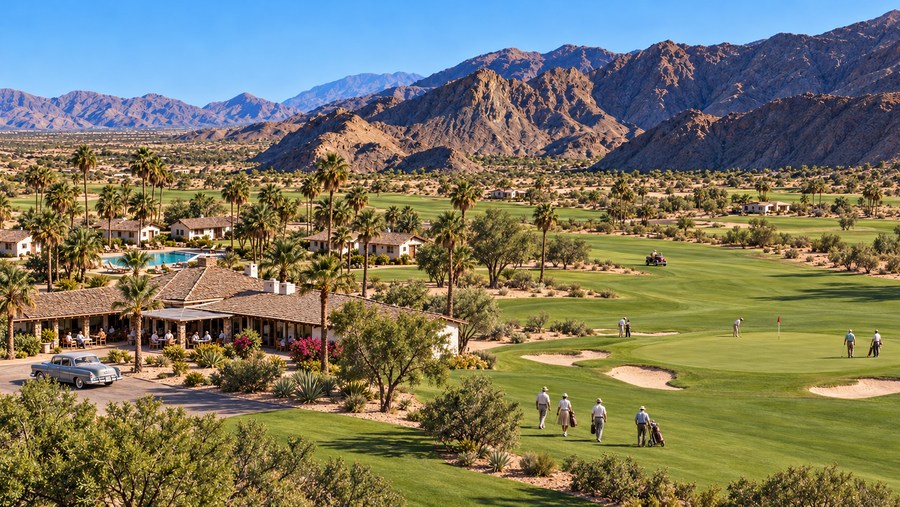
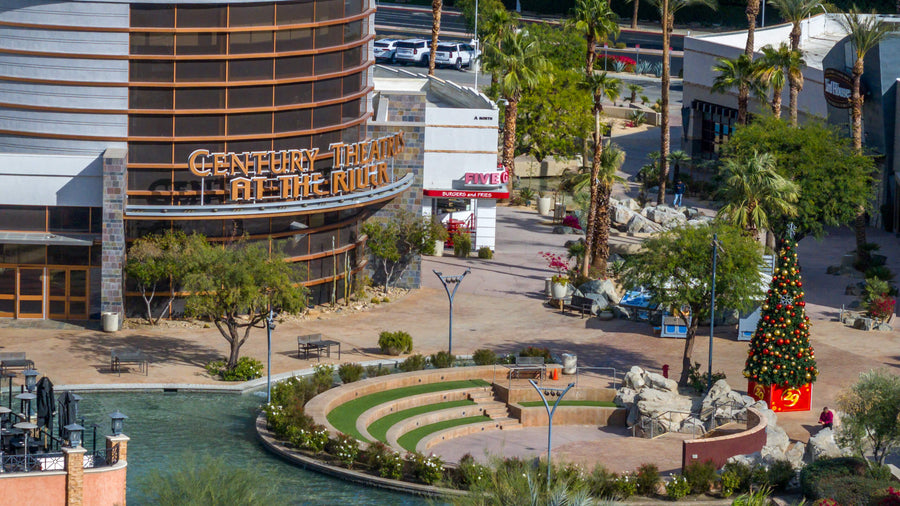
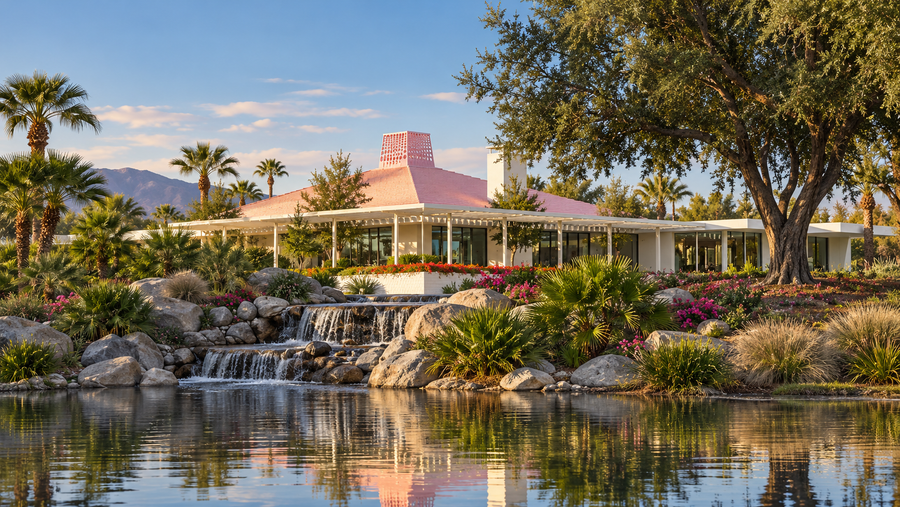
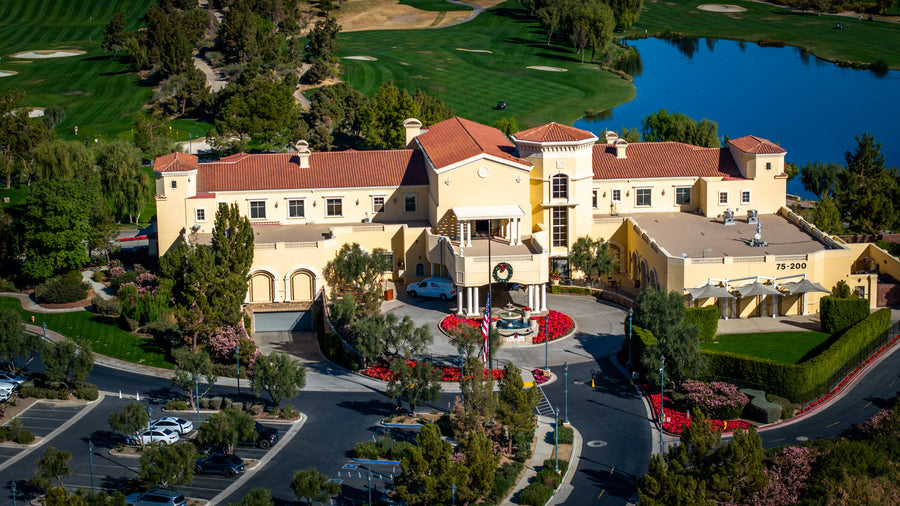
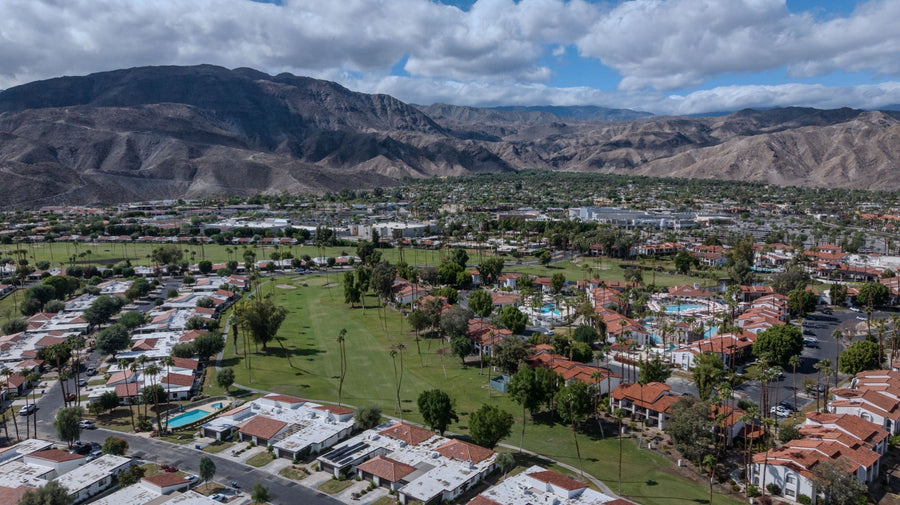
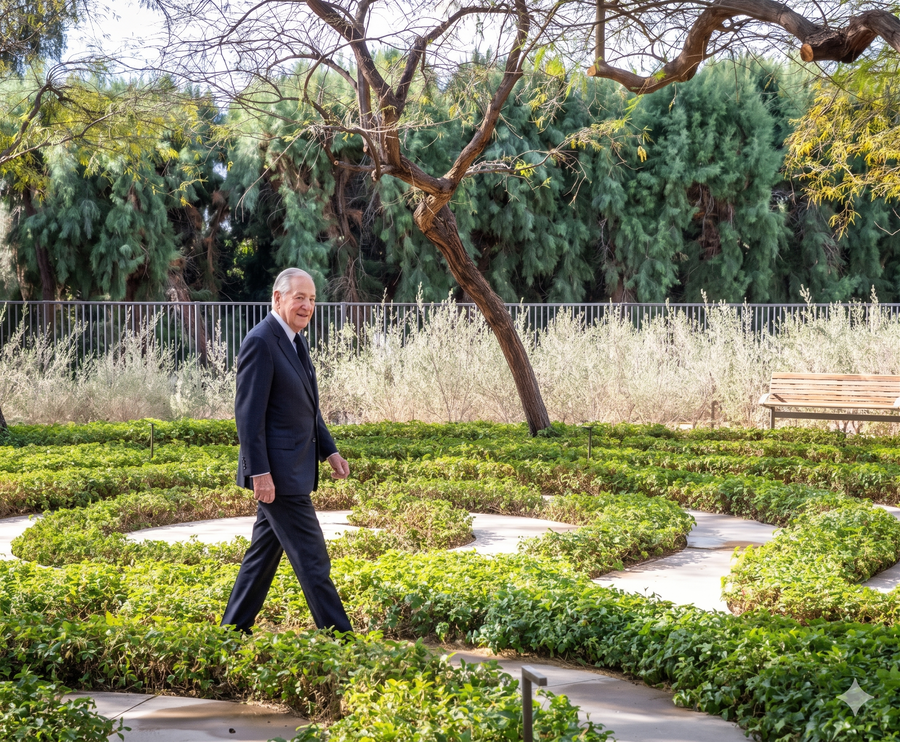
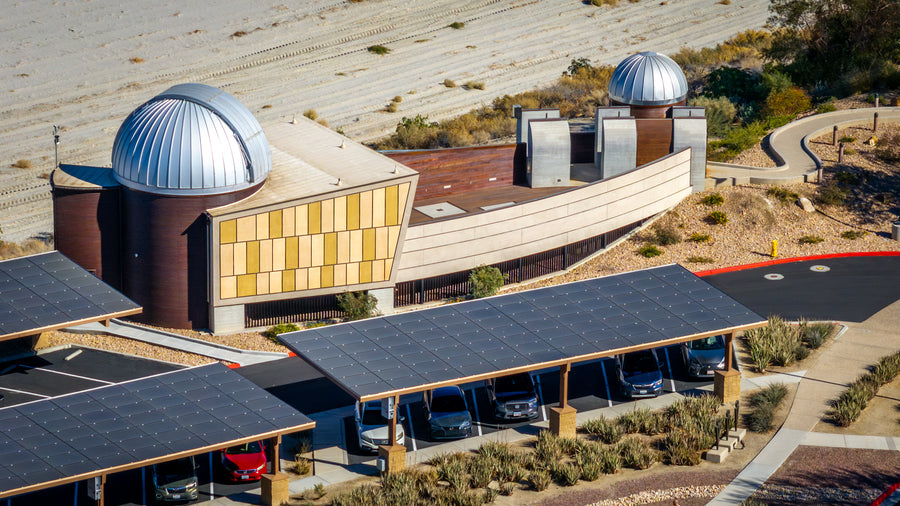
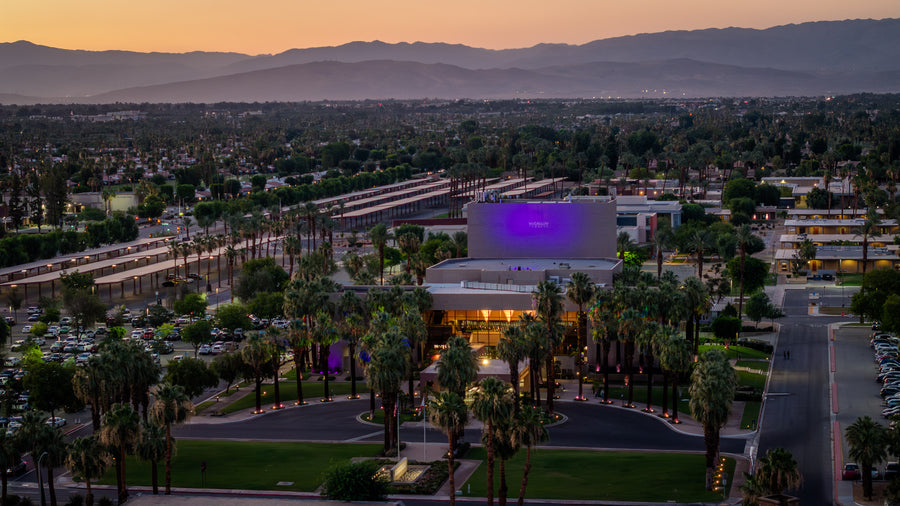
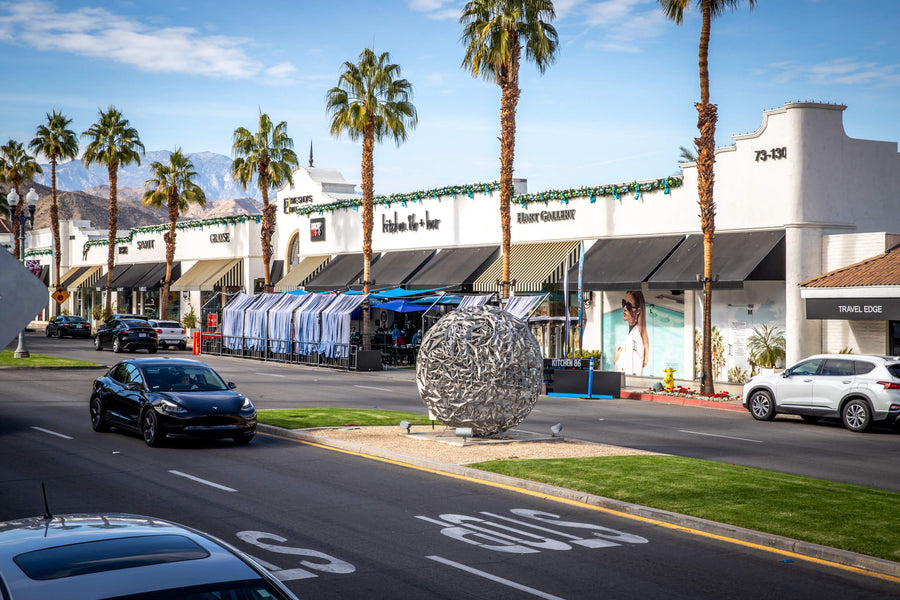
The opening image is an AI-generated editorial illustration of an imagined 1950s desert golf scene. It is not an archival photograph, a measured reconstruction or an actual view of Tamarisk. The photograph within the article is Mark Miller’s October 13, 2026 view of neighboring Thunderbird Country Club, labeled accordingly. Original Tamarisk photography is on the DOI photography tracker.