How the Coachella Valley Became a Golf Capital
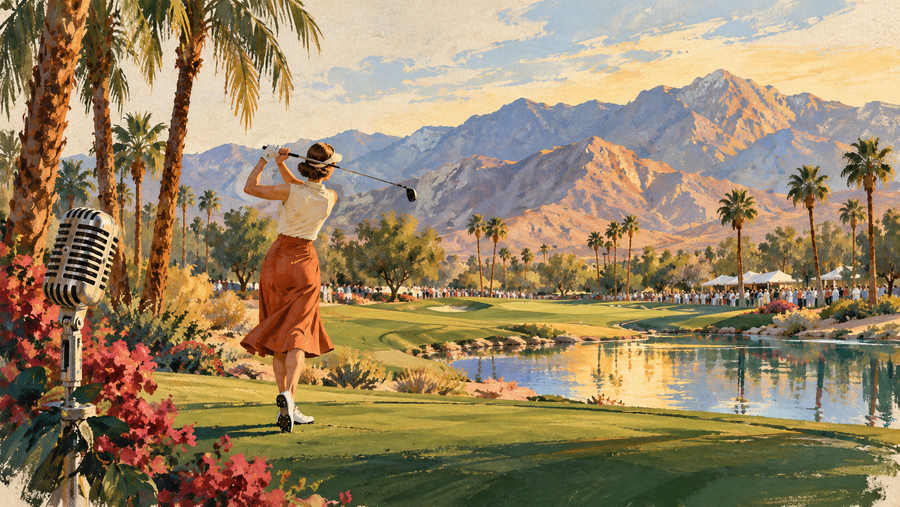
From O’Donnell and Thunderbird to televised tournaments and fairway neighborhoods, explore how golf reshaped the desert—and the people, work and water behind it.

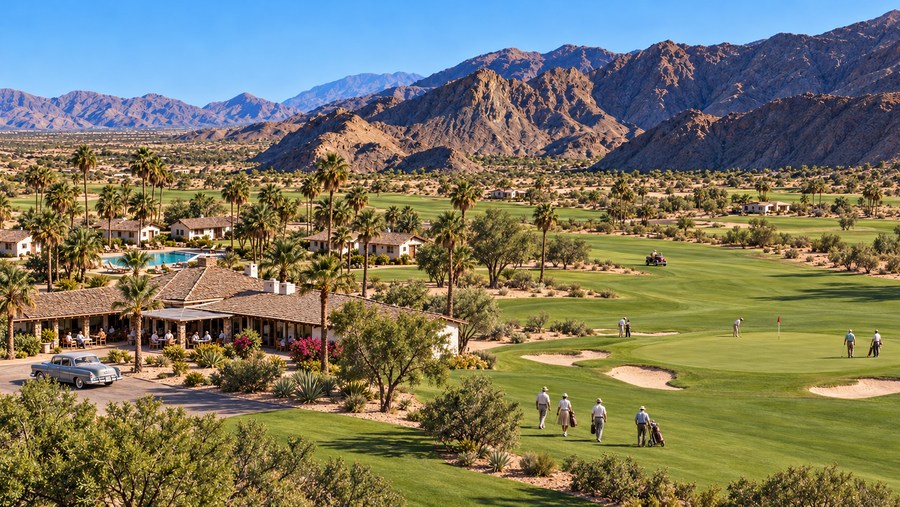
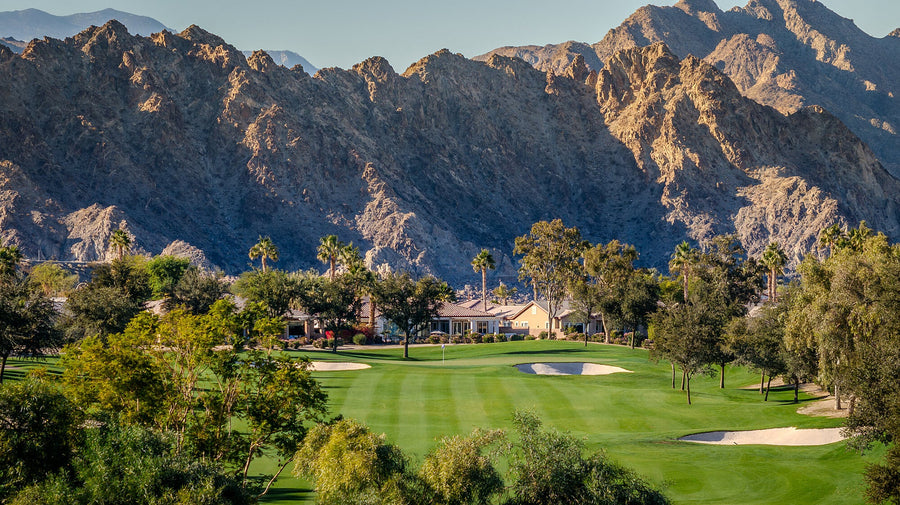
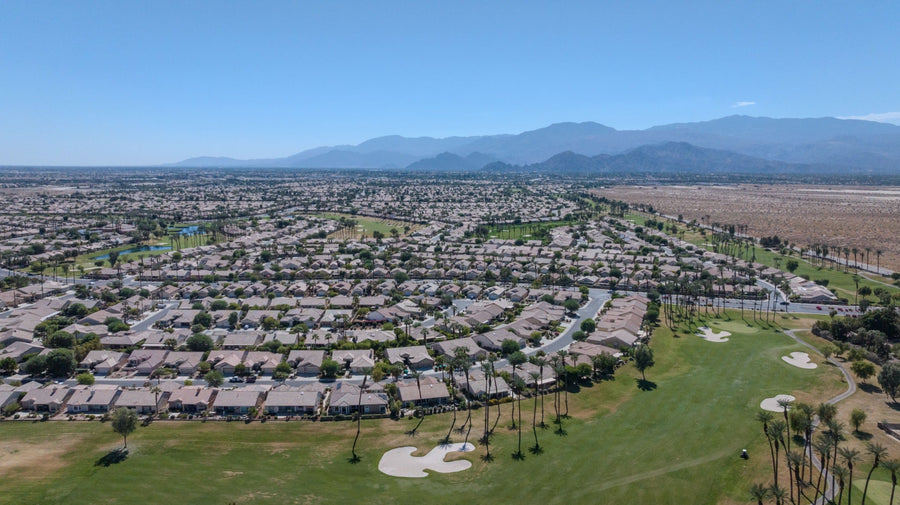
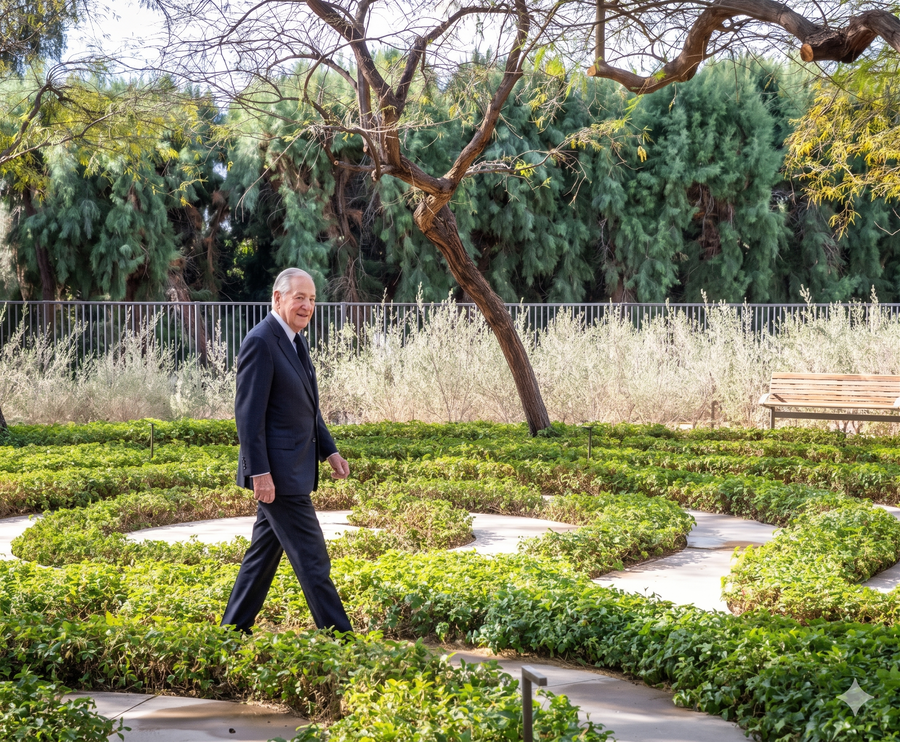
From above, a Coachella Valley golf community has a recognizable shape: fairways bend through the property, homes face their edges, and a clubhouse gives the neighborhood a center. That pattern is one of the most lasting results of the valley’s transformation into a golf destination.
Winter sunshine was the invitation. Developers, tournament organizers, residents and workers turned it into an industry. Starting with a small Palm Springs course and accelerating after World War II, golf helped determine where people stayed, which communities grew and what a desert home could promise.
The history is bigger than famous players and famous members. It is also a story of real estate, public access, water infrastructure and the people who kept the fairways green.
- O’Donnell’s nine-hole course preceded the boom; Thunderbird’s 1951 opening established an influential 18-hole residential club model.
- Tournaments associated with the Ryder Cup, Bob Hope and Dinah Shore carried desert golf to wider audiences.
- Fairways shaped resort stays and residential neighborhoods, while workers and water infrastructure made the landscape possible.
- Explore nine course openings and four perspectives on how golf changed the valley, then locate related places below.
Before the boom: O’Donnell and a winter resort town
The valley was already a Cahuilla homeland, with its own communities, water knowledge and travel routes, long before golf promoters arrived. The resort economy grew within that inhabited landscape.
In Palm Springs, oilman Thomas O’Donnell helped establish one of the valley’s earliest enduring golf landmarks. The Southern California Golf Association dates his land purchase to 1925 and the start of play to two years later. The nine-hole course sat close to the growing village, making golf part of a winter visit without requiring a sprawling residential development. Source notes
That distinction matters. Early Palm Springs offered golf as one attraction within a resort town. The postwar country club would combine the course, the social institution and the surrounding real estate into a much larger proposition.
1951: Thunderbird changes the model
Thunderbird Country Club opened its course on January 9, 1951, on the former Thunderbird Ranch in what is now Rancho Mirage. Developer and golfer Johnny Dawson and architect Lawrence Hughes helped turn a dude-ranch property into the valley’s first 18-hole course. Source notes
The important innovation was the combination of golf and homes. The course gave nearby property a shared identity and a view that developers could sell. Homeownership, membership and social life reinforced one another. The SCGA’s history of Thunderbird describes real-estate sales as central to the club’s early financial survival.
When Thunderbird hosted the Ryder Cup in 1955, the young club gained a place in international golf history. Its importance to the valley, however, went beyond that tournament: it demonstrated how a country club could become the organizing idea for an entire residential enclave.
The 1950s country-club corridor
Tamarisk opened in February 1952, adding a second 18-hole course in Rancho Mirage. Its founding also exposed the social boundaries of the early club world. Jewish business and entertainment figures helped create an alternative to the exclusionary practices they encountered elsewhere. Tamarisk’s own history makes inclusion part of its founding identity. Source notes
Farther east, Eldorado opened in Indian Wells in 1957 and hosted the Ryder Cup in 1959. La Quinta Country Club’s course opened in 1959, followed by a dedication by President Dwight Eisenhower in 1960. These were distinct properties, but together they show how quickly the geography of desert golf extended beyond Palm Springs. Source notes · Source notes
The result was a corridor of courses, clubhouses and homes. A visitor could increasingly identify a place by its club as readily as by its city.
Interactive timeline: when nine landmark courses opened
Use this opening-date explorer to follow that expansion. A club’s founding, its first course opening and a later redesign can fall in different years; the notes identify which event each date describes.
A century on the fairways
Explore nine landmarks in desert golf
Choose an opening-date cutoff, search for a club or city, then select a numbered marker or name. The locator is schematic; it shows the broad geographic pattern rather than precise locations.
Approximate positions, not to scale or for navigation. Nine selected landmarks, not a complete inventory. Numbering follows opening dates; later renovations and reorganizations may have different dates.
All nine opening dates and source notes
- 1927 · O’Donnell Golf Club
Palm Springs. The SCGA dates the land purchase to 1925 and play to two years later. This nine-hole course preceded the postwar country-club boom. Source notes
- January 9, 1951 · Thunderbird Country Club
Rancho Mirage. The valley’s first 18-hole course opened on the former Thunderbird Ranch. The club hosted the Ryder Cup in 1955 and helped establish the residential country-club model. Source notes
- February 1952 · Tamarisk Country Club
Rancho Mirage. Tamarisk added a second 18-hole course and an alternative to exclusionary membership practices. Its founders included Jewish business and entertainment figures. Source notes
- November 1957 · Eldorado Country Club
Indian Wells. The SCGA records the first tee shot on November 22, 1957. Eldorado hosted the 1959 Ryder Cup. Its original opening and later course redesign are different dates. Source notes
- 1959 · La Quinta Country Club
La Quinta. The course opened in 1959; President Dwight Eisenhower dedicated the club in 1960. La Quinta Country Club is a separate property from La Quinta Resort. Source notes
- January 1965 · Seven Lakes Country Club
Palm Springs. The executive course opened before the first residential sales later in 1965. Fairways became the shared landscape for a midcentury neighborhood. Source notes
- 1972 · Mission Hills: Dinah Shore course
Rancho Mirage. Mission Hills dates its founding to 1971 and its original course opening to 1972. The women’s tournament began in 1972 and became an LPGA major in 1983. Source notes
- 1986 · PGA WEST: Stadium Course
La Quinta. The date refers to the Stadium Course, not every PGA WEST course. It hosted the Skins Game beginning in 1986 and the Bob Hope Classic in 1987. Source notes
- February 2003 · Trilogy Golf Club at La Quinta
La Quinta. Construction began in 2002; play followed in February 2003. The course hosted the Skins Game from 2003 through 2006. Source notes
Tournaments put the desert in the picture
The Palm Springs Golf Classic began in 1960, with Arnold Palmer winning the inaugural event. It became the Bob Hope Desert Classic in 1965. The event connected professional competition with the valley’s entertainment-world identity and carried images of winter golf to a national audience. Source notes
Women’s golf added another defining chapter. The tournament associated with Dinah Shore began at Mission Hills in 1972 and became an LPGA major in 1983. For generations of viewers, its fairways and celebratory pond jump became part of the desert’s sporting image. Its final Mission Hills edition was in 2022; the championship moved to Texas in 2023. Source notes
PGA WEST’s Stadium Course opened in 1986, hosted the Skins Game that year and entered the Bob Hope Classic rotation in 1987. The course’s dramatic design made the landscape itself part of the spectacle. Source notes
These events did more than advertise a round of golf. They showed prospective visitors a winter setting in which hotels, restaurants, vacation homes and recreation belonged to the same trip.
Resorts and public play broaden the story
The residential club was only one branch of the golf economy. At La Quinta Resort, the Mountain and Dunes courses opened in 1980, linking new golf facilities to an established hotel destination. A visitor could build a stay around the course without buying a home beside it. Source notes

Later venues continued to connect visitors with the game. Classic Club hosted the Bob Hope Chrysler Classic in 2006. City-owned SilverRock hosted the event from 2008 through 2011. Their place in tournament history helps explain why the valley’s golf identity reaches beyond private membership clubs. Source notes · Source notes
Indian Wells Golf Resort offers another way to see the relationship between golf and the visitor economy. For a practical comparison of places to play, use our Coachella Valley golf course guide.

When the fairway becomes an address
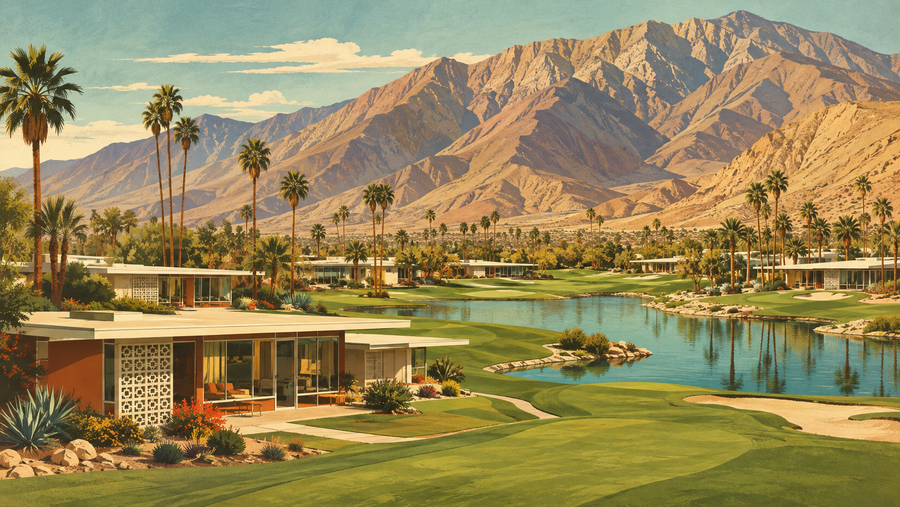
As the model spread, golf began shaping everyday residential design. At Seven Lakes in Palm Springs, the executive course opened in January 1965 and residential sales followed later that year. The community joined modern architecture with a shared landscape of fairways and mountain views. Source notes
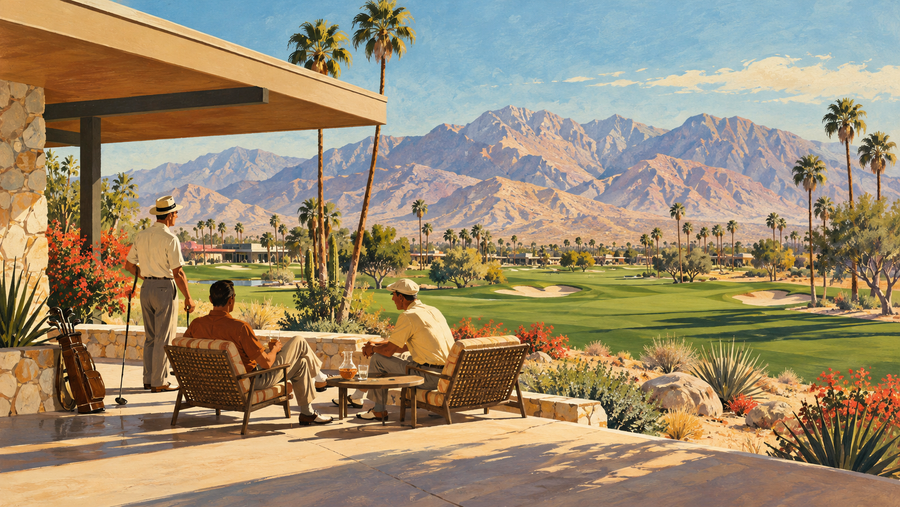
Later developments offered different versions of that relationship: resort-oriented neighborhoods, large country-club communities and active-adult settings. The view from the patio became part of the product. So did proximity to a clubhouse and a ready-made social routine.
Our history of Sunrise Company traces how developers expanded that lifestyle. Sun City Palm Desert provides another recognizable example of homes arranged around recreational space.

Read the landscape, then read the documents. A home beside a course, the course itself and a club membership can involve different ownership arrangements. A golf view alone does not establish playing rights. For a purchase, confirm the property’s actual relationship to the club.
Interactive: what did golf change?
The same fairway can tell several histories. Explore the connections among housing, tourism, labor and water, then follow the links for context.
Explore the connections
Select a perspective to connect the history with the landscape you see today.
Homes
A course becomes a neighborhood
The fairway supplied a shared view and a reason to buy into a particular place. At Seven Lakes, the executive course opened in January 1965 before the first residential sales later that year.
What to notice today: Look for homes turned toward the fairway, shared open space and a clubhouse that anchors the neighborhood.
Follow the housing storyTourism
A winter round becomes a national image
The 1955 Ryder Cup at Thunderbird, the Palm Springs Golf Classic beginning in 1960, and the women’s event at Mission Hills beginning in 1972 put different versions of desert golf in front of larger audiences.
What to notice today: Look for the connection among tournament venues, resort rooms and the promise of winter sunshine.
Follow the tournament storyWork
Leisure depends on year-round labor
Construction crews, groundskeepers and service workers made the resort landscape function. Historian Stanley Fonseca’s research connects that expansion to unequal access to housing and land for communities of color.
What to notice today: Look beyond the clubhouse: the landscape also records who built it, maintained it and could afford to live nearby.
Read about the people behind the fairwaysWater
The green landscape is engineered
CVWD began using recycled water for golf-course irrigation in 1968. Its Mid-Valley Pipeline began supplementing recycled supplies with Colorado River water in 2009 to reduce groundwater pumping.
What to notice today: A green fairway does not identify its water source. Groundwater, recycled water and imported water are different parts of the story.
Follow the water storyThe people behind the fairways
Club histories tend to foreground founders, architects, presidents and performers. The landscape also depended on construction crews, groundskeepers, irrigation specialists, cooks, cleaners and other service workers whose labor made leisure possible.
In a 2021 study in Pacific Historical Review, historian Stanley Fonseca examines the relationship among golf development, racial exclusion and land use in the valley. He documents how communities of color supplied labor while facing unequal access to housing and displacement pressures. His research gives the resort story a necessary second perspective: prosperity and belonging were distributed unevenly. Source notes
That history belongs alongside the tournament trophies. Asking who maintained a place, who could enter it and who could live nearby produces a fuller account of how the valley changed.
The water behind the green
A desert fairway is an engineered landscape. Irrigation, soils, drainage and maintenance turn a dry setting into a playable course. The source of the water matters as much as the green surface a visitor sees.
The Coachella Valley Water District began supplying recycled water for golf-course irrigation in 1968. In 2009, its Mid-Valley Pipeline began supplementing recycled supplies with Colorado River water to reduce groundwater pumping. These milestones show that golf’s environmental history includes changes in infrastructure and water sourcing, as well as changes in course design. Source notes
It would be inaccurate to assume every course uses the same supply, or to identify that supply from a photograph. Recycled water, imported water and groundwater are different resources. The larger regional story connects to the Coachella Canal and the water system that helped build the modern valley.
Trilogy and the responsibility of a golf landscape
At Trilogy La Quinta, construction of the course began in 2002 and play followed in February 2003. The Skins Game ran there from 2003 through 2006, bringing another generation of televised golf to the east valley. Source notes
Its later closure and the homeowners’ 2024 acquisition and restoration effort reveal a different side of the model. A golf course can be a neighborhood’s defining amenity and also an asset that requires sustained investment and management. Our full history of Trilogy Golf Club follows those changes.

How to read today’s golf landscape
The Coachella Valley became a golf capital through the accumulation of many decisions: to build a course, sell homes around it, stage a tournament, expand a resort and invest in the systems that kept it operating.
On your next drive through Rancho Mirage, Indian Wells, Palm Desert or La Quinta, look at how streets meet the course edge, how a clubhouse anchors a development and how resorts cluster around recreation. Those patterns are the history still visible on the ground.
Use the Keep Exploring section below to locate places from the story and continue into the valley’s community and water histories. You can also compare a later private-club setting at Tradition Golf Club in La Quinta.
Frequently asked questions about Coachella Valley golf history
What was the first golf course in the Coachella Valley?
O’Donnell is one of the valley’s earliest enduring golf landmarks. The SCGA dates its land purchase to 1925 and the start of play to 1927. Thunderbird opened the valley’s first 18-hole course on January 9, 1951.
Why did the Coachella Valley become a golf destination?
Winter weather made outdoor recreation attractive, while developers connected courses to club life, resort stays and homes. Tournaments carried that landscape to a wider audience. Water infrastructure, investment and year-round labor made the growth possible.
What role did Bob Hope and Dinah Shore play?
The Palm Springs Golf Classic began in 1960 and took Bob Hope’s name in 1965. The women’s tournament associated with Dinah Shore began at Mission Hills in 1972 and became an LPGA major in 1983. Both helped make desert golf nationally recognizable.
Does owning a golf-course home include golf membership?
A fairway address does not by itself establish membership or playing privileges. The home, course and club can have different owners and rules. Confirm the arrangement for the particular property and club.
How should I interpret the opening dates and photographs in this article?
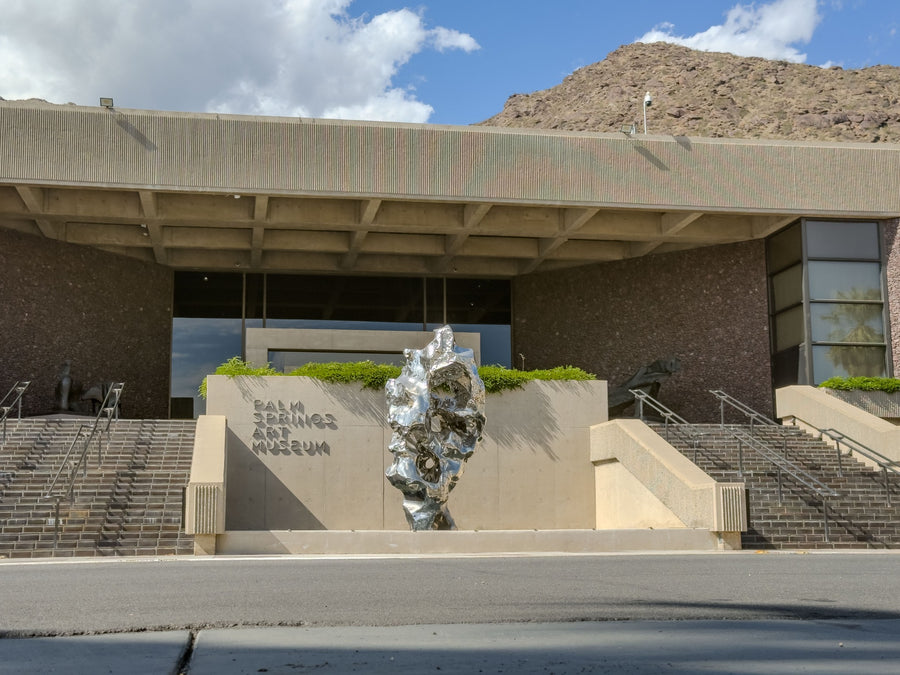
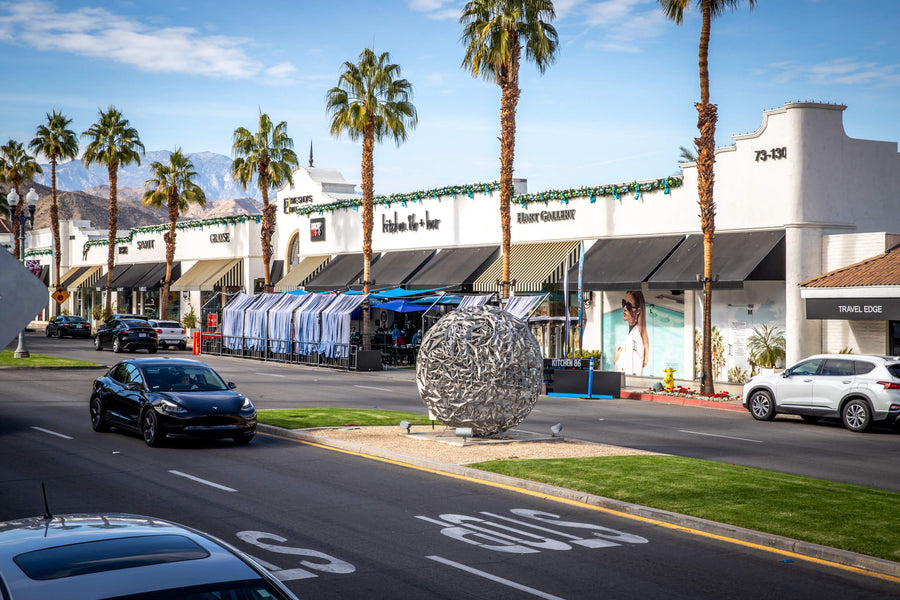
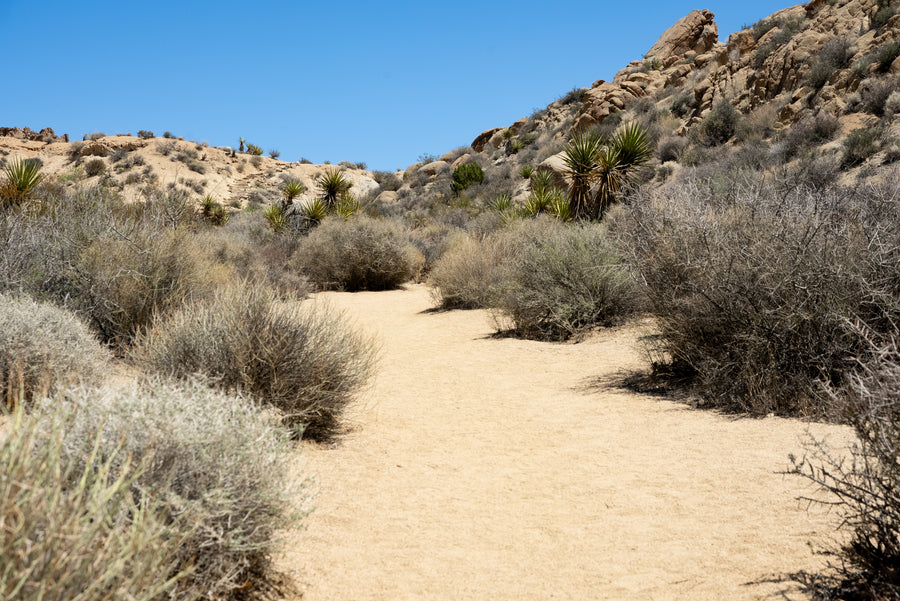
The explorer dates the named course opening, which may differ from a club’s founding or redesign. Its locator is schematic and not for navigation. The photographs are contemporary views by Mark Miller, with capture dates in their captions; they are not archival images of the openings.
Sources, opening-date notes and photography
Historical research reviewed October 10, 2026. Opening dates refer to the named course, not necessarily the club’s founding or a later reconstruction. Club histories and golf-association records establish the sequence; scholarly research adds context on labor and exclusion.
- SCGA: A Coachella Valley Original — O’Donnell Golf Club — Land purchased in 1925; course opened for play two years later; early Palm Springs golf.
- Thunderbird Country Club: Thunderbird Ranch — Ranch origins, development team and January 9, 1951 opening.
- Thunderbird Country Club: The Ryder Cup — 1955 Ryder Cup at Thunderbird.
- SCGA: Classic Course — Thunderbird CC — The relationship between the early club and surrounding real-estate sales.
- SCGA: Star Light Still Shines Bright at Historic Tamarisk CC — February 1952 opening; founding context; the 1960 Classic and its 1965 renaming.
- Tamarisk Country Club: Celebrate Our History — The club’s account of its inclusive founding.
- SCGA: Eldorado CC — November 22, 1957 first tee shot; 1959 Ryder Cup; later redesign.
- La Quinta Country Club: Heritage — 1959 course opening and 1960 Eisenhower dedication.
- Desert Oasis Insider: The History of Seven Lakes — January 1965 course opening and later residential sales; companion article links to Palm Springs historic-resource records.
- City of Palm Springs: Seven Lakes historic-resource application — Primary historic-resource record linked from the companion Seven Lakes article. The city’s document viewer may require a browser session.
- Mission Hills Country Club: Traditions and Community — Club founded in 1971; original course opening in 1972. The explorer uses the course date.
- LPGA: Chevron Championship overview — The women’s event began in 1972 and became a major in 1983.
- LPGA: Chevron Announces Plans for New Era of the Championship — Move from Mission Hills to Texas beginning in 2023.
- PGA WEST: Our History — Stadium Course opening in 1986 and Bob Hope Classic debut in 1987.
- PGA WEST: Tournament History — Skins Game tenure beginning in 1986.
- La Quinta Resort & Club: Our Story — Mountain and Dunes courses opened in 1980.
- PGA TOUR: 2007 Media Guide — 2006 Bob Hope Chrysler Classic record at Classic Club. Large PDF; search within it for the tournament.
- SilverRock Resort — City ownership and Bob Hope Classic host years, 2008–2011.
- Stanley Fonseca: Whiteness on the Green — Pacific Historical Review 90(4), 2021, pages 448–474. Research on golf, labor, racial exclusion and land development.
- CVWD: Recycled and Nonpotable Water — Golf-course recycled-water service began in 1968.
- CVWD: Nonpotable/Recycled Water for Landscape Irrigation — Mid-Valley Pipeline began operation in 2009, supplementing recycled supplies with Colorado River water to reduce groundwater pumping.
- Desert Oasis Insider: The History of Trilogy Golf Club at La Quinta — Construction, February 2003 opening, Skins Game years and the homeowners’ 2024 acquisition; includes its own supporting sources.
Photography: all five main article photographs are contemporary images from Mark Miller’s existing collection, with dates identified in the captions. They illustrate today’s landscape and are not presented as historical photographs.
Editorial interpretation: connections among course design, neighborhood form, tourism and everyday experience are the author’s synthesis of the cited history and the pictured landscape. The opening-date explorer is selective, not a ranking or complete course inventory. Read our editorial standards.