
Texas Olive
Texas olive pairs crinkled white flowers with broad, softly textured leaves. The blossoms have yellow throats, a small detail that becomes especially clear in a close view. Mark Miller photographed this flowering...
- In this guide
- Non-native
- Explore the collection
- Desert flora guide
A closer look.
Open a photograph to see the details. Use the arrows or swipe to explore the gallery.

Photographs from Desert Oasis Insider’s plant collection. Locations are shown where recorded in the original gallery.
Get to know this plant.
About this classification: Non-native
Grown here, with origins outside the local native flora. Non-native describes geographic origin; it does not automatically mean invasive.
Texas olive pairs crinkled white flowers with broad, softly textured leaves. The blossoms have yellow throats, a small detail that becomes especially clear in a close view. Mark Miller photographed this flowering plant at The Living Desert in Palm Desert on October 15, 2026.
At a glance
- Botanical name: Cordia boissieri
- Also called: Mexican olive, wild olive and anacahuita
- Plant type: Large shrub or small tree
- Native range: Southern Texas and northern Mexico
- Coachella Valley status: Cultivated, non-native
- Typical size: About 15–20 feet tall and 10–15 feet wide, depending on conditions and training
How to recognize it
Look for clusters of white, flaring flowers with yellow centers at the branch tips. The broad leaves have conspicuous veins and a soft, pale underside. Together, the flowers and foliage distinguish it from plants with similarly colored blooms but much smaller leaves.
Despite its common name, Texas olive is not the culinary olive, Olea europaea. Its name refers to the olive-like appearance of its fruit.
In a desert landscape
This plant can be allowed to branch as a large shrub or trained into a small tree. It grows in sunny, well-drained locations and tolerates dry conditions once established, although moisture availability influences flowering. Cold weather can damage foliage or cause leaf loss.
Allow room for its mature canopy, and consider flower and fruit litter when choosing a position beside paving. Avoid treating a photograph of an irrigated garden specimen as a promise of year-round flowering in every yard.
About these photographs
The wider view and flower close-up show the same plant. Identification is based on the visible flowers and leaves; a garden label was not photographed. Both images document a cultivated specimen at The Living Desert.
Explore more
Sources
- University of Florida IFAS Extension: Texas olive
- University of Arizona Campus Arboretum: Cordia boissieri
Photography © Mark Miller, October 15, 2026. Botanical sources checked October 15, 2026.
More plants from our gardens.
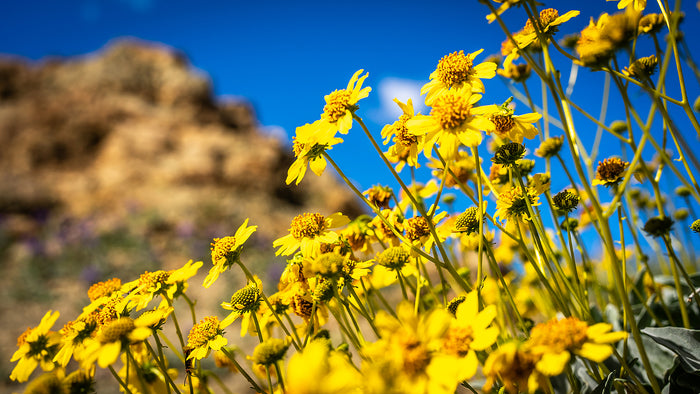
Brittlebush
Silver leaves and bright yellow flowers make this a familiar desert shrub.
Meet this plant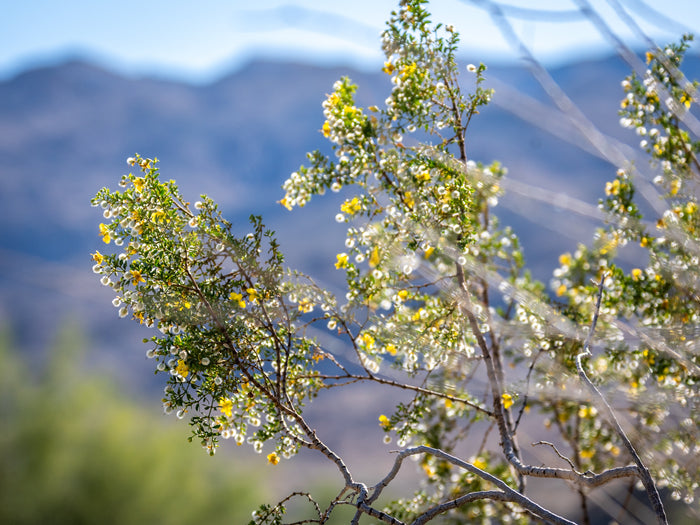
Creosote Bush
Small resinous leaves and yellow flowers belong to one of the desert’s defining shrubs.
Meet this plant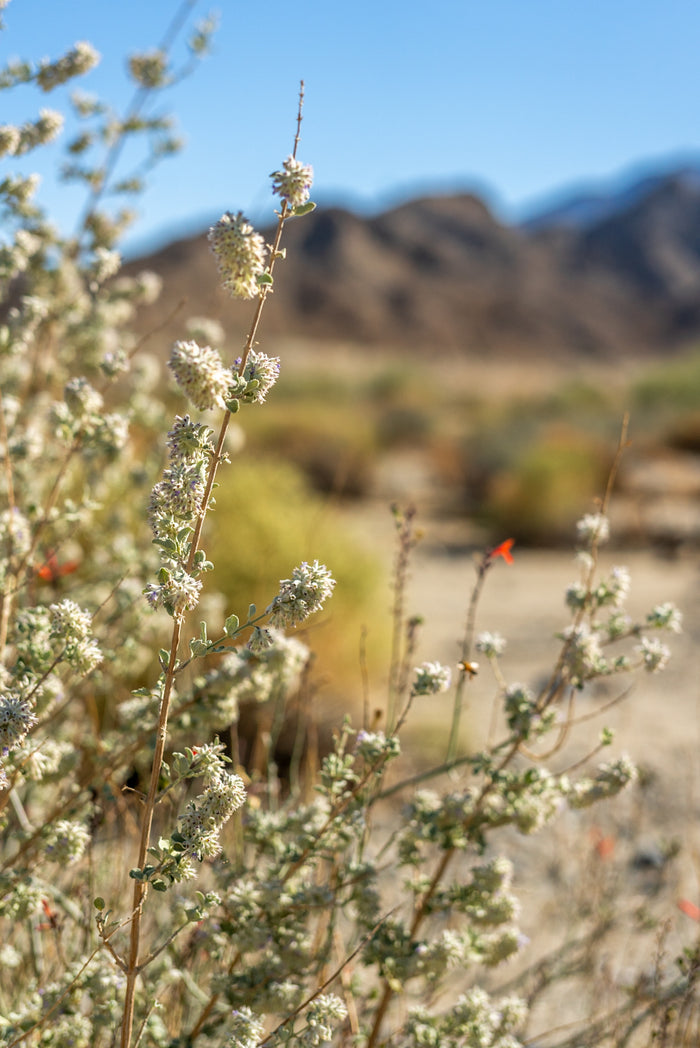
Desert Lavender
Pale purple flowers and soft gray foliage distinguish this aromatic desert shrub.
Meet this plantFollow the story outside.
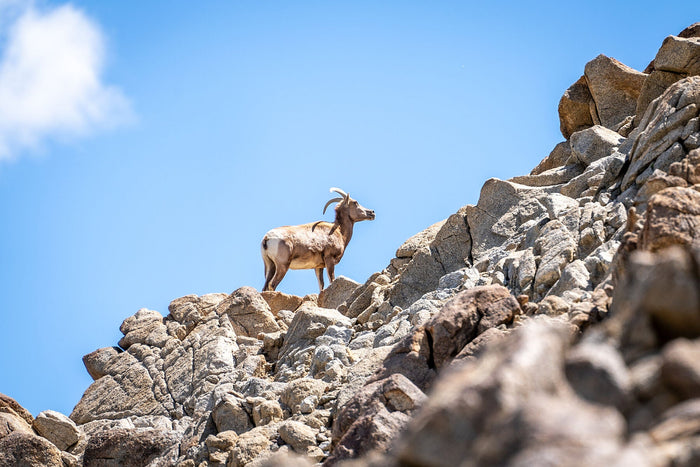
Bighorn Sheep of the Coachella Valley
Discover the bighorn sheep that share this landscape and the desert plants connected to their lives.
Read the story
La Quinta Cove Hiking Trails: Three Routes and What to Know Before You Go
Take the plant guide into the landscape with a closer look at the trails around La Quinta Cove.
Read the story
Hiking in Palm Desert: Trails, Views & Safety Guide
Continue exploring Palm Desert’s trails, open views and the outdoor spaces just beyond town.
Read the story