Indian Rosewood
Dalbergia sissoo
Dalbergia sissoo is a non-native shade tree with pointed green leaflets and gently drooping branches. These photographs document cultivated trees at Trilogy Polo Club in Indio. Also commonly known as: sissoo, shisham...
- In this guide
- Non-native
- Explore the collection
- Desert flora guide
A closer look.
Open a photograph to see the details. Use the arrows or swipe to explore the gallery.


Photographs from Desert Oasis Insider’s plant collection. Locations are shown where recorded in the original gallery.
Get to know this plant.
About this classification: Non-native
Grown here, with origins outside the local native flora. Non-native describes geographic origin; it does not automatically mean invasive.
Dalbergia sissoo is a non-native shade tree with pointed green leaflets and gently drooping branches. These photographs document cultivated trees at Trilogy Polo Club in Indio.
Also commonly known as: sissoo, shisham or sheesham, and North Indian rosewood.
A familiar tree in the neighborhood
Mark Miller photographed the street-side tree on October 21, 2026, capturing its canopy, bark, and backlit foliage. Five photographs show the same individual; the lakeside photograph shows a separate tree whose overall form is consistent with the same species, although its leaves have not been checked close up.
The close views support identification as Dalbergia sissoo. The scientific name matters because “Indian rosewood” can also refer to other rosewoods, including Dalbergia latifolia.
How to recognize Indian rosewood
- Leaves: Compound leaves carry several broad, oval-to-rounded leaflets with pointed tips and smooth edges. Look for the shared leaf stalk rather than treating every leaflet as a separate leaf.
- Bark: Mature trunks develop rough, furrowed bark.
- Shape: A spreading canopy with hanging outer branches. Pruning and growing conditions influence its silhouette.
- Flowers and pods: Small pale flowers are followed by flat seedpods. Neither is the focus of this photo series.
Non-native flora of the Coachella Valley
This tree comes from the Indian subcontinent, not the California desert. Here it belongs with cultivated, non-native landscape plants. Its presence in a neighborhood does not make it part of the valley’s native flora.
Growing in a desert neighborhood
Indian rosewood tolerates intense heat and grows quickly, helping explain its appeal as a shade tree in warm-climate landscapes. Mature trees can reach roughly 40–60 feet tall with a broad crown, depending on conditions.
Heat tolerant does not mean irrigation free. University of Arizona describes moderate water use. Space matters too: spreading surface roots can lift paving, and roots may produce new shoots. Those traits deserve consideration around sidewalks, walls, and small yards.
Read the story
Sissoo Trees in the Coachella Valley: Beautiful Shade, Roots That Need Room explores the tree’s appeal in a desert neighborhood, how to recognize it, and why its roots need space.
Photographed at Trilogy Polo Club
Photography by Mark Miller, October 21, 2026, Indio, California. The gallery moves from the full tree to leaf and bark details, then to its neighborhood setting. These are residential community observations, not an invitation to enter private grounds.
Sources and identification notes
- University of Florida IFAS — Indian Rosewood: identification, growth, and roots
- University of Arizona Campus Arboretum — Sissoo: origin, water use, and cultivation
- University of Arizona — Indian rosewood in a hot-climate landscape
Identification is based on the photographed leaves, bark, and tree form. The separate lakeside tree remains a probable match.
More plants from our gardens.
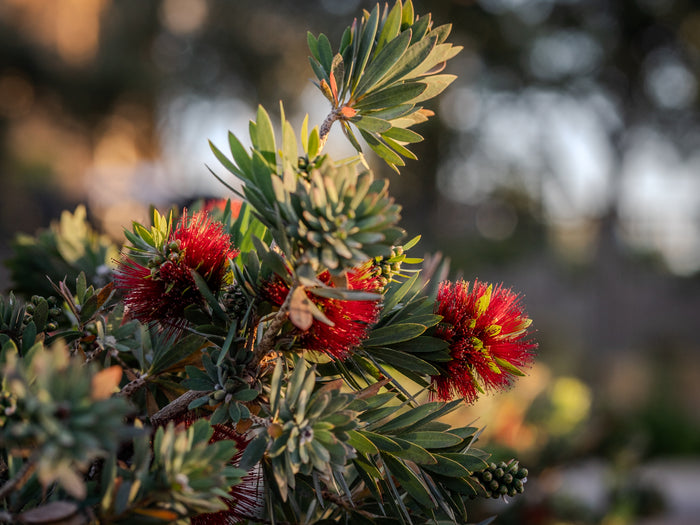
Bottlebrush
Brush-like flower clusters are the most recognizable feature of these ornamentals.
Meet this plant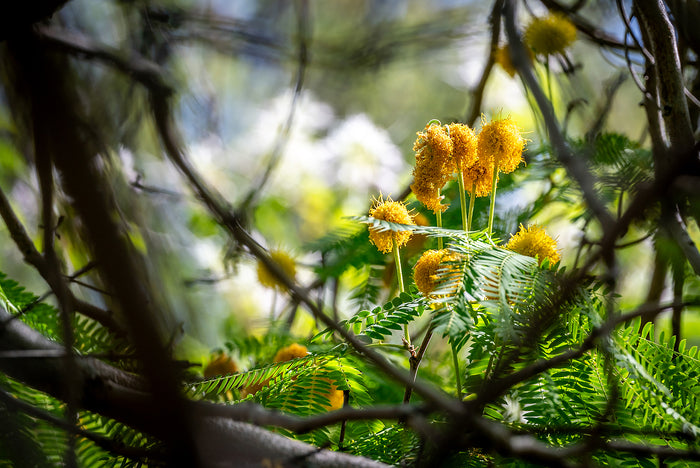
Sweet Acacia (Acacia farnesiana)
Fragrant yellow flower balls; Calflora lists sweet acacia as non-native to California.
Meet this plant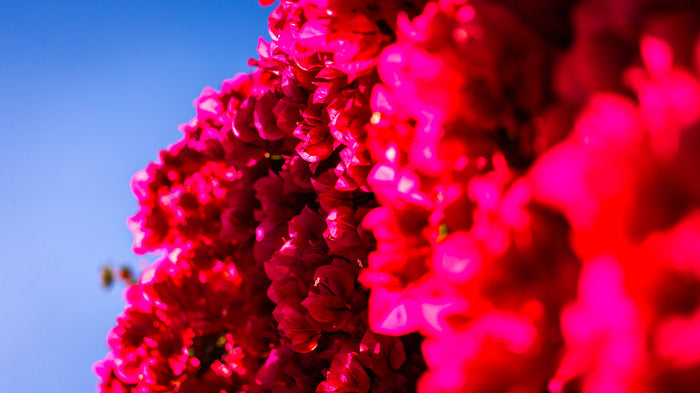
Bougainvillea
Colorful papery bracts bring vivid color to walls, courtyards and garden plantings.
Meet this plant