
Bottlebrush
Callistemon / Melaleuca species
Brush-like flower clusters are the most recognizable feature of these ornamentals.
- In this guide
- Non-native
- Plant group
- Trees & palms
- Origins & context
- Australia
- Explore the collection
- Desert flora guide
A closer look.
Open a photograph to see the details. Use the arrows or swipe to explore the gallery.
Photographs from Desert Oasis Insider’s plant collection. Locations are shown where recorded in the original gallery.
Get to know this plant.
About this classification: Non-native
Grown here, with origins outside the local native flora. Non-native describes geographic origin; it does not automatically mean invasive.
A non-native but widely cultivated shrub or small tree in arid and Mediterranean climates, including Coachella Valley, California.
Identification:
- Flowers: Bright red, cylindrical, brush-like flower clusters composed of numerous stamens, giving them their characteristic "bottlebrush" appearance. Some varieties may have yellow or pinkish hues.
- Leaves: Narrow, lance-shaped, and typically a deep green with a leathery texture.
- Growth Habit: Dense and bushy, often pruned into hedges or small trees.
Ecological Role & Adaptations:
- Native to Australia, bottlebrush plants are well-adapted to drought conditions and thrive in sandy, well-draining soils.
- Their nectar-rich flowers attract pollinators such as bees, butterflies, and hummingbirds.
- They tolerate heat, wind, and poor soil, making them ideal for low-water gardens.
Cultural & Practical Uses:
- Frequently planted as ornamental shrubs in desert landscapes, parks, and streetscapes.
- Some species have been used in erosion control due to their adaptability to dry conditions.
- In traditional Australian Aboriginal culture, certain species of Callistemon were used medicinally.
Potential Environmental Impact:
While bottlebrush is not invasive in the Mojave or Colorado Desert, it is not a native plant and does not support the same ecosystem functions as local flora. However, because of its low water use and pollinator attraction, it is often a preferred non-native choice for xeriscaping.
More plants from our gardens.
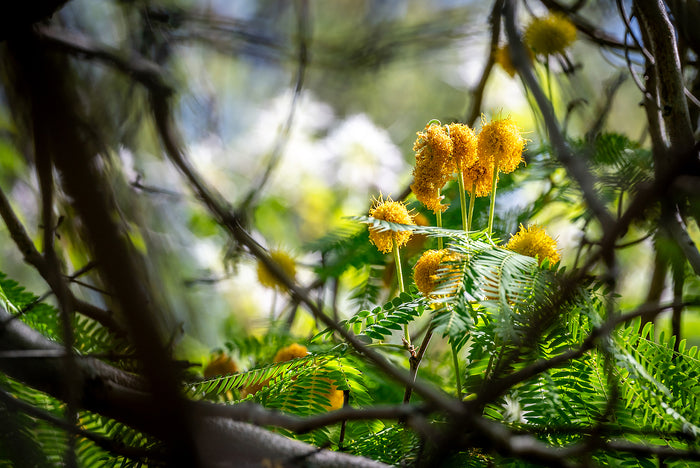
Sweet Acacia (Acacia farnesiana)
Fragrant yellow flower balls; Calflora lists sweet acacia as non-native to California.
Meet this plant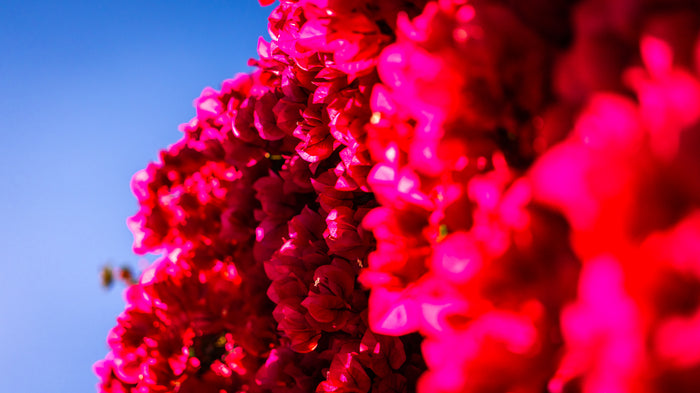
Bougainvillea
Colorful papery bracts bring vivid color to walls, courtyards and garden plantings.
Meet this plant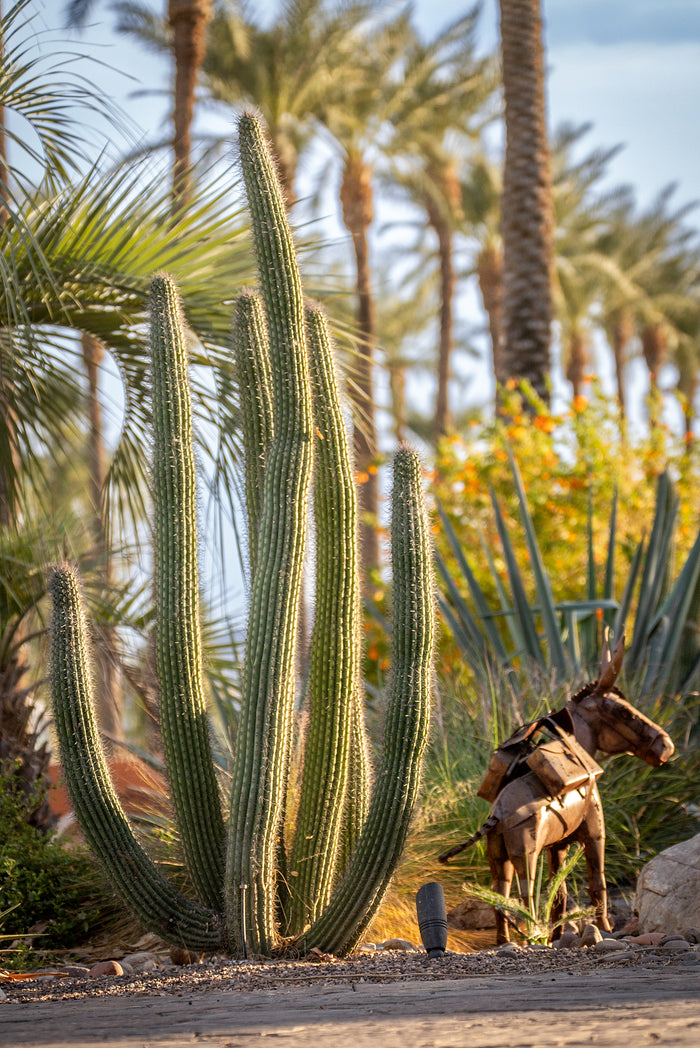
Organ Pipe Cactus
A Sonoran Desert native elsewhere, grown here as a sculptural garden cactus.
Meet this plantFollow the story outside.
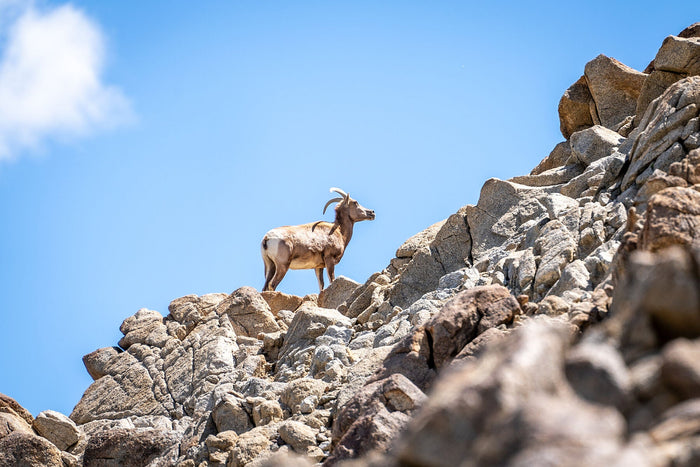
Bighorn Sheep of the Coachella Valley
Discover the bighorn sheep that share this landscape and the desert plants connected to their lives.
Read the story
La Quinta Cove Hiking Trails: Three Routes and What to Know Before You Go
Take the plant guide into the landscape with a closer look at the trails around La Quinta Cove.
Read the story
Hiking in Palm Desert: Trails, Views & Safety Guide
Continue exploring Palm Desert’s trails, open views and the outdoor spaces just beyond town.
Read the story