
Mexican Fan Palm
Mexican fan palm (Washingtonia robusta) creates the tall, slender silhouette seen in many Coachella Valley streets and landscaped communities. Its green, fan-shaped leaves gather into a compact crown high above the ground....
- In this guide
- Non-native
- Explore the collection
- Desert flora guide
A closer look.
Open a photograph to see the details. Use the arrows or swipe to explore the gallery.

Photographs from Desert Oasis Insider’s plant collection. Locations are shown where recorded in the original gallery.
Get to know this plant.
About this classification: Non-native
Grown here, with origins outside the local native flora. Non-native describes geographic origin; it does not automatically mean invasive.
Mexican fan palm (Washingtonia robusta) creates the tall, slender silhouette seen in many Coachella Valley streets and landscaped communities. Its green, fan-shaped leaves gather into a compact crown high above the ground.
- Plant group: an evergreen fan palm in the palm family, Arecaceae.
- Origin: native to northwestern Mexico; non-native to California.
- Identification: a slender, tapering trunk and a dense crown of green fans.
- Local photographs: taken by Mark Miller at Rancho Las Palmas Country Club in Rancho Mirage on October 12, 2026.
Reading the photographs
The two photographs show palms rising above the tiled roofs of Rancho Las Palmas Country Club, with the mountains behind them. The closer image makes the folded, fan-shaped leaf blades particularly easy to see.
Mexican fan palm is the most likely identification of the prominent trees shown. Their slender trunks and dense green crowns fit that species. Mexican and California fan palms readily hybridize in cultivation, however, so the photographs do not establish that every tree is a pure Washingtonia robusta.
What to look for
A mature Mexican fan palm has a single upright trunk that narrows toward the crown. The leaf blades spread as fans and divide into many narrow segments. Older leaf bases may remain attached; after they fall away, closely spaced rings become visible on the trunk. Unremoved dead leaves can form a hanging skirt.
Leaf-stalk edges bear teeth. This is a useful identification feature to examine visually rather than by running a hand along the stalk. A palm’s height or a freshly trimmed trunk alone is not enough to settle its identity.
Mexican fan palm, California fan palm or date palm?
| Palm | Visible clues | California status |
|---|---|---|
| Mexican fan palm Washingtonia robusta |
Usually a slender, tapering trunk and compact green crown of fans. | Non-native |
|
California fan palm Washingtonia filifera |
Usually a stouter, column-like trunk and a more open crown of gray-green fans. | Native to the region’s desert oases |
| Date palm Phoenix dactylifera |
Long, feather-shaped fronds with leaflets arranged along a central stem. | Introduced crop and landscape palm |
The fan-versus-feather distinction separates these Washingtonia palms from agricultural date palms. Distinguishing the two fan-palm species is less straightforward, especially where hybrids occur.
A landscape tree, not a native oasis indicator
A planted palm beside a fairway or home tells a different story from a natural desert oasis. The California fan palm is the palm associated with the region’s native oases, where reliable water supports the grove and surrounding habitat.
Mexican fan palm belongs in this guide’s non-native collection. “Non-native” describes its geographic origin, not simply whether it can grow here. Calflora also identifies this species as introduced in California.
Frequently asked questions
Is Mexican fan palm native to the Coachella Valley?
No. Its native range is in northwestern Mexico. The native desert fan palm of this region is Washingtonia filifera.
Are these the palms that produce commercial dates?
No. Commercial dates come from Phoenix dactylifera, a palm with feather-shaped fronds. The trees featured here have fan-shaped leaves.
How can Mexican and California fan palms be distinguished?
Compare trunk shape, crown density and leaf color together. Mexican fan palm typically looks slimmer and more compact; California fan palm typically looks stouter and more open. Hybrids can combine these traits.
Why do some fan palms have a skirt and others have bare trunks?
Old leaves can remain attached below the green crown. Landscape maintenance often removes them, so the presence or absence of a skirt alone does not identify the species.
Where were these photographs taken?
Mark Miller photographed these palms at Rancho Las Palmas Country Club in Rancho Mirage on October 12, 2026. Their identification is based on visible features, with a possibility of hybrid ancestry.
Sources and identification notes
- USDA-supported palm identification guide — Washingtonia robusta
- Cal Poly SelecTree — Mexican fan palm
- Calflora — California occurrence and non-native status
- National Park Service — native desert fan-palm oases
- University of Florida IFAS — date palm
Species information checked October 12, 2026. The page uses Mexican fan palm as the most likely identification, while preserving the possibility that the photographed landscape palms include hybrids.
Keep exploring
More plants from our gardens.
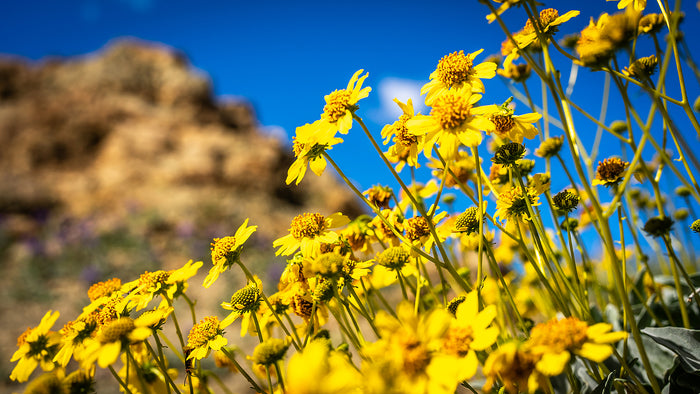
Brittlebush
Silver leaves and bright yellow flowers make this a familiar desert shrub.
Meet this plant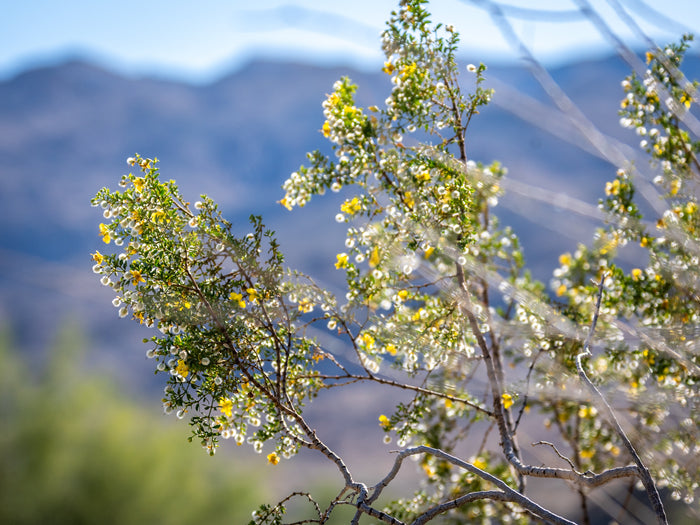
Creosote Bush
Small resinous leaves and yellow flowers belong to one of the desert’s defining shrubs.
Meet this plant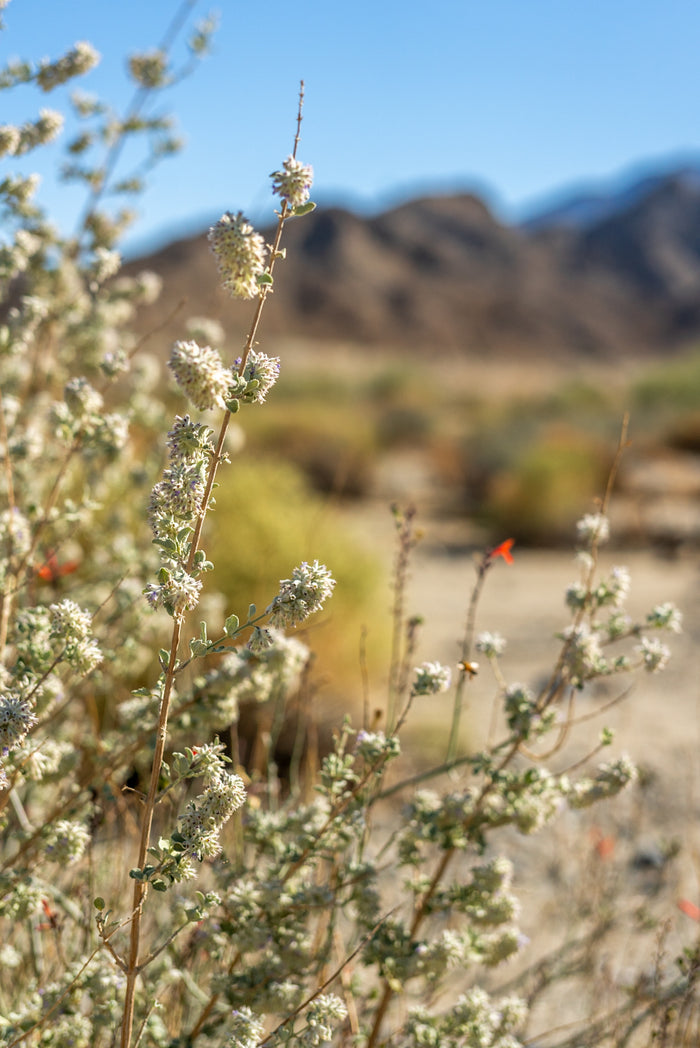
Desert Lavender
Pale purple flowers and soft gray foliage distinguish this aromatic desert shrub.
Meet this plantFollow the story outside.
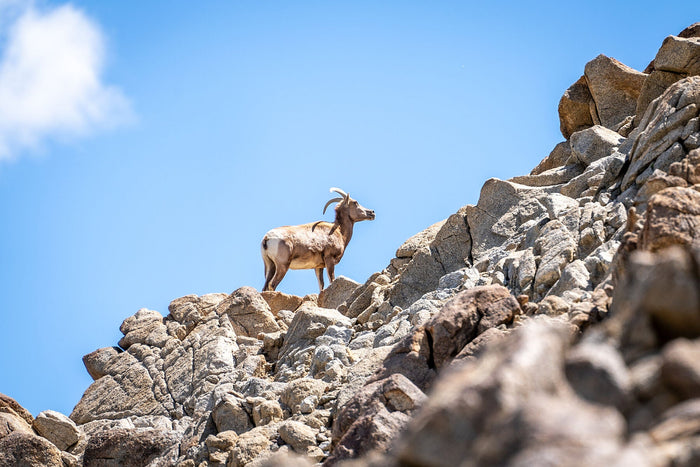
Bighorn Sheep of the Coachella Valley
Discover the bighorn sheep that share this landscape and the desert plants connected to their lives.
Read the story
La Quinta Cove Hiking Trails: Three Routes and What to Know Before You Go
Take the plant guide into the landscape with a closer look at the trails around La Quinta Cove.
Read the story
Hiking in Palm Desert: Trails, Views & Safety Guide
Continue exploring Palm Desert’s trails, open views and the outdoor spaces just beyond town.
Read the story