








How Desert Hot Springs Became a Spa Town
Coffee’s bathhouse, small spa motels and the people who turned mineral water into a community.

A bathhouse gives people a reason to come. A room gives them a reason to stay. Streets, drinking water and neighbors give them a way to make a life.
That progression helps explain Desert Hot Springs. Its history reaches beyond a discovery of hot water or the biography of one pioneering builder. It is also the story of a developer’s bathhouse, small motel businesses and a community taking shape around a resource beneath the ground.
The revealing question is not simply why the water is hot. It is how that water changed what people could build here.
- The commercial turning point: Coffee’s mineral bathhouse opened in 1941.
- A distinctive vacation tradition: small spa motels welcomed middle- and working-class travelers.
- More than a resort story: water infrastructure, families and local institutions helped make a city.
- Look beyond the famous landmarks: modest pool courts and older motel buildings carry history too.
Before the bathhouse: a place, then a proposition
The Coachella Valley was already a Cahuilla homeland long before twentieth-century homesteaders arrived. Describing a settler’s water discovery should never make the earlier human story disappear.
Cabot Yerxa’s homestead and Miracle Hill belong to that later settlement chapter. L. W. Coffee pursued a different task: turning the mineral-water opportunity into a destination and a town. The Historical Society connects the two men’s stories; MSWD dates the first subdivisions to 1940.129
Those are different achievements. Finding water, offering a public bathing experience and sustaining a neighborhood required different kinds of work.
Coffee’s bathhouse: a reason to make the trip
Coffee’s Desert Hot Springs Mineral Baths opened on July 12, 1941. Seidenberg’s research locates the bathhouse at Palm Drive and Eighth Street and describes separate bathing facilities for men and women. The original business offered bathing rather than overnight rooms.3

That distinction is the hinge of the story. The attraction existed before a visitor could assume there would be a hotel room beside it. A destination for a soak and a destination for a vacation were still different things.
The early bathhouse did not survive intact. It burned on January 20, 1947. Coffee rebuilt, reopening in July with a swimming pool, bathing facilities and spaces for visitors to linger.3
Rebuilding kept the central proposition alive: the water was worth traveling for. The businesses that followed could add accommodation to that proposition.
The spa motel made the visit into a stay
USC’s heritage-conservation program describes the city’s 1950s spa motels as destinations for middle- and working-class families. The term spa-tel captures their combination of lodging and mineral-water recreation.4
In the accompanying interview, Seidenberg explains how small properties, often with about ten units, added rooms and pools as car travel expanded. Some businesses were run by owners whose lives were closely tied to the property.5

This changes what is worth noticing. A modest room facing a pool can explain a vacation tradition as clearly as a grand lobby. The important relationship is between the private place to sleep and the shared place to spend the day.
For a visitor, that arrangement makes a different sort of holiday possible: little distance between the room, the water and the people encountered repeatedly around it. For a small operator, hospitality becomes something built at the scale of a property and its guests.
Follow the turning points
Open a year for the milestone. Subdivision, the bathhouse opening and incorporation happened at different times; none should stand in for all the others.
1940A town takes shape
MSWD dates the first subdivisions to 1940, before the famous bathhouse opening.2
1941A reason to visit
Coffee’s Desert Hot Springs Mineral Baths opened on July 12.3
1947Fire, then rebuilding
The original bathhouse burned in January; a replacement opened that July.3
1953Water becomes a public responsibility
Residents voted to form the Desert Hot Springs County Water District.2
1954A different kind of care
Parents of children with polio founded Angel View around the local mineral-water resource.6
1963An incorporated city
Desert Hot Springs became a city after decades of settlement and development.1
A destination still needed a working community
Hot mineral water could attract visitors, but households needed dependable drinking water. MSWD’s account describes dissatisfaction with earlier water arrangements and the election that established a public district in 1953. The vote was 246 to 9. The district began with five wells, two reservoirs and roughly 100,000 feet of pipeline.2
That infrastructure is less photogenic than a pool, but just as important to the city’s history. It is the difference between selling an appealing experience and supporting people who live and work there.
Angel View adds another dimension. The organization says parents of children with polio founded it in 1954 on a natural mineral-water spring. Its history describes a rehabilitation hospital on donated land and a later expansion into services for children and adults with disabilities.6
That is a history of care, families and institution-building. It should be understood in its medical and social context, without turning yesterday’s promotional language about water into a present-day promise of treatment.
Incorporation in 1963 gave Desert Hot Springs another distinct milestone. The city was more than its visitor businesses, even while the water remained central to its identity.1
An old motel can have more than one life
The story did not stop when the first generation of spa motels opened. Seidenberg’s interview describes properties converted to apartments or other uses, demolished, or rediscovered for renovation. That makes surviving ordinary buildings part of the historical record, alongside the better-known attractions.5
Hope Springs provides a specific example. Its own history dates the ten-room La Bella Sari motel to 1963, built by two women from Los Angeles. It later became apartments. A 1999 purchase and renovation returned it to hotel use under the Hope Springs name.7
Follow that sequence and the same property tells several stories: a vacation business, housing, then a renewed destination. A renovation may preserve some features and alter others. The useful questions are what survives, what changed and whose experience each version served.
It also means “historic” and “unchanged” are different claims. An appealing older building deserves a closer look, not an invented opening date or an assumption that every detail is original.
See the story in today’s Desert Hot Springs
Start with Cabot’s Pueblo Museum for the earlier homestead chapter. The museum offers different interior and grounds visit formats; choose the visit you want and check its ticket calendar.8
Then compare the city’s lodging scale. Hope Springs connects directly to the motel history above. Our listings for The Spring, Azure Palm, Miracle Springs and Two Bunch Palms offer present-day points of comparison. Inclusion here does not mean each property dates to the same period.
The Keep Exploring map below uses existing DOI place records for the museum and current lodging locations. It is an orientation map, not a reconstruction of the historic town, a tour of original buildings or permission to enter private grounds.
If the next step is a soak, use our mineral-pool and day-pass guide. If the question is what lies underground, use the geothermal-water explainer. Historical family vacations do not establish today’s admission rules at any particular spa.
Desert Hot Springs becomes more interesting when you can read those layers together: water beneath the ground, hospitality around a pool, and the less visible work that lets a community endure.
Questions about Desert Hot Springs history
Who founded Desert Hot Springs: Cabot Yerxa or L. W. Coffee?
When did Coffee’s bathhouse open?
The Desert Hot Springs Mineral Baths opened on July 12, 1941. The original bathhouse burned in 1947 and was rebuilt that year.3
What was a spa-tel?
A spa motel combined guest rooms with a mineral-water bathing experience. The term helps distinguish these small lodging businesses from a bathhouse that visitors used without staying overnight.4
When did Desert Hot Springs become an incorporated city?
Can I visit the historic places without booking a hotel?
Cabot’s museum offers ticketed visit options. Spa grounds and pools have their own access rules; a building’s historic interest does not create public access. Use the linked museum and day-pass guides to plan, and confirm directly before visiting.8
Sources and research notes
Research checked October 24, 2026. This article separates town development, bathhouse openings and incorporation. Historical claims about healing are treated as period context.
- Desert Hot Springs Historical Society — History of Desert Hot Springs. Coffee’s bathhouse, town development and incorporation. Its Homestead Act date is not used.
- Mission Springs Water District — History. First subdivisions in 1940, the 1953 district election and early water infrastructure.
- Willa A. Seidenberg — Spa City: The Midcentury Spa-Tels of Desert Hot Springs. USC Master of Heritage Conservation thesis, December 2023; printed pp. 6, 71–72 for the 1941 opening, bathhouse location, fire and rebuilding.
- USC Save As — The Midcentury Spa-Tels of Desert Hot Springs. March 7, 2024 episode description; middle- and working-class vacations and preservation research.
- USC Save As — Transcript for Season 4, Episode 7. March 6, 2024; lodging development, adaptive reuse and the distinction between ordinary buildings and celebrated landmarks. Personal recollections and interpretation are identified as such.
- Angel View — About Angel View. The organization’s account of its 1954 founding by parents of children with polio and its later evolution.
- Hope Springs Resort — About + FAQs. The property’s history as La Bella Sari, 1963 construction, later apartment use, 1999 purchase and renovation.
- Cabot’s Pueblo Museum — Plan Your Visit. Different museum visit formats. Consult the ticket calendar for current availability; conflicting or seasonal hours are not reproduced.
- Desert Oasis Insider — Cabot Yerxa, Miracle Hill and the Making of Desert Hot Springs. Companion guide and its linked original evidence for the homestead and museum.
- Desert Oasis Insider — Why Is the Water Hot in Desert Hot Springs?. Companion geology guide and its scientific sources; spa wells and the municipal drinking-water supply are distinct systems.
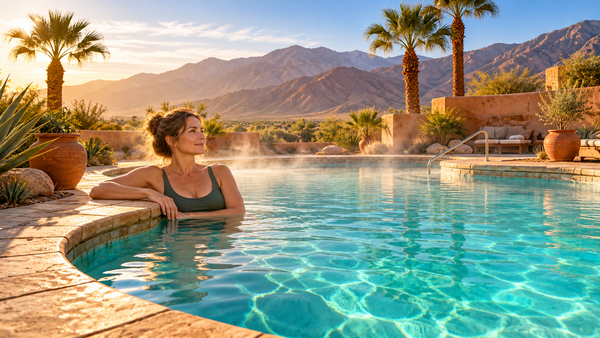
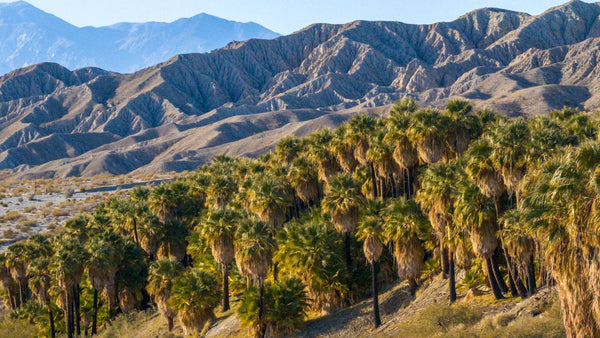
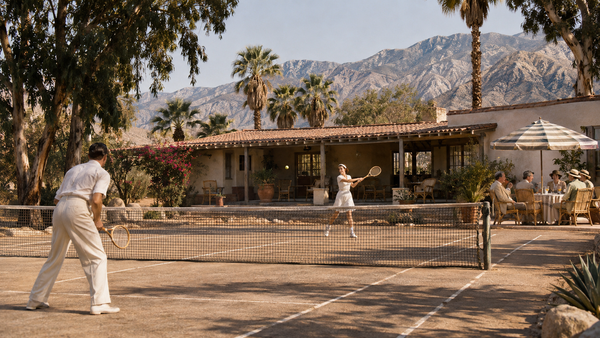
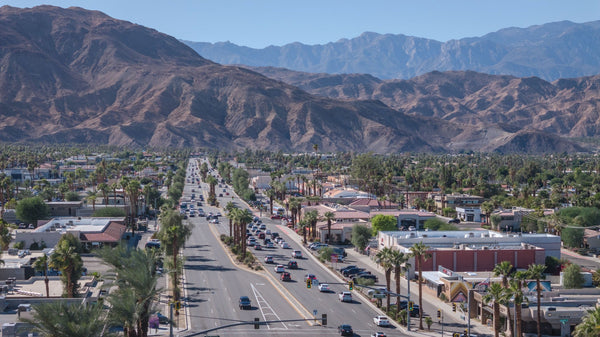
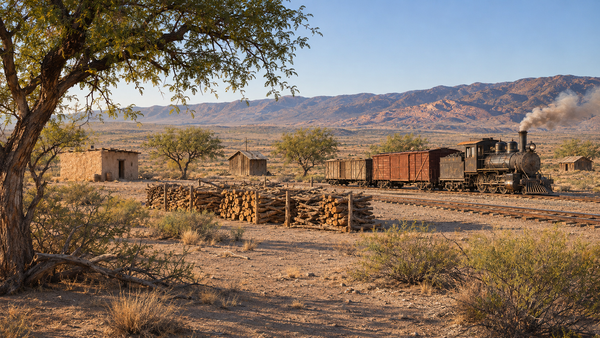
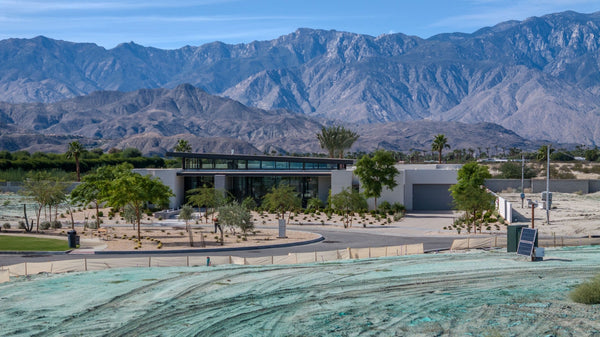
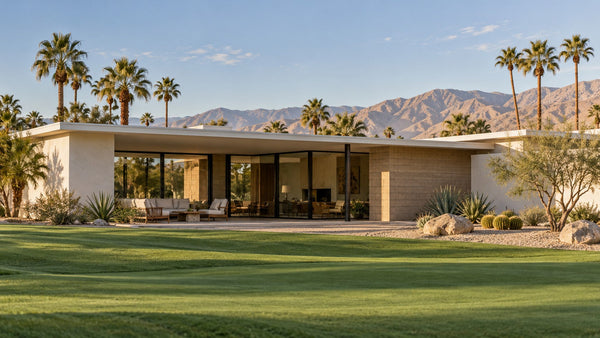
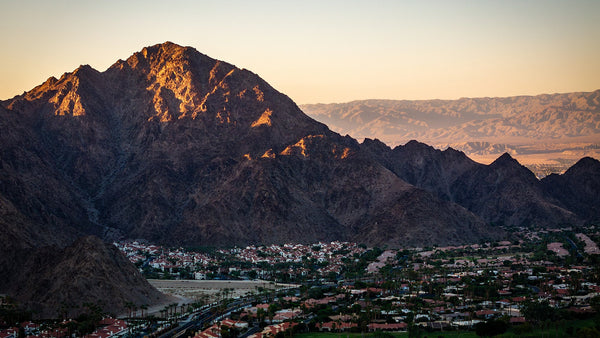
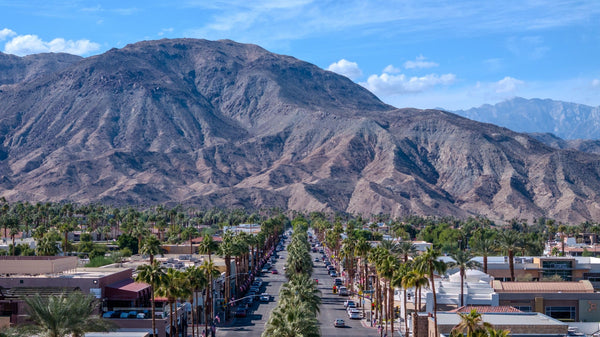
The timeline is an original editorial presentation, not an archival object. The map reuses DOI’s existing place records and current lodging listings; it does not mark Coffee’s demolished bathhouse or show historical boundaries. The featured image and two inline images are AI-generated, imagined historical scenes. They do not document named guests or reconstruct specific properties. No archival photographs have been reproduced.


