
















A Mountain View Is More Than the Mountain
What will you actually see from your chair, window or backyard?

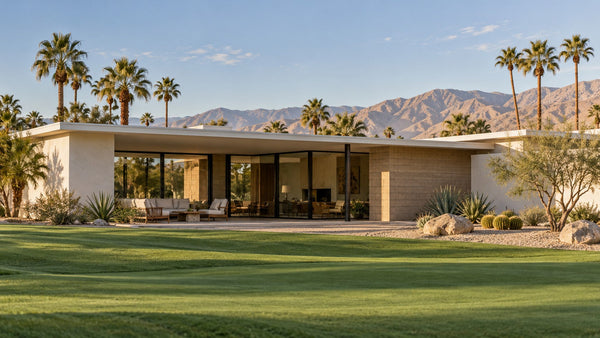
A mountain view sounds like a single feature. In practice, it is a combination of things: the ridge itself, everything between you and it, the direction you face, and the place where you actually sit.
Looking through my recent photographs of Trilogy La Quinta, the Haystack Mountain area, Ironwood and Rancho Mirage, I keep coming back to one home-buying question: What will you actually see from your chair, window or backyard?
A close rocky slope can feel dramatic. A distant range across a broad stretch of sky can feel spacious. Either can be beautiful. The useful comparison is the whole scene you will live with, at the times you will use it.
- Evaluate the foreground, middle distance and mountain as one scene.
- Compare views from the chair, sofa and window positions you will actually use.
- Match light and shade to your routine, and investigate claims about future view protection.
Read the whole view, from foreground to skyline
Start at the bottom of the scene and work upward. What occupies the space nearest you: your own patio, a wall, a neighbor’s roof, landscaping, a fairway or an open stretch of desert? Then look at the middle distance. Finally, look at the mountain.
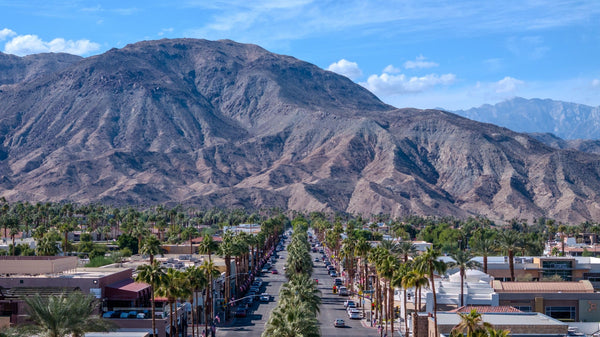
The Haystack Mountain photograph above has several layers. Homes and streets sit along the lower edge; smaller ridges overlap behind them; higher slopes fill much of the skyline. Those layers are part of its character. A home in that broader setting still needs its own viewing test.
Rooftops do not automatically spoil a view, and open ground does not automatically make one better. A low, consistent roofline may leave a mountain clearly visible. A single nearby tree or patio column may interrupt the part of the ridge you care about most. Ask what your eye settles on when you stop searching for the peak.
Trilogy La Quinta: one setting, very different scenes
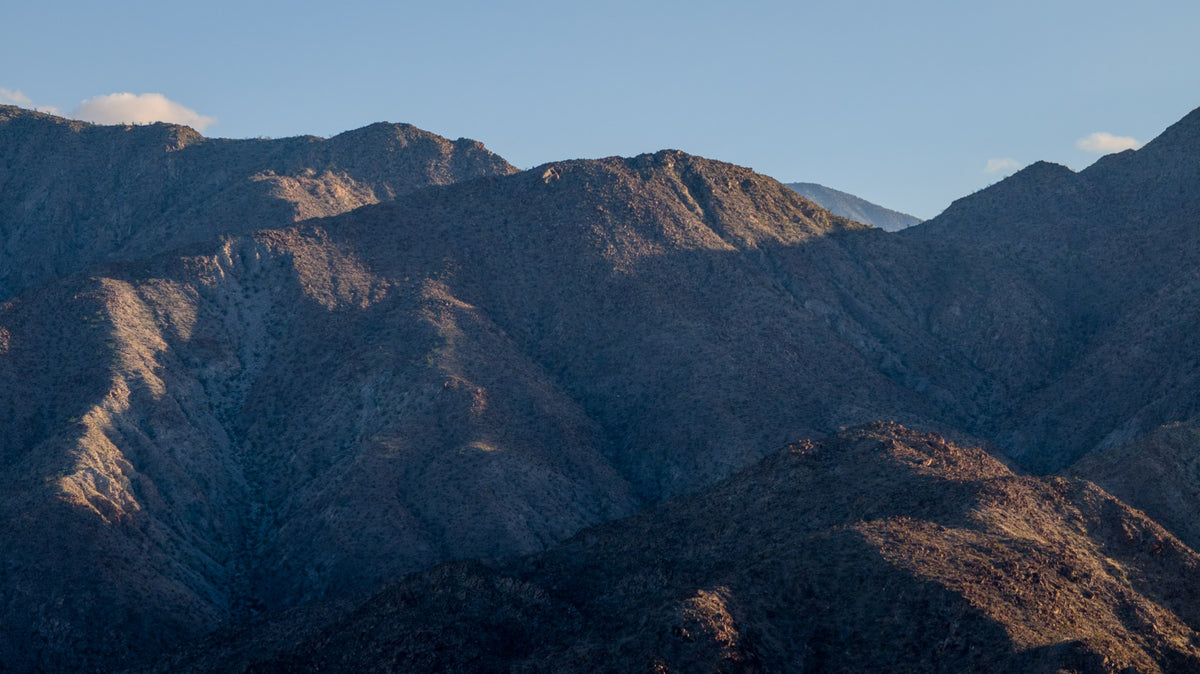
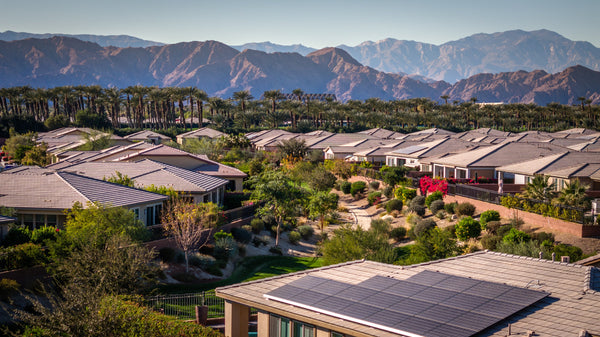
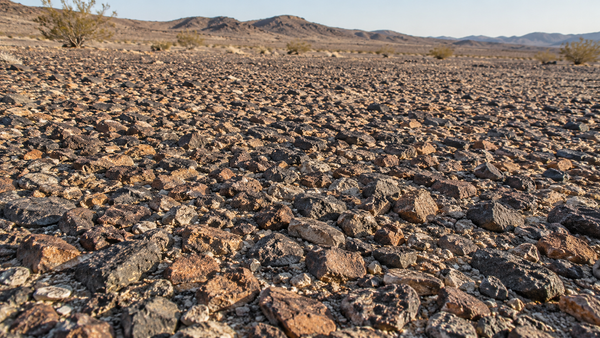
In my October 30 photographs behind Trilogy La Quinta, the close ridges are all texture: folds, rock, light and shadow. They create a very different visual experience from the wider view looking across the neighborhood.
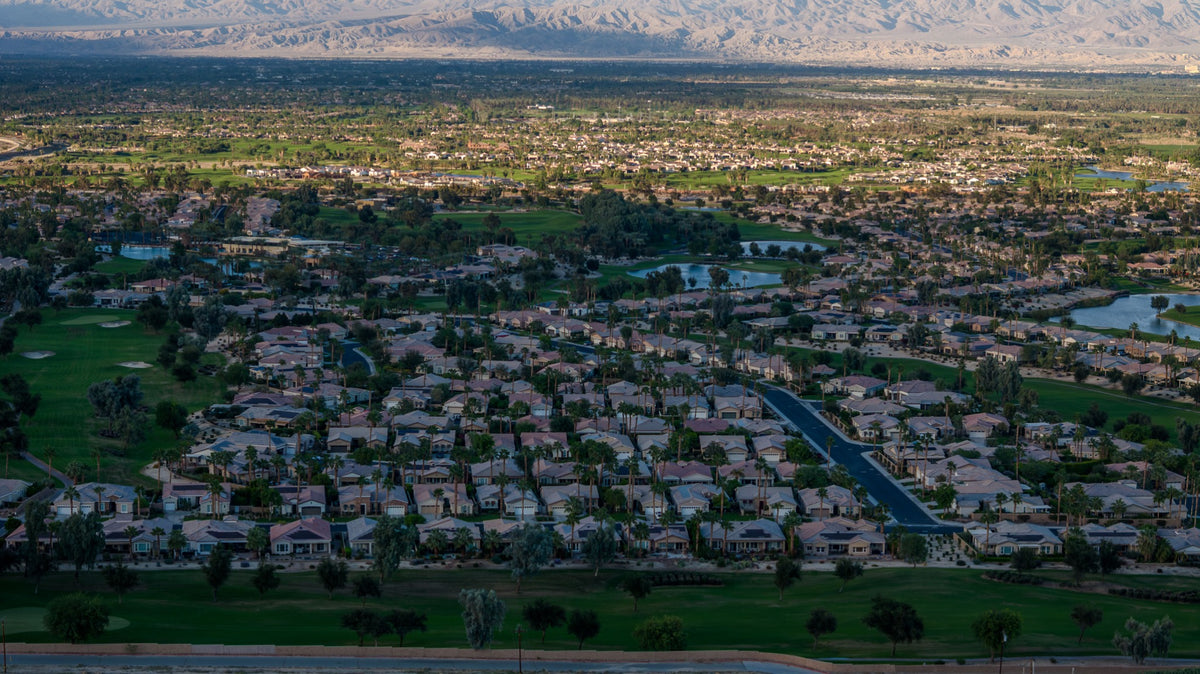
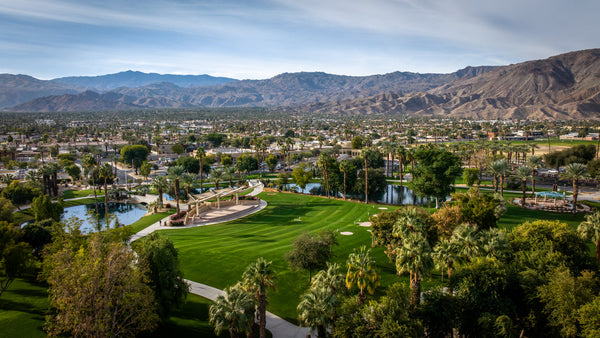
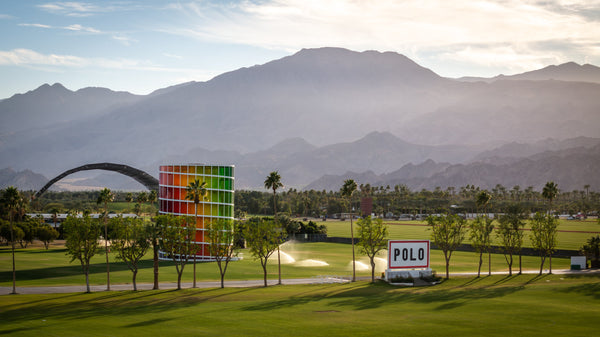
Here, homes, palms, fairways and water occupy much of the picture, with mountains farther away. Neither photograph tells the whole story of a particular house. Together they show why “mountain views in Trilogy” is too broad a description to make a buying decision.
These elevated photographs explain the setting; they do not represent the seated view from a particular home. For a house you are considering, establish which direction the main living room and patio face, then check the actual sightline. The Trilogy La Quinta home buying guide helps put the community around that individual lot into context.
Ironwood: the foreground is part of the view
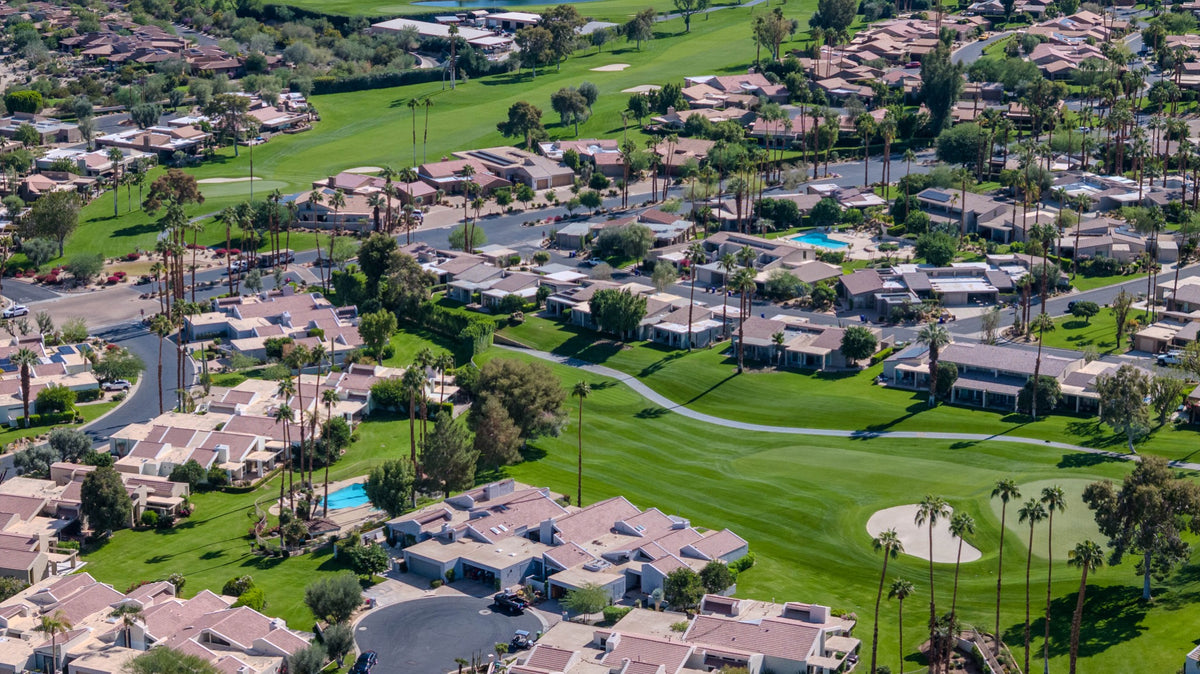
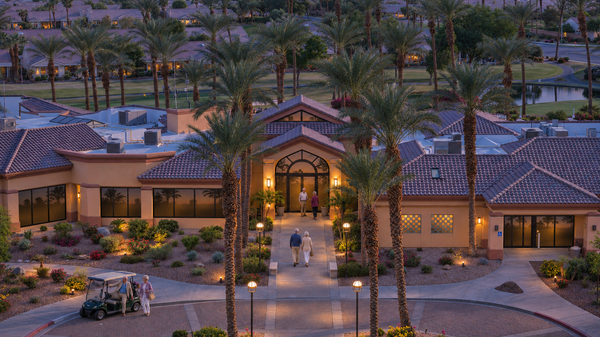
This Ironwood photograph is useful precisely because it makes the neighborhood foreground so visible. Rooflines, trees, paths and the shape of the open space all help explain how homes relate to one another.
On a tour, look beyond the word “fairway.” Does the open space begin immediately beyond the patio, or is another building in between? Does the seating area look down the open corridor or across it toward other homes? Can you enjoy the scene while preserving the privacy you want?
Two homes with the same floor plan can answer those questions differently. Use the Ironwood home buying study guide for the community, then compare the individual lots using the same criteria. That is also the approach I describe in how I compare two homes in the same community.
Rancho Mirage: close slopes and distant layers
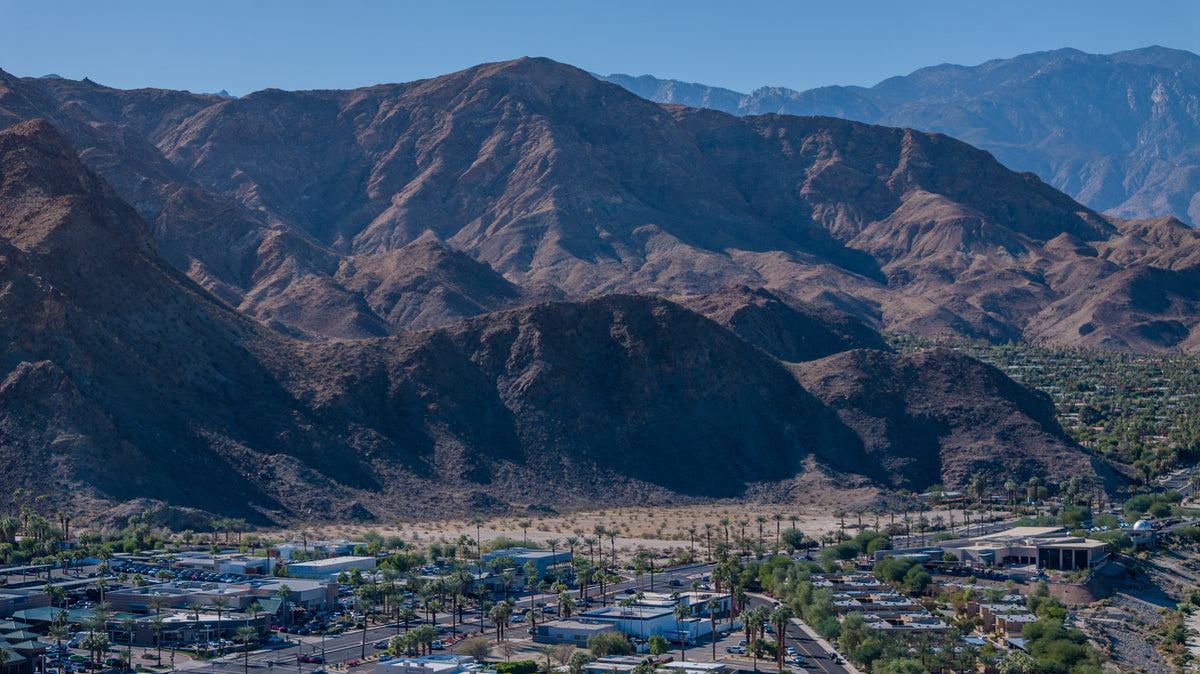
In this Rancho Mirage scene, the nearby slopes have strong shapes and visible texture, while a farther ridge adds another layer behind them. Buildings and roads remain part of the composition.
From a particular home, a nearby slope might fill the window and hide a more distant summit. From another, a lower foreground could reveal several ranges. More visible peaks is not necessarily the goal. Some people want an intimate rocky backdrop; others want a long horizon and room for changing clouds.
Distance also changes how the air affects the scene. Distant mountains can become pale or indistinct in haze, as explained in why distant mountains look blue—and sometimes disappear. Use the Coachella Valley mountain guide to identify the range rather than relying on a listing’s general label.
The seated-view test
Before you decide how much you love a view, experience it from the places you expect to use every day:
- Sit where the patio furniture would go. Use normal chair height. Notice whether a wall, hedge or roof now cuts across a ridge that was visible while standing.
- Check the main indoor seat. Look from the sofa or dining-chair position, not only while standing at the glass. Window frames, columns and the room’s layout can change what is comfortably visible.
- Look straight ahead, then to each side. Distinguish a view that fills your normal line of sight from one that requires turning your head or moving to the edge of the yard.
- Include the whole frame. Take a wide reference photo that includes the patio or window. A tighter mountain photograph can be lovely, but keep both.
- Repeat the same test at the next home. Label your photographs with the home, room, direction and time so the comparison stays useful after several tours.
Camera position and framing can change how large mountains appear relative to nearby objects. My article on why mountains look huge in some photographs explains that relationship. For a buying decision, the photograph should help you remember the experience you had in the space.
Match the light to the way you live
A dramatic late-afternoon photograph does not tell you what breakfast on that patio will feel like. If possible, revisit at the time you expect to spend outside. Notice where the sun sits, which slopes are illuminated, when shade reaches the patio and whether glare makes the indoor view harder to enjoy.
Direction matters, but the building matters too. Patio covers, overhangs, glass and nearby landscaping influence comfort. The U.S. Department of Energy’s Building America Solution Center explains that solar control depends on both window orientation and shading; low-angle sun at east- and west-facing windows can be especially difficult to shade with an overhead overhang alone.
That makes backyard exposure a useful companion question. Look for a view you will enjoy from a place you will actually use. One October visit cannot demonstrate every season, so ask for additional observations when summer or winter use is important to you.
Ask what could change around the view
Separate what you can see today from what you know about the land in front of it. A vacant parcel, golf course, wash and landscaped common area are different settings. A photograph cannot establish future use or a protected sightline.
For a serious contender, ask your agent to help identify the relevant parcels and review available planning information, disclosures and community documents. Ask specifically about proposed construction and landscape rules. If you are told a view is protected, request the document supporting that claim and have the appropriate professional explain it.
Also consider ordinary changes close to home: trees mature, hedges grow, and neighboring improvements can affect the scene. Record what is confirmed and what remains an open question.
Find a home with a view you’ll enjoy every day
Start with available homes on Bloom, then bring your shortlist back to these questions: What is in the foreground? Where will I sit? What direction will I face? When will I use the space?
Search homes for sale on Bloom
The best fit may be a close mountain backdrop, an open fairway outlook or a distant layered horizon. The important thing is that the view works from your home, in your daily life.
Frequently asked questions
How can I tell whether a listing’s mountain view will look the same in person?
Ask where the photograph was taken and whether it was made at ground level. Visit the home, sit in the main indoor and outdoor seating positions, and compare the full scene with the listing image. An aerial or tightly framed photograph cannot establish that seated view.
Is a closer mountain view always better?
No. A close slope can provide texture and drama; a distant view can offer a wider horizon and several layers. Compare the foreground, the visible sky, privacy and the way you use the space. The better fit depends on your preferences.
Can two homes on the same street have different mountain views?
Yes. Lot position, ground level, viewing direction, nearby roofs, landscaping and the location of windows can change the sightline. Test each home separately, even when the floor plans are identical.
What time of day should I check a home’s view?
Start with the times you expect to use the patio or main living space. If possible, compare a morning and later-day visit. Note shade and glare as well as mountain color, and ask about seasonal differences that one visit cannot show.
Does open land in front of a home guarantee a lasting view?
No. Identify the land and review the relevant planning information, disclosures and community documents. Treat a claim that the view is protected as something to document and verify, rather than something a photograph proves.
Sources and photo notes
- Original photography: Mark Miller. Rancho Mirage, October 27, 2026; Haystack Mountain area and Ironwood Country Club, October 29, 2026; Trilogy La Quinta, October 30, 2026. Elevated photographs illustrate landscape and neighborhood relationships; they are not property-specific seated-view demonstrations.
- Building America Solution Center: Shading and Solar Control for Windows and Skylights — Pacific Northwest National Laboratory / U.S. Department of Energy. Used for the orientation and shading discussion; accessed October 30, 2026.
- Related DOI guides: Backyard exposure, photographic perspective, atmospheric perspective and mountain identification.
The home-tour checklist is Mark’s editorial framework for comparing views. This article does not assess a particular parcel’s development rights or promise a protected view.


