
























That “Chipmunk” Among the Rocks: Meet the White-tailed Antelope Squirrel
Follow a small desert neighbor through food gathering, watchful pauses, shade and underground shelter.

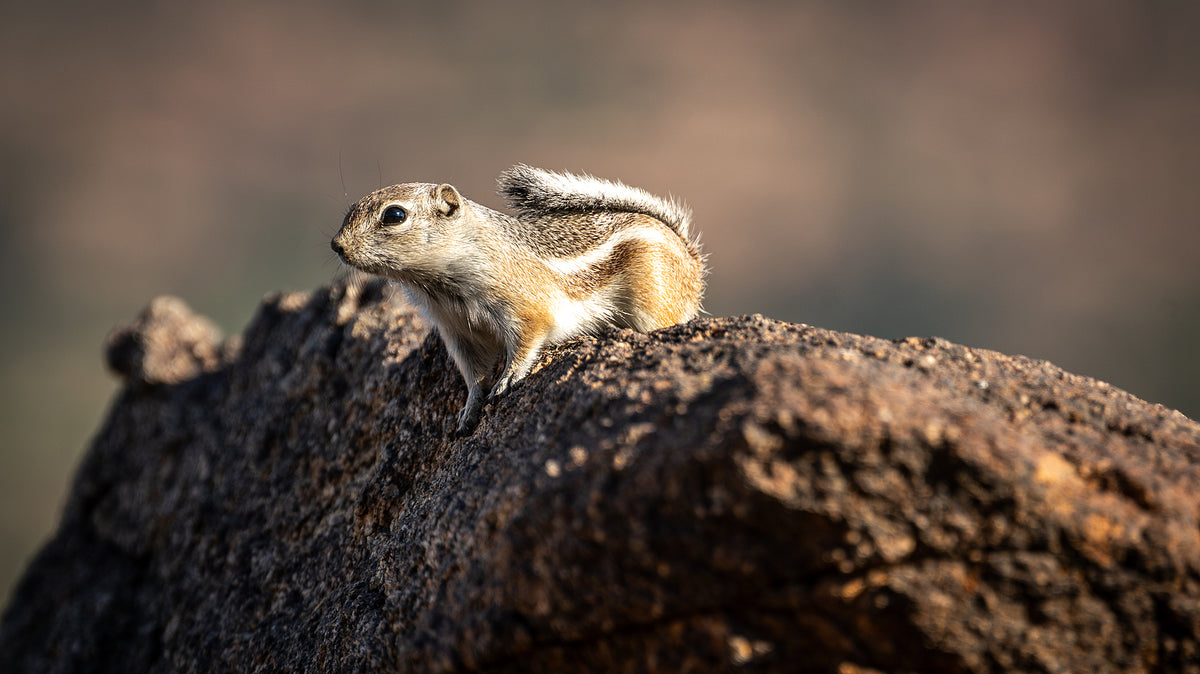
At first glance, the little animal perched on a rock can look like a chipmunk. Look again at these photographs: a pale stripe runs along the side, the face is comparatively plain, and the tail curls up behind the body. These are the details that make the white-tailed antelope squirrel worth a closer look.
Mark Miller’s three photographs give us a quiet view of a very busy desert neighbor. Its story moves between exposed ground and protective cover: finding a meal, pausing to watch, slipping into shade, and disappearing beneath the surface. The photographs illustrate the animal; their exact shooting location has not been confirmed.
- Look for a pale flank stripe, a relatively plain face and a pale underside to the tail.
- Its day connects food gathering, watchful pauses, shade and underground refuge.
- The interactive cutaway is a schematic; a burrow entrance alone cannot identify its occupant.
First, look past the chipmunk resemblance
The white-tailed antelope squirrel (Ammospermophilus leucurus) has a light stripe along each flank and a pale underside to its tail. That tail is often held over the back. The stripe is a useful clue, but a quick glimpse of any small striped animal is not a complete identification. [1]
Chipmunks have stripes across the face as well as the body. A plain face paired with a distinct pale flank stripe is a better starting point than size alone. In the photographs below, compare the side view with the front view rather than looking for just one “chipmunk-like” feature. [5]

Desert country, with places to disappear
This species lives in desert and foothill habitats, including rocky, gravelly and sandy ground. Rocks are part of the picture, but so are shrubs and soil suitable for burrows. [6]
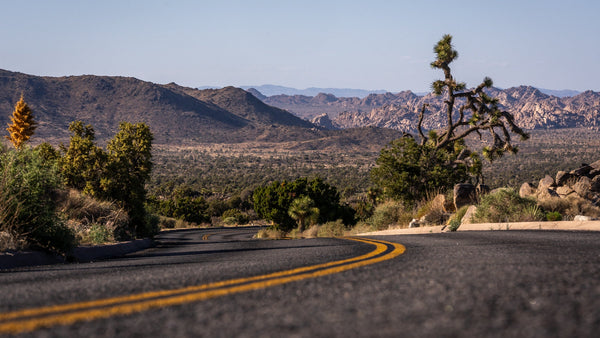
For a regional anchor, Joshua Tree National Park lists the white-tailed antelope squirrel as common and parkwide. The park also lists dusky chipmunks in pinyon-juniper habitat and California ground squirrels in rocky areas. That is an important distinction for trips from the Coachella Valley into surrounding mountains: the small animal at your feet will not necessarily be this species. [4]
A locality on a species list is evidence of presence, not a promise of an encounter. Use the photographs as an identification aid, then consider the habitat and the markings of the individual animal you actually see.
Explore a small desert world
One squirrel, four parts of its day
Choose a scene to follow the squirrel between exposed ground and shelter.
Swipe across the diagram to explore. Keyboard: focus the diagram and use the arrow keys.
1. A pause with a view
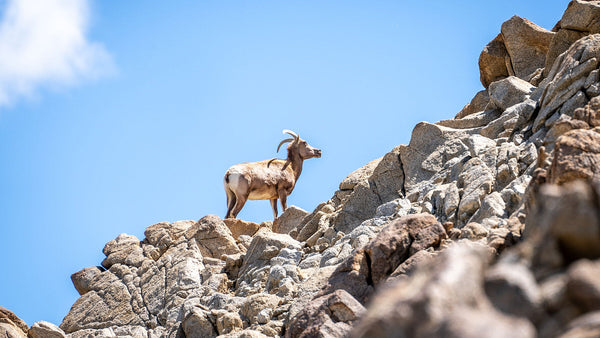
The photographs capture a raised position on a rock. A pause like this is a chance for us to notice posture and markings; a photograph alone cannot tell us what the animal is watching or why it stopped.
2. A meal in many small pieces
Seeds are only part of the menu. White-tailed antelope squirrels also eat plant material, fruit and insects. Cheek pouches let them transport food, rather than finishing every find where they pick it up. [1]
3. Contact with cooler ground
During hot weather, surface activity can happen in short bouts. These squirrels have been observed flattening their bodies against cooler shaded ground, a behavior associated with shedding heat. A patch of shade belongs in the story as much as the sunny rock. [3]
4. Out of sight, below the surface
Burrows provide refuge. This tunnel and chamber are illustrative, not a plan of a particular animal’s home. Do not identify the occupant from a hole alone: a field study found that entrance measurements and appearance could not reliably distinguish several desert rodents’ burrows. [7]
The scenes are examples, not a fixed daily timetable. Tunnel shape, depth and temperature are not measured here. Leave burrow entrances undisturbed.
Food gathering, nesting and the next generation
The food carried away in cheek pouches may become a cache. That makes the squirrel more than a visitor to a feeding patch: it moves food through its surroundings, and seeds that escape later use may have a chance to germinate. This is a possible contribution to seed dispersal, not a claim that every stored seed becomes a plant. [6]
Breeding is generally associated with spring. Young begin life in a sheltered nest and depend on their mother before they can forage for themselves. The underground part of the story matters even when an observer sees only an adult hurrying across the surface. [6]
The squirrel is also food for other animals. Hawks, owls, snakes and mammalian predators are among the threats described for the species. Its small world is threaded into a larger food web; a nearby refuge can matter when a feeding trip becomes dangerous. [6]
Active in daylight, with choices about exposure
Unlike many desert mammals that stay hidden through the day, white-tailed antelope squirrels are diurnal. The National Park Service describes activity in cooler parts of the day and shelter associated with shrubs such as creosote and yucca. Being a daytime animal does not mean remaining in full sun continuously. [1]
They remain active through the year rather than undergoing the extended winter hibernation familiar from some other ground squirrels. Season, weather and local conditions still change what an observer is likely to see. [2]
It is tempting to give this routine an exact clock: a certain number of minutes feeding, then a precisely cooled burrow. The Arizona-Sonora Desert Museum cautions that some familiar descriptions of underground cooling rest on limited measurements. Here, the useful story is the behavior we can support—short surface bouts and use of cooler places—without inventing a universal schedule. [3]
How to watch without changing the scene
Choose a place to stand or sit, give the animal room, and let the photograph come from its ordinary activity. A longer lens or a careful crop is a better tool than a closer approach. Keep the exit route to cover clear, and never put food beside a rock to arrange a portrait.
Look for a sequence rather than a trophy frame: the pause, the movement toward cover, the return to feeding. Note the location and habitat as carefully as the markings. If the animal repeatedly stops what it is doing because of your presence, increase the distance.
The reward is a richer view of a familiar desert neighbor. What first looked like “a chipmunk on a rock” becomes an animal making many small decisions about food, exposure and shelter.
White-tailed antelope squirrel: common questions
Is a white-tailed antelope squirrel a chipmunk?
No. It is a ground squirrel. Look for the pale flank stripe and relatively plain face; chipmunks have facial stripes as well as body stripes. [5]
Can I see these squirrels around Joshua Tree?
Joshua Tree National Park lists white-tailed antelope squirrels as common and parkwide. That does not guarantee a sighting at any particular stop. [4]
Do white-tailed antelope squirrels hibernate?
They remain active year-round rather than entering a prolonged winter hibernation. Activity still varies with conditions. [2]
What do they eat?
Their diet includes seeds, plant material, fruit and insects. They can carry food in cheek pouches. [1]
Can I tell which animal lives in a desert burrow?
Not reliably from the entrance alone. A field study found overlapping burrow characteristics among desert rodent species. Watch from a distance and do not probe, block or excavate a hole. [7]
Sources & photography notes
- National Park Service, Mojave National Preserve. White-tailed Antelope Ground Squirrel. Updated January 13, 2025. Identification, diet, daytime activity and shelter.
- National Park Service, Grand Canyon–Parashant National Monument. Antelope Ground Squirrel. Updated January 23, 2020. Year-round activity and cooling behavior.
- Arizona-Sonora Desert Museum. Adaptations of Birds and Mammals. Foraging bouts, contact with cooler surfaces, and limits of underground cooling evidence.
- National Park Service, Joshua Tree National Park. Mammals. Park species list and habitat descriptions.
- National Park Service, Rocky Mountain National Park. Squirrels and Chipmunks. Updated May 5, 2018. Facial stripes as a chipmunk identification feature; used for comparison, not local distribution.
- Jennifer Nixon, Animal Diversity Web, University of Michigan. Ammospermophilus leucurus. 2002 species account. Habitat, caching, reproduction and predators.
- Philip Leitner and Edward LaRue. Surveys for and Excavations of Suspected Mohave Ground Squirrel Burrows. December 11, 2014. Field evidence on limits of identifying desert rodent burrows by entrance characteristics.
Sources reviewed October 21, 2026. Photographs by Mark Miller from the Desert Oasis Insider collection. The cutaway is an educational schematic, not a photographed burrow or a mapped observation.


