
Coyote
Canis latrans · Mammal
Pointed ears, a narrow muzzle and a bushy tail. Get to know the coyote through Mark’s local photographs, field notes and a closer look at life along the desert’s edges.
- Local status
- Native to California
- On the menu
- Adaptable omnivore
- Often active
- Dawn, dusk & night
- Look for
- Pointed ears & a bushy tail
One animal. Different perspectives.
Open a photograph to see the full frame. Use the arrows to move between images.

The resting pose brings the pointed ears, narrow face and dark tail tip into view. This photograph was made at The Living Desert; the opening photograph was made in Thermal.
Meet an adaptable desert neighbor.
Start with the silhouette.
Look for a lean body, long legs and upright, pointed ears. Shape can be more useful than coat color when the light is changing.
Follow the face.
The muzzle is long and narrow. In the zoo portrait, the face and ears are especially easy to study.
Notice the tail.
A coyote’s bushy tail usually has a dark tip. When moving, it is often carried low behind the body.
At home along the edges.
In the Thermal photograph, a coyote stands in an agricultural landscape with buildings and mountains beyond it. The scene captures something essential about this animal: it can live where natural habitat and human activity meet.
A flexible menu.
Coyotes eat small mammals, insects and other animal prey, while also taking fruit and plant foods. Their food choices shift with opportunity. As predators and scavengers, they are part of the system that connects smaller animals, plants and the surrounding landscape.
A social animal, even when seen alone.
Coyotes often live in family groups, but an individual may travel or hunt on its own. A lone animal in a photograph does not tell us the size of its family or territory.
What are you noticing?
Choose a scene for a closer look at everyday coyote behavior.
A sighting can be a passing moment.
Coyotes can be active in daylight as well as at night. An animal moving across an open space may simply be traveling or looking for food. A daytime sighting alone does not establish that anything is wrong.
Listen without counting.
Yips, barks and howls are part of coyote communication. A family can sound surprisingly numerous, so the volume of a chorus is not a reliable count of how many animals are nearby.
Look for what attracts wildlife.
Pet food, accessible garbage and fallen fruit can draw wildlife toward homes. Remove those food sources, keep pets close and give a passing coyote space. If an animal approaches people, follow California wildlife guidance.
Questions that come with a sighting.
Are coyotes native to this area?
Coyotes are native to California and occupy rural, residential and urban habitats. They are part of the Coachella Valley’s wildlife, including the desert and agricultural landscapes shown in this collection.
Does seeing one during the day mean it is sick?
No. Coyotes can be active during both day and night. Observe from a distance; the time of day alone does not diagnose an animal’s health.
Do coyotes eat only meat?
No. They are opportunistic omnivores. Along with animal prey and carrion, their diet can include fruit and other plant foods.
How should I protect my pets?
Keep cats indoors, supervise small pets outside and walk dogs on a short leash. A fenced yard is not a reason to leave a small pet unattended. Feed pets indoors and remove outdoor food sources.
Were both photographs taken in the wild?
The opening image was made in Thermal, California. The second was made at The Living Desert Zoo and Gardens on September 12, 2025. Each image is labeled to keep its setting clear.
Respect the animal. Reduce the invitation.
A few everyday habits help keep wild coyotes wary of people.
Keep food indoors.
Secure garbage, bring in pet food and pick up fallen fruit. Feeding wildlife can change its behavior around people.
Stay close to pets.
Use a short leash on walks and supervise small pets outside, including in fenced yards.
Leave room to move.
Do not approach, feed or corner a coyote. Let it leave on its own. For an animal approaching people, use the state’s encounter guidance.
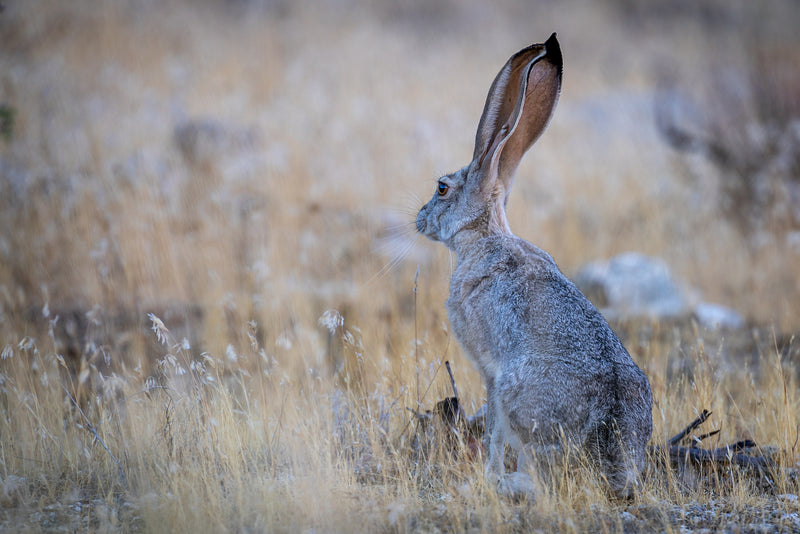
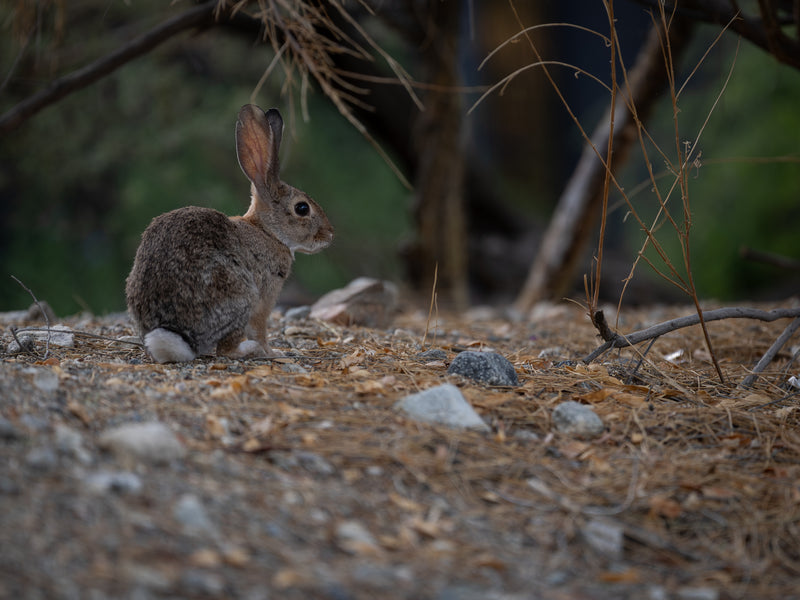
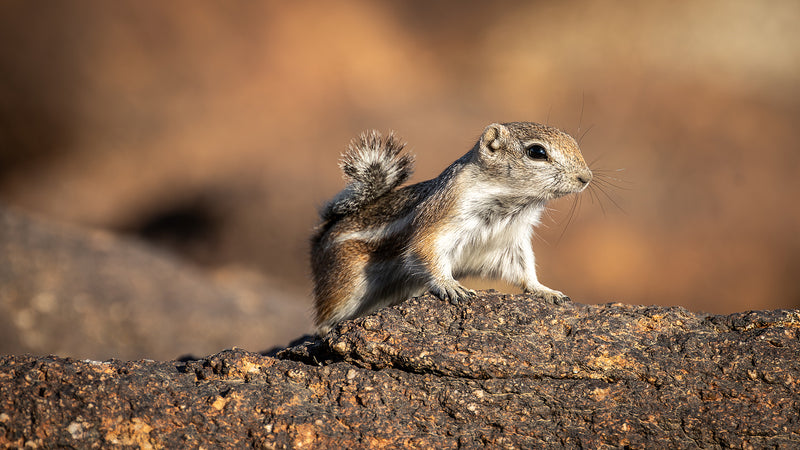
Explore the smaller mammals.
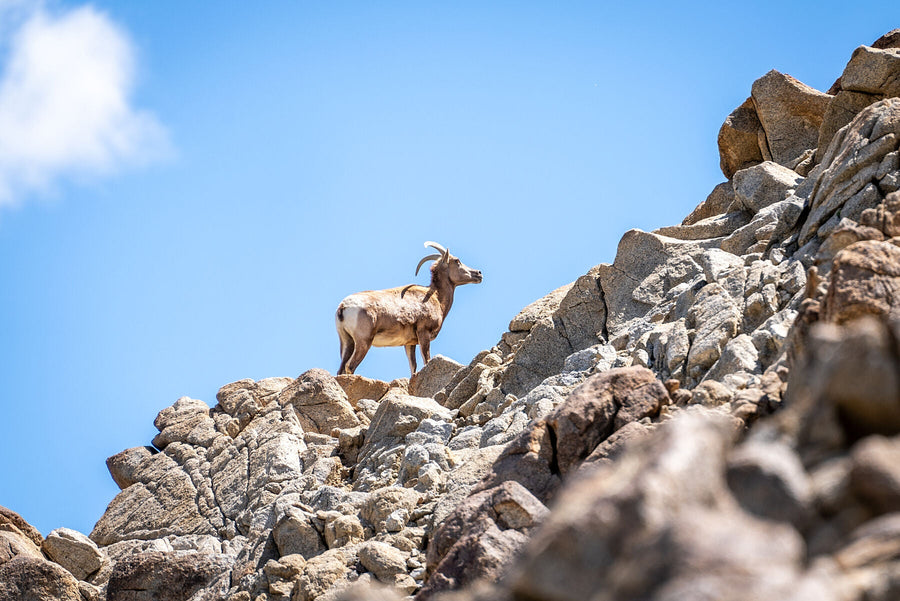
Understand the desert around you.
Sources & photo notes
Photographs by Mark Miller. The Thermal location and the zoo photograph’s date come from the existing image records. The guide describes general behavior; a photograph or brief sighting cannot establish an individual animal’s health, intent or family structure.