
Ring-necked Duck
Aythya collaris
Look for the peaked head and pale bill markings rather than the hard-to-see neck ring.
- Bird group
- Waterfowl & waterbirds
- Where to look
- Cool-season freshwater ponds
- Explore the region
- Coachella Valley bird guide
Through the lens.
Select any photograph for a closer look. Move through the gallery with the arrows or a swipe.


This is a regional bird guide; photographs may also come from places beyond the valley. Locations are noted when available.
Know what to notice.
A medium-sized diving duck commonly found in freshwater habitats, including ponds, marshes, and slow-moving rivers. Despite its name, the subtle chestnut-colored ring around its neck is rarely visible, making the species more easily identified by other key markings.
Identification
- Males: Glossy black head, back, and breast, with a white belly and distinctive white "spur" on the side. Their bill is gray with a white band near the tip and a black tip.
- Females: More subdued in color, with a brown body, a paler face, and a white eye-ring. Their bill has similar white markings but is less pronounced than in males.
- Size: 15–18 inches long, with a wingspan of about 24 inches.
Behavior and Adaptations
Unlike many diving ducks, Ring-necked Ducks can take off directly from the water without a long running start. They often forage by diving, feeding on aquatic plants, seeds, and invertebrates. They are more adaptable to shallow freshwater habitats than some of their close relatives, such as scaup or canvasbacks.
Habitat and Range in the Coachella Valley
While not year-round residents, Ring-necked Ducks are common winter visitors to the Coachella Valley, often seen in artificial lakes, ponds, and marshes. They migrate from northern breeding grounds in Canada and the northern U.S. to spend the cooler months in California and other southern regions.
Ecological Role
As omnivores, Ring-necked Ducks contribute to the health of wetland ecosystems by controlling insect populations and dispersing seeds from the plants they consume. They are also prey for raptors such as peregrine falcons and bald eagles.
Another bird to discover.
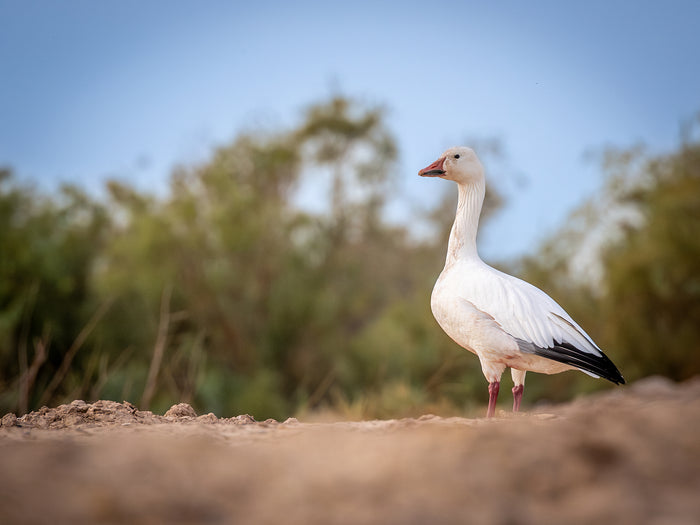
Snow Geese
White birds with black wingtips gather in winter flocks around refuge fields and wetlands.
Meet this bird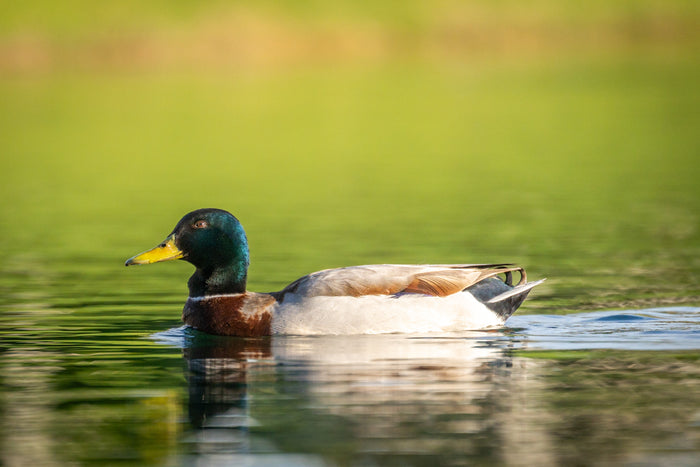
Mallard Duck
Adult males have green heads; females are mottled brown. Both show a blue wing patch.
Meet this bird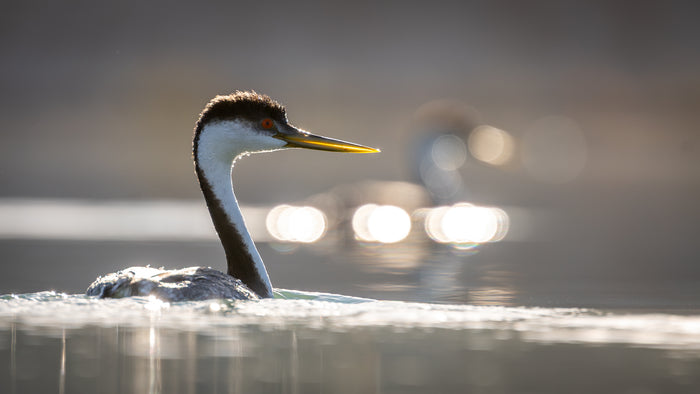
Western Grebe
A long white neck, dark cap and slender bill mark this diving bird of open water.
Meet this birdSee the bigger picture.
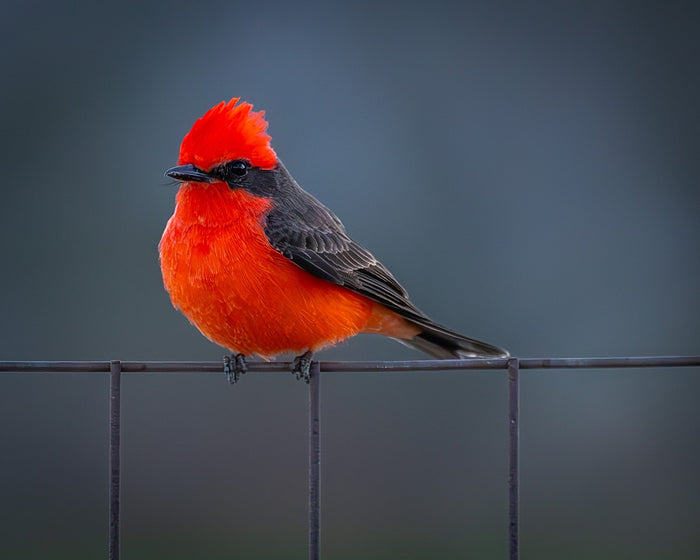
The Pacific Flyway: Coachella Valley’s Living Migration Path
Follow the larger migration story connecting desert oases, open water and the birds passing through the valley.
Read the story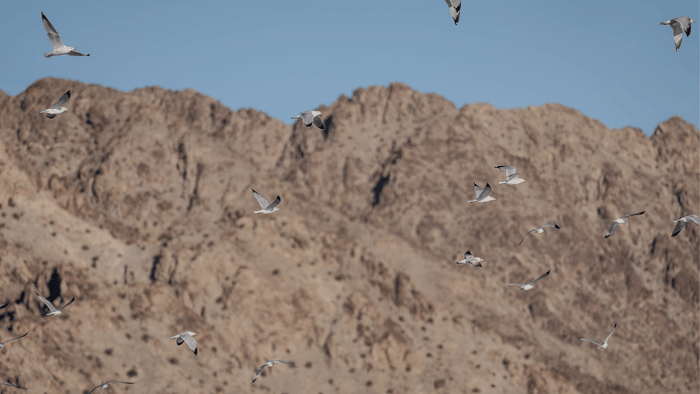
Layers of a Desert Lake: Birds of Lake Cahuilla in Winter
Explore a winter visit to Lake Cahuilla, from close encounters along the shore to movement above the water.
Read the story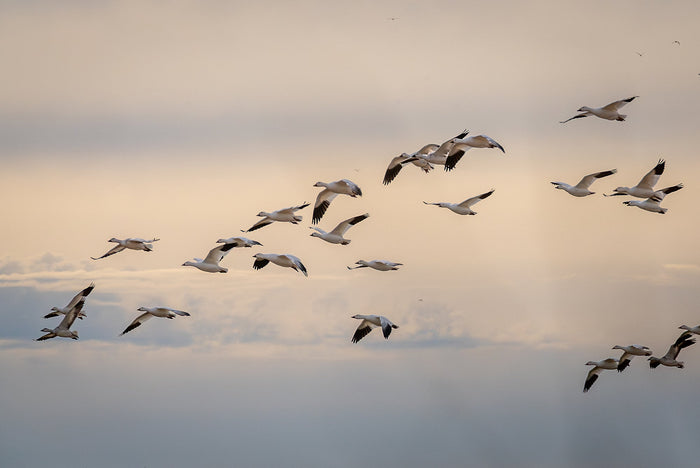
Salton Sea Bird Watching: Where to Go & What to See
Continue south to the Salton Sea for a broader look at birding places, habitats and seasonal variety.
Read the story