
Red-tailed Hawk
Buteo jamaicensis
Broad wings and, in adults, a reddish upper tail; often watches from a high perch.
- Bird group
- Raptors & owls
- Where to look
- Open country & foothills
- Explore the region
- Coachella Valley bird guide
Through the lens.
Select any photograph for a closer look. Move through the gallery with the arrows or a swipe.

This is a regional bird guide; photographs may also come from places beyond the valley. Locations are noted when available.
Know what to notice.
The Red-tailed Hawk (Buteo jamaicensis) is one of the most widespread and recognizable raptors in North America—and a commanding presence in the skies of the Coachella Valley and surrounding mountain ranges.
Identification
-
Size: Large, stocky hawk with broad wings and a short, wide tail.
-
Coloration: Adults are typically brown above and pale below with a streaked belly band. The tail is rich rufous-red on top (hence the name), often visible in flight.
-
Juveniles: Lack the red tail; instead, they have brown-barred tails and are more heavily streaked underneath.
-
Call: A raspy, descending kee-eeeee-arr, often used in movies to represent any bird of prey.
Habitat & Range
-
In the Coachella Valley: Common year-round resident.
-
Seen soaring over deserts, washes, agricultural fields, open canyons, and even urban areas.
-
Prefers open landscapes with nearby perches such as utility poles, Joshua trees, or cliff edges.
Diet & Hunting
-
A versatile predator, it hunts mostly small mammals: ground squirrels, rabbits, and desert woodrats.
-
Will also eat snakes, birds, and carrion.
-
Often seen soaring or perched, scanning for prey with exceptional eyesight.
-
Uses a dive-and-grab method from a high perch or while gliding overhead.
Adaptations
-
Incredible vision: Can spot prey from over 100 feet up.
-
Broad wings: Provide lift for slow, soaring flight, ideal for conserving energy over large open areas.
-
Vocalizations & posture: Used for territory defense and courtship displays.
Ecological Role
-
Serves as a top predator in local food webs, controlling rodent populations.
-
Nesting sites can become microhabitats for smaller birds that reuse old nests.
Breeding
-
Pairs often mate for life.
-
Build large stick nests high in cliffs or tall trees (including palms).
-
Two to three eggs per clutch, with chicks hatching in spring.
Cultural & Symbolic Significance
-
Revered in many Native American traditions as a symbol of strength, vision, and guardianship.
-
Their dramatic cry and silhouette have made them iconic in American visual culture.
Another bird to discover.
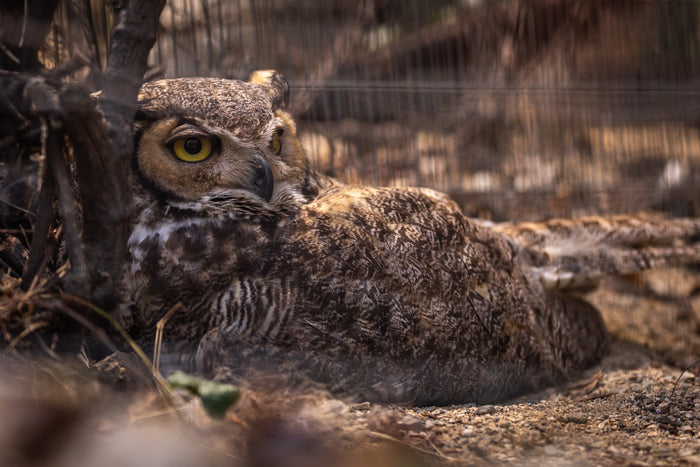
Great Horned Owl (Bubo virginianus)
Prominent ear tufts and yellow eyes; listen for deep hooting around dusk.
Meet this bird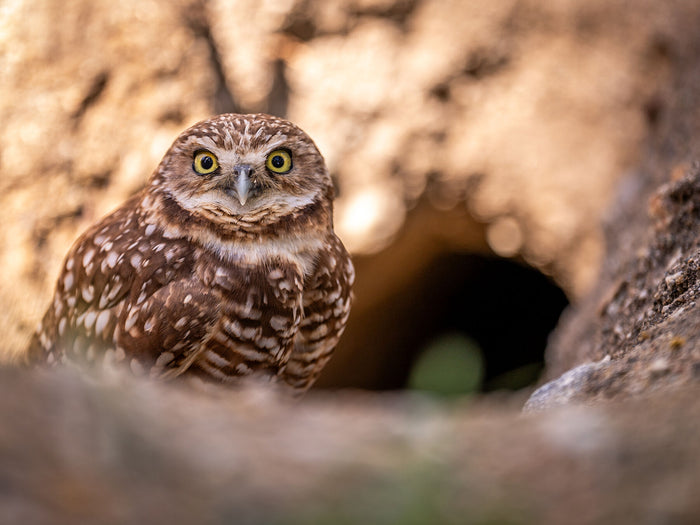
Burrowing Owl
A small owl with long legs and yellow eyes, often watching from close to the ground.
Meet this birdSee the bigger picture.
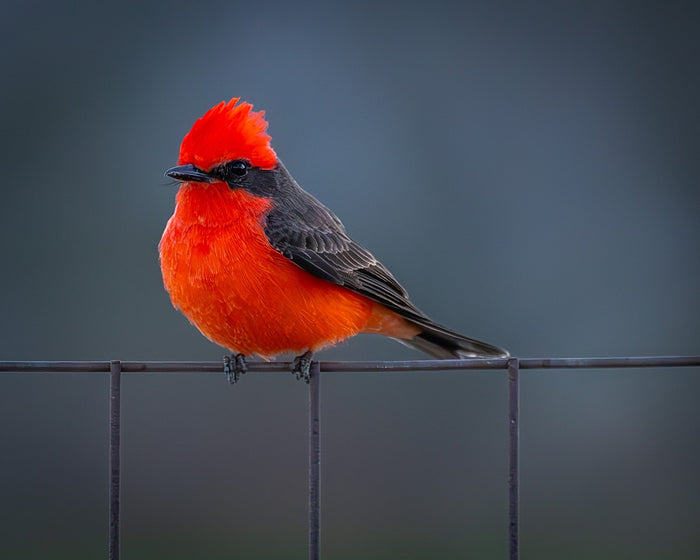
The Pacific Flyway: Coachella Valley’s Living Migration Path
Follow the larger migration story connecting desert oases, open water and the birds passing through the valley.
Read the story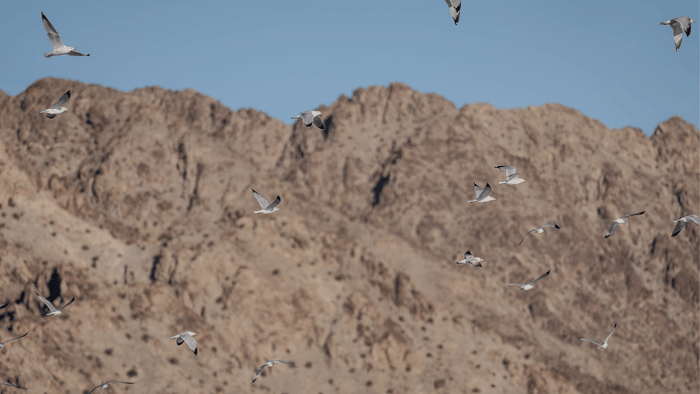
Layers of a Desert Lake: Birds of Lake Cahuilla in Winter
Explore a winter visit to Lake Cahuilla, from close encounters along the shore to movement above the water.
Read the story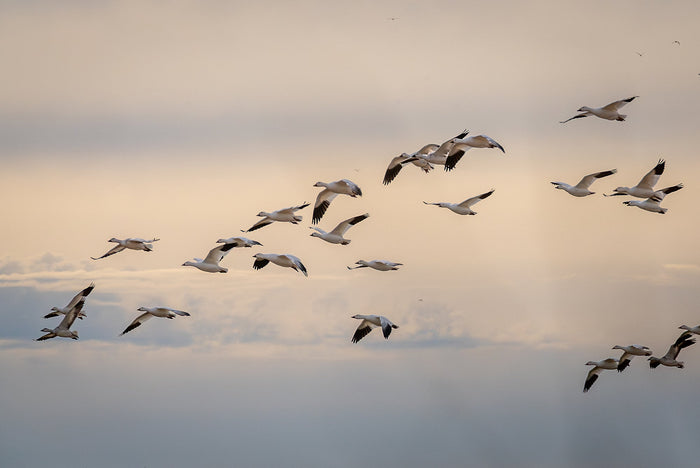
Salton Sea Bird Watching: Where to Go & What to See
Continue south to the Salton Sea for a broader look at birding places, habitats and seasonal variety.
Read the story