
Loggerhead Shrike
Lanius ludovicianus
A gray songbird with a bold black face mask, scanning for prey from exposed perches.
- Bird group
- Songbirds & flycatchers
- Where to look
- Open scrub & agricultural edges
- Explore the region
- Coachella Valley bird guide
Through the lens.
Select any photograph for a closer look. Move through the gallery with the arrows or a swipe.


This is a regional bird guide; photographs may also come from places beyond the valley. Locations are noted when available.
Know what to notice.
A small but fierce songbird known for its raptor-like hunting behavior. Found year-round in the Coachella Valley, this bird is often seen perched on fences, shrubs, or power lines, scanning for prey.
Identification & Appearance
- Size: About 8-9 inches (20-23 cm) long, with a wingspan of 11-13 inches (28-33 cm).
-
Coloration:
- Gray upperparts and white underparts.
- Bold black mask across the face.
- Black wings with white patches, visible in flight.
- Short, hooked black bill, giving it a raptor-like look.
- Legs & Feet: Black, strong for gripping prey.
Behavior & Adaptations
- Nicknamed the "Butcher Bird" because it impales prey on thorns, barbed wire, or sharp twigs for storage.
- Hunts like a mini-raptor, using keen eyesight and swift aerial attacks.
- Despite being a songbird, it preys on small vertebrates—a rare trait.
- Aggressive defender of its territory, especially during breeding season.
Habitat & Range
- Found in open desert scrub, grasslands, and agricultural areas.
- Prefers habitats with scattered trees, bushes, or fence posts for hunting perches.
- Year-round resident in the Coachella Valley and throughout Southern California.
Diet
- Small mammals, lizards, insects, and even other birds.
- Uses its hooked beak to deliver a precise bite to the neck or head.
- Stores excess food by impaling it on thorns or barbed wire, a behavior called larder-hoarding.
Nesting & Reproduction
- Builds cup-shaped nests in dense shrubs or small trees.
- Lays 4-6 eggs, incubated primarily by the female.
- Both parents feed and protect the chicks, which fledge in about two weeks.
- Juveniles quickly learn to hunt and impale prey.
Conservation & Threats
-
Populations are declining, possibly due to:
- Habitat loss from development and agriculture.
- Pesticides reducing insect populations (a key food source).
- Collisions with vehicles, as they hunt along roadsides.
- Listed as a "species of concern" in some regions.
Where to See in the Coachella Valley
- Open desert areas with shrubs and fences.
- Agricultural fields with perches like fence posts or power lines.
- Joshua Tree National Park and other dry, open landscapes.
The Loggerhead Shrike is a small but powerful predator, blending the traits of songbirds and raptors. Its fascinating hunting behavior and adaptability to harsh desert environments make it a unique and important part of the Coachella Valley ecosystem. 🐦🦎⚡
Another bird to discover.
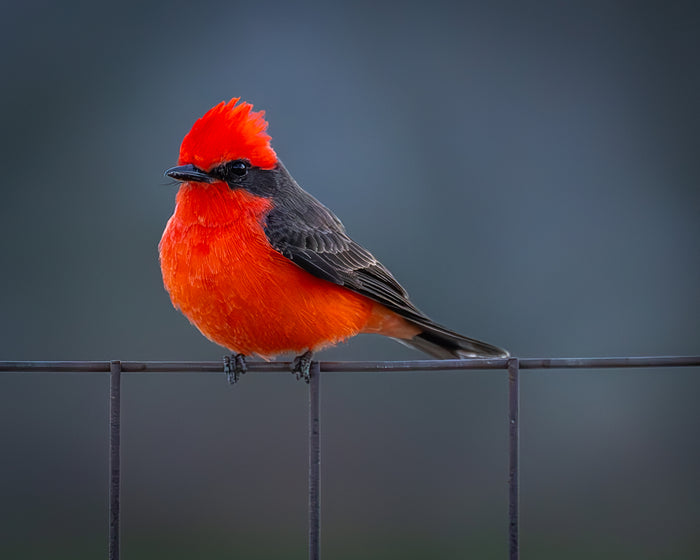
Vermilion Flycatcher
Adult males flash scarlet red; watch for short flights out from an exposed perch.
Meet this bird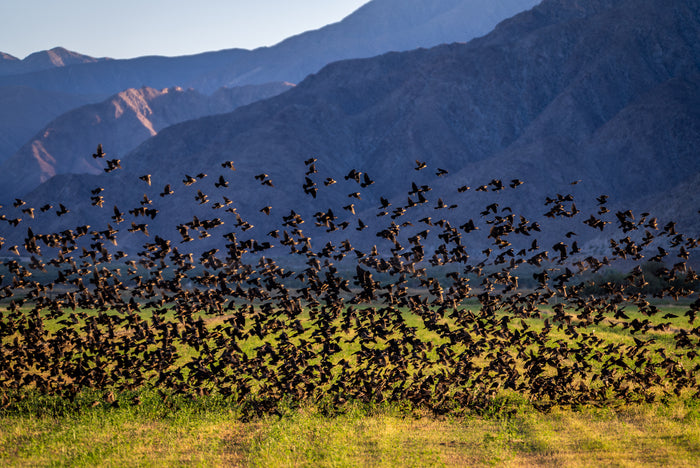
European Starling
Glossy dark plumage turns speckled in fresh feathers; look for flocks over farms and towns.
Meet this bird
Black Phoebe
A black chest and white belly; often returns to the same low perch after catching insects.
Meet this birdSee the bigger picture.
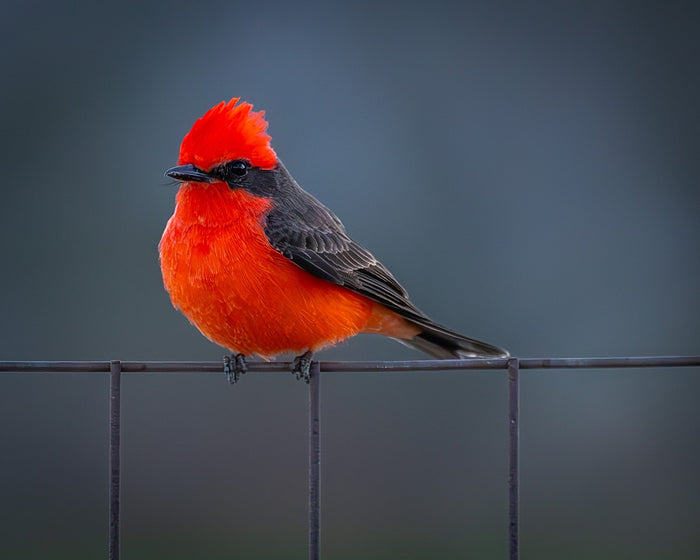
The Pacific Flyway: Coachella Valley’s Living Migration Path
Follow the larger migration story connecting desert oases, open water and the birds passing through the valley.
Read the story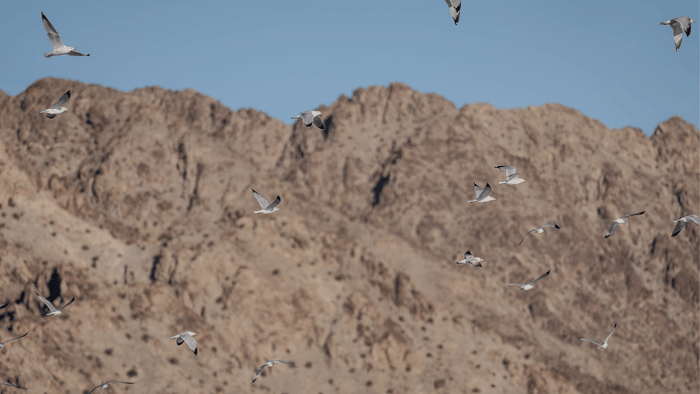
Layers of a Desert Lake: Birds of Lake Cahuilla in Winter
Explore a winter visit to Lake Cahuilla, from close encounters along the shore to movement above the water.
Read the story
Salton Sea Bird Watching: Where to Go & What to See
Continue south to the Salton Sea for a broader look at birding places, habitats and seasonal variety.
Read the story